

Photo: Wikipedia
Demographics of Cherry Hills Village, CO
Affluence Level in Cherry Hills Village, CO
An elite concentration of wealth — high incomes, strong home values, advanced degrees, and minimal poverty signal a top-tier socioeconomic profile.
Census doesn't track above $250K
People of Cherry Hills Village, CO
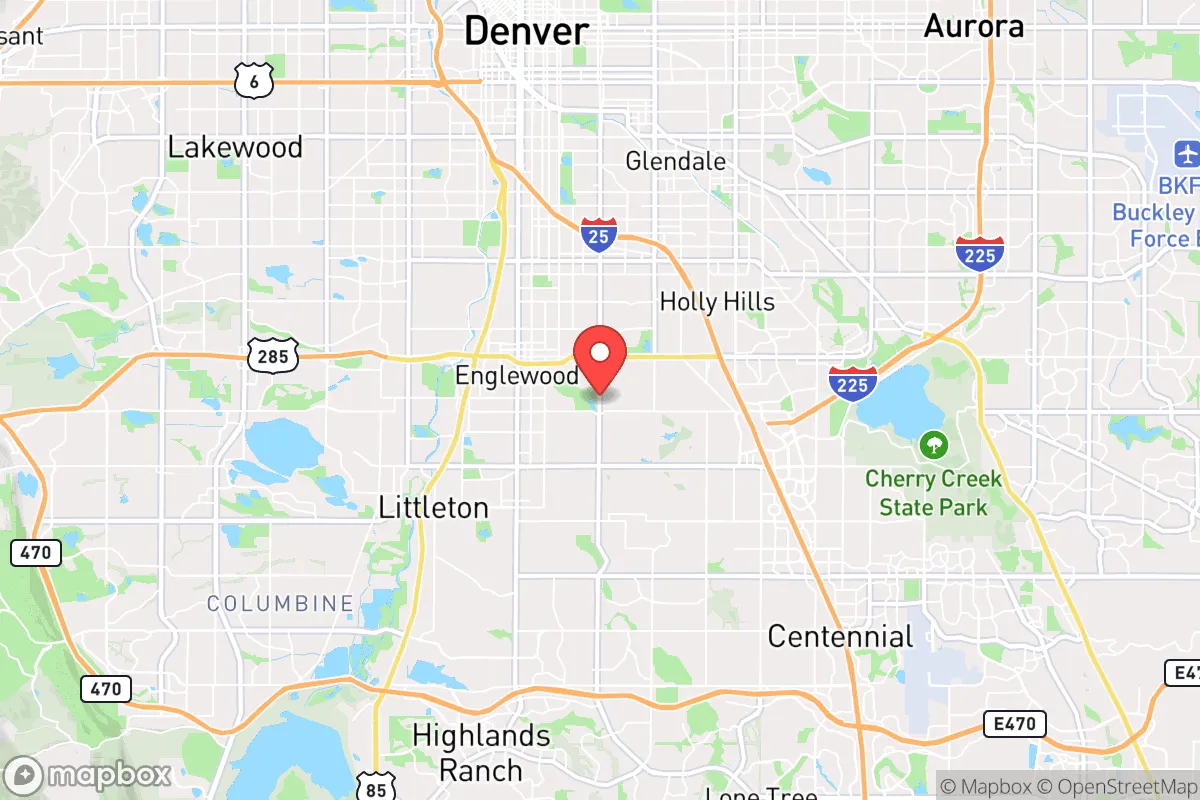
Cherry Hills Village, Colorado, is an affluent, low-density enclave of 6,366 residents characterized by its 87.2% white, highly educated population (83.0% college-educated) and a strikingly low foreign-born share of just 1.2%. The city is a planned suburban sanctuary of large estates and horse properties, where the median household income exceeds $250,000 and the identity is defined by privacy, land ownership, and proximity to Denver’s business core without the urban density. Its residents are overwhelmingly native-born, with small Hispanic (6.9%), Black (1.3%), East/Southeast Asian (0.8%), and Indian subcontinent (0.8%) communities that have arrived primarily through professional and executive relocations rather than chain migration.
How the city was settled and grew
Cherry Hills Village was not a product of 19th-century homesteading or mining booms. It was incorporated in 1945 as a planned residential community for Denver’s business and professional elite. The land was originally part of the larger Cherry Creek Valley, used for ranching and dryland farming by a sparse population of Anglo-American settlers and some Hispanic families who had worked the land since the 1860s. The city’s founding wave was almost entirely white, upper-income families seeking a rural-suburban lifestyle within commuting distance of downtown Denver. The original core neighborhoods—Hunsinger Ranch and Orchard Estates—were platted in the late 1940s and 1950s on former ranchland, with minimum lot sizes of 2.5 acres to enforce low density. No significant immigrant or minority populations settled here during this period; the city was deliberately exclusionary through zoning and price barriers. The 1960 Census recorded Cherry Hills Village as 99.6% white, a figure that would change only marginally over the next six decades.
Modern era (post-1965)
The 1965 Hart-Cellar Act had negligible direct impact on Cherry Hills Village because the city never attracted the chain-migration networks that transformed other Denver suburbs. Instead, the post-1965 era saw domestic in-migration of wealthy white professionals from the East Coast and California, drawn by the city’s reputation for top-tier schools (Cherry Creek School District) and large lots. The Belcaro Park and South Cherry Hills neighborhoods developed in the 1970s and 1980s, attracting corporate executives, surgeons, and oil-and-gas attorneys. The small Hispanic population (6.9% today) is largely composed of second- and third-generation families who work in service and landscaping roles for the city’s estates, concentrated in the Cherry Creek Valley area along the creek corridor. The East/Southeast Asian and Indian subcontinent communities (each 0.8%) arrived in the 1990s and 2000s as tech and finance professionals, settling in the newer Homestead Estates subdivision near the city’s eastern edge. These groups remain small and highly assimilated, with no distinct ethnic enclaves or institutions. The Black population (1.3%) is similarly dispersed, consisting of professionals in medicine and law.
The future
Cherry Hills Village is homogenizing further rather than diversifying. The foreign-born share (1.2%) is among the lowest in the Denver metro area and has declined from 2.1% in 2010, as rising home prices (median over $2 million) have priced out even affluent immigrants. The white share has remained stable at 87-88% since 2000, with no significant growth in any minority group. The Hispanic population is plateauing as service workers are pushed to more affordable suburbs like Aurora or Commerce City. The East/Southeast Asian and Indian subcontinent communities are likely to remain small, limited to a handful of families per year who can afford entry. Over the next 10-20 years, the city will likely become even whiter and older, as younger families are priced out and retirees age in place. No new subdivisions are planned, and zoning restrictions remain among the strictest in Colorado, ensuring demographic continuity.
For a conservative-leaning individual or parent considering relocation, Cherry Hills Village offers a stable, low-crime, high-amenity environment with minimal demographic change and no pressure toward urban-style diversity. The city is becoming a gilded retirement and executive compound, where the population is shrinking slightly (down from 6,500 in 2020) and aging, but where the character of the community—white, wealthy, native-born—is unlikely to shift meaningfully in the foreseeable future.

* Values derived from national, state, county, city and local statistics and may differ in a specific area. Last updated: 2026-04-16T00:58:17.000Z
Narrative content on this page is AI-generated and may contain mistakes. Verify any details that matter before acting on them.
ReloMaps may earn a commission from affiliate links at no extra cost to you.

