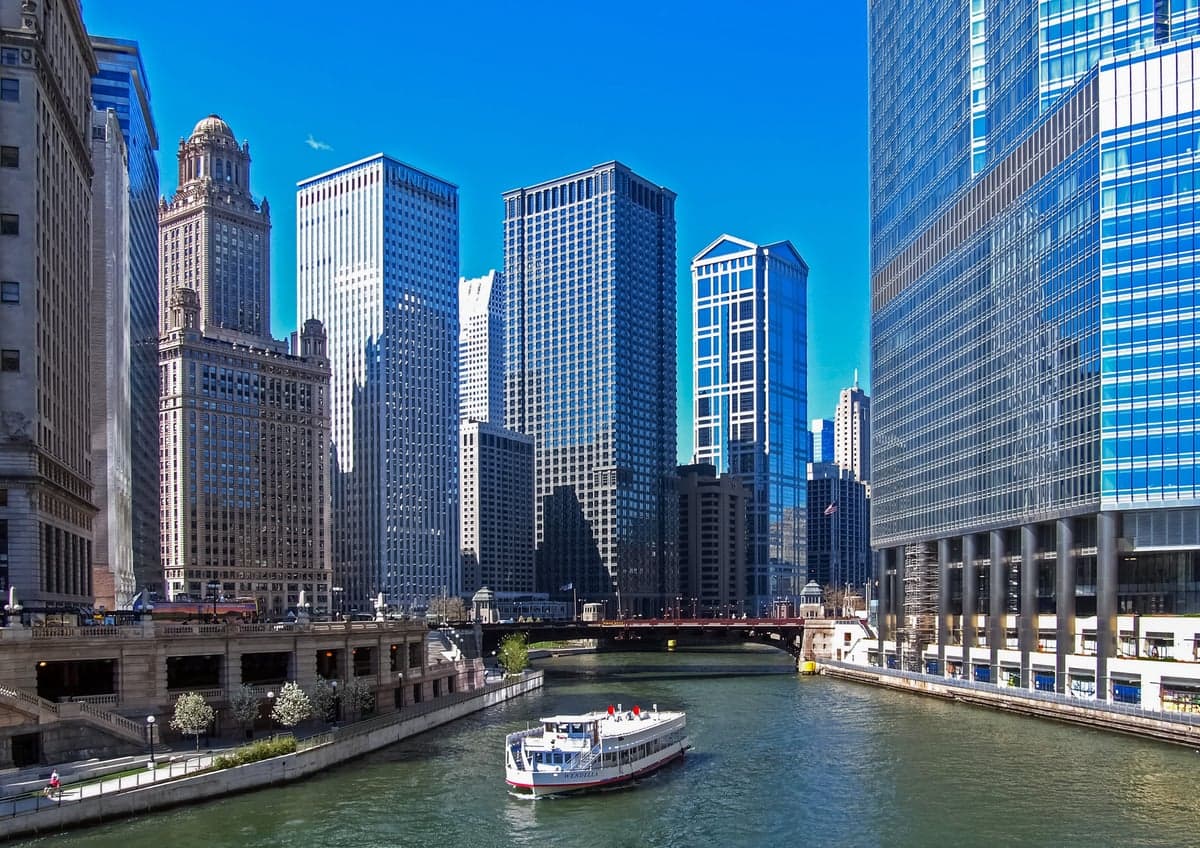
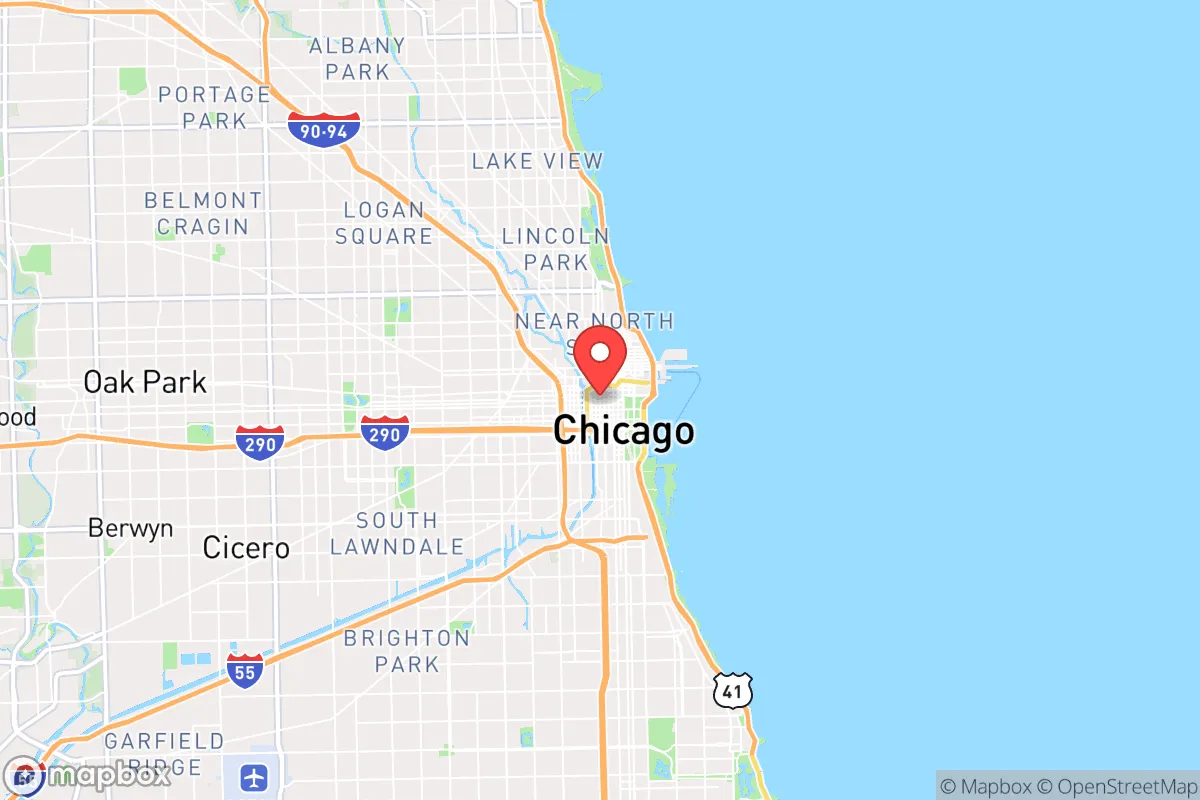
Photo: Wikipedia
Personal Sovereignty in Chicago, IL
Viable for self-reliance. Generally workable, though some barriers may limit total independence.
What does Personal Sovereignty tell us?
Personal Sovereignty measures your capacity for self-reliance and independence with minimal government friction. Higher scores mean fewer barriers between you and the way you want to live... but it assumes you have the space you need and good neighbors.
What does this tell us?
Personal Sovereignty measures your capacity for self-reliance and independence with minimal government friction. Higher scores mean fewer barriers between you and the way you want to live... but it assumes you have the space you need and good neighbors.
State Policy
Energy independence: Importer (45% of energy produced in-state)
Personal Liberty
Homesteading

Personal Liberty Analysis
Chicago, Illinois, presents a deeply constrained environment for personal sovereignty, where the individual's right to self-determination is systematically subordinated to expansive government authority. For those prioritizing autonomy, self-reliance, and minimal state interference, the city's dense regulatory framework, high tax burden, and restrictive policies on self-defense and personal liberties create a significant barrier to living on your own terms. This analysis examines the specific factors that make Chicago a challenging location for those seeking to maximize personal freedom, particularly from a survivalist and prepper perspective.
Tax burden and regulatory posture: The cost of living under government control
Chicago's tax environment is among the most aggressive in the nation, directly eroding personal sovereignty by limiting what you can keep and control. The combined state and local sales tax rate can exceed 10.25%, one of the highest in the country, meaning nearly every purchase funds government operations. Property taxes are notoriously high, with Cook County's average effective rate around 2.1% of assessed value, often translating to thousands of dollars annually for a modest home. This is not a one-time cost but a perpetual lien on your property, effectively making you a renter to the state. The state income tax is a flat 4.95%, and while not progressive, it adds another layer of extraction. For a prepper or survivalist, this tax burden directly competes with funds that could be allocated to land, supplies, or self-sufficiency projects. The regulatory posture is equally stifling. Chicago has over 600 occupational licenses, many with onerous requirements, and a complex zoning code that makes even minor home-based businesses or workshops a bureaucratic headache. The city's building code is notoriously strict, and permits for anything from a fence to a solar panel can involve months of delays and fees. This environment is designed to centralize control, not empower individual initiative.
Self-defense and gun law specifics: A disarmed populace in a high-crime city
For anyone serious about personal sovereignty, the right to self-defense is non-negotiable. Chicago's gun laws are among the most restrictive in the nation, effectively treating law-abiding citizens as potential threats. The city banned handguns outright for decades until the Supreme Court's McDonald v. Chicago (2010) ruling, but the aftermath has been a relentless series of local ordinances designed to make ownership as difficult as possible. To legally possess a firearm in Chicago, you must have a Firearm Owner's Identification (FOID) card from the state, which requires a background check and can take months to process. Handgun purchases are limited to one per 30 days. Carrying a concealed firearm requires a state-issued Concealed Carry License (CCL), which involves 16 hours of training, a live-fire qualification, and a fee. Even with a CCL, Chicago has designated "sensitive places" where carry is prohibited, including parks, public transportation, hospitals, and any establishment that serves alcohol. The city's high violent crime rate—consistently ranking among the worst in the nation for homicides and shootings—makes these restrictions particularly galling. A law-abiding citizen faces a legal minefield just to defend their life, while criminals, by definition, ignore these laws. For a prepper, this means your ability to protect your home and family is severely curtailed by the very government that fails to guarantee your safety.
Self-reliance and homesteading viability: The urban squeeze on independence
True self-reliance requires space and freedom from restrictive zoning. Chicago's dense urban environment is fundamentally hostile to homesteading or off-grid living. The typical residential lot in the city is a narrow 25-foot by 125-foot strip, often with a small backyard. Zoning codes strictly prohibit keeping livestock like chickens or goats in most residential areas, and even vegetable gardens can be subject to nuisance complaints. Rainwater harvesting is technically allowed but heavily regulated, and any significant water storage system requires permits. Solar panels are permitted but must be installed by licensed contractors and meet strict building codes, making DIY installations nearly impossible. The city's reliance on centralized infrastructure—grid power, municipal water, and sewer systems—means that any attempt to go off-grid is not just impractical but illegal. For a prepper, the lack of space for a root cellar, a substantial garden, or a workshop for tool repair is a major limitation. The nearest rural areas with viable land for a retreat are at least an hour's drive away, in counties like McHenry or DeKalb, but even there, property taxes and zoning restrictions remain significant. Chicago is a place where you are dependent on the system for your basic needs, not a place where you can build a self-sufficient homestead.
Personal liberties: Parental rights, medical autonomy, speech, and property
Chicago's approach to personal liberties reflects a broader trend of government overreach into areas traditionally considered private. Parental rights are under constant pressure. The Chicago Public Schools (CPS) system has implemented policies on sex education and gender identity that can bypass parental consent, and the city's health department has offered reproductive health services to minors without notifying parents. Medical autonomy is similarly constrained. Illinois has a vaccine mandate for school attendance, and during the COVID-19 pandemic, Chicago imposed some of the strictest and longest-lasting lockdowns and mask mandates in the country, with fines for non-compliance. Freedom of speech is technically protected, but the city has a history of using permitting requirements and noise ordinances to limit protests and public gatherings. Property rights are the most compromised. The city's use of eminent domain is aggressive, and the property tax system, with its annual reassessments and appeals process, creates a constant state of uncertainty. For a prepper, the ability to stockpile supplies, build a secure shelter, or even put up a privacy fence is subject to endless rules. The city's "Vacant Building Ordinance" can even force owners of unoccupied properties to register them and pay fees, treating your own land as a liability. This is not a place where you are free to live as you see fit; it is a place where the state dictates the terms of your existence.
In the broader landscape of American cities, Chicago stands out as a place where personal sovereignty is systematically dismantled in favor of centralized control. Compared to cities in states like Texas, Florida, or Tennessee, where tax burdens are lower, gun rights are respected, and zoning is more permissive, Chicago represents the opposite pole. For a survivalist or prepper who values the ability to defend themselves, keep their earnings, and live independently, this city is a strategic liability. The high cost of living, restrictive laws, and pervasive government oversight make it a place to leave, not to build a future. If your priority is maximizing personal freedom and minimizing state interference, Chicago is a clear warning of what happens when that sovereignty is lost.

* Values derived from national, state, county, city and local statistics and may differ in a specific area. Last updated: 2026-04-13T20:10:41.000Z
Narrative content on this page is AI-generated and may contain mistakes. Verify any details that matter before acting on them.
ReloMaps may earn a commission from affiliate links at no extra cost to you.

