
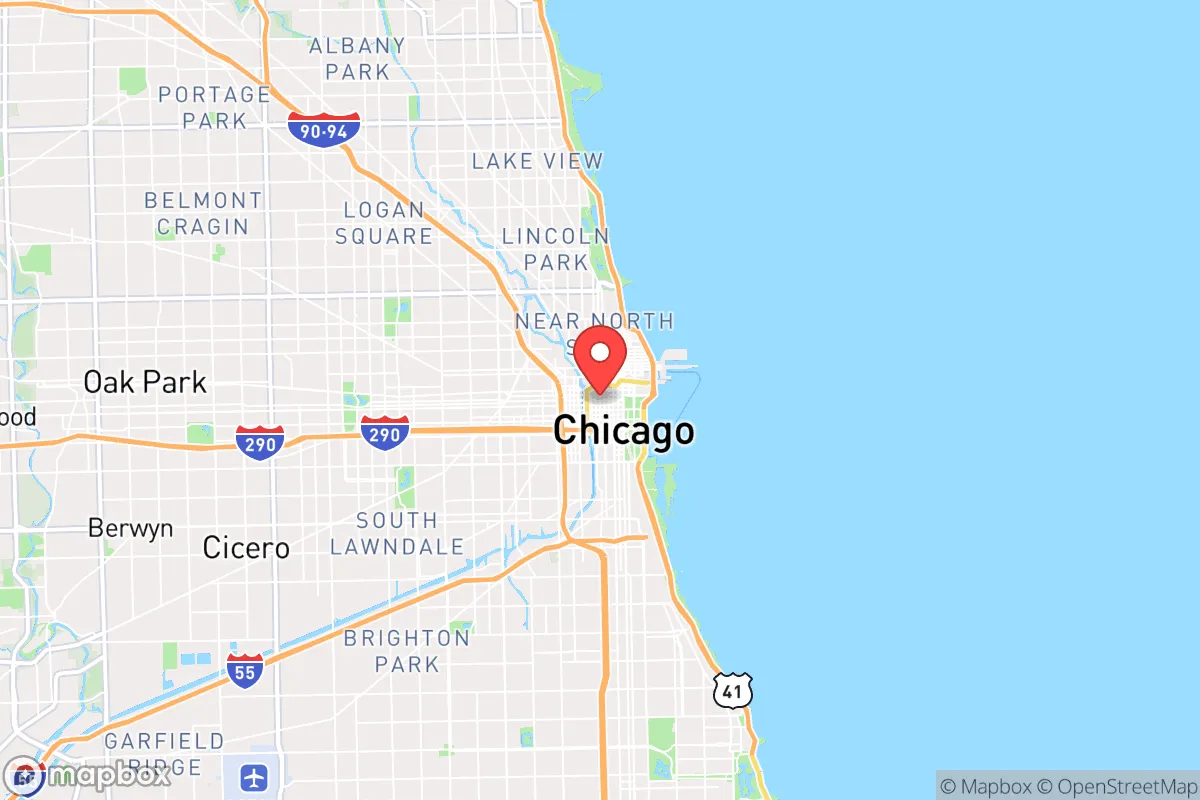
Photo: Wikipedia
Quality of Life in Chicago, IL
A livable area that tracks near national norms for affordability, walkability, and neighborhood health.
What does Quality of Life tell us?
Quality of Life blends cost of living, nearby amenities, socioeconomic signals, and neighborhood character. City-level scores represent the whole municipality; individual neighborhoods can differ.
What does this tell us?
Quality of Life blends cost of living, nearby amenities, socioeconomic signals, and neighborhood character. City-level scores represent the whole municipality; individual neighborhoods can differ.
Cost of Living
16% above national average
The Real Cost of Living in Chicago, IL for 2026
| Tier | Individual | Family (4) |
|---|---|---|
| Survival | $55k | $104k |
| Comfortable | $124k | $183k |
| Luxury | $136k+ | $210k+ |
| Elite (Top 5%) | $199k+ | $309k+ |
41%
The Area Signal
A metric tracking the socioeconomic signals of the area.


Hobbies
Explore the areaGroceries
5 within 10 miles
Gas
0 within 10 miles
Hospital
3 within 20 miles
Airport
MDW — Chicago Midway International
Post Office
USPS — Chicago, IL
Critical Amenities
Quality-of-Life Analysis
Chicago offers a distinctly urban quality of life shaped by its status as a global city with a cost of living index of 116 (16% above the U.S. average), attracting a diverse mix of young professionals, established families, and creatives drawn to its dense neighborhoods, cultural institutions, and robust transit network. The city’s median home value of $315,200 and median rent of $1,380 provide a more attainable entry point compared to coastal peers like New York or San Francisco, though affordability varies sharply by neighborhood. Residents here trade some space and car dependency for walkable blocks, lakefront access, and a 24-hour energy that defines daily life in the nation’s third-largest metro area.
Cost of living, housing affordability, and how Chicago compares to nearby suburbs
Chicago’s overall cost of living sits 16% above the national average, driven primarily by housing and taxes, but remains significantly cheaper than major coastal cities. The median home value of $315,200 is roughly half that of Los Angeles or Seattle, while the median rent of $1,380 undercuts the national median for large metros. However, property taxes in Cook County are among the highest in the U.S., often adding $4,000–$8,000 annually to homeownership costs. Compared to nearby suburbs like Evanston or Oak Park, Chicago proper offers lower per-square-foot prices, but buyers face older housing stock and higher crime rates in some areas. The average commute of 33.5 minutes is longer than the national average of 27 minutes, reflecting the city’s sprawling employment centers and reliance on the CTA’s L trains and buses, which many residents use to avoid parking costs and traffic on the Kennedy and Dan Ryan expressways.
Neighborhood amenities, schools, and the daily rhythm of life in Chicago
Daily life in Chicago revolves around its 77 community areas, each with distinct character—from the lakefront high-rises of Lincoln Park to the bungalow-lined streets of Beverly. The city’s 8,800 acres of parks, anchored by the 18-mile Lakefront Trail and Millennium Park, provide year-round recreation, while the public school system (CPS) offers selective enrollment schools like Walter Payton College Prep and Whitney Young that rank among the nation’s best, though neighborhood school quality varies widely. Residents rely on the CTA’s 145 bus routes and 8 rail lines for the average 33.5-minute commute, with many walking to grocery stores, coffee shops, and restaurants in walkable corridors like Wicker Park’s Milwaukee Avenue or Hyde Park’s 53rd Street. Cultural amenities are world-class: the Art Institute, Lyric Opera, and Second City comedy club draw locals and tourists alike, while summer street festivals (Taste of Chicago, Lollapalooza, neighborhood fests) define the social calendar. Winters are harsh, with average January highs around 32°F and lake-effect snow, but the city’s indoor options—from museums to deep-dish pizza joints—keep life active year-round.
Chicago is best suited for those who thrive in a dense, walkable environment with strong transit access and don’t mind cold winters or high property taxes. Young professionals and families who prioritize cultural amenities, diverse food scenes, and public transportation over suburban yard space will find the city’s affordability relative to other global hubs compelling. Retirees and remote workers may prefer quieter neighborhoods like Andersonville or Lincoln Square, while those seeking top-tier public schools should target selective CPS programs or consider nearby suburbs. Ultimately, Chicago rewards residents who embrace its neighborhood-centric lifestyle, lakefront access, and the trade-off of higher taxes for urban energy and opportunity.

Crime in Chicago, IL
WARNING: The crime statistics are unreliable for this jurisdiction. Local authorities have either not reported or under reported their data to the FBI. This could be due to bad intentions, incompetence or technical issues. Regardless, we suggest skepticism.
Significantly higher crime rates than 78% of comparable U.S. locations.
Violent CrimeViolent Crime Analysis
Property CrimeProperty Crime Analysis
Crime Analysis
Chicago, Illinois, presents a complex safety landscape that demands careful consideration, particularly for those relocating from areas with more conservative justice systems. The city's overall crime rates are significantly elevated compared to national averages, with a violent crime rate of 370.8 incidents per 100,000 residents and a property crime rate of 2,920.8 per 100,000. These figures place Chicago well above the national median for both categories, a reality shaped in part by the progressive policies of Cook County's elected officials and judiciary.
Crime in context
Chicago's violent crime rate is roughly double the national average, while its property crime rate is nearly 70% higher than the U.S. median. When compared to the rest of Illinois, Chicago is the primary driver of the state's elevated crime statistics. The city's challenges are compounded by a justice system that, under progressive leadership, has prioritized alternatives to incarceration and reduced bond requirements. While these policies aim to address systemic inequities, critics argue they have directly contributed to a revolving-door effect, where repeat offenders are quickly returned to the streets. This approach, while sympathetic to offenders, has demonstrably negative consequences for public safety and victim justice.
What residents experience
For daily life in Chicago, safety is a neighborhood-by-neighborhood proposition. Property crime—including theft, burglary, and motor vehicle theft—is the most common concern, affecting residents across the city. Carjackings and retail theft have seen notable increases in recent years, often linked to organized groups exploiting lenient prosecution policies. Violent crime, while less frequent, is heavily concentrated in specific areas, particularly on the South and West Sides. Residents in these neighborhoods report a heightened sense of vulnerability, with many avoiding public transit after dark or investing heavily in home security systems. The city's response has included increased police patrols in high-crime zones, but the underlying judicial philosophy remains a point of contention.
Neighborhood-level variation is extreme. Areas like Lincoln Park, Lakeview, and the Loop generally experience lower violent crime rates, though property crime remains a persistent nuisance. In contrast, neighborhoods such as Englewood, Austin, and Garfield Park have violent crime rates that can be five to ten times higher than the city average. This disparity means that a resident's safety experience is almost entirely determined by their zip code. For those considering a move, thorough research into specific neighborhood crime maps and recent trends is essential, as the city's overall statistics do not reflect the reality of safer enclaves. The progressive policies of Cook County State's Attorney Kim Foxx's office have been a focal point of debate, with opponents arguing they have eroded deterrence and emboldened criminal activity across the metro area.
* Values derived from national, state, county, city and local statistics and may differ in a specific area. Last updated: 2026-04-13T20:10:41.000Z
Narrative content on this page is AI-generated and may contain mistakes. Verify any details that matter before acting on them.
ReloMaps may earn a commission from affiliate links at no extra cost to you.

