
Photo: Wikipedia
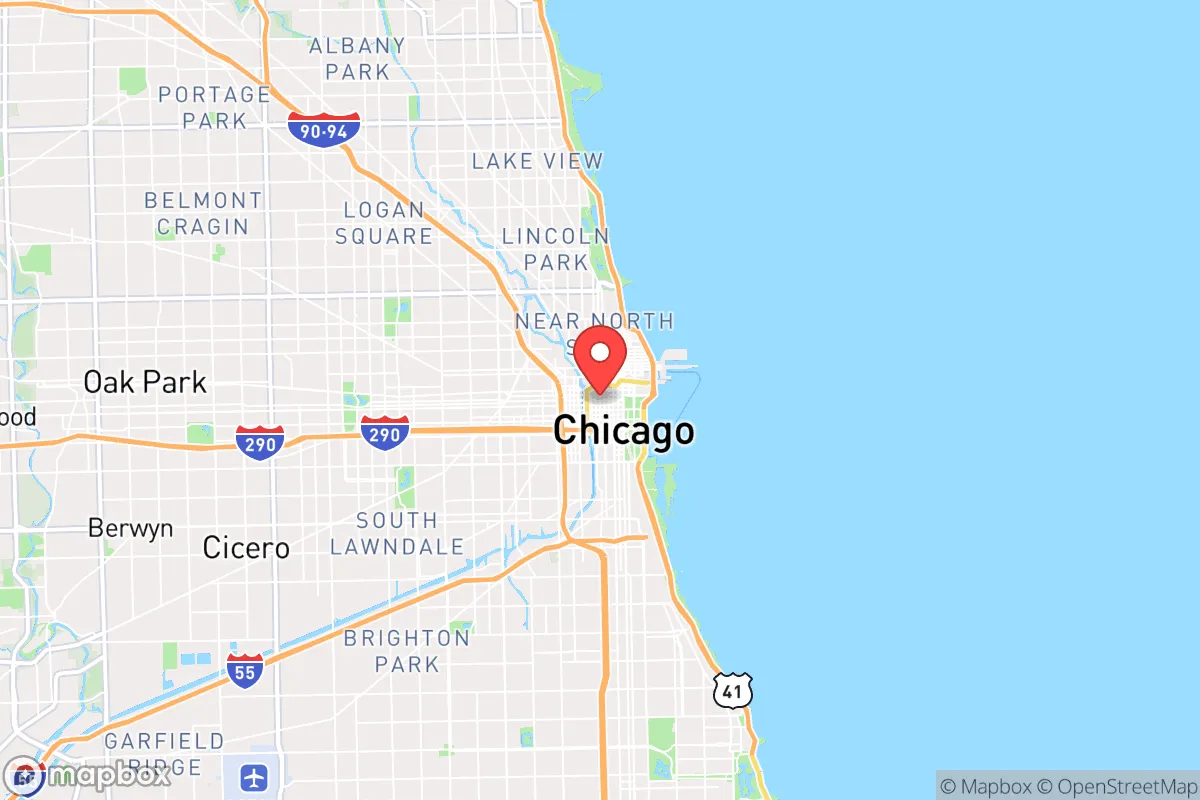
Strategic Assessment of Chicago, IL
High tactical risk. This location is likely close to major population centers, strategic targets, or sits in a high-disaster corridor. A retreat property and careful exit planning is required.
What does the Strategic Assessment tell us?
Our Strategic Assessment grades tactical survivability of an area. Major population centers, military targets, fallout zones, natural disasters, and border exposure all drive risk — lower exposure means a more defensible position in a crisis.
This is heavily inspired by Joel Skousen's Strategic Relocation book. Highly recommended you checkout the book ($)What does this tell us?
Our Strategic Assessment grades tactical survivability of an area. Major population centers, military targets, fallout zones, natural disasters, and border exposure all drive risk — lower exposure means a more defensible position in a crisis.
This is heavily inspired by Joel Skousen's Strategic Relocation book. Highly recommended you checkout the book ($)Strategic Pillars

Key Distances
Regional Safe Places
Below is our recommended "safe zones" in Illinois and the surrounding area based on our strategic heuristics. For most people, it's unrealistic to live in a “safe zone” full-time due to work, family or other personal reasons. They tend to be more rural. However, many of these areas are perfect for second homes and retreat properties that double as a vacation home or even a short-term rental.
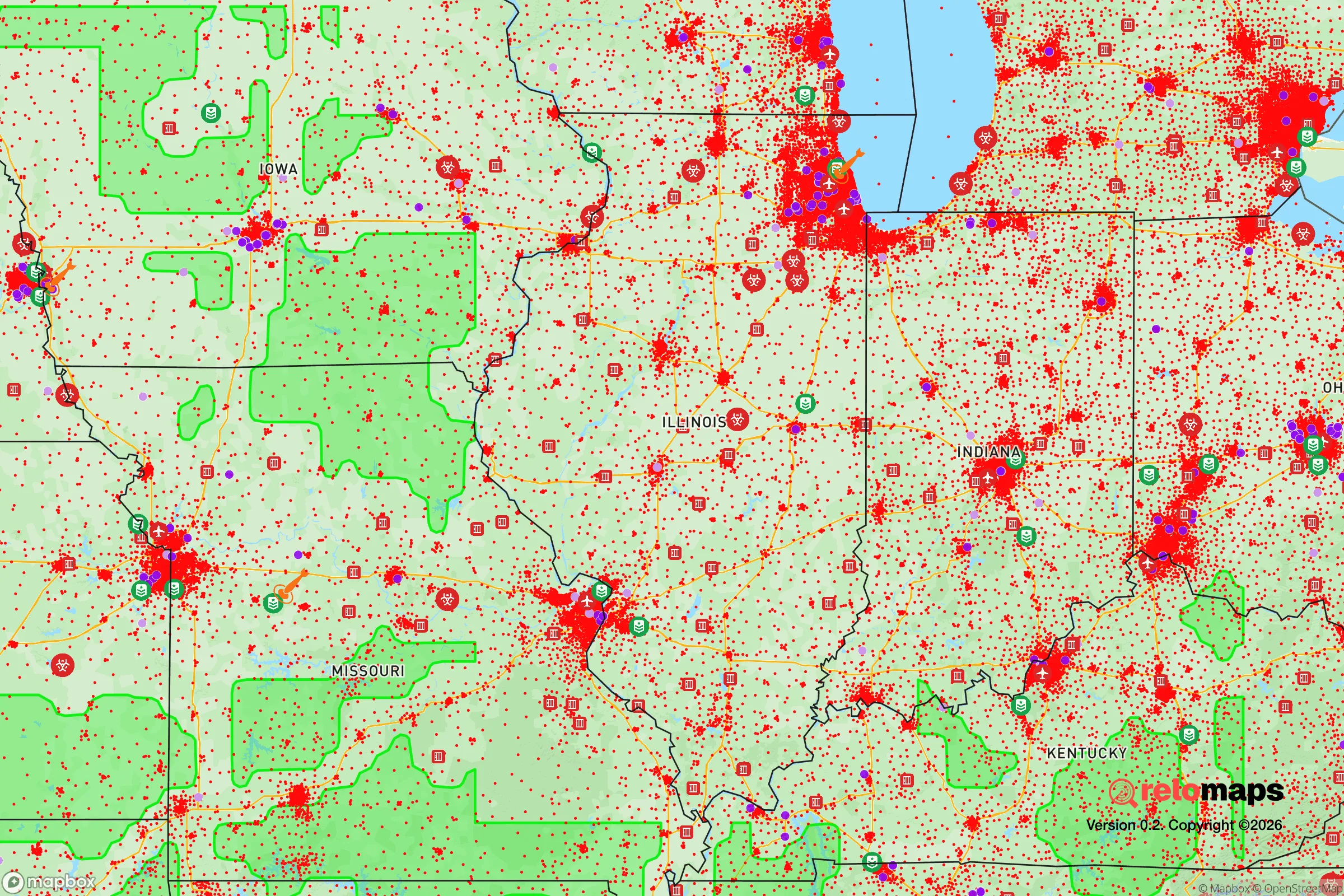
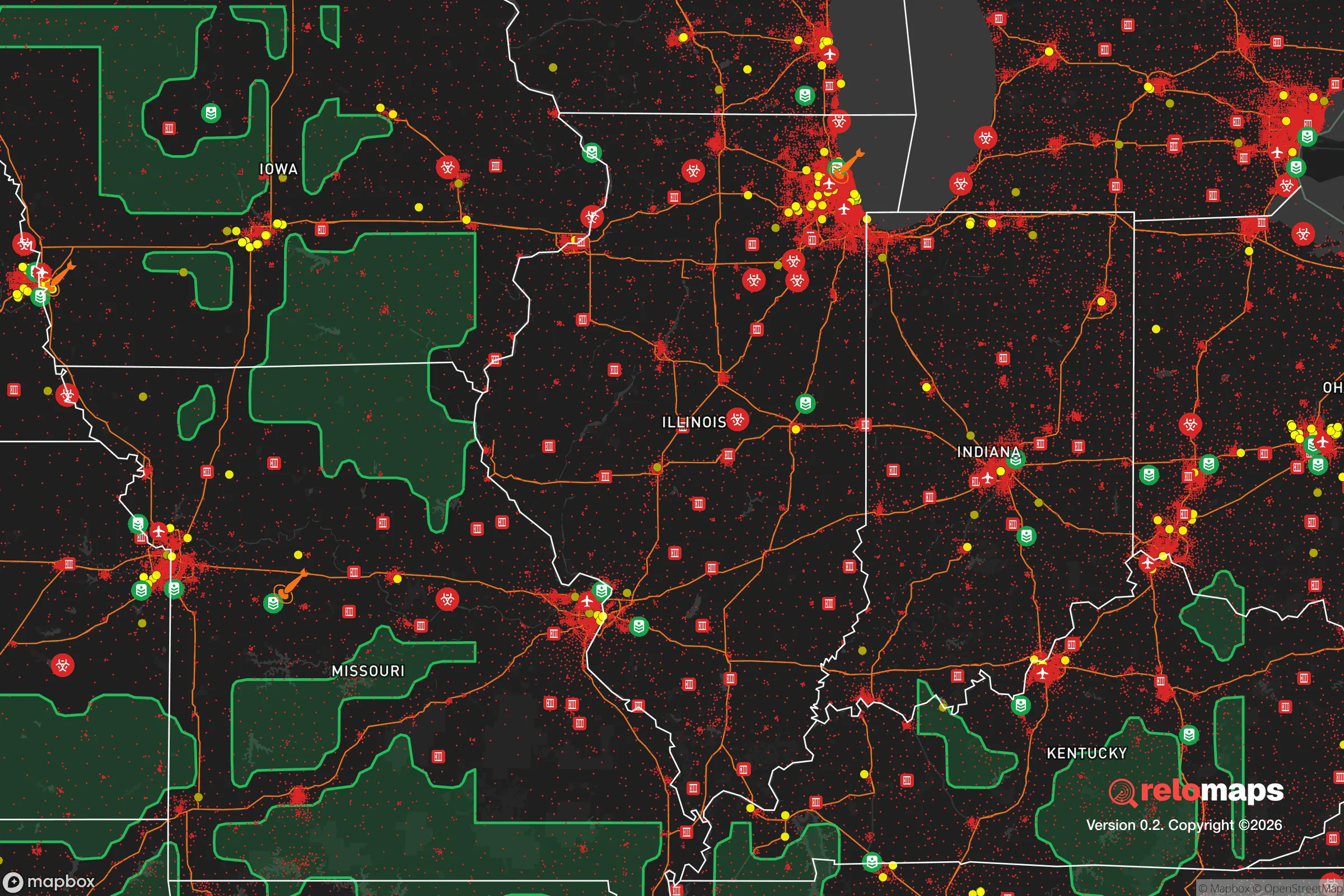


Important Note: For informational purposes only. This does not mean nothing bad ever happens in the green zones. Please use common sense. This is based on public data and modeled with AI. We tried to take a conservative approach but mistakes happen. We update this regularly as new information becomes available.
Solar Generator Recommendations
Backup power matters more here than in safer locations. We've picked three solar generators across budgets and capacity tiers — start with the budget unit if you only need a few essentials, or step up if you want to run a fridge and HVAC for days at a time.

Jackery Portable Power Station Explorer 300
Budget OptionPower on the Go: Weighing only 11 lbs, it's convenient to set up and store with book-sized foldable solar panels

BLUETTI Portable Power Station AC180
Designed for both indoor and outdoor scenarios, AC180 is highly capable as it has a robost capacity and continuous output power.

EF ECOFLOW DELTA Pro Ultra Power Station
Upgraded PickEcoFlow DELTA Pro Ultra is a whole-home energy system designed to grow with your family. Integrated with the Smart Home Panel 2, it scales to meet your evolving energy needs — keeping your home powered, intelligent, and secure through every stage of life.
We earn a commission, at no additional cost to you.
Strategic Assessment Analysis
Chicago, Illinois, presents a deeply contradictory strategic picture for the conservative-leaning relocator concerned with long-term resilience. On one hand, its position as a continental transportation hub and its access to the largest freshwater system in North America offer undeniable logistical and survival advantages. On the other, the city’s dense population, entrenched political culture, and proximity to high-value government and financial targets create a risk profile that most preppers would find unacceptable for a primary relocation site. This analysis weighs those factors for the single individual or parent who is serious about being prepared for civic unrest, mass casualty events, and systemic collapse.
Geographic position and natural advantages for long-term survival
Chicago’s single greatest strategic asset is its location on Lake Michigan, which holds roughly 20% of the world’s surface freshwater. For a survivalist, water security is non-negotiable, and this lake provides a virtually inexhaustible supply—provided you can treat and distribute it. The city also sits at the nexus of the nation’s rail, highway, and air freight networks, meaning that in a partial collapse scenario, Chicago would be one of the last places to lose access to resupply chains. The surrounding region is flat, fertile, and part of the Corn Belt, offering some of the best agricultural soil on the planet within a 50-mile radius. For a family willing to relocate to the outer suburbs or exurbs—places like McHenry County or DeKalb County—you gain proximity to this water and farmland while staying outside the immediate blast radius of the urban core. The Midwest’s relatively low seismic and hurricane risk also reduces the chance of a natural disaster compounding a man-made one.
Risks, exposures, and proximity to high-value fallout targets
The downsides are severe and must be stated plainly. Chicago is a Tier 1 target in any major conflict scenario. It hosts the Chicago Mercantile Exchange, O’Hare International Airport, major rail yards, and the Argonne National Laboratory—all potential first-strike or sabotage targets. The city’s population density of over 11,000 people per square mile means that any biological event, chemical release, or radiological incident would cascade rapidly. For the prepper, the risk isn’t just the initial event; it’s the mass exodus. If a major attack or grid-down scenario hits, expect millions of people to flee the city simultaneously, clogging every major highway (I-90, I-94, I-55, I-290) and turning the suburbs into a chokepoint. The city’s political leadership has also shown a pattern of defunding police and limiting civilian firearm rights, which directly impacts your ability to defend your home and family during civil unrest. The 2020 riots and looting in the Loop and along Michigan Avenue are a preview of what happens when order breaks down—and the response was slow, inconsistent, and politically constrained.
Practical resilience for a relocator: food, water, energy, and defensibility
If you are determined to locate in the Chicago area despite the risks, your survival plan must be built around layered redundancy. Water is your first win: Lake Michigan is a massive resource, but you need a plan to access it without relying on municipal treatment plants. A Berkey filter or a Sawyer Squeeze, combined with a stash of purification tablets, is baseline. For energy, the grid is old and vulnerable—expect rolling blackouts during peak summer or winter storms. Solar panels with battery storage are viable, but Chicago’s cloudy winters reduce output by 40-60% compared to the Southwest. A backup generator running on propane or natural gas is almost mandatory. Food storage is easier here than in many regions: the cost of bulk grains, beans, and canned goods is lower due to proximity to agricultural processing centers. You can build a six-month supply without breaking the bank. Defensibility is the hardest variable. Inside the city limits, you are surrounded by millions of people, many of whom will be desperate in a crisis. The smart play is to target a rural or semi-rural property at least 60 miles from downtown, in a county with a strong gun culture and low crime baseline. Places like Jo Daviess County or Stephenson County offer more land, fewer neighbors, and a political climate that respects the Second Amendment. Even then, you are still within a day’s drive of the city’s chaos, so you need a hardened retreat—not a suburban McMansion with a white picket fence.
The overall strategic picture for Chicago is one of high potential reward paired with extreme risk. The freshwater and farmland are genuine long-term assets that few other major cities can match. But the density, target profile, and political fragility of the region make it a poor choice for anyone seeking a stable, defensible base for the coming decade. For the single individual or parent who is serious about preparedness, the best use of Chicago is as a resource hub—a place to acquire supplies, network with like-minded people, and then relocate to a more defensible position in the surrounding countryside. Do not bet your family’s future on the idea that the city will hold together when the next shock hits. Plan for the exodus, not the stay.

* Values derived from national, state, county, city and local statistics and may differ in a specific area. Last updated: 2026-04-13T20:10:41.000Z
Narrative content on this page is AI-generated and may contain mistakes. Verify any details that matter before acting on them.
ReloMaps may earn a commission from affiliate links at no extra cost to you.

