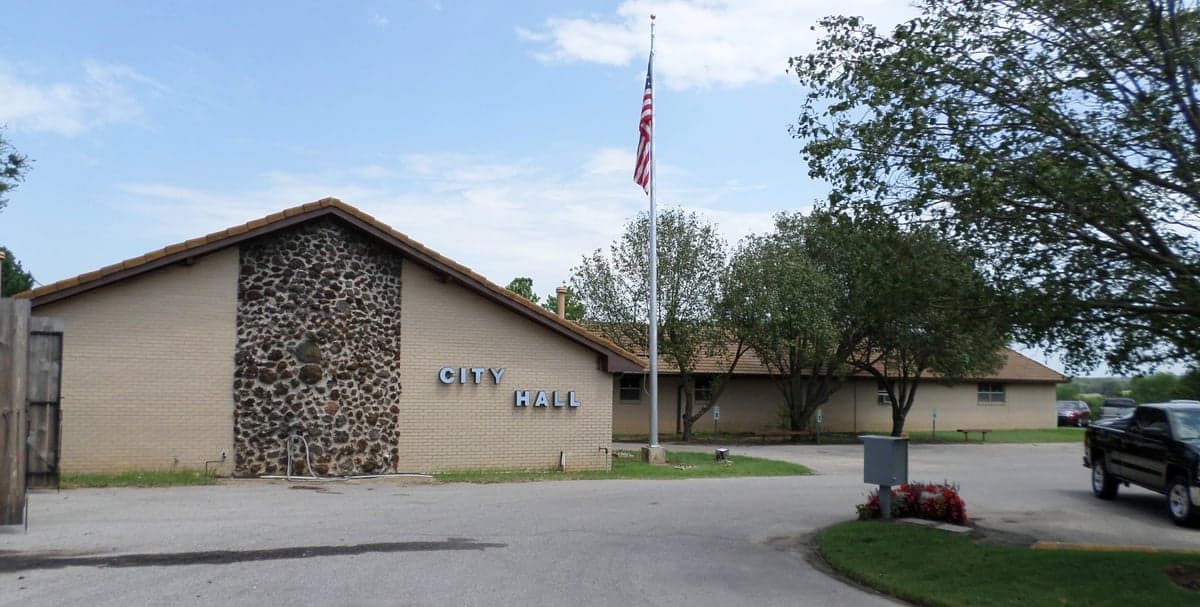
Photo: Wikipedia
Political ClimatePolitical Climate in Choctaw, OK
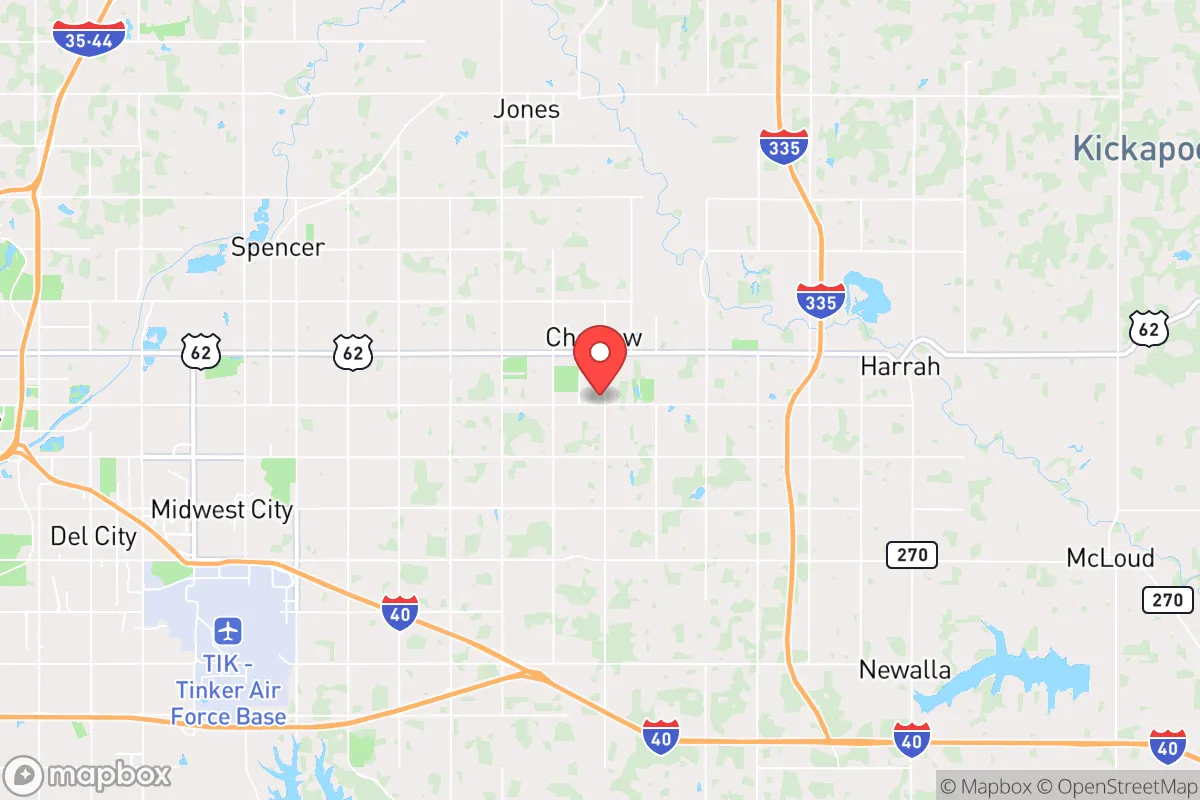
District shown is the primary district for this city’s centroid. Cities may span multiple districts.
Local Political AnalysisPolitical Analysis of Choctaw, OK
Choctaw, Oklahoma, has long been a solidly conservative community, and that hasn't changed much even as the broader metro area shifts. With a Cook PVI of R+9, this isn't a swing town—it's a place where Republican candidates can reliably count on winning by double digits. But if you've lived here as long as I have, you'll notice the political conversation has gotten a lot more intense, especially around things like school board meetings and local ordinances. The old "live and let live" conservative vibe is still here, but there's a growing unease about outside influences creeping in from the city.
How it compares
Drive ten miles west into Oklahoma City proper, and you'll hit neighborhoods that vote blue more often than not—places like the Paseo or Plaza District. Head east toward Choctaw, and the landscape changes fast. We're surrounded by towns like Harrah and McLoud that lean just as red, but Choctaw's proximity to the metro means we get a front-row seat to the ideological tug-of-war. While Oklahoma County as a whole has trended purple in recent cycles, Choctaw remains a reliable conservative stronghold. That R+9 rating isn't just a number—it reflects a community that consistently rejects the kind of progressive policy experiments you see in places like Norman or Stillwater. The contrast is stark: you can drive from a city council meeting in OKC debating defunding police to a Choctaw town hall where the biggest concern is keeping property taxes low and school curriculum traditional.
What this means for residents
For folks living here, the political climate means a few practical things. First, you're not going to see a lot of government overreach into your daily life—at least not yet. The local leadership generally believes in letting people run their own households, businesses, and churches without a bunch of red tape. That said, there's a real concern among long-time residents that the progressive wave washing over the rest of the country is trying to find a foothold here. We've seen it in school board races where candidates pushing critical race theory or gender ideology have tried to slip in, and in zoning debates where "affordable housing" mandates start sounding a lot like government telling you what you can do with your own land. The good news is that the community has been vigilant—turnout in local elections is higher than in most suburbs, and people pay attention. But you can't get complacent. The fight to keep Choctaw's conservative character intact is ongoing, and it requires showing up.
One thing that sets Choctaw apart from some of the more libertarian-leaning rural towns nearby is that we still have a strong sense of community responsibility. It's not just about keeping government small—it's about neighbors helping neighbors. You'll see that in the way the local churches and civic groups step up when a family falls on hard times, rather than waiting for a government program. That's the kind of conservatism that works here: personal freedom paired with personal accountability. If you're looking for a place where you can raise a family without worrying about your kids being indoctrinated at school or your business being regulated into the ground, Choctaw is still that place. But keep an eye on those city council meetings—because the people who want to change that are always just a few votes away.

State Political ClimatePolitical Climate in Oklahoma
State Political AnalysisPolitical Environment in the State
Oklahoma has been a reliably red state for decades, but the political climate here is more nuanced than a simple party label suggests. The state leans strongly Republican, with Donald Trump winning by over 33 points in 2024, and the GOP holds every statewide office and supermajorities in both legislative chambers. Over the last 10-20 years, the state has shifted rightward, driven by rural realignment and the collapse of the old Democratic coalition that once dominated rural areas and small towns. However, a growing urban-liberal bloc in Oklahoma City and Tulsa is creating a visible cultural and political tension that newcomers should understand before planting roots.
Urban vs. rural divide
The political map of Oklahoma is a textbook case of the urban-rural split. Oklahoma City and Tulsa are the two blue islands in a sea of red. In 2024, Oklahoma County (Oklahoma City) voted for Kamala Harris by a narrow margin, while Tulsa County went for Trump by about 12 points—a far cry from the surrounding rural counties that routinely deliver 80%+ Republican margins. The suburbs tell a more complex story: Edmond and Norman are politically distinct, with Edmond leaning conservative but increasingly purple, while Norman—home to the University of Oklahoma—is the most reliably liberal city in the state outside of the core urban centers. The rural areas, from the Panhandle down to the Red River, are deeply conservative, with counties like Cimarron and Texas routinely voting 85-90% Republican. The divide is not just about party; it’s about worldview. Rural Oklahomans see the state as a last bastion of traditional values, while urbanites push for more progressive policies on everything from education to criminal justice reform.
Policy environment
Oklahoma’s policy environment is aggressively conservative, with a focus on low taxes and limited government. The state has a flat income tax rate of 4.75%, which is being phased down toward 3.99% by 2027, and no estate tax. Sales taxes are high—often over 10% in cities like Tulsa and Oklahoma City—but property taxes are among the lowest in the nation, averaging about 0.9% of home value. The regulatory posture is business-friendly, with right-to-work laws and minimal zoning restrictions outside of major metros. Education policy is a flashpoint: the state has one of the nation’s most expansive school choice programs, including the Oklahoma Parental Choice Tax Credit, which provides up to $7,500 per child for private school expenses. However, public school funding remains a perennial issue, with teacher pay ranking near the bottom nationally despite recent raises. Healthcare is a mixed bag: Oklahoma rejected Medicaid expansion until 2021, when voters passed a ballot initiative, but the state still has some of the highest uninsured rates in the country. Election laws are strict—voter ID is required, and early voting is limited to three days. The state also passed a law in 2023 requiring all ballots to be hand-counted in future elections, a move that has drawn both praise for security and criticism for inefficiency.
Trajectory & freedom
Oklahoma is on a trajectory of expanding personal freedom in several key areas, but with notable exceptions. On the plus side, the state has become a national leader in gun rights: permitless carry was signed into law in 2019, and in 2023, the legislature passed a law prohibiting any state or local enforcement of federal gun regulations that don’t exist in state statute—a direct challenge to federal overreach. Parental rights were strengthened with the 2022 Parents’ Bill of Rights, which requires schools to notify parents of any medical or mental health services offered to their children. Medical autonomy took a hit, however, with the near-total abortion ban passed in 2022 (SB 612), which has no exceptions for rape or incest—a position that many conservatives support but that has also driven some families to consider neighboring states. Property rights are generally strong, with no statewide rent control and minimal eminent domain abuse, though oil and gas mineral rights can create headaches for landowners. The biggest concern for freedom-minded newcomers is the state’s heavy reliance on sales taxes and fees, which can feel regressive, and the growing influence of corporate interests in the state capitol.
Civil unrest & political movements
Oklahoma has seen its share of political flashpoints, but they tend to be more organized and less chaotic than in states like Oregon or Texas. The most visible movement in recent years has been the push for school choice and parental rights, which culminated in the 2023 teacher walkout—a rare left-wing protest that drew thousands to the capitol but ultimately failed to reverse the school choice expansion. On the right, the “Oklahoma Freedom Caucus” has become a powerful force in the legislature, pushing for tighter election laws, anti-CRT measures, and a ban on gender-affirming care for minors (passed in 2023). Immigration politics are less heated than in border states, but Oklahoma has seen a surge in anti-sanctuary city legislation, with a 2024 law threatening to withhold state funds from any city that declares itself a sanctuary. Election integrity remains a hot-button issue: the 2023 hand-counting law was passed amid widespread distrust of voting machines, and a 2024 audit of Tulsa County’s 2020 results found no significant irregularities, but the controversy hasn’t died down. New residents will notice the strong presence of church-affiliated political groups, particularly in rural areas, and a general distrust of federal authority that manifests in everything from license plate readers to mask mandates.
Projection
Over the next 5-10 years, Oklahoma is likely to become even more conservative, but with a growing urban-liberal counterweight that will keep the state from drifting too far into libertarian territory. In-migration is a wild card: the state is attracting retirees and remote workers from California and Colorado, drawn by low housing costs and a slower pace of life. These newcomers tend to be more moderate than the native population, which could slowly shift the suburbs of Edmond and Broken Arrow toward purple. However, the rural areas are not shrinking as fast as in other states, thanks to the oil and gas industry and a strong agricultural base. The biggest wildcard is education: if the school choice program continues to expand, it could hollow out rural public schools, accelerating the urban-rural divide. Expect more battles over transgender rights, book bans, and vaccine mandates, as the legislature continues to test the limits of state power. For a conservative-leaning family, Oklahoma in 2030 will likely feel much like it does today—red, affordable, and free in most respects, but with a simmering cultural war that occasionally boils over into lawmaking.
For a new resident, the bottom line is this: Oklahoma offers a high degree of personal freedom on guns, taxes, and parental rights, but you’ll need to accept that the state is deeply engaged in cultural battles that may affect your daily life, especially if you live in or near a city. The rural areas are safe and stable, the suburbs are growing and politically mixed, and the urban cores are increasingly progressive. If you value low taxes, strong gun rights, and a government that mostly stays out of your business, Oklahoma is a solid bet—just be prepared for the occasional legislative firestorm and a sales tax that stings every time you buy a gallon of milk.
* Values derived from national, state, county, city and local statistics and may differ in a specific area. Last updated: 2026-04-21T11:17:08.000Z
Narrative content on this page is AI-generated and may contain mistakes. Verify any details that matter before acting on them.
ReloMaps may earn a commission from affiliate links at no extra cost to you.

