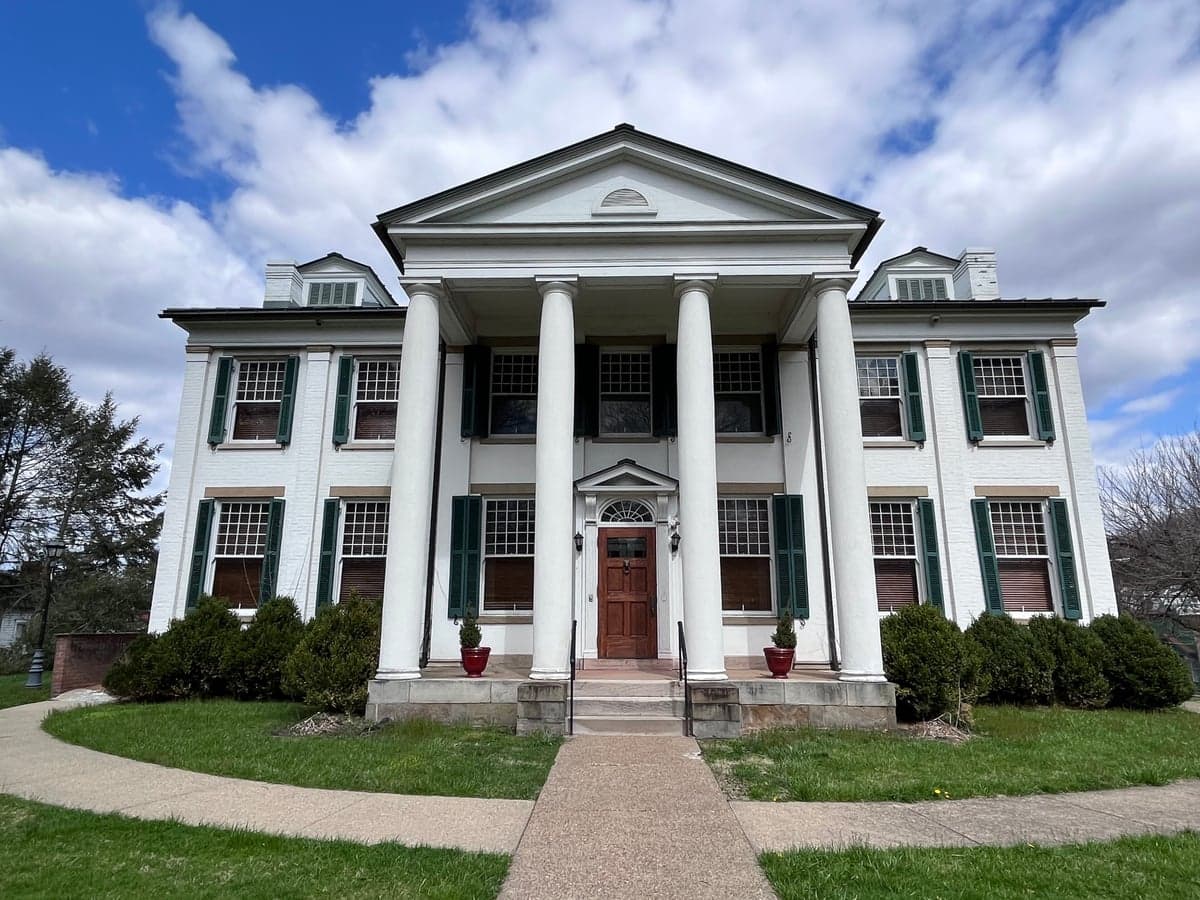
Photo: Wikipedia
Political ClimatePolitical Climate in Clarksburg, WV
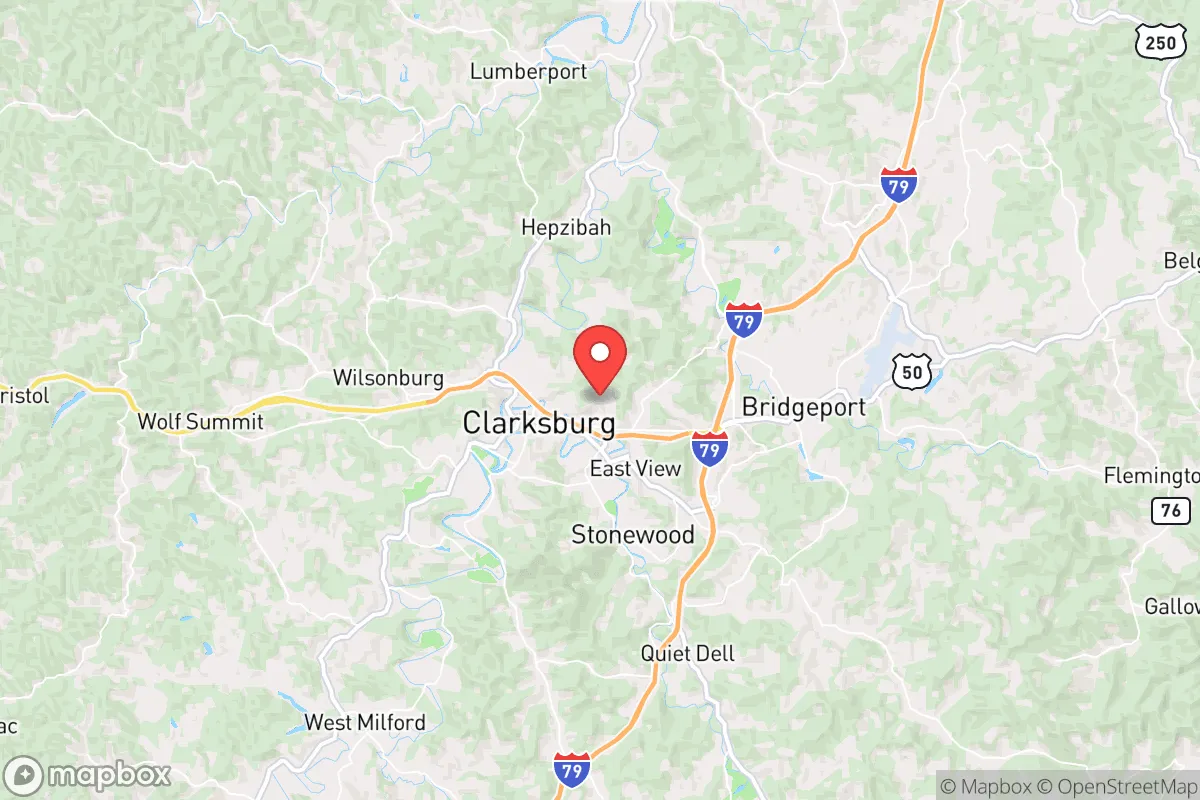
District shown is the primary district for this city’s centroid. Cities may span multiple districts.
Local Political AnalysisPolitical Analysis of Clarksburg, WV
Clarksburg, West Virginia, is about as reliably conservative as a place can get, and that’s been the case for as long as most folks around here can remember. The Cook PVI rating of R+20 tells you the math: this isn’t a swing town or a purple patch—it’s deep red territory where Republican candidates routinely win by double digits, and the local culture reflects that. If you’re looking at the political climate, the short version is that Clarksburg leans hard right, and while the national winds have shifted left in some places, this area has held its ground, and most residents intend to keep it that way.
How it compares
Drive thirty minutes south to Bridgeport, and you’ll find a similar conservative vibe, though it’s a bit more suburban and corporate. Head north to Morgantown, home of West Virginia University, and you’ll hit a stark contrast—that town has drifted noticeably left over the past decade, with younger, transient populations pushing progressive policies on housing and local ordinances. Clarksburg, by contrast, has stayed steady. The surrounding Harrison County is solidly Republican, and while Fairmont to the east has a few more moderate pockets, Clarksburg itself remains a bastion of traditional values. The difference isn’t subtle: in Morgantown, you’ll see more pride flags and talk of “equity” initiatives; in Clarksburg, the conversation is still about property rights, Second Amendment protections, and keeping government out of your business. That R+20 rating isn’t just a number—it’s a reflection of a community that votes its conscience and doesn’t apologize for it.
What this means for residents
For the people who live here, the political climate translates into a daily life that feels less burdened by the kind of government overreach you hear about in other parts of the country. There’s no aggressive push for zoning changes that would tell you what you can do with your own land, no heavy-handed tax hikes disguised as “sustainability” programs, and no real appetite for the kind of progressive social engineering that’s crept into places like Charleston or Morgantown. The local school board and city council meetings are still dominated by folks who believe in fiscal restraint and personal responsibility, not identity politics. That said, there’s a quiet concern among long-time residents that the state legislature in Charleston—while still conservative overall—has started flirting with policies that feel a little too cozy with federal mandates, especially around healthcare and education. The worry is that if we’re not careful, Clarksburg could see the same kind of slow erosion of local control that’s happened in other red areas. For now, though, the atmosphere is one of cautious stability: you can still run a small business without drowning in red tape, and your rights as a gun owner or a property owner aren’t under daily assault.
Culturally, Clarksburg stands out for its no-nonsense approach to community life. There’s no push for “sanctuary city” status, no talk of defunding the police, and the local churches and veterans’ organizations still set the social tone. The biggest policy distinction you’ll notice is the strong support for energy independence—coal and natural gas are still part of the local identity, and any talk of “green transitions” is met with skepticism because folks here remember what happened when the government picked winners and losers in the past. If you’re moving here, you’ll find neighbors who mind their own business but will show up when you need them, and a political culture that values freedom over convenience. The trajectory? As long as the state doesn’t cave to federal pressure, Clarksburg will likely stay the course—conservative, grounded, and wary of anyone promising to “fix” things that aren’t broken.

State Political ClimatePolitical Climate in West Virginia
State Political AnalysisPolitical Environment in the State
West Virginia is one of the most reliably Republican states in the nation, with a partisan lean of roughly +30 points in federal elections and a GOP trifecta controlling the governorship, both chambers of the legislature, and all three congressional seats. Over the past 20 years, the state has undergone a dramatic realignment: in 2000, it was a swing state that voted for George W. Bush by just 6 points, but by 2024, Donald Trump carried it by nearly 40 points. This shift reflects a wholesale abandonment of the Democratic Party by working-class voters, particularly in the coalfields and small towns, driven by cultural and economic grievances. The dominant coalition today is a mix of rural conservatives, energy-sector workers, and evangelical Christians, with the only remaining Democratic strongholds being a few university towns and the eastern panhandle’s commuter suburbs.
Urban vs. rural divide
The political map of West Virginia is starkly divided between a handful of small cities and the vast rural expanse. The state’s largest metro, Charleston, leans slightly Democratic due to its unionized government workers and service-sector population, but even Kanawha County has trended red, voting for Trump by 12 points in 2024. Morgantown, home to West Virginia University, is the most liberal pocket in the state, with Monongalia County voting Democratic in recent presidential cycles by narrow margins—a rarity driven by faculty, students, and healthcare professionals. Huntington and Wheeling are more mixed but still lean Republican, reflecting their blue-collar roots. The real action is in the rural counties: Mingo, Logan, and McDowell in the southern coalfields routinely deliver 75-80% of their votes to Republicans, a complete inversion from the 1990s when they were Democratic strongholds. The Eastern Panhandle (Berkeley, Jefferson, Morgan counties) is a unique battleground—it’s growing fast with exurbanites from DC and Maryland, and while it still votes Republican, it’s more moderate and less culturally conservative than the rest of the state. If you’re moving here, expect the political vibe to shift dramatically depending on whether you’re in a college town, a coal county, or a DC commuter suburb.
Policy environment
West Virginia’s policy environment is aggressively conservative, with a focus on low taxes, deregulation, and cultural traditionalism. The state has no personal income tax on Social Security benefits, and the corporate net income tax was slashed to 6.5% in 2023, with further cuts planned. Property taxes are among the lowest in the nation, capped by the state constitution at 1.5% of assessed value for most classes. Education policy is a flashpoint: the state passed a universal school choice law in 2021 (HB 2013) allowing Education Savings Accounts for all families, though it was initially watered down after a teacher strike. Governor Jim Justice signed a near-total abortion ban in 2022 with no exceptions for rape or incest, and the state has a “constitutional carry” gun law (permitless carry) since 2016. Healthcare is a mixed bag: the state expanded Medicaid under the ACA, but the legislature has resisted further expansion of government-run programs. Election laws are restrictive—voter ID is required, early voting is limited to 10 days, and no-excuse absentee voting was eliminated in 2021. For a conservative-leaning newcomer, the policy environment is largely welcoming, though the heavy reliance on federal funding (over 40% of the state budget) creates a tension between ideological purity and practical dependence on Washington.
Trajectory & freedom
West Virginia has been moving decisively toward greater personal freedom in most areas, but with some concerning exceptions. On the positive side, the state passed the Second Amendment Preservation Act in 2021, which prohibits state enforcement of any future federal gun bans—a clear assertion of state sovereignty. The Parental Bill of Rights (HB 4655) passed in 2022, requiring schools to notify parents of any curriculum changes related to sexuality or gender identity and to obtain consent before administering surveys. Medical freedom saw a win with the COVID-19 vaccine mandate ban (SB 334) in 2022, which prohibits employers from requiring vaccination as a condition of employment. Property rights were strengthened by the Property Protection Act (HB 4006) in 2023, which limits eminent domain for private economic development. However, there are red flags: the state’s tobacco 21 law and strict alcohol regulations (state-run liquor stores, no Sunday sales in many counties) show a lingering paternalism. More concerning is the 2023 data privacy bill (HB 3010), which gave the attorney general broad power to sue tech companies for alleged censorship—a well-intentioned move but one that could invite government overreach into private platforms. The overall trajectory is toward more liberty, but the state’s small-government ethos is sometimes undercut by a willingness to use state power for moral or cultural ends.
Civil unrest & political movements
West Virginia has a history of labor militancy that has morphed into a broader anti-establishment sentiment. The 2018 teacher strike shut down every school in the state for nine days, a massive show of force that won a 5% pay raise but also signaled a deep distrust of the legislature. More recently, the 2021 anti-mandate protests at the state capitol in Charleston drew thousands opposing COVID-19 restrictions, with many participants carrying Gadsden flags and “Don’t Tread on Me” signs. The Mountain State Constitution Party and local militia groups are active in rural counties, particularly around Berkeley Springs and Elkins, advocating for nullification of federal laws. Immigration politics are muted—the state has one of the smallest foreign-born populations in the country (under 2%)—but there’s a vocal anti-sanctuary movement that successfully pressured the legislature to pass a law in 2020 requiring local law enforcement to cooperate with ICE. Election integrity is a live issue: the 2020 audit of the presidential election in Kanawha County found no irregularities, but grassroots groups like the West Virginia Election Integrity Project continue to push for hand-counting of ballots and paper-only voting. A new resident won’t see daily protests, but the political temperature is high—expect heated debates at local diners and town halls, especially around energy policy and school curriculum.
Projection
Over the next 5-10 years, West Virginia will likely become even more Republican, but with growing internal fractures. The Eastern Panhandle is the wild card: as more DC-area refugees move in for lower taxes and more space, they’ll bring moderate, suburban Republicanism that could clash with the state’s more populist, rural base. The coalfield counties will continue to depopulate, losing political clout, while the Morgantown area will grow as a tech and healthcare hub, potentially creating a small liberal enclave. The state’s dependence on federal funding (especially for highways, Medicaid, and the Mountaintop Removal cleanup) means that any major federal budget cuts could trigger a fiscal crisis, forcing the legislature to either raise taxes or slash services—a test of its small-government principles. The biggest wildcard is the 2026 gubernatorial race, where the open seat (Justice is term-limited) could see a primary battle between a Trump-style populist and a more establishment conservative. For a newcomer, expect the state to remain a conservative stronghold, but with increasing tension between the old-school libertarian streak and a newer, more culturally interventionist strain of Republicanism.
For a conservative-leaning individual or family moving to West Virginia, the bottom line is this: you’ll find a state that largely respects your right to live as you see fit, with low taxes, strong gun rights, and a government that’s generally on your side. But don’t expect a libertarian paradise—the state still has a heavy hand in alcohol sales, education mandates, and a growing willingness to use government power to enforce cultural norms. The best places to land if you value maximum freedom are the rural counties like Pocahontas or Tucker, where local government is minimal and neighbors mind their own business. If you want a bit more community and services, Bridgeport or Martinsburg offer a good balance. Just be aware that the political winds are shifting, and the state’s future will be shaped by how it handles the tension between its libertarian roots and its new, more assertive conservatism.
* Values derived from national, state, county, city and local statistics and may differ in a specific area. Last updated: 2026-04-23T06:06:02.000Z
Narrative content on this page is AI-generated and may contain mistakes. Verify any details that matter before acting on them.
ReloMaps may earn a commission from affiliate links at no extra cost to you.

