Photo: Wikipedia
Quality of Life in Cleveland Heights, OH
A high quality of life with strong walkability, manageable living costs, healthy neighborhood signals, and solid amenity access.
What does Quality of Life tell us?
Quality of Life blends cost of living, nearby amenities, socioeconomic signals, and neighborhood character. City-level scores represent the whole municipality; individual neighborhoods can differ.
What does this tell us?
Quality of Life blends cost of living, nearby amenities, socioeconomic signals, and neighborhood character. City-level scores represent the whole municipality; individual neighborhoods can differ.
Cost of Living
16% below national average
The Real Cost of Living in Cleveland Heights, OH for 2026
| Tier | Individual | Family (4) |
|---|---|---|
| Survival | $18k | $34k |
| Comfortable | $34k | $50k |
| Luxury | $131k+ | $202k+ |
| Elite (Top 5%) | $176k+ | $273k+ |
143%
The Area Signal
A metric tracking the socioeconomic signals of the area.
Hobbies
Explore the areaGroceries
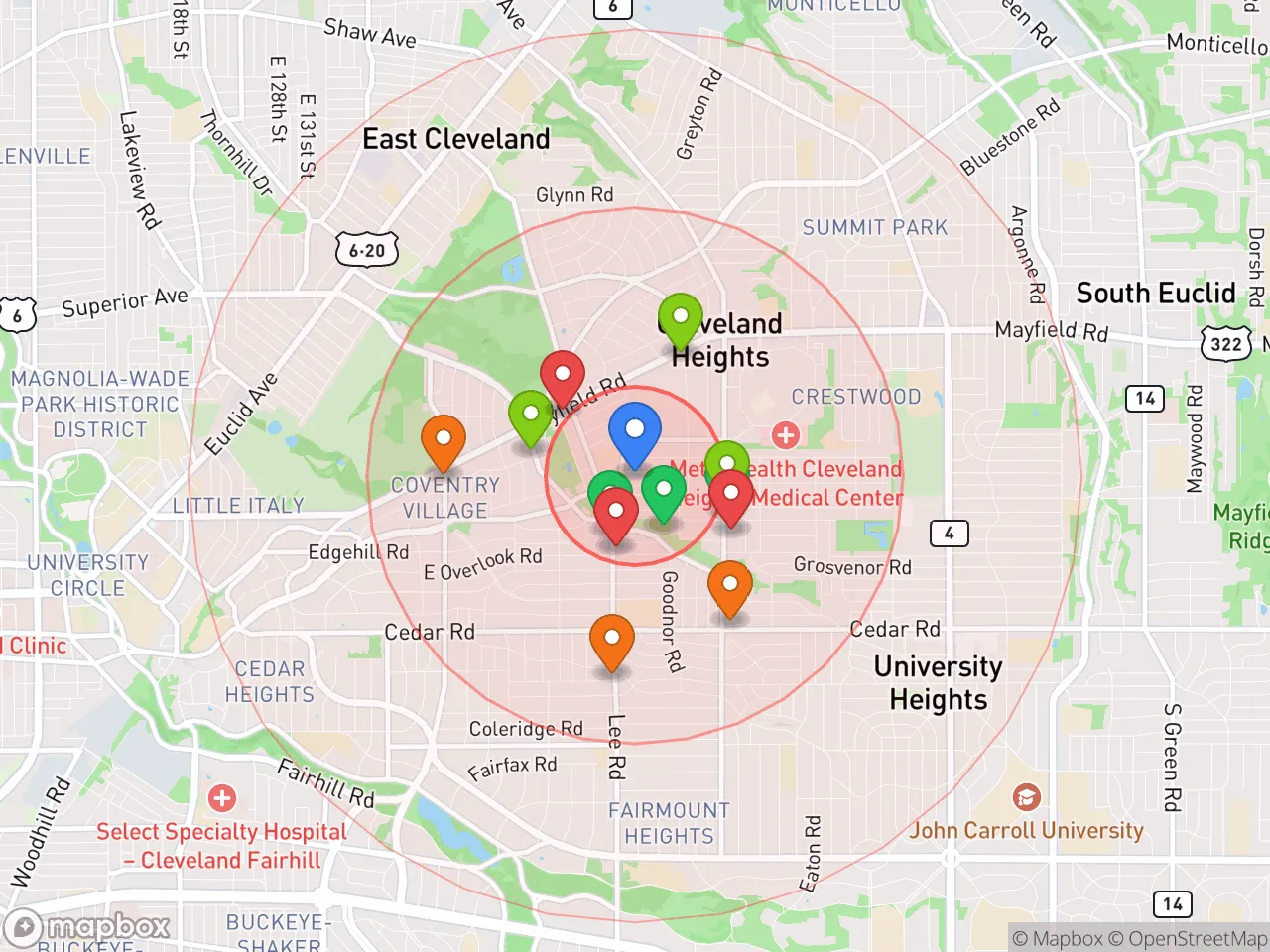
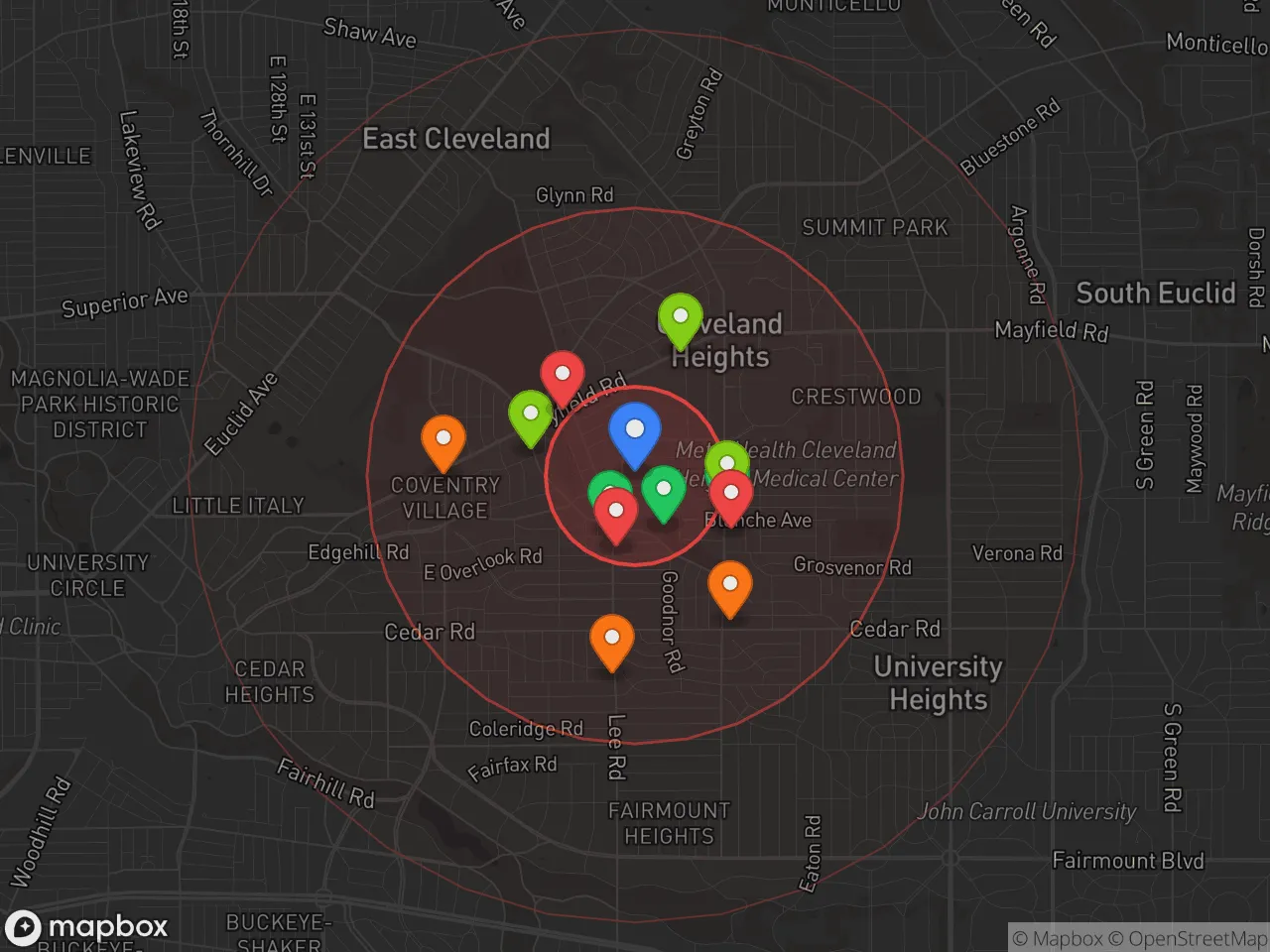
6 within 10 miles
Gas
20 within 10 miles
Hospital
20 within 20 miles
Airport
Pittsburgh International Airport
Post Office
USPS — Cleveland Heights, OH
Critical Amenities
Quality-of-Life Analysis
Cleveland Heights offers a distinctly affordable entry point into the Cleveland metro area’s inner-ring suburbs, combining a cost-of-living index of 84 (16% below the national average) with a median home value of $176,700 and median rent of $1,139. This pricing places it well below neighboring Shaker Heights (median home value ~$250,000) and University Heights (~$220,000), making it a practical choice for first-time homebuyers, renters, and young professionals who want walkable streets and historic architecture without the premium attached to more exclusive eastern suburbs. The community draws a notably diverse mix: long-standing families, Case Western Reserve University faculty and staff, and creative-class workers who commute roughly 22 minutes to downtown Cleveland or University Circle.
Cost of living, housing, and affordability compared to nearby suburbs
Housing in Cleveland Heights is the primary driver of its low cost of living. The median home value of $176,700 is roughly 30% below the Cuyahoga County median of $250,000, while the median rent of $1,139 undercuts the county average of $1,350. Compared to Shaker Heights, where the median home value exceeds $300,000 in some neighborhoods, Cleveland Heights offers similar pre-war housing stock—Colonial Revivals, Tudors, and Craftsman bungalows—at a fraction of the price. Property taxes are moderate for Ohio (effective rate around 2.1%), though buyers should note that older homes often require deferred maintenance. Renters benefit from a stable supply of duplexes and apartment buildings along Cedar Road and Mayfield Road, keeping two-bedroom units typically under $1,200. The average commute of 22 minutes is shorter than the national average of 27 minutes, aided by direct access to I-90 and the Red Line rapid transit at the Cedar-University station.
What daily life is like for families, walkability, and school options
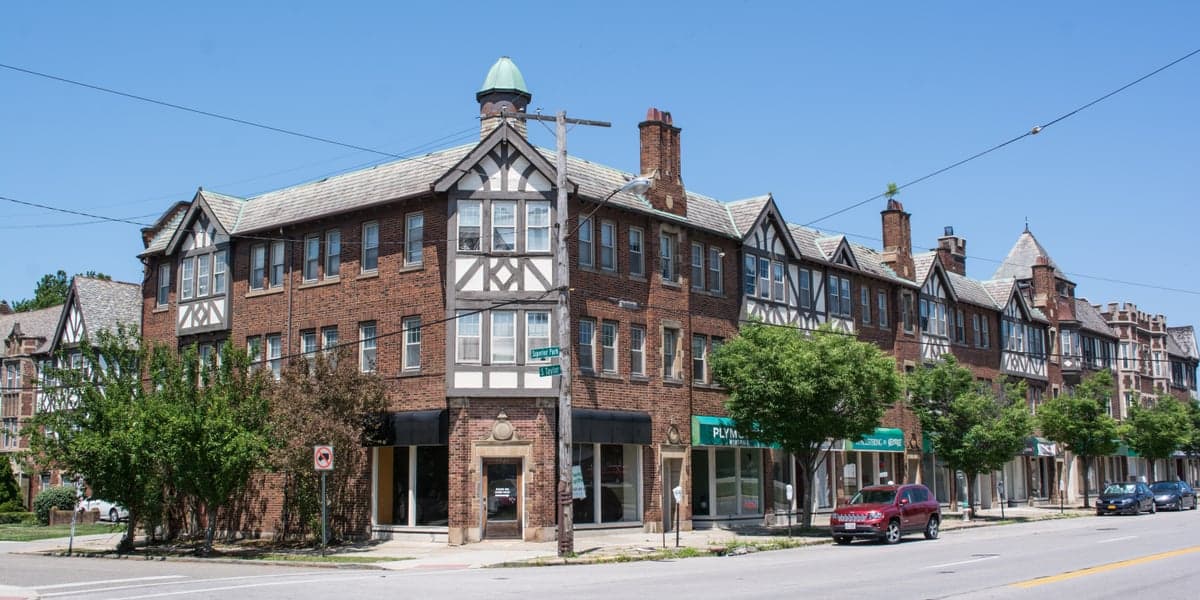
Daily life in Cleveland Heights centers on its walkable commercial nodes—Cedar-Lee, Coventry Village, and the Cedar-Fairmount district—where residents find independent bookstores, coffee shops, and ethnic restaurants within a 10-minute walk of many homes. The city’s walk score of 63 and bike score of 48 are high for Ohio, and the 2,500-acre Cleveland Metroparks system (including the nearby Doan Brook Trail) provides quick access to hiking and lakefront recreation. The Cleveland Heights-University Heights City School District serves roughly 5,000 students, with Cleveland Heights High School offering an International Baccalaureate program and a graduation rate of 82%. For families seeking alternatives, nearby private options include the Hathaway Brown School (K–12, tuition ~$30,000) and University School (all-boys, K–12, tuition ~$28,000). The city’s recreation centers, including the Cleveland Heights Community Center and Cain Park (a 22-acre outdoor arts venue), anchor a family-oriented rhythm of farmers’ markets, summer concerts, and youth sports leagues.
This combination of affordability, walkability, and cultural density makes Cleveland Heights a strong fit for renters and buyers who prioritize urban amenities over suburban sprawl. It works especially well for young professionals commuting to University Circle or downtown Cleveland, families seeking diverse public schools or proximity to private institutions, and empty-nesters drawn to historic homes and a lively arts scene. Those seeking new construction, large lots, or a low-tax environment should look farther out in Geauga or Medina counties; but for anyone wanting an established, walkable community with a cost of living 16% below the national average, Cleveland Heights delivers a rare value proposition in the Cleveland market.

Crime in Cleveland Heights, OH
Generally safer than 70% of comparable U.S. locations.
Violent CrimeViolent Crime Analysis
Property CrimeProperty Crime Analysis
Crime Analysis
Cleveland Heights presents a crime profile that warrants careful consideration for potential residents, particularly given its location within a large metro area influenced by progressive judicial policies. The city's violent crime rate stands at 242.2 incidents per 100,000 residents, while property crime occurs at a rate of 1,085.4 per 100,000. These figures place Cleveland Heights in a challenging position relative to national averages, and the broader context of Cuyahoga County's justice system adds a layer of complexity for those evaluating safety.
Crime in context
When compared to national benchmarks, Cleveland Heights' violent crime rate is roughly 30% lower than the U.S. average of approximately 370 per 100,000, which may appear encouraging at first glance. However, the property crime rate is notably higher than the national median of around 1,000 per 100,000. More critically, these statistics must be weighed against the reality that Cuyahoga County, including Cleveland Heights, operates under a justice system shaped by progressive prosecutors and judges. This ideological approach, while sympathetic to offender rehabilitation, has been linked to reduced incarceration rates and more lenient sentencing, which can result in repeat offenders returning to the streets more quickly. For residents, this means that even when crimes are reported, the likelihood of sustained consequences for perpetrators is diminished, potentially undermining long-term safety.
What residents experience
Daily life in Cleveland Heights involves navigating a community where property crimes like theft, burglary, and vehicle break-ins are the most common concerns. The elevated property crime rate suggests that residents should take proactive measures such as securing homes, using surveillance systems, and avoiding leaving valuables in cars. Violent crime, while less frequent, does occur and includes incidents of assault and robbery that can affect public perception of safety, particularly in certain commercial corridors or near transit hubs. The progressive judicial environment in the region means that offenders arrested for these crimes may face reduced penalties or diversion programs, which can erode trust in the system's ability to protect victims and deter future offenses. This dynamic creates a situation where residents must be more vigilant than in communities with stricter law enforcement and sentencing practices.
Neighborhood-level variation within Cleveland Heights is significant, with areas closer to the Coventry Village and Cedar-Lee districts generally experiencing higher foot traffic and more visible police presence, which can deter some criminal activity. Conversely, quieter residential streets near the city's borders with East Cleveland and Cleveland proper may see higher rates of property crime and occasional violent incidents. Prospective residents should research specific block-level data and consider consulting local crime maps or speaking with neighborhood associations. The combination of above-average property crime and a progressive justice system that may not fully prioritize public safety makes it essential for newcomers to approach Cleveland Heights with a clear understanding of the risks and a commitment to personal security measures.
* Values derived from national, state, county, city and local statistics and may differ in a specific area. Last updated: 2026-04-21T18:21:56.000Z
Narrative content on this page is AI-generated and may contain mistakes. Verify any details that matter before acting on them.
ReloMaps may earn a commission from affiliate links at no extra cost to you.

