Photo: Wikipedia
Find The Best Places To Live
in Cleveland Heights
PRO TIP! You can paste a Zillow or Redfin link to get info on that property.
What It's Like Living in Cleveland Heights, OH
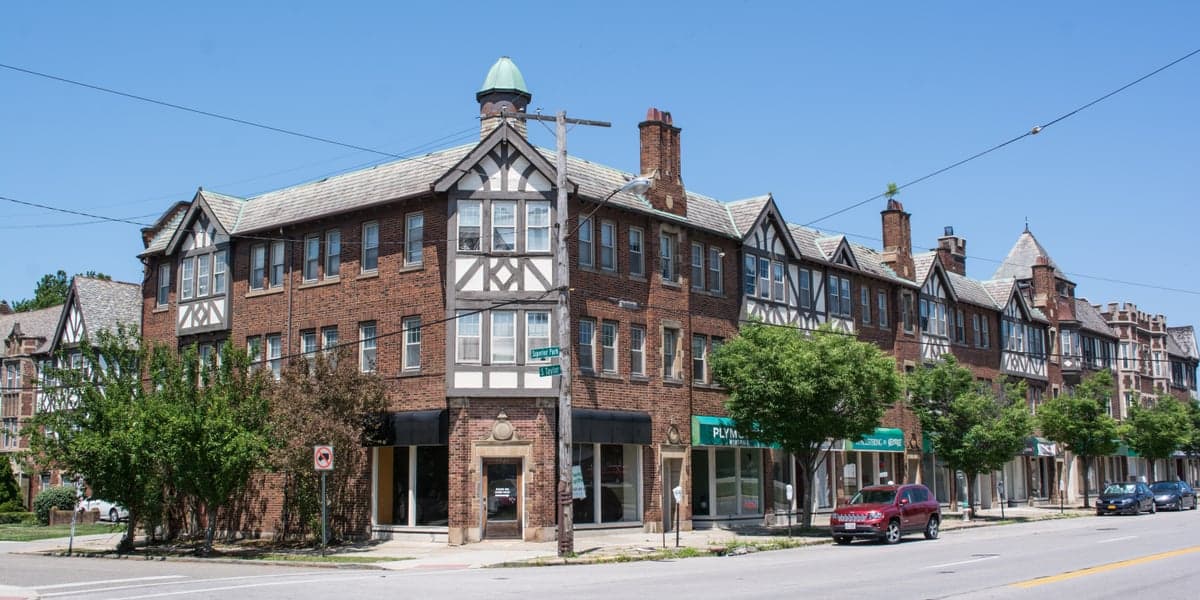
Cleveland Heights has a way of surprising people. It’s not a suburb that tries to impress you with strip malls or manicured lawns. Instead, it feels like an old, established city neighborhood that happens to have its own school system and a mayor. With a population just under 45,000 and a median age of 36.4, it attracts a mix of young professionals, empty-nesters, and families who want walkable streets, historic homes, and a social scene that doesn’t revolve around a golf course. The vibe is intellectual, a little artsy, and genuinely diverse — not in a brochure way, but in the way your neighbors actually come from different backgrounds and income levels.
The Daily Rhythm: Coffee Shops, Porch Life, and a Real Commute
Most mornings in Cleveland Heights start with a line at Phoenix Coffee on Coventry or the Brewed Awakening on Lee Road. People walk their dogs past century-old homes with wide front porches — and they actually use those porches. The average commute is just over 22 minutes, which is realistic for driving into downtown Cleveland or University Circle. Traffic is rarely a headache except on Cedar Road near the border with University Heights during school drop-off. The area is dense enough that you can run errands on foot: groceries at Dave’s Market, a book at Loganberry Books, a haircut at a local barbershop. Weekends often mean a trip to the Cleveland Heights Farmers Market (May through October) on South Taylor Road, where the crowd is as much about socializing as shopping.
One thing that stands out: people here are outside a lot. The city has over 20 parks, including the sprawling Cain Park, which hosts concerts and an arts festival in the summer. In winter, the rhythm slows down — snow removal is decent but not instant, and you’ll learn to love a good fireplace. The weather is classic Northeast Ohio: gray from November through March, with real snow and lake effect. But when spring hits, the whole place wakes up.
Who Fits In — and Who Doesn’t
Cleveland Heights works best for people who value character over convenience. The median home value is around $177,000, which is strikingly low for a community where 57.5% of adults hold a college degree. That means you can buy a solid 1920s colonial or a Craftsman bungalow for what would get you a one-bedroom condo in many coastal suburbs. The median household income is $72,302 — comfortable but not wealthy. You’ll find professors from Case Western, nurses from the Cleveland Clinic, artists, and small business owners. It’s not a place for someone who wants a brand-new McMansion or a gated community. It’s for people who don’t mind that the kitchen needs updating because the neighborhood has a real identity.
For families, the public schools are a major draw — and a major point of debate. The Cleveland Heights-University Heights City School District is diverse and offers strong programs, but it faces the same challenges as many inner-ring suburbs: aging facilities and a tax base that doesn’t always keep up. Many parents are deeply involved, and the high school’s theater and music programs are excellent. Sports are less dominant here than in neighboring Shaker Heights or Beachwood; the big Friday night football energy is more muted. That said, Cleveland Heights High School has a competitive soccer program and a strong track team, and the community shows up for the annual rivalry game against Shaker.
What’s There to Do: Music, Food, and the Quirks of Coventry
The entertainment scene punches well above the city’s weight. The Grog Shop on Coventry is a legendary indie music venue — bands like The Black Keys and The National played there before they were famous. On any given night, you can catch a punk show, a DJ set, or a local singer-songwriter. A few doors down, Nighttown offers jazz and a proper dinner menu. For food, you’ve got Tommy’s, a Cleveland institution known for its milkshakes and vegetarian-friendly menu that’s been around since 1972. Melt Bar & Grilled started here (the original location is on Lee Road) and still draws crowds for its insane grilled cheese creations. Coventry Village itself is a walkable strip of vintage shops, record stores, and ethnic restaurants — it’s the closest thing to a college-town vibe you’ll find in a suburb.
Festivals are a big deal. Cain Park Arts Festival brings in juried artists from across the region. The Coventry Street Fair is a late-summer block party with live music and local vendors. And the Heights Music Hop turns Lee Road into a multi-venue concert route. If you’re into pro sports, downtown Cleveland is 15 minutes away — Cavs, Guardians, and Browns games are easy to get to, but they don’t define local identity the way they do in the city proper.
Pros and Cons of Living Here
The honest trade-offs are worth laying out. On the plus side: affordable historic housing with real character, a walkable urban feel with multiple commercial districts, and a genuinely diverse population that’s rare in the suburbs. The cost of living index is 84 — well below the national average — so your money goes further. The violent crime rate of 242.2 per 100,000 is higher than the national average, though most of it is concentrated in specific areas and property crime is the bigger day-to-day concern. Longtime residents will tell you to lock your car doors and not leave packages on the porch overnight.
On the downside: property taxes are high (Ohio’s system leans heavily on real estate taxes for schools), and the housing stock requires maintenance — old homes mean old roofs, old furnaces, and old plumbing. The city’s finances have been tight for years, and you’ll notice it in potholes and slower city services. Also, if you want a big yard or total quiet, this isn’t it. You’ll hear neighbors, sirens, and the occasional late-night argument on Coventry. But for the right person — someone who wants a real community with a pulse, not a gated bubble — Cleveland Heights feels less like a compromise and more like a find.

Similar towns to Cleveland Heights
* Values derived from national, state, county, city and local statistics and may differ in a specific area. Last updated: 2026-04-21T18:21:56.000Z
Narrative content on this page is AI-generated and may contain mistakes. Verify any details that matter before acting on them.
ReloMaps may earn a commission from affiliate links at no extra cost to you.

