Photo: Wikipedia
Demographics of Cleveland, TN
Affluence Level in Cleveland, TN
A middle-class area roughly in line with national averages across income, home values, education, and employment.
People of Cleveland, TN
The people of Cleveland, Tennessee, today form a predominantly white (74.5%) and native-born community of 48,185, with a notable and growing Hispanic minority (11.1%) and smaller Black (7.6%), Indian-subcontinent (1.2%), and East/Southeast Asian (1.0%) populations. The city’s character is shaped by its role as a regional manufacturing and logistics hub, a college town (Lee University and Cleveland State Community College), and a culturally conservative anchor of Bradley County. With a foreign-born share of just 4.7% and a college attainment rate of 31.1%, Cleveland is less diverse and less educated than the national average, but its population is slowly diversifying through Hispanic and Indian-subcontinent immigration.
How the city was settled and grew
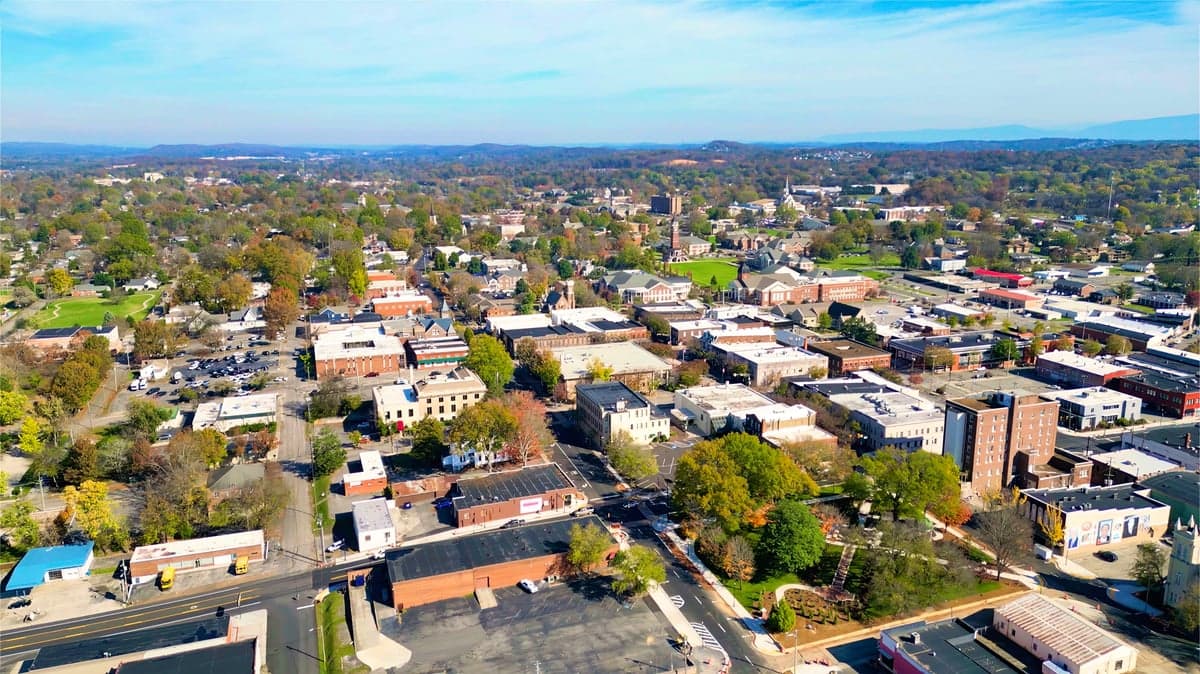
Cleveland was founded in 1837 as the seat of Bradley County, named after the Cherokee leader Colonel Cleveland, and its early population was overwhelmingly white settlers of Scots-Irish and English descent moving west from North Carolina and Virginia. The city’s growth was driven by the arrival of the East Tennessee and Georgia Railroad in the 1850s, which turned Cleveland into a cotton and timber shipping point. The historic Downtown Cleveland district, centered around the Bradley County Courthouse, was built by these early merchant and farming families. A second wave came after the Civil War, when freed Black families settled in the St. Elmo and Ocoee neighborhoods (the latter now part of the city’s east side), establishing churches and schools that remain community anchors. The early 20th century brought a third wave: white Appalachian migrants from surrounding rural counties, drawn by textile mills and the Hardwick Stove Company, who populated the North Cleveland and South Lee neighborhoods with modest worker cottages. By 1950, Cleveland’s population was nearly 100% white and native-born, with a small Black minority concentrated in St. Elmo.
Modern era (post-1965)
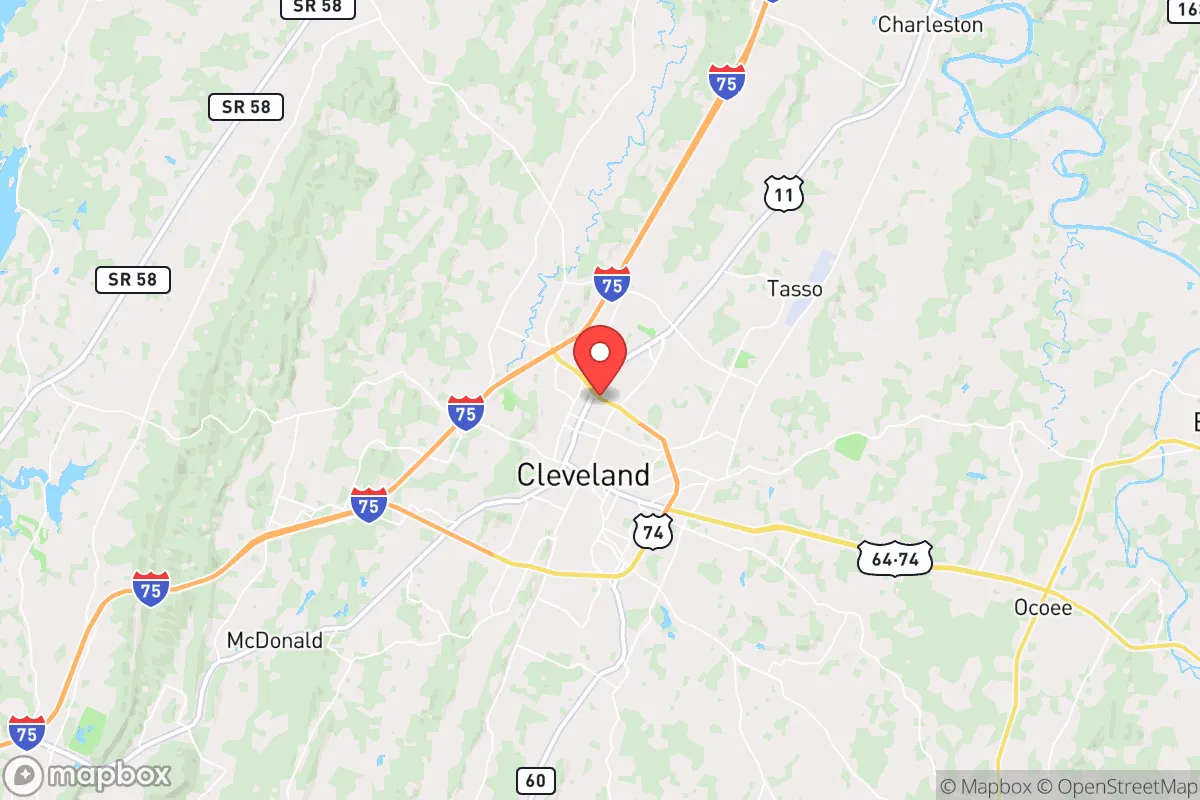
The 1965 Hart-Cellar Act had a limited immediate effect on Cleveland, but the city’s manufacturing base—especially Whirlpool (opened 1972) and Olin Corporation—began attracting Hispanic workers from Texas and Mexico in the 1990s. This wave settled primarily in the Spring Place and Waterville areas on the city’s south and west sides, where affordable housing and proximity to industrial parks made entry-level jobs accessible. The Hispanic share grew from under 2% in 1990 to 11.1% by 2024, making it the fastest-growing demographic. The Indian-subcontinent community (1.2%) is a more recent arrival, largely professionals and students tied to Lee University and the medical sector; they concentrate in the Blue Springs and University Heights neighborhoods near the campus. East/Southeast Asian residents (1.0%) are a smaller, older group, many connected to the region’s furniture and textile supply chains, and are scattered rather than clustered. The Black population (7.6%) has remained stable since the 1970s, with St. Elmo still its historic core, though some families have moved to newer subdivisions in East Cleveland. White residents, while still the majority, have suburbanized into the North Cleveland and Mouse Creek areas, creating a pattern where older, denser neighborhoods are more diverse and newer subdivisions are more homogenous.
The future
Cleveland’s population is heading toward moderate diversification, but not rapid change. The Hispanic share is likely to continue growing, driven by family reunification and continued manufacturing employment, potentially reaching 15-18% by 2040. The Indian-subcontinent community, while small, is growing faster than the East/Southeast Asian group due to Lee University’s international recruitment and local hospital hiring. The white share will decline gradually, but Cleveland is not experiencing the rapid ethnic turnover seen in larger Southern cities. The city is tribalizing into distinct enclaves rather than homogenizing: Hispanic families concentrate in Spring Place and Waterville, Indian families in Blue Springs, and white families in North Cleveland and Mouse Creek. St. Elmo remains a stable Black neighborhood but is not growing. The foreign-born share (4.7%) is low and will remain below 10% for the foreseeable future, as Cleveland lacks the high-skilled job base or refugee resettlement programs that drive larger immigrant inflows in Chattanooga or Nashville.
For someone moving in now, Cleveland is becoming a more layered community—still predominantly white and native-born, but with a visible Hispanic presence and small, professional Indian and Asian enclaves. The city’s conservative political culture and family-oriented neighborhoods remain intact, but newcomers should expect gradual demographic change in specific districts rather than a wholesale transformation. The practical implication: neighborhoods like Spring Place and Blue Springs offer growing ethnic infrastructure (groceries, churches, small businesses), while North Cleveland and Mouse Creek remain overwhelmingly white and suburban. The city is not becoming a melting pot, but a collection of distinct, stable enclaves.

* Values derived from national, state, county, city and local statistics and may differ in a specific area. Last updated: 2026-05-01T08:07:25.000Z
Narrative content on this page is AI-generated and may contain mistakes. Verify any details that matter before acting on them.
ReloMaps may earn a commission from affiliate links at no extra cost to you.

