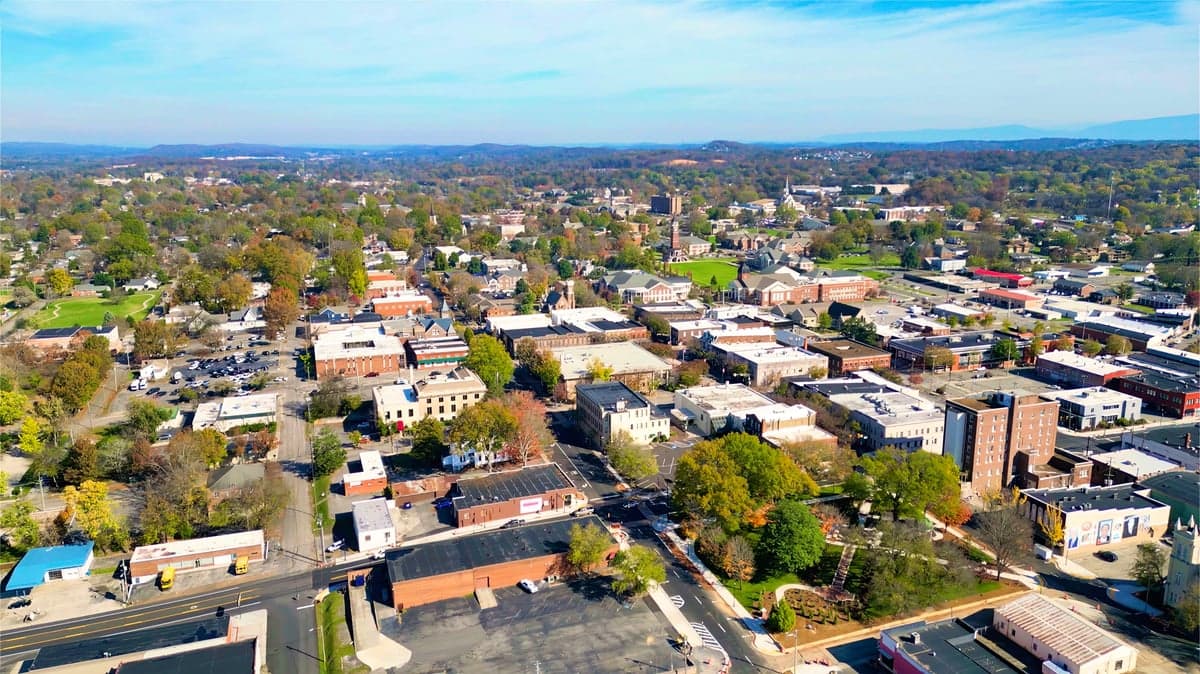
Photo: Wikipedia
Political ClimatePolitical Climate in Cleveland, TN
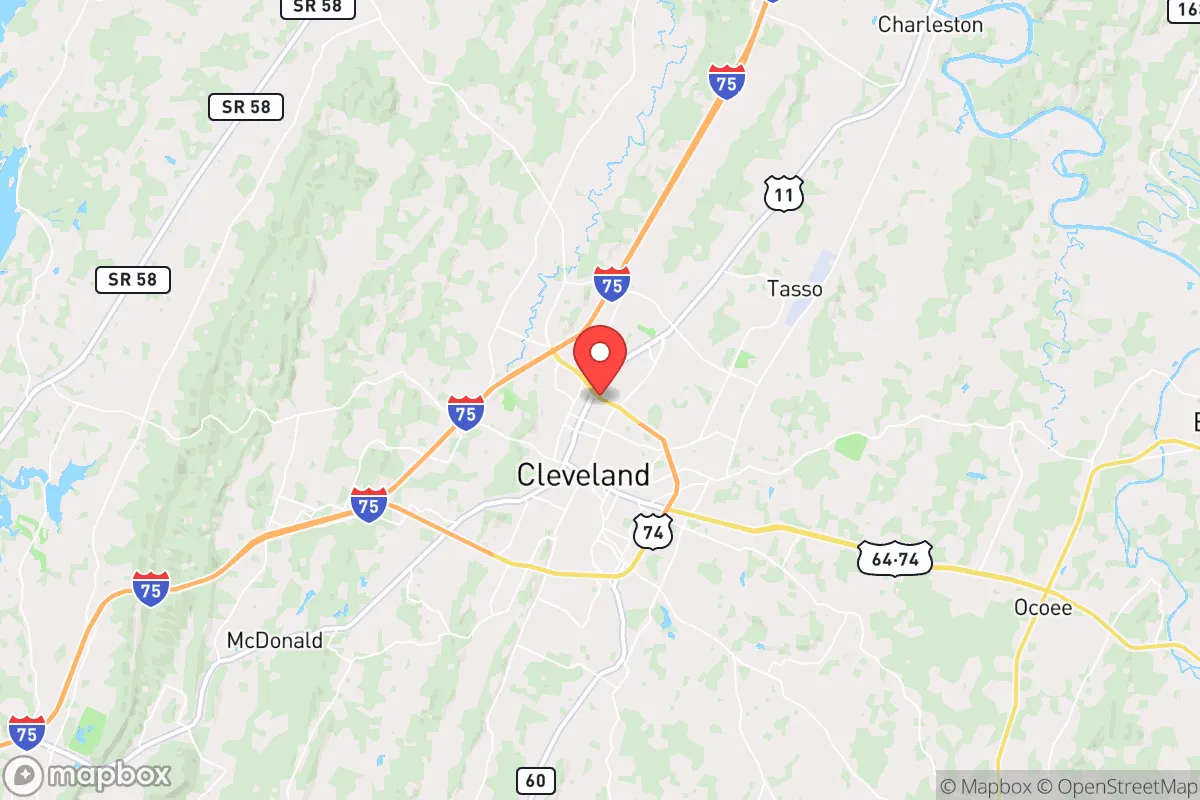
District shown is the primary district for this city’s centroid. Cities may span multiple districts.
Local Political AnalysisPolitical Analysis of Cleveland, TN
Cleveland, Tennessee, sits solidly in the conservative column, with a Cook PVI of R+18 that reflects decades of consistent Republican voting. The city and surrounding Bradley County have long been a stronghold for traditional values, with local elections often decided in the GOP primary. That said, you can feel the political winds shifting a bit, especially as Chattanooga’s influence creeps northward and new residents bring different perspectives. While the area still leans heavily red, the margin of victory in some local races has tightened over the past few cycles, and that’s something folks who value limited government and personal freedoms are keeping a close eye on.
How it compares
Compared to nearby cities, Cleveland is a bastion of conservative stability. Drive 30 minutes south to Chattanooga, and you’ll find a much more progressive-leaning urban core, with Hamilton County trending purple in recent elections. Head east to Athens or west to Dayton, and you’ll see similar red hues, but Cleveland’s R+18 rating puts it squarely in the “deep red” category for this region. The contrast is starkest with Chattanooga’s city council, which has pushed zoning changes and diversity initiatives that would never fly here. Even within Bradley County, the city of Cleveland itself is slightly more moderate than the rural precincts, but the difference is marginal. For someone moving from a blue state, this area feels like a breath of fresh air—where the Second Amendment is respected, taxes are low, and the government mostly stays out of your business.
What this means for residents
For residents, the political climate translates into a daily life that prioritizes personal responsibility over government mandates. You won’t see mask mandates or business shutdowns like you did in Nashville or Knoxville during the pandemic—local leaders here pushed back hard. Property taxes remain among the lowest in the state, and there’s no city income tax. The school board and county commission are dominated by conservatives who focus on fiscal restraint and parental rights in education. That said, the recent influx of remote workers from California and New York has brought some tension. You’ll hear folks grumbling about new housing developments and the occasional progressive candidate popping up in local races. The long-term concern is that if growth continues unchecked, the political balance could tip, bringing the kind of overreach we see in places like Chattanooga or even Nashville.
Culturally, Cleveland still feels like a small town where neighbors know each other and church attendance is high. The local paper’s letters to the editor are full of folks defending traditional marriage and opposing any hint of critical race theory in schools. The biggest policy distinction is the area’s strong support for school choice and vocational training—Lee University and Cleveland State Community College are major employers, and the community values practical education over ideological indoctrination. If you’re looking for a place where the government respects your rights and doesn’t try to micromanage your life, Cleveland is still that place. But keep an eye on the city council elections in 2026—that’s where the real battle for the soul of this town will play out. For now, it’s a solid conservative haven, but nothing stays the same forever.

State Political ClimatePolitical Climate in Tennessee
State Political AnalysisPolitical Environment in the State
Tennessee has been a reliably red state for decades, but the political climate here is more nuanced than a simple party label suggests. The state leans solidly Republican at the federal and state level, with Donald Trump winning by 30 points in 2024, but the real story is the ongoing tension between a deeply conservative, rural base and rapidly growing, moderate-to-liberal urban centers like Nashville and Memphis. Over the last 10-20 years, the state has shifted rightward on cultural and economic issues, driven by an influx of conservative-leaning migrants from blue states and a legislature that has become increasingly assertive in preempting local progressive ordinances.
Urban vs. rural divide
The political map of Tennessee is a classic study in contrast. The major population centers—Nashville (Davidson County), Memphis (Shelby County), and to a lesser extent Chattanooga (Hamilton County) and Knoxville (Knox County)—are the blue dots in a sea of red. Nashville and Memphis consistently vote Democratic by wide margins, with Shelby County delivering over 60% for Biden in 2020. However, the real political muscle is in the suburbs and exurbs. Williamson County (south of Nashville) is one of the wealthiest and most reliably Republican counties in the nation, voting +40 points for Trump. Rutherford County (Murfreesboro) and Wilson County (Lebanon) are also deep red, fueled by families fleeing Nashville's rising taxes and progressive policies. The rural counties in Middle and East Tennessee—like Grundy, Van Buren, and Hancock—are among the most conservative in the country, often voting 80%+ Republican. The divide isn't just about party; it's about worldview. Urban voters prioritize transit, density, and social programs, while rural and suburban voters prioritize low taxes, gun rights, and local control. The legislature, dominated by rural and suburban Republicans, has repeatedly overruled Nashville and Memphis on issues like sanctuary city bans, mask mandates, and tax hikes.
Policy environment
Tennessee's policy environment is a model for conservative governance. There is no state income tax on wages, a major draw for relocators from high-tax states like California and New York. The sales tax is high (9.55% average combined rate), but the overall tax burden is low. The regulatory posture is business-friendly, with right-to-work laws and minimal red tape. On education, the state has embraced school choice aggressively: the Education Savings Account (ESA) program, expanded in 2025, allows families to use state funds for private school tuition, homeschooling, or tutoring. This is a huge win for parents who want control over their kids' education. Healthcare is a mixed bag; Tennessee did not expand Medicaid under the ACA, keeping costs lower for the state but leaving a coverage gap. The legislature has also passed laws restricting abortion to the point of a near-total ban (trigger law after Dobbs), with no exceptions for rape or incest—a stance that aligns with the conservative base but has caused some suburban women to shift toward Democrats. Election laws are secure: voter ID is required, and the state has purged inactive voter rolls. There is no early voting on Sundays, which some see as a safeguard against "souls to the polls" drives.
Trajectory & freedom
Tennessee is becoming more free in many respects, particularly on Second Amendment and parental rights. In 2021, the state passed constitutional carry (permitless carry of handguns), a major expansion of gun rights. In 2023, the Tennessee Parental Rights in Education Act (often called the "Don't Say Gay" bill) was signed, prohibiting classroom instruction on sexual orientation and gender identity in K-8. This was a direct response to progressive overreach in school districts like Metro Nashville Public Schools. The state also passed a law banning transgender athletes from female sports, and in 2024, the legislature passed a bill allowing teachers to carry firearms on campus. However, there are concerning trends. The Tennessee Valley Authority (TVA) has been pushing for more federal control over energy policy, and the state's reliance on federal highway funds creates leverage for Washington. The biggest red flag is the growth of local government overreach in Nashville and Memphis, which the state legislature has had to preempt repeatedly. The state's preemption law (blocking cities from passing stricter gun laws or labor ordinances) is a good check on local tyranny, but it's a constant battle.
Civil unrest & political movements
Tennessee has seen its share of political flashpoints. The 2023 Nashville Covenant School shooting sparked massive protests at the state capitol, with thousands of activists demanding gun control. The legislature responded by passing a bill to arm teachers, not by restricting rights—a clear signal of where the state stands. The Tennessee Three (state representatives Justin Jones, Justin Pearson, and Gloria Johnson) were expelled for protesting on the House floor, then reinstated, becoming national symbols of progressive resistance. This has energized the left in Nashville and Memphis, but it has also hardened the resolve of rural conservatives. Immigration politics are relatively quiet, but the state has passed a law requiring local law enforcement to cooperate with ICE, and there is a growing movement to restrict sanctuary policies. There is no serious secessionist movement, but there is a strong nullification sentiment among some rural counties regarding federal gun laws. The Tennessee State Guard has been revived as a volunteer militia, which some see as a hedge against federal overreach. Election integrity remains a hot topic; the state's voter ID law is strict, and there have been no major fraud scandals, but the left continues to push for mail-in ballot expansion.
Projection
Over the next 5-10 years, Tennessee will likely become more conservative, not less. The in-migration from blue states is actually reinforcing the red lean, as many relocators are conservative families and remote workers fleeing high taxes and progressive policies in places like California, Illinois, and New York. The fastest-growing counties—Williamson, Rutherford, and Wilson—are all deep red. The urban centers will continue to drift left, but the legislature will keep preempting their progressive experiments. The biggest wild card is the Nashville metro area, which is growing so fast that it could eventually flip the state if the suburban ring moderates. But for now, the suburbs are holding firm. Expect more school choice expansion, further tax cuts, and continued resistance to federal overreach on environmental and gun issues. The state's constitutional carry law is unlikely to be rolled back, and parental rights will remain a priority. The biggest threat to freedom is the potential for federal mandates on energy or healthcare that could force the state's hand, but Tennessee's legal team is already preparing to fight any such overreach.
Bottom line for a new resident: If you're moving to Tennessee for freedom, you're making a good bet. The state respects your right to keep and bear arms, keep more of your paycheck, and raise your kids without government interference. Just be aware that the urban centers are a different world—if you settle in Nashville or Memphis, you'll be living in a blue bubble with higher taxes and more progressive policies. Stick to the suburbs or rural areas, and you'll find a community that shares your values. The political climate here is stable, conservative, and likely to stay that way for the foreseeable future.
* Values derived from national, state, county, city and local statistics and may differ in a specific area. Last updated: 2026-05-01T08:07:25.000Z
Narrative content on this page is AI-generated and may contain mistakes. Verify any details that matter before acting on them.
ReloMaps may earn a commission from affiliate links at no extra cost to you.

