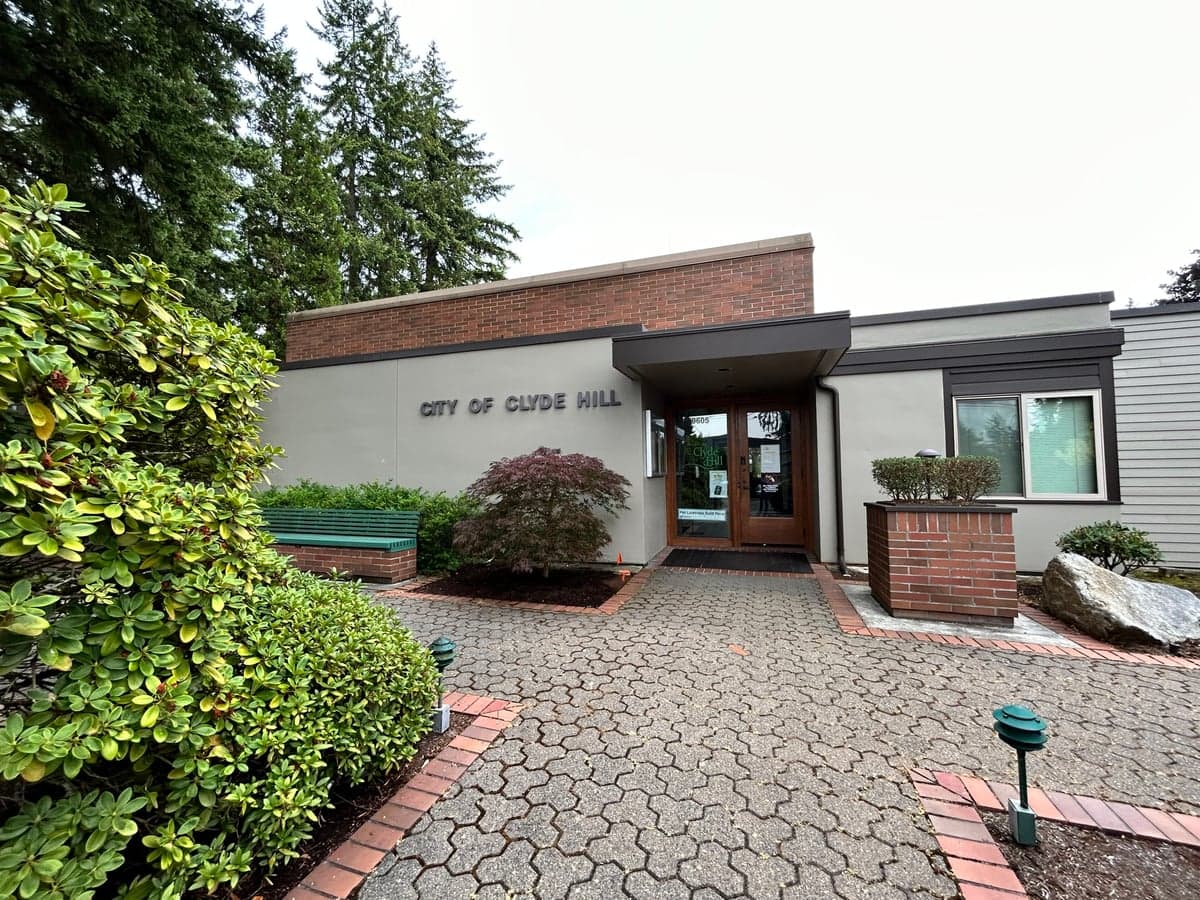
Photo: Wikipedia
Demographics of Clyde Hill, WA
Affluence Level in Clyde Hill, WA
An elite concentration of wealth — high incomes, strong home values, advanced degrees, and minimal poverty signal a top-tier socioeconomic profile.
Census doesn't track above $250K
People of Clyde Hill, WA
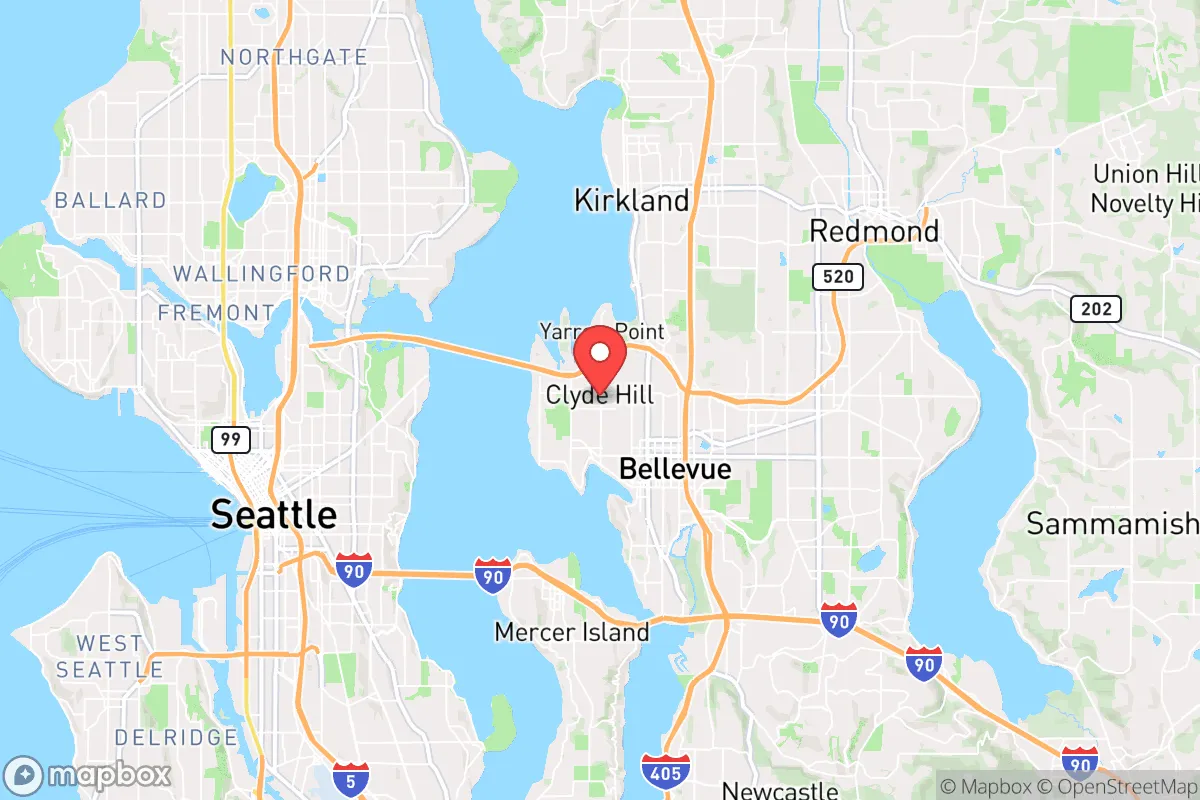
Clyde Hill, Washington, is a small, affluent city of 3,104 residents on the Eastside of Lake Washington, defined by its high concentration of college-educated professionals (77.7%) and a distinctive demographic profile that blends a historic white majority with a significant and growing East/Southeast Asian population (23.6%) and a notable Indian-subcontinent community (9.9%). The city is overwhelmingly residential, with no commercial core, and its character is shaped by large, custom-built homes on spacious lots, a legacy of its mid-century development as an exclusive suburb for Seattle's business elite. Today, Clyde Hill is a magnet for tech executives and entrepreneurs, particularly those from nearby Microsoft and Amazon, who value its privacy, top-rated Bellevue School District schools, and proximity to the region's job centers.
How the city was settled and grew
Clyde Hill was not a pioneer settlement or a farming community. Its history as a populated place begins in the early 20th century, when wealthy Seattle families began building summer estates on the wooded hillside overlooking Lake Washington. The area was originally part of the larger Medina precinct, and its transformation from seasonal retreats to a permanent suburb accelerated after the construction of the Lake Washington Floating Bridge (the Lacey V. Murrow Memorial Bridge) in 1940, which connected the Eastside to Seattle. The city was officially incorporated in 1953, driven by residents who wanted to control zoning and maintain the area's low-density, residential character. The first wave of permanent residents were largely white, upper-middle-class professionals—doctors, lawyers, and business owners—who built homes in the West Clyde Hill neighborhood, closest to the lake, and along the winding, tree-lined streets of North Clyde Hill. These early subdivisions, such as the original Clyde Hill plat, featured large lots (typically half an acre or more) and strict architectural covenants that reinforced the area's exclusivity.
Modern era (post-1965)
The post-1965 era brought profound demographic change, driven not by the Hart-Cellar Act's immigration reforms (which had a delayed effect on the Eastside) but by the explosive growth of the technology sector. The arrival of Microsoft in nearby Redmond in 1979 and the subsequent rise of Amazon in Seattle transformed Clyde Hill from a local elite enclave into a global magnet for highly skilled professionals. The city's population, which had been nearly entirely white through the 1980s, began to diversify as tech companies recruited top talent from East Asia and the Indian subcontinent. The South Clyde Hill neighborhood, with its newer, larger homes and closer proximity to Bellevue's commercial core, became a preferred destination for East/Southeast Asian families, particularly those of Chinese and Korean heritage, who were drawn to the area's excellent schools and safe, quiet streets. The Central Clyde Hill area, centered around 92nd Avenue Northeast, saw a notable influx of Indian-subcontinent families, many of whom work as engineers and executives at Microsoft and Amazon. This wave was not a mass migration but a steady, high-income inflow: the foreign-born population now stands at 10.4%, and the Asian (East/Southeast) share has risen to 23.6%, while the Indian-subcontinent share has reached 9.9%. The white population, while still a majority at 53.6%, has declined from near-total dominance in the 1970s. The Hispanic population remains small at 4.2%, and the Black population is recorded at 0.0%, reflecting the city's continued economic and social selectivity.
The future
The demographic trajectory of Clyde Hill points toward continued diversification at the top of the income and education ladder, but within a framework of increasing tribalization by ethnicity rather than full integration. The East/Southeast Asian and Indian-subcontinent communities are not dispersing evenly; they are forming distinct, high-density enclaves within specific neighborhoods. The Westover neighborhood, a newer subdivision near the southern edge of the city, has become a particular concentration for Indian-subcontinent families, while the Evergreen Point area, with its lakefront estates, remains predominantly white and older. This pattern is likely to persist and even intensify over the next 10-20 years, as the city's housing stock—almost entirely single-family homes on large lots—limits the total population and ensures that only the wealthiest buyers can enter. The foreign-born share may rise modestly as tech recruiting continues, but the city's small size and high property values (median home price well above $3 million) will prevent any rapid demographic shift. The white population will likely continue its gradual decline, while the East/Southeast Asian and Indian-subcontinent shares will grow, but the city will remain a predominantly white, highly educated, and extremely affluent enclave. The Hispanic and Black populations are unlikely to increase significantly without a fundamental change in housing affordability or zoning.
For a conservative-leaning individual or family considering a move to Clyde Hill, the bottom line is that this is a place of stability, privacy, and exceptional public services, but one where demographic change is real and concentrated. The city is becoming a multi-ethnic, high-income suburb where distinct communities coexist rather than fully blend. New residents should expect a quiet, family-oriented environment with top-tier schools and low crime, but also a social landscape where neighborhood identity is increasingly tied to ethnic background. The city's future is not one of homogenization but of stratified diversity, and for those who value property values, safety, and educational outcomes above all else, Clyde Hill will remain a premier choice.

* Values derived from national, state, county, city and local statistics and may differ in a specific area. Last updated: 2026-04-27T14:15:19.000Z
Narrative content on this page is AI-generated and may contain mistakes. Verify any details that matter before acting on them.
ReloMaps may earn a commission from affiliate links at no extra cost to you.

