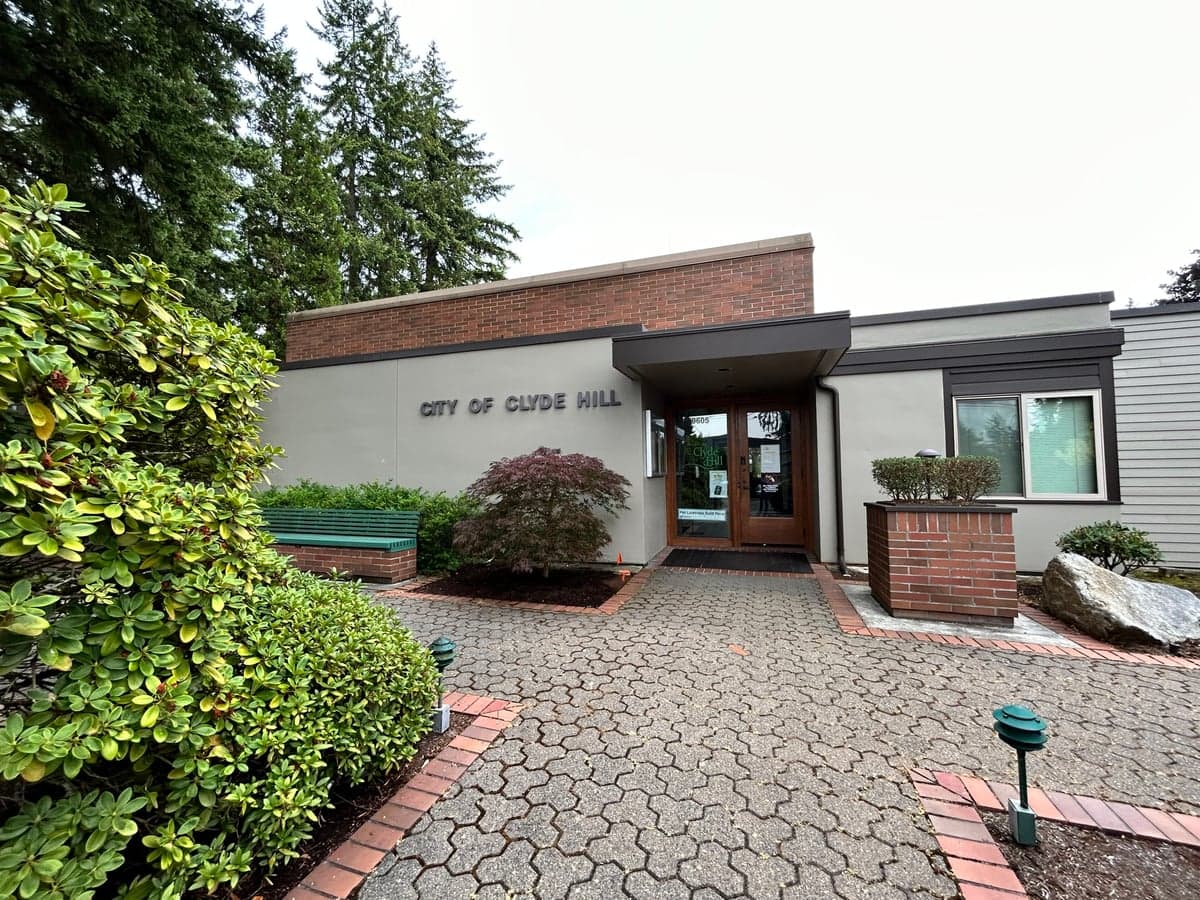
Photo: Wikipedia
Personal Sovereignty in Clyde Hill, WA
Viable for self-reliance. Generally workable, though some barriers may limit total independence.
What does Personal Sovereignty tell us?
Personal Sovereignty measures your capacity for self-reliance and independence with minimal government friction. Higher scores mean fewer barriers between you and the way you want to live... but it assumes you have the space you need and good neighbors.
What does this tell us?
Personal Sovereignty measures your capacity for self-reliance and independence with minimal government friction. Higher scores mean fewer barriers between you and the way you want to live... but it assumes you have the space you need and good neighbors.
State Policy
Energy independence: Importer (55% of energy produced in-state)
Personal Liberty
Homesteading

Personal Liberty Analysis
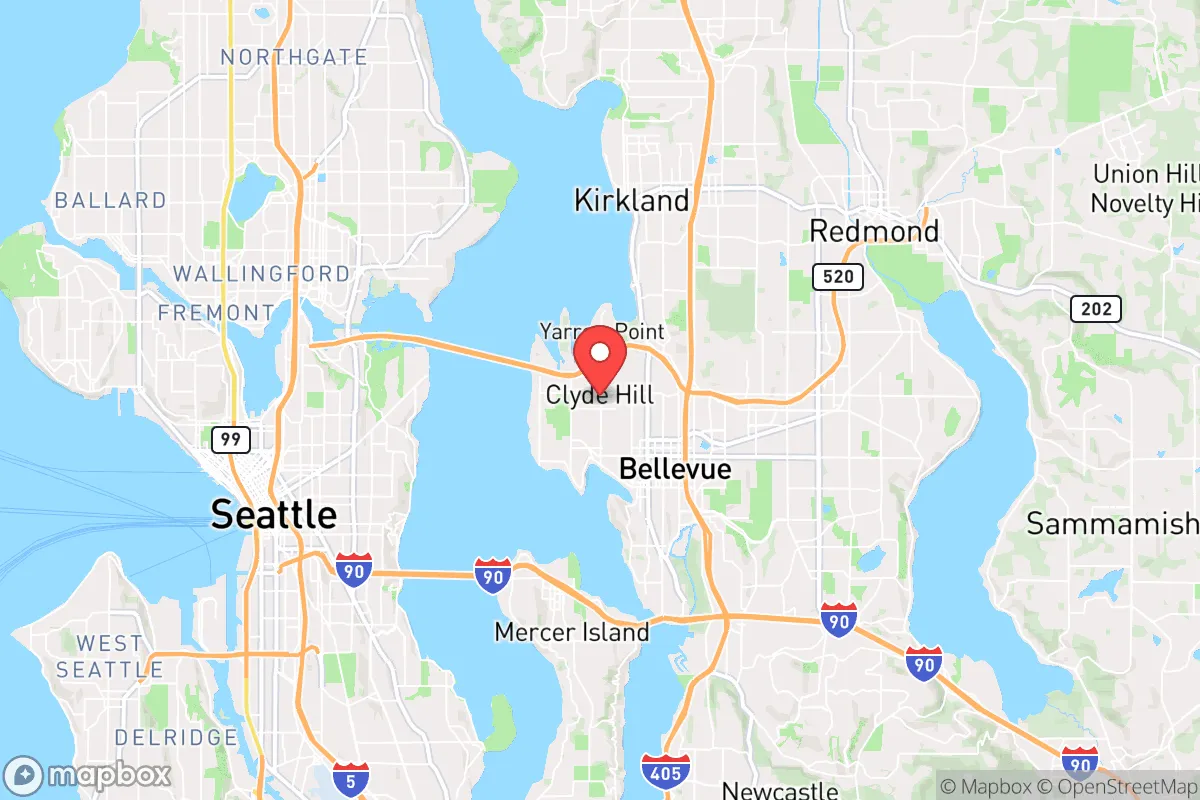
Clyde Hill, Washington, offers a peculiar blend of personal sovereignty that demands a clear-eyed, survivalist assessment. Nestled on the Eastside of Lake Washington, this small, affluent city of roughly 3,000 residents operates within the broader framework of King County and Washington State—a state with a reputation for progressive governance that often clashes with individual autonomy. For the conservative-leaning individual or parent concerned with government overreach, Clyde Hill presents a paradox: a highly localized, low-crime enclave with strong property rights, yet one that is legally bound to a state and county increasingly hostile to self-reliance, firearm freedoms, and medical independence. The key to understanding sovereignty here is recognizing that your personal bubble can be robust, but the regulatory weather system around it is often stormy.
Tax burden and regulatory posture in a high-cost state
Washington State’s lack of a personal income tax is a significant draw for those seeking to keep more of their earnings, but this is a double-edged sword. The state relies heavily on a high sales tax (currently 10.4% in King County) and steep property taxes to fund its expansive government. In Clyde Hill, the median property tax bill hovers around $15,000–$20,000 annually on a typical $2.5 million home, a figure that can feel like a permanent lien on your land. The regulatory posture is equally burdensome: the state’s Growth Management Act (GMA) tightly controls land use, and King County’s environmental regulations—particularly around shoreline management and tree removal—can make even minor property improvements a bureaucratic slog. For a prepper, this means that while you can own your home outright, the state’s appetite for revenue and control over your land use is persistent. The upside is that Clyde Hill’s city council is notoriously hands-off on local business and property matters, often deferring to homeowners, but the state and county layers above it are where the real friction lives.
Self-defense and gun law specifics in a restrictive state
For the survivalist, Washington’s gun laws are a major red flag. The state has enacted a ban on "assault weapons" (defined broadly to include many semi-automatic rifles), a 10-round magazine capacity limit, and a 10-day waiting period for all firearm purchases. Additionally, a 2023 law requires a permit to purchase a pistol, which includes a mandatory safety training course and a background check through local law enforcement. While Clyde Hill itself has no additional local ordinances, you are still subject to these state-level restrictions. Open carry is legal without a permit, but concealed carry requires a license (CPL), which is shall-issue but can be delayed by the county. For a prepper, the practical takeaway is that building a robust personal armory is legally constrained, and the political climate in Olympia suggests further restrictions are likely. The city’s low violent crime rate (essentially zero homicides in recent years) means you likely won’t need a firearm for immediate self-defense, but the principle of the matter—your right to keep and bear arms—is under direct assault by the state government.
Self-reliance and homesteading viability: lot sizes, zoning, and off-grid feasibility
Clyde Hill’s zoning is a mixed bag for the homesteader. Minimum lot sizes are typically one acre, which is generous by suburban standards, but the city’s zoning code is strict about accessory structures, livestock, and "agricultural" uses. You can keep chickens (hens only, no roosters) and bees with a permit, but larger livestock like goats or pigs are prohibited. The soil is decent for a vegetable garden, and many properties have mature trees for firewood, but the homeowner’s association (HOA) covenants in many neighborhoods can restrict things like clotheslines, sheds, or visible solar panels. Off-grid feasibility is low: the city requires connection to municipal water and sewer, and solar panels must be grid-tied. For a prepper, this means you can achieve a degree of food self-sufficiency (a large garden, fruit trees, a small greenhouse), but true independence from the grid is not legally possible. The trade-off is that the city’s infrastructure is reliable, and the neighbors are generally respectful of privacy, but don’t expect to disappear into a self-sufficient compound here.
Personal liberties: parental rights, medical autonomy, speech, and property
This is where Clyde Hill’s local character shines, even as the state pushes back. Parental rights are strong in practice: the Bellevue School District (which serves Clyde Hill) has a reputation for academic excellence and, until recently, maintained a relatively hands-off approach to controversial curriculum. However, the state’s 2023 "My Health My Data" act and laws allowing minors to consent to certain medical treatments (including reproductive care) without parental notification have eroded some of that autonomy. Medical autonomy is a battlefield: Washington has legalized assisted suicide, recreational marijuana, and has a robust vaccine mandate for school attendance. For a conservative parent, this means you must be vigilant about what your children are exposed to in school and healthcare settings. Free speech is protected under the state constitution, but the state’s "malicious harassment" law and hate crime statutes are broadly interpreted, and local social norms in Clyde Hill lean heavily toward progressive orthodoxy—meaning you may face social ostracism for expressing traditional views. Property rights are the strongest pillar: the city’s zoning is stable, and eminent domain is rarely used. You can build, remodel, and landscape with relative freedom, provided you comply with the city’s design review board, which is more concerned with aesthetics than ideology.
In the final analysis, personal sovereignty in Clyde Hill is a fortress with a leaky roof. The local environment—low crime, strong property rights, good schools, and a quiet, private atmosphere—provides a solid foundation for a self-reliant family. But the state and county governments above it are actively hostile to many of the core tenets of a survivalist mindset: gun rights, medical freedom, and parental control. Compared to a place like rural Idaho or Montana, Clyde Hill is a compromise. You get the economic opportunity and infrastructure of a major metro area, but you must constantly defend your autonomy against a political machine that views your independence as a problem to be managed. For the strategic relocator, this is a place to build wealth and raise children in a safe bubble, but not a place to make a last stand. If you value your ability to own a wide range of firearms, opt out of medical mandates, and live truly off-grid, look elsewhere. If you want a high-quality, low-drama base of operations within striking distance of a major city, and you’re willing to fight the occasional regulatory battle, Clyde Hill can work—but only if you keep your powder dry and your lawyer on speed dial.

* Values derived from national, state, county, city and local statistics and may differ in a specific area. Last updated: 2026-04-27T14:15:19.000Z
Narrative content on this page is AI-generated and may contain mistakes. Verify any details that matter before acting on them.
ReloMaps may earn a commission from affiliate links at no extra cost to you.

