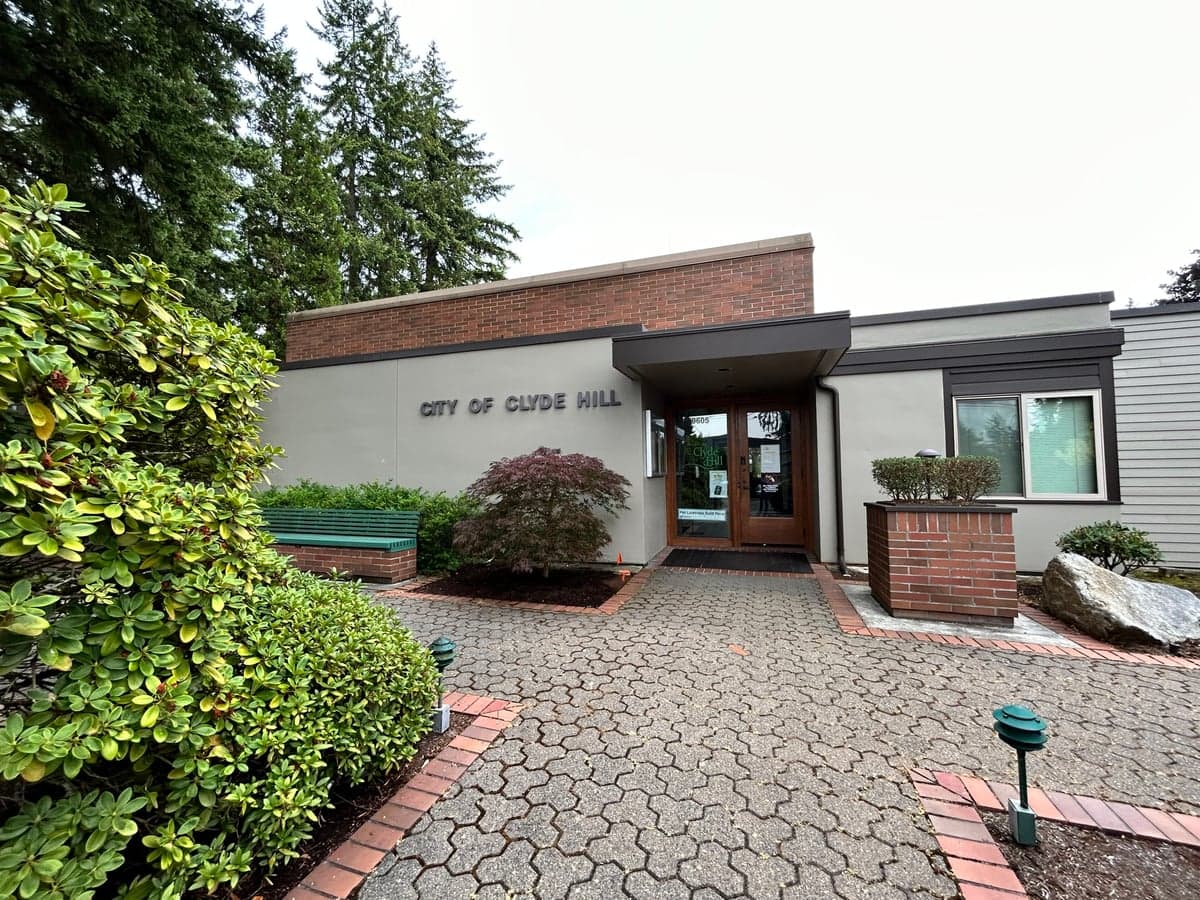
Photo: Wikipedia
Political ClimatePolitical Climate in Clyde Hill, WA
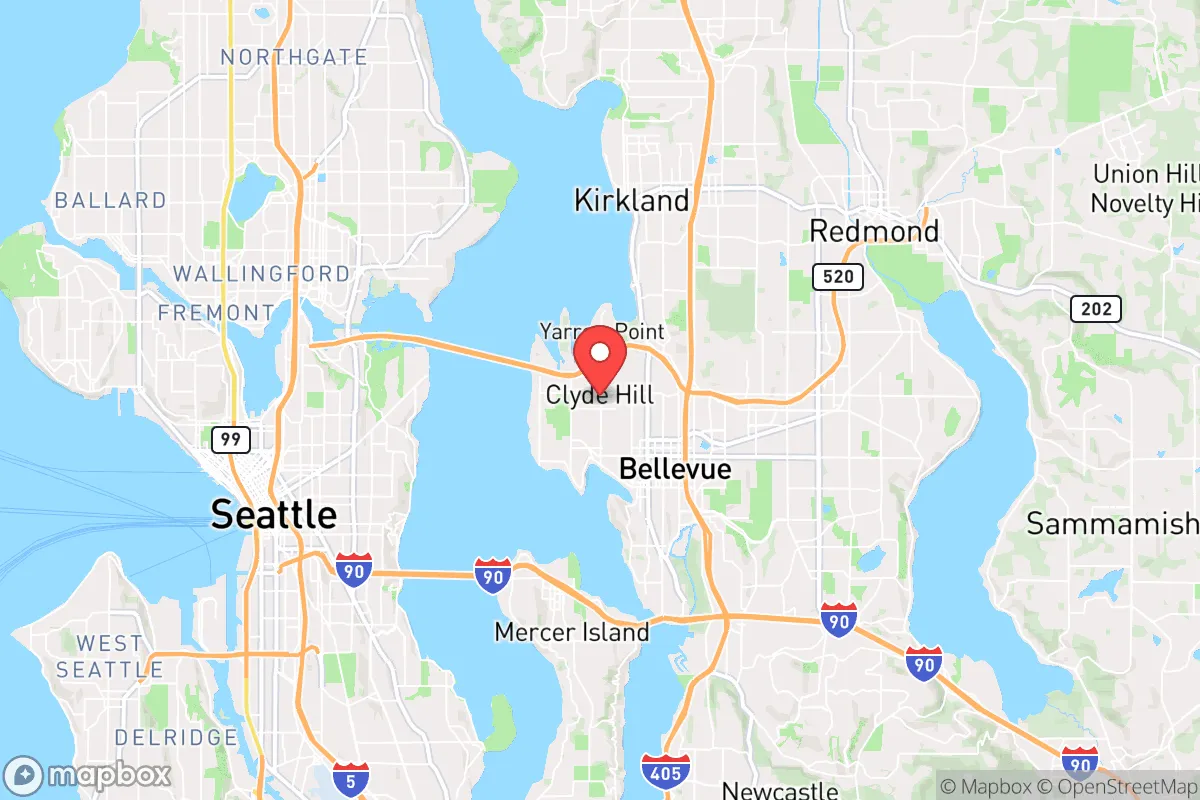
District shown is the primary district for this city’s centroid. Cities may span multiple districts.
Local Political AnalysisPolitical Analysis of Clyde Hill, WA
Clyde Hill, Washington, has a Cook Political Report Partisan Voting Index (PVI) of D+15, meaning it leans heavily Democratic compared to the national average. But if you’ve lived here as long as I have, you know that number doesn’t tell the whole story. This town was once a quiet, fiscally conservative enclave where folks minded their own business and valued low taxes and property rights. Over the last decade, the political climate has shifted noticeably toward progressive activism, driven largely by an influx of newcomers from Seattle and tech money. The local city council and school board now routinely push policies that feel more like King County’s agenda than the independent, small-government spirit that built this place.
How it compares
Drive five miles west into Seattle’s Capitol Hill, and you’ll find a political culture that makes Clyde Hill look moderate—but that’s a low bar. Head east to Redmond or Kirkland, and you’ll see similar progressive trends, though Clyde Hill’s wealth insulates it from some of the more aggressive tax-and-spend measures. The real contrast is with towns like Carnation or Duvall, where residents still vote for limited government and push back on zoning mandates. Even nearby Bellevue, once a conservative stronghold, has shifted left, but Clyde Hill’s D+15 rating puts it squarely in the same camp as Medina and Hunts Point—places where property values are high, but so is the pressure to conform to regional progressive orthodoxy.
What this means for residents
For those of us who value personal freedoms, the trend is concerning. The city council has shown increasing willingness to impose new regulations on home renovations, tree removal, and even short-term rentals—rules that feel like government overreach into what you can do with your own property. School board meetings have become battlegrounds over curriculum and parental rights, with a vocal minority pushing for policies that prioritize ideology over academic excellence. If you’re a conservative or libertarian-leaning resident, you’ll find yourself constantly defending the idea that local government should stay out of your backyard and your family’s decisions. The long-term trajectory points to more of the same: tighter land-use controls, higher property taxes disguised as “levies,” and a cultural environment where dissenting political views are often met with social pressure rather than respectful debate.
One cultural distinction worth noting: Clyde Hill still has a strong sense of community among longtime residents who remember when the town was more politically balanced. You’ll find neighbors who quietly vote Republican but keep their yard signs generic to avoid conflict. The policy fights that matter most here are local—zoning, school funding, and police budgets—and they’re where the rubber meets the road. If you’re considering a move, understand that the political climate is not neutral; it’s actively shifting toward progressive governance, and that shift comes with real consequences for your property rights, your tax bill, and your children’s education. Keep an eye on city council elections and school board races—that’s where the future of Clyde Hill’s character will be decided.

State Political ClimatePolitical Climate in Washington
State Political AnalysisPolitical Environment in the State
Washington State has transformed from a purple swing state into a solidly blue stronghold over the past two decades, with Democrats controlling every statewide office and both legislative chambers since 2012. The state’s overall partisan lean is roughly D+8 to D+10 in presidential elections, driven overwhelmingly by the Seattle metroplex, but this masks a deep and growing urban-rural chasm that leaves conservative-leaning residents feeling increasingly isolated outside of a few remaining red enclaves. For a single person or parent considering relocation, the trajectory is clear: the state’s political center of gravity continues to shift leftward, with policy consequences that directly affect personal freedom, taxation, and daily life.
Urban vs. rural divide
The political map of Washington is a tale of two states. King County, home to Seattle, Bellevue, and Redmond, casts roughly 30% of the state’s total vote and delivers a Democratic margin of 60-70 points in most elections. This single county alone determines statewide outcomes. Pierce County (Tacoma) and Snohomish County (Everett) have also trended blue, though less dramatically. Meanwhile, the eastern half of the state — places like Spokane, Yakima, and the Tri-Cities (Kennewick, Pasco, Richland) — votes reliably Republican, but their populations are too small to counterbalance the I-5 corridor. A few suburban counties have flipped in recent cycles: Clark County (Vancouver) went from red to purple to light blue, and even traditionally conservative areas like Kitsap County (Bremerton) now lean Democratic. The only reliably red counties left are in the far east and central regions — Lincoln, Adams, Garfield, and Columbia — plus a handful of exurban pockets like Lewis County (Centralia) and parts of Whatcom County (Bellingham’s rural outskirts). If you’re a conservative looking for like-minded neighbors, your best bets are Spokane Valley, the Tri-Cities, or small towns like Colville and Walla Walla, but even these are seeing demographic creep from coastal transplants.
Policy environment
Washington’s policy environment is defined by aggressive progressive governance. The state has no personal income tax, which sounds good on paper, but it makes up for it with the highest state sales tax in the nation (averaging 9-10% in most cities) and high property taxes that have risen sharply since the 2019 McCleary school funding fix. The regulatory posture is among the most burdensome in the country: the state has a strict cap-and-trade program (Climate Commitment Act), a long-term care payroll tax (WA Cares) that took effect in 2023, and some of the nation’s toughest gun laws, including a ban on standard-capacity magazines and an assault weapons ban passed in 2023. Education policy is dominated by teachers’ unions, with school choice virtually nonexistent — no charter schools to speak of, and a voucher program that was struck down years ago. Healthcare is heavily regulated, with a state-based insurance exchange and a public option that has struggled to gain traction. Election laws are among the most liberal: universal mail-in voting, same-day registration, and no voter ID requirement at the polls (though you must provide a signature). For a conservative, the cumulative effect is a state that taxes heavily, regulates intrusively, and offers little institutional resistance to progressive priorities.
Trajectory & freedom
Washington is unequivocally becoming less free by any measure of personal liberty that conservatives value. The 2023 assault weapons ban and magazine capacity limit (HB 1240) directly curtailed Second Amendment rights, and a 2024 law (SB 5078) banned the sale of most semi-automatic rifles to anyone under 21. Parental rights have eroded: the state passed a law in 2023 (SB 5599) that allows minors to access shelter and certain medical services without parental consent, and a 2024 bill (HB 1469) expanded gender-affirming care protections for minors, overriding parental authority in some cases. Medical autonomy took a hit with the state’s COVID-19 vaccine mandates, which remain in place for healthcare workers and some public employees, and the state’s public health emergency powers were expanded without meaningful legislative checks. Property rights are under pressure from the Climate Commitment Act, which imposes carbon costs that raise building costs, and from a 2023 law (HB 1110) that effectively ended single-family zoning in most cities, allowing duplexes and fourplexes in formerly owner-occupied neighborhoods. On the positive side for conservatives, Washington has no state income tax and no capital gains tax (a 2021 capital gains tax was struck down by the state Supreme Court in 2023, though a new version is likely). But the overall trajectory is toward more government control, not less.
Civil unrest & political movements
Washington has a long history of civil unrest, most notably the 2020 CHOP/CHAZ occupation in Seattle’s Capitol Hill neighborhood, where activists took over several city blocks for weeks, resulting in multiple deaths and widespread property damage. The state’s sanctuary policies are among the strongest in the nation: the 2019 Washington Trust Act (SB 5497) prohibits state and local law enforcement from cooperating with federal immigration authorities in most cases, and a 2023 law (HB 1440) extended protections to undocumented immigrants in the workplace. Organized activist movements on the left include the evergreen presence of Antifa-aligned groups in Seattle and Portland-adjacent Vancouver, while conservative movements are more localized — the Washington State Republican Party has seen internal fractures between moderates and the MAGA-aligned wing, and there have been periodic secessionist murmurs from eastern counties (the "Liberty State" movement, though it has gained little traction). Election integrity remains a flashpoint: Washington’s universal mail-in system has been criticized for lax signature verification and the potential for ballot harvesting, though no major fraud has been proven. A new resident would notice the political tension most acutely in the Seattle suburbs — places like Issaquah and Sammamish — where progressive activism clashes with more moderate homeowners, and in the rural-urban interface of counties like Skagit and Whatcom.
Projection
Over the next 5-10 years, Washington will likely become even more progressive. In-migration from California and other blue states continues to fuel Democratic dominance, while the state’s rural population stagnates or declines. The state’s cap-and-trade program will drive up energy and transportation costs, and new housing mandates will reshape suburban neighborhoods in ways that may accelerate white flight to exurbs like Yelm or Tenino. The state Supreme Court is solidly liberal and will likely uphold further gun restrictions and tax increases. The only wildcard is a potential economic downturn: Washington’s economy is heavily dependent on tech (Microsoft, Amazon) and aerospace (Boeing), and a major recession could shift priorities. But demographically, the state is on a path to become more like Oregon or California — high taxes, heavy regulation, and a shrinking middle class. For a conservative moving in now, the realistic expectation is that you will be a permanent political minority, with your vote increasingly irrelevant in statewide elections. Your best strategy is to choose your local jurisdiction carefully: a red county like Spokane or a purple exurb like Camas will offer more breathing room than Seattle or Bellevue.
For a new resident, the bottom line is this: Washington offers stunning natural beauty and a strong economy, but it comes with a political price tag. You will pay high sales taxes, face some of the nation’s strictest gun laws, and live under a government that is actively expanding its reach into your personal life — from your children’s medical decisions to the type of housing you can build on your property. If you value low taxes, strong Second Amendment protections, and parental rights, Washington is a challenging place to call home. Your best bet is to target a red-leaning county like Spokane or the Tri-Cities, where local governance can partially buffer state overreach, but be prepared for the blue tide to keep rising.
* Values derived from national, state, county, city and local statistics and may differ in a specific area. Last updated: 2026-04-27T14:15:19.000Z
Narrative content on this page is AI-generated and may contain mistakes. Verify any details that matter before acting on them.
ReloMaps may earn a commission from affiliate links at no extra cost to you.

