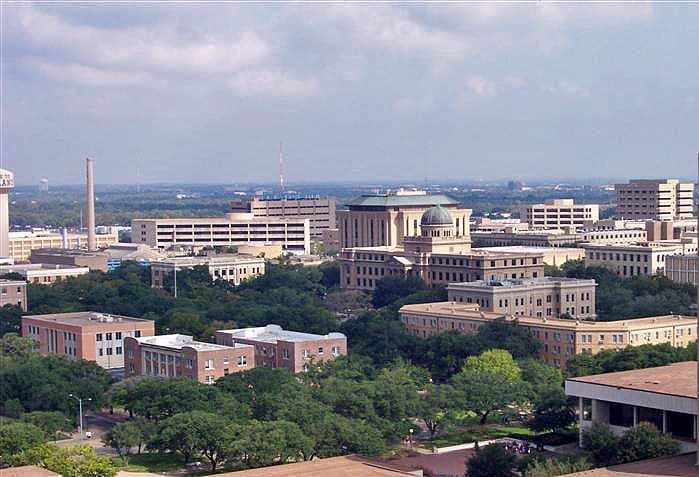
Photo: Wikipedia
Quality of Life in College Station, TX
A high quality of life with strong walkability, manageable living costs, healthy neighborhood signals, and solid amenity access.
What does Quality of Life tell us?
Quality of Life blends cost of living, nearby amenities, socioeconomic signals, and neighborhood character. City-level scores represent the whole municipality; individual neighborhoods can differ.
What does this tell us?
Quality of Life blends cost of living, nearby amenities, socioeconomic signals, and neighborhood character. City-level scores represent the whole municipality; individual neighborhoods can differ.
Cost of Living
7% above national average
The Real Cost of Living in College Station, TX for 2026
| Tier | Individual | Family (4) |
|---|---|---|
| Survival | $19k | $35k |
| Comfortable | $63k | $93k |
| Luxury | $94k+ | $145k+ |
| Elite (Top 5%) | $155k+ | $240k+ |
56%
The Area Signal
A metric tracking the socioeconomic signals of the area.
Hobbies
Explore the areaGroceries
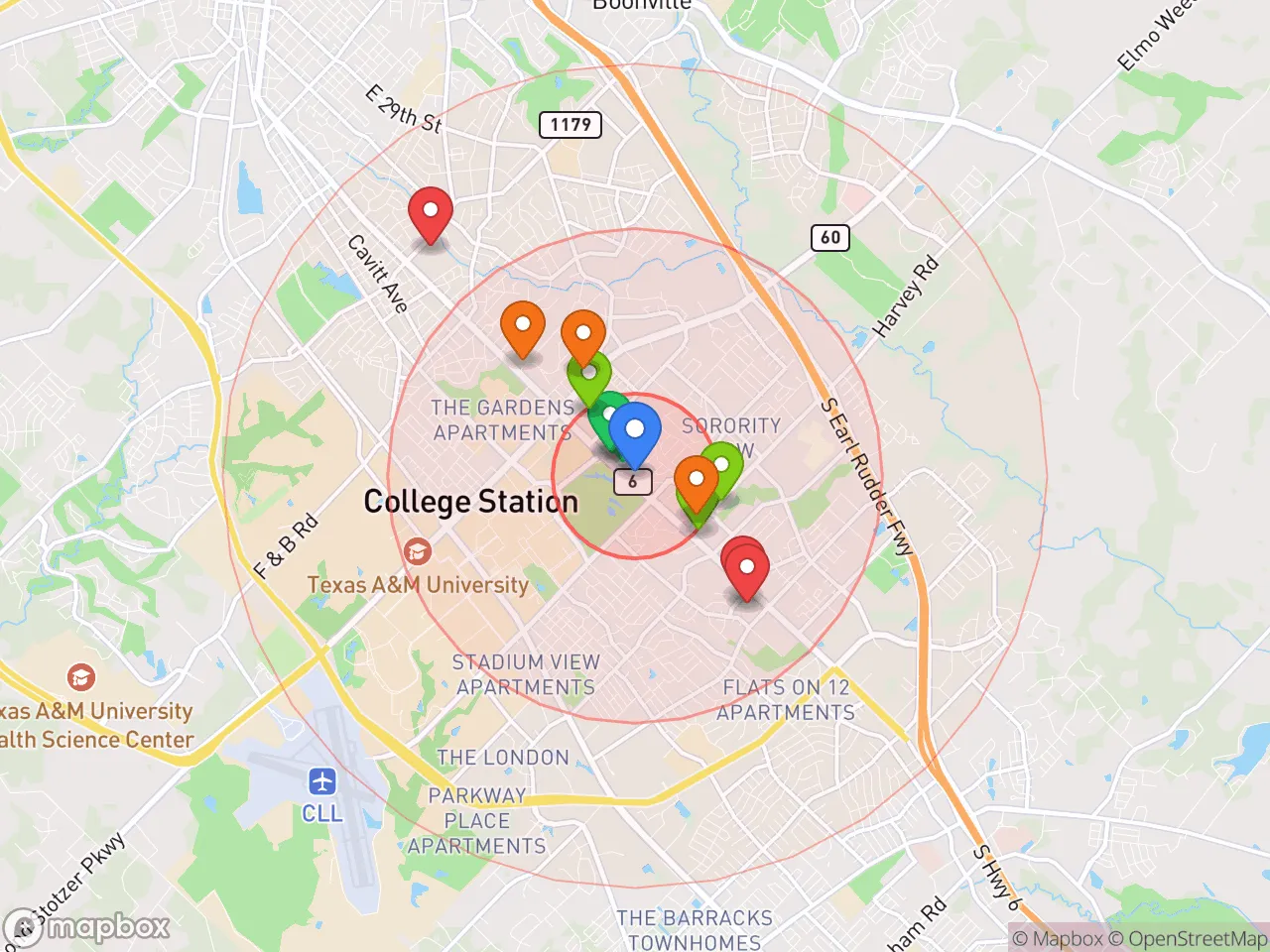
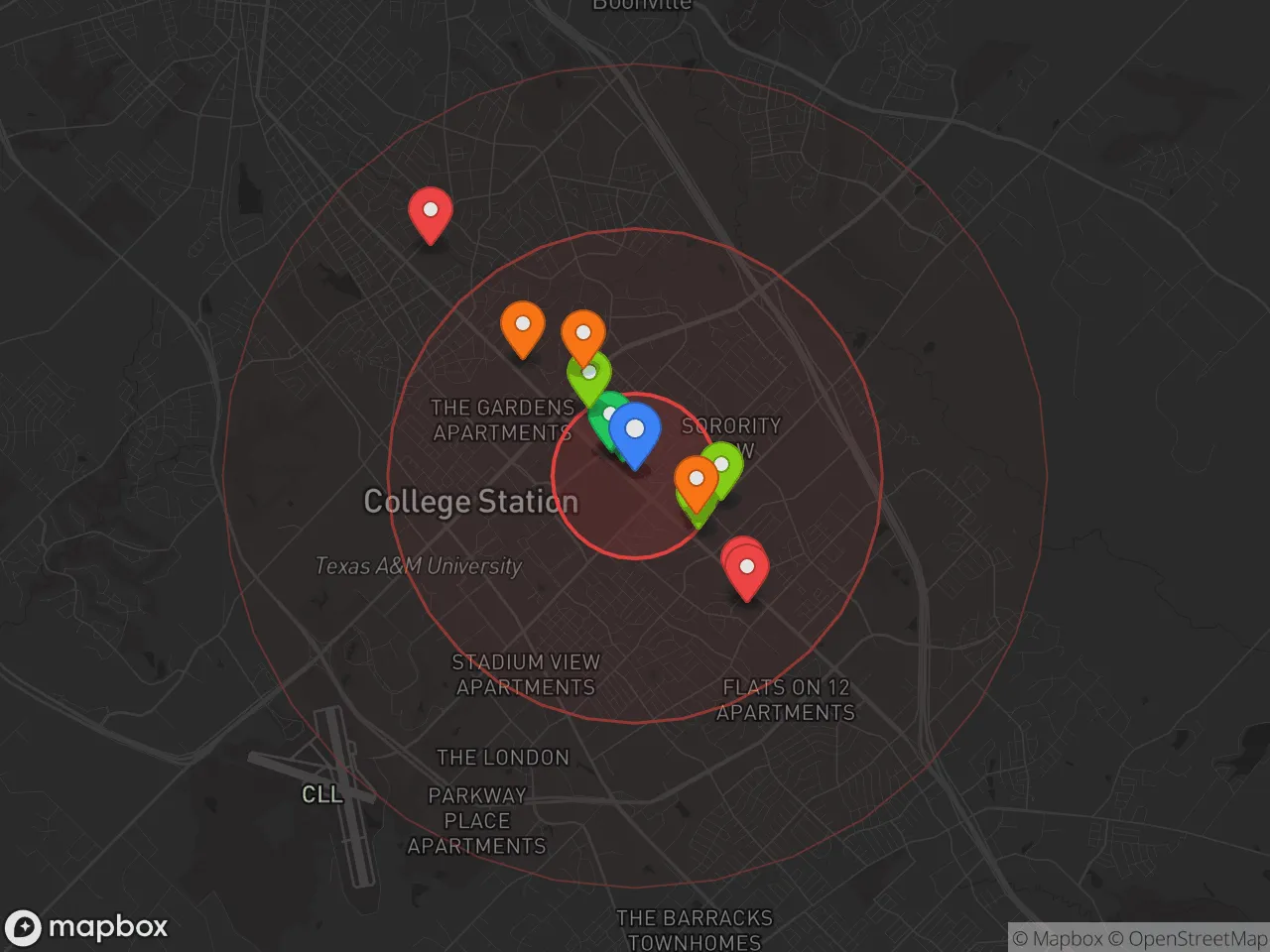
6 within 10 miles
Gas
20 within 10 miles
Hospital
5 within 20 miles
Airport
IAH — George Bush Intercontinental
Post Office
USPS — Snook, TX
Critical Amenities
Quality-of-Life Analysis
College Station, Texas, presents a quality of life shaped by the presence of Texas A&M University, a major research institution that anchors a relatively affluent and well-educated population. The city’s economy and culture are heavily influenced by the university’s 70,000+ students and faculty, creating a community that is younger, more transient, and more politically moderate than much of the surrounding Brazos Valley. With a cost of living index of 107 (slightly above the national average of 100), College Station offers a suburban lifestyle with urban amenities, but its affordability profile differs markedly from both the booming Dallas-Fort Worth metroplex and the more rural towns of Central Texas.
Cost of living, housing affordability, and how it compares to nearby cities
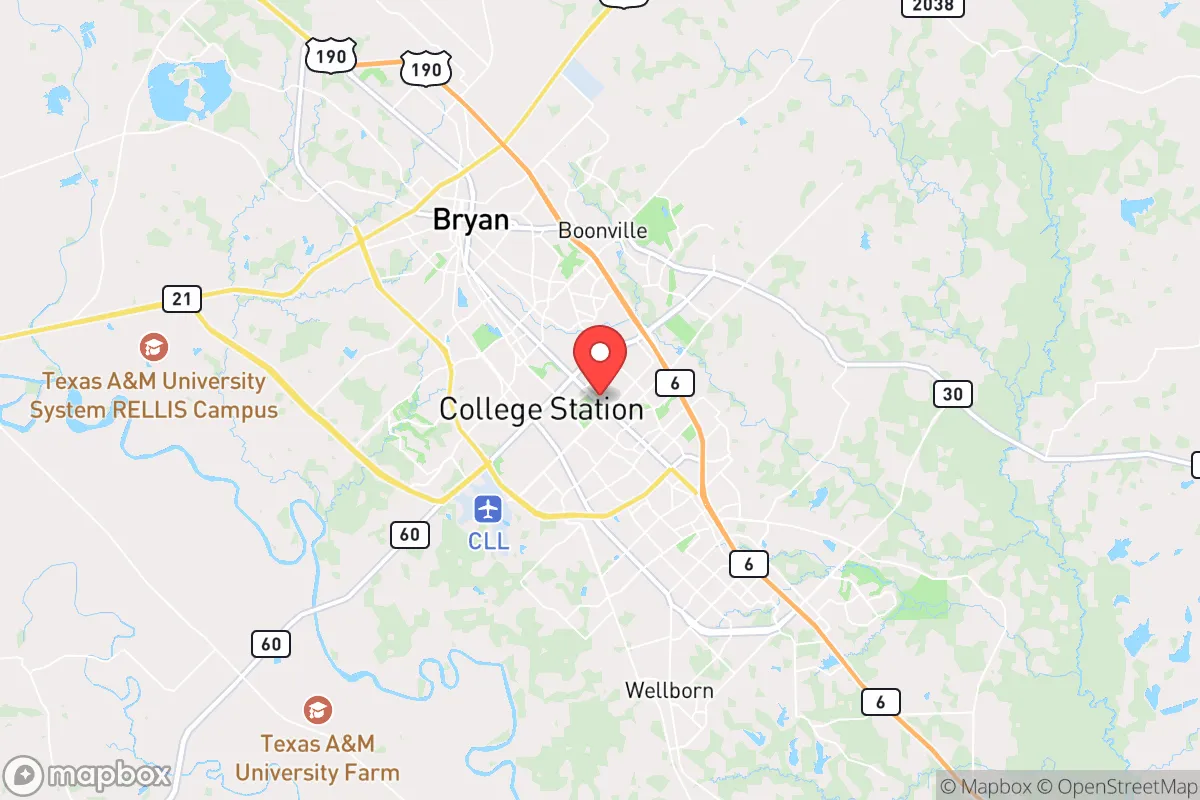
While College Station’s overall cost of living is 7% above the national average, housing remains a relative bargain compared to Texas’s major metros. The median home value of $326,500 is roughly 30% lower than the Austin-Round Rock metro area (median ~$475,000) and about 20% below the statewide median of ~$340,000. Median rent sits at $1,168, which is notably lower than the national median of $1,400 and significantly cheaper than Austin’s $1,600+ average. However, prices have risen sharply since 2020: home values in College Station have increased by roughly 40% over the past five years, outpacing wage growth for many non-university workers. Compared to nearby Bryan (the city’s twin across Highway 6), College Station homes command a premium of about 15-20%, reflecting the university’s draw and newer housing stock. The average commute of 17.2 minutes is well below the national average of 26 minutes, a direct benefit of the city’s compact layout and limited sprawl relative to Houston or Dallas.
What daily life is like for families, professionals, and students
Daily life in College Station revolves around the Texas A&M campus, which functions as the city’s cultural and economic engine. The public school system, College Station ISD, is consistently rated above the state average, with schools like College Station High School and A&M Consolidated High School offering strong STEM and agricultural programs. For families, the city provides ample green space—Wolf Pen Creek Park and the 240-acre Lick Creek Park offer hiking and sports facilities—while the George Bush Presidential Library and Museum adds a historical dimension. The city’s restaurant and retail scene is concentrated along Texas Avenue and University Drive, with a mix of national chains and local spots like the Dixie Chicken (a legendary Aggie bar) and Hullabaloo Diner. The rhythm of life is heavily seasonal: the city swells during football season (September–November) and empties out during summer breaks, when traffic and wait times drop noticeably. For professionals, the largest employers outside the university are the St. Joseph Health system and the Texas A&M Health Science Center, offering stable white-collar employment.
College Station is best suited for those who value a tight-knit, university-centered community with short commutes and lower housing costs than Texas’s major cities. Families with school-age children will find strong public schools and safe neighborhoods, while young professionals and academics benefit from the university’s job market and cultural events. Retirees or those seeking a quieter, more rural pace may prefer nearby towns like Caldwell or Brenham, as College Station’s identity is inextricably tied to the Aggie calendar. For anyone who prioritizes walkability, nightlife, or a diverse urban environment, the city’s car-dependent layout and limited entertainment options outside the campus orbit may feel constraining. Ultimately, College Station offers a stable, affordable quality of life for those who align with its collegiate rhythm and suburban character.

Crime in College Station, TX
Lower crime rates than 82% of comparable U.S. locations.
Violent CrimeViolent Crime Analysis
Property CrimeProperty Crime Analysis
Crime Analysis
College Station, Texas, reports a violent crime rate of 128.6 per 100,000 residents and a property crime rate of 853.7 per 100,000, placing it well below national averages for both categories. These figures, drawn from the most recent FBI Uniform Crime Reporting data, indicate a community where serious violent offenses like homicide and aggravated assault are statistically rare. However, the city’s location within a large metropolitan area and its status as a college town introduce specific safety dynamics that prospective residents should weigh carefully.
Crime in context
College Station’s violent crime rate of 128.6 per 100,000 is roughly 63% lower than the national average of approximately 350 per 100,000, and significantly below the Texas state average of around 420 per 100,000. Property crime, at 853.7 per 100,000, is also below the national benchmark of about 1,950 per 100,000. These low rates are partly attributable to the city’s robust police presence and the stabilizing influence of Texas A&M University, which maintains its own campus police force. However, as part of the Bryan-College Station metro area, the city is not immune to spillover crime from nearby communities. Brazos County, which encompasses College Station, has a district attorney’s office that operates under a conservative, law-and-order philosophy, which helps keep recidivism rates lower than in jurisdictions with progressive prosecutors. In contrast, larger metro areas with liberal district attorneys often see higher rates of property crime and repeat offenses due to lenient sentencing and diversion programs.
What residents experience
For most residents, daily life in College Station feels safe, with the most common concerns being theft from vehicles and bicycle theft, particularly near the university campus and apartment complexes. Burglary rates are moderate but concentrated in student-heavy neighborhoods during holiday breaks. Violent crime is rare and typically involves individuals known to each other, rather than random attacks on the public. The city’s proactive community policing model, including neighborhood watch programs and regular patrols, contributes to a sense of security. Property crime rates have remained stable since 2020, showing no significant spike, which contrasts with national trends in many progressive-run cities where property crime surged after 2020 due to bail reform and reduced prosecution of non-violent offenses.
Neighborhood-level variation
Safety varies notably by neighborhood. Areas west of Texas Avenue and south of University Drive, including the historic district and newer subdivisions like Pebble Creek, consistently report the lowest crime rates. The Northgate entertainment district, while heavily policed, sees higher rates of minor theft and public intoxication incidents on game days. Neighborhoods near the city’s eastern edge, closer to Bryan, experience slightly elevated property crime rates, though still below state averages. For families and professionals, College Station’s overall safety profile is strong, but the city’s conservative judicial approach is a key factor in maintaining these low numbers—a contrast to the rising crime seen in many large metro areas with progressive prosecutors.
* Values derived from national, state, county, city and local statistics and may differ in a specific area. Last updated: 2026-04-21T12:55:54.000Z
Narrative content on this page is AI-generated and may contain mistakes. Verify any details that matter before acting on them.
ReloMaps may earn a commission from affiliate links at no extra cost to you.

