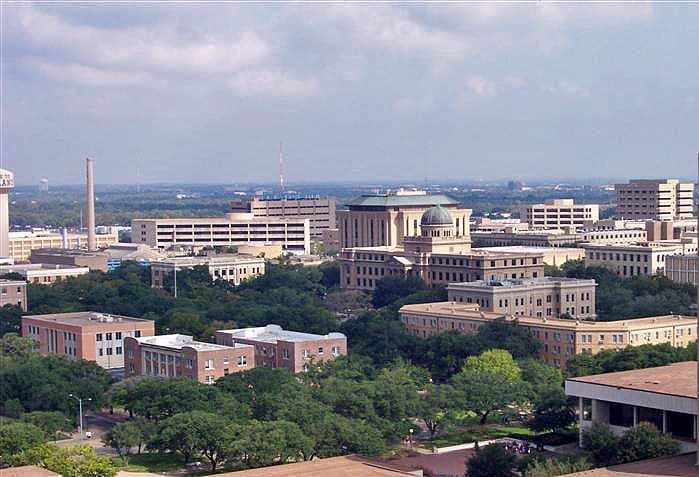
Photo: Wikipedia
Political ClimatePolitical Climate in College Station, TX
District shown is the primary district for this city’s centroid. Cities may span multiple districts.
Local Political AnalysisPolitical Analysis of College Station, TX
College Station has long been a solidly conservative stronghold, with a Cook PVI of R+12 that reflects a deep-rooted preference for limited government and personal responsibility. But if you’ve lived here as long as I have, you’ve watched the political winds shift—not enough to flip the city, but enough to make you pay attention. The old guard of ranchers, Aggie alumni, and small-business owners still sets the tone, but the influx of university faculty and out-of-state transplants has started to nudge things leftward, especially on cultural issues. It’s still a place where you can count on your neighbor to wave a “Don’t Tread on Me” flag, but you’ll also see more yard signs for progressive candidates than you did a decade ago.
How it compares
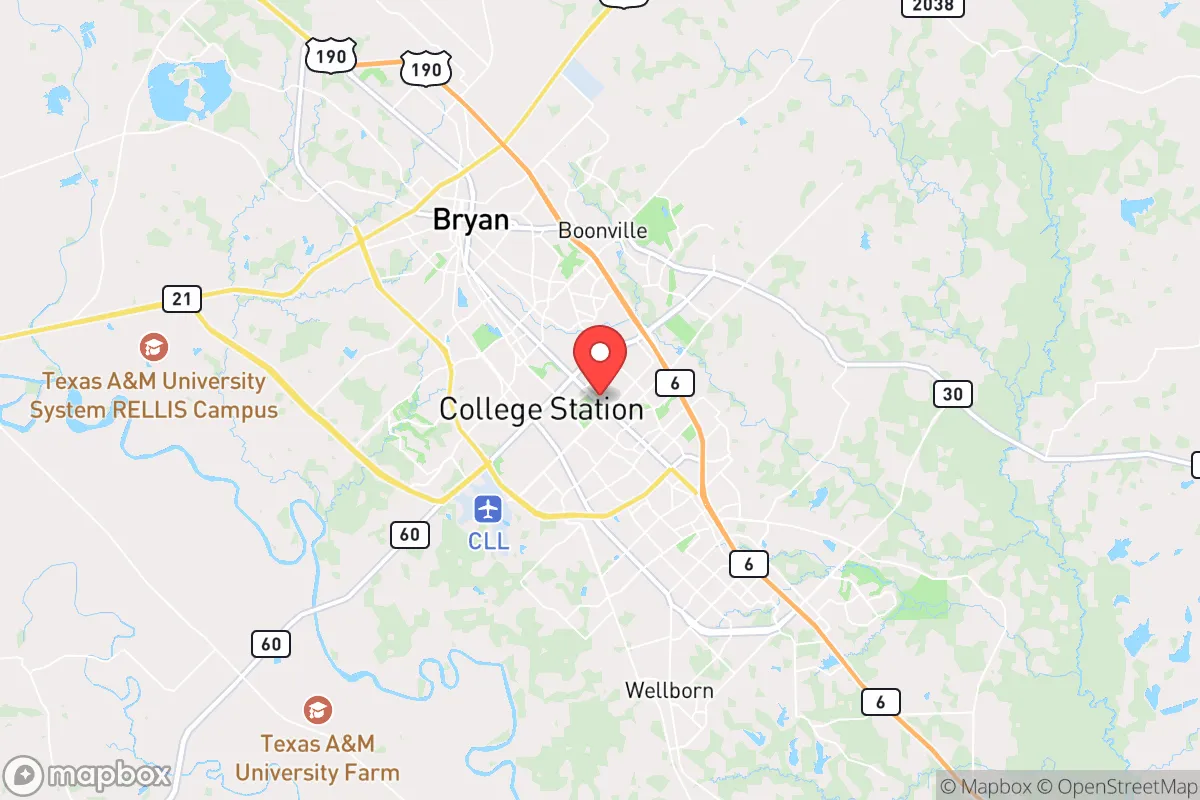
Drive 20 minutes north to Bryan, and you’ll find a similar conservative baseline, though Bryan’s older, working-class roots make it even more resistant to progressive trends. Head east to Navasota or south to Brenham, and you’re in deep-red territory where the R+12 rating would look almost moderate. The real contrast is with Austin, just 90 minutes west—a city that’s become a poster child for government overreach, from zoning mandates to mask mandates. College Station residents watch that experiment with a wary eye, grateful that our local leaders still prioritize property rights and Second Amendment freedoms over top-down social engineering. The university itself, Texas A&M, remains a conservative anchor—its Corps of Cadets and Aggie traditions are a living rebuke to the cancel-culture nonsense you see on other campuses.
What this means for residents
For families and retirees here, the political climate translates into tangible freedoms. You won’t find the kind of heavy-handed HOA regulations or business licensing red tape that chokes smaller towns. Property taxes are a perennial gripe—Texas doesn’t have a state income tax, so local governments lean hard on property levies—but the city council has historically resisted the urge to expand services through new fees or mandates. The biggest concern I hear from longtime neighbors is the slow creep of progressive policies into the school board and city planning. Bond proposals for “equity initiatives” or bike lanes that nobody asked for get more traction than they used to, and that’s a red flag for anyone who values fiscal conservatism. If you’re moving here, expect a community that still believes in personal accountability, but keep an eye on local elections—that’s where the real fight for your rights plays out.
Culturally, College Station is a place where church attendance is still the norm, and the phrase “government of the people” isn’t just a civics lesson. You’ll see it in the way neighbors handle disputes without calling the city—a handshake still means something. The biggest policy distinction from blue enclaves like Austin or Houston is the absence of a citywide plastic bag ban or a living wage ordinance; the local attitude is that businesses and individuals know their own needs better than a bureaucrat does. That said, the long-term trajectory depends on who moves in next. If the university continues to import faculty from coastal states, the R+12 rating could slip to R+8 or R+6 over the next decade. For now, though, College Station remains a place where you can live your life without a government official looking over your shoulder—and that’s worth holding onto.

State Political ClimatePolitical Climate in Texas
State Political AnalysisPolitical Environment in the State
Texas remains a solidly Republican state, but the political landscape has shifted noticeably over the past two decades. The GOP still dominates statewide races, with every statewide office held by a Republican and a 2024 presidential margin of roughly +14 points for Donald Trump. However, the coalition is fracturing along geographic and demographic lines: fast-growing suburban counties like Collin and Denton are drifting left, while rural and exurban areas are doubling down on conservative values. The 10-20 year arc shows a state that is becoming more polarized, not less, with the blue wave in major metros colliding against a red wave in the rest of the state.
Urban vs. rural divide
The political map of Texas is a tale of two worlds. The major metros—Houston, Dallas-Fort Worth, Austin, San Antonio, and El Paso—are the engines of Democratic growth. Harris County (Houston) went for Hillary Clinton in 2016 and has only gotten bluer since, while Travis County (Austin) is now one of the most liberal jurisdictions in the South. Bexar County (San Antonio) and Dallas County have also trended left, with Dallas County flipping to Biden by 15 points in 2020. Meanwhile, the rural and exurban counties—places like Lubbock, Midland-Odessa, and the Panhandle—vote Republican by margins of 70-80%. The real battleground is the suburbs: Collin County (north of Dallas) voted for Trump by only 4 points in 2020, down from a 20-point margin in 2012. Fort Bend County (southwest of Houston) flipped to Biden in 2020 and is now a Democratic stronghold. This urban-rural split means that while the state remains red, the GOP's dominance is increasingly reliant on rural turnout and legislative gerrymandering.
Policy environment
Texas has one of the most conservative policy environments in the country, but it's not without its contradictions. The state has no income tax, which is a major draw for relocating families and businesses. Property taxes are high—averaging around 1.6% of assessed value—but there's no state-level property tax; it's all local. The regulatory posture is famously business-friendly, with minimal zoning in many areas and a right-to-work law that keeps unions weak. Education policy is a flashpoint: the state has a school voucher program (the Texas Education Savings Account program, passed in 2023) that allows parents to use public funds for private or homeschool expenses, but it's limited to certain districts and income levels. Healthcare is a mixed bag: Texas has the highest uninsured rate in the nation (around 17%), and the state has refused to expand Medicaid under the Affordable Care Act. Election laws have tightened: the 2021 SB 1 law restricted mail-in voting, added ID requirements, and banned drive-through voting. For a conservative audience, the policy environment is largely favorable, but the high property taxes and limited school choice options in some areas are ongoing frustrations.
Trajectory & freedom
On balance, Texas is becoming more free in some areas and less free in others. The good news for conservatives: the state has expanded gun rights significantly. In 2021, Texas passed permitless carry (HB 1927), allowing adults to carry handguns without a license or training. Parental rights were strengthened with the 2023 passage of the "Parental Bill of Rights" (SB 1515), which requires schools to notify parents about curriculum changes and medical services. Medical autonomy took a hit with the 2021 abortion ban (SB 8), which effectively outlawed abortion after six weeks and allowed private citizens to sue violators—a controversial but popular move among conservatives. On the downside, property rights are under pressure: the 2023 "Texas Regulatory Consistency Act" (HB 2127) preempted local ordinances on everything from tree preservation to short-term rentals, which some see as a loss of local control. Taxation remains a sore spot: while there's no income tax, the state's reliance on property taxes means that homeowners in fast-growing areas like Austin and Dallas are seeing their tax bills rise faster than inflation. The trajectory is toward more state-level preemption of local laws, which is a double-edged sword for freedom-minded residents.
Civil unrest & political movements
Texas has seen its share of political flashpoints. The 2020 Black Lives Matter protests in Austin and Houston were large and sometimes violent, leading to property damage and a lasting rift between city leaders and state officials. The "Defund the Police" movement gained traction in Austin, where the city council cut the police budget by $150 million in 2020, only to reverse course after a spike in violent crime. On the right, the "Texas Nationalist Movement" (Texit) has gained some traction, with a 2022 poll showing 31% of Texans supporting secession—though it remains a fringe idea. Immigration politics are a constant flashpoint: Governor Greg Abbott's Operation Lone Star has deployed state troopers and National Guard to the border, leading to legal battles with the Biden administration. In 2023, the state passed SB 4, which allows state and local police to arrest people suspected of entering the U.S. illegally—a law that is currently tied up in court. Election integrity remains a hot-button issue: the 2020 election saw lawsuits over Harris County's drive-through voting, and the 2021 SB 1 law was passed in response. A new resident in El Paso or Laredo will see border patrol checkpoints and hear constant debate about immigration, while someone in Lubbock or Amarillo will encounter a more homogeneous, pro-law enforcement environment.
Projection
Over the next 5-10 years, Texas is likely to become more Republican at the state level but more competitive in the suburbs. The in-migration of conservative-leaning families from California and the Northeast is offsetting the leftward drift of the native-born population. However, the Democratic strongholds in Houston, Dallas, Austin, and San Antonio are growing faster than the rural counties, which means the statewide margin will continue to shrink. The 2024 election showed that Trump's coalition is holding in rural areas but losing ground in the suburbs, and that trend is likely to continue. The state's legislative maps are gerrymandered to protect Republican incumbents, so the Texas House and Senate will remain red for the foreseeable future. The biggest wild card is the border: if the federal government continues to struggle with immigration, expect Texas to push for even more state-level enforcement, which could alienate moderate voters in the suburbs. For a new resident, the next decade will feel like a tug-of-war between the state's conservative leadership and the growing influence of its liberal cities.
Bottom line for a new resident: If you're moving to Texas for the conservative policies, you'll find a state that largely delivers on low taxes, gun rights, and parental control—but you'll also encounter high property taxes, a polarized media environment, and a constant battle between state and local governments. The best bet for a conservative-leaning family is to target the exurbs or smaller cities like Katy, Frisco, or New Braunfels, where the political climate is more stable and the schools are strong. Avoid the urban cores of Austin and Houston if you want to avoid progressive policies and high costs. Texas is still a red state, but it's a red state that's fighting to stay that way.
* Values derived from national, state, county, city and local statistics and may differ in a specific area. Last updated: 2026-04-21T12:55:54.000Z
Narrative content on this page is AI-generated and may contain mistakes. Verify any details that matter before acting on them.
ReloMaps may earn a commission from affiliate links at no extra cost to you.

