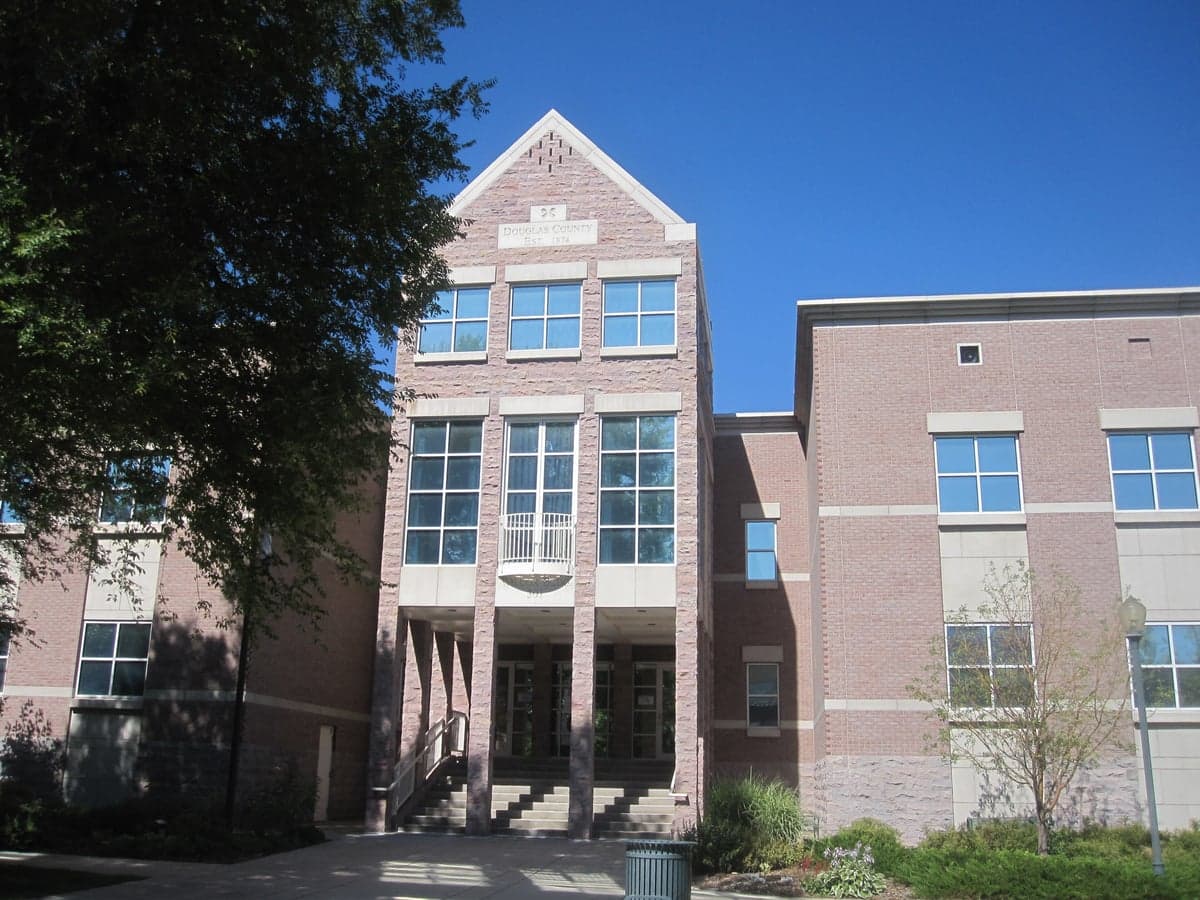
Photo: Wikipedia
Demographics of Douglas County
Affluence Level in Douglas County
An upper-middle-class area. Household wealth, education levels, and homeownership run ahead of national benchmarks.
People of Douglas County
Douglas County, Colorado, is today one of the most affluent, highly educated, and politically conservative suburban counties in the United States, with a population of 368,283 that is 78.3% white, 9.9% Hispanic, and marked by a notably high 60.9% college attainment rate. Its residents are overwhelmingly native-born—only 3.4% are foreign-born—and the county’s identity is defined by master-planned communities, top-ranked public schools, and a culture rooted in Western independence and family-oriented suburban life. The county’s human history is a story of late settlement, rapid post-1960s suburbanization, and a recent influx of domestic migrants from coastal and Rust Belt states, creating a place that feels both new and deliberately traditional.
Settlement & growth (pre-1960)
Before American settlement, the land now called Douglas County was part of the traditional territory of the Ute people, who used the South Platte River valley and the Front Range foothills for seasonal hunting and travel. The Spanish and later Mexican governments claimed the region but established no permanent settlements within the county’s boundaries. The area remained largely untouched by European colonization until after the 1848 Treaty of Guadalupe Hidalgo ceded the territory to the United States.
American settlement began in earnest with the 1858–1859 Colorado Gold Rush. Prospectors and traders moved through the South Platte corridor, and the first permanent Anglo-American settlers arrived in the early 1860s, primarily farmers and ranchers from the Midwest and Upper South. The town of Franktown, founded in 1862, became the county’s first seat and a supply hub for ranchers. These early settlers were overwhelmingly of English, Scots-Irish, and German stock, drawn by the promise of cheap land under the Homestead Act and the open-range cattle industry.
The arrival of the Denver & Rio Grande Railroad in the 1870s transformed the county. The railroad spurred the founding of Castle Rock in 1874, which became the permanent county seat thanks to its rhyolite stone quarries—the source of the distinctive gray stone used in many early Denver buildings. The town of Parker was platted in 1874 as a ranching and farming community along Cherry Creek. Throughout the late 19th and early 20th centuries, the county’s economy remained tied to cattle ranching, dryland wheat farming, and quarrying. The population grew slowly, reaching only about 3,500 by 1930. Dust Bowl conditions in the 1930s drove some families out, but the county’s high-altitude plains were less devastated than the eastern Colorado farm counties. No major immigrant waves arrived during this period; the population remained almost entirely native-born white, with a small number of Hispanic families tracing back to the Spanish colonial period in neighboring southern Colorado.
Modern era (post-1965)
The 1965 Hart-Cellar Act had minimal direct effect on Douglas County, as the foreign-born population remains just 3.4% today. Instead, the county’s modern demographic transformation was driven by domestic migration and suburbanization. The key turning point was the completion of Interstate 25 through the county in the 1970s, which made the southern Denver suburbs commutable. Between 1970 and 2000, the county’s population exploded from about 8,400 to over 175,000, as families and corporations relocated from California, the Midwest, and the East Coast.
This wave of domestic in-migration was overwhelmingly white, college-educated, and politically conservative. Master-planned communities such as Highlands Ranch, which began development in 1981, became the epicenter of this growth. Highlands Ranch was designed for families seeking large homes, low crime, and excellent schools, and it quickly attracted upper-middle-class migrants from California and the Rust Belt. The town of Lone Tree, incorporated in 1995, grew around the Park Meadows mall and corporate office parks, drawing professionals in finance, technology, and healthcare. Castle Pines, originally a golf-course community, attracted executives and entrepreneurs. These communities remain overwhelmingly white and affluent today.
Hispanic population growth has been modest compared to the rest of Colorado. The Hispanic share of 9.9% is concentrated in older unincorporated areas and in parts of Castle Rock and Parker, where some families have lived for generations as ranchers and construction workers. The East/Southeast Asian population, at 3.1%, and the Indian subcontinent population, at 2.5%, are newer arrivals, primarily professionals in the technology and healthcare sectors who moved to the county after 2000. These communities are dispersed rather than concentrated in ethnic enclaves, living in the same master-planned subdivisions as their white neighbors. The Black population, at 1.3%, is similarly small and scattered, with no historic Black neighborhood in the county.
The future
Douglas County’s population is projected to continue growing, though at a slower pace than the 1990s and 2000s. The county is nearing build-out in its most desirable areas, and new development is pushing south toward Sedalia and east toward the unincorporated plains. The demographic future points toward modest diversification, but the county is likely to remain predominantly white and native-born for the foreseeable future. The foreign-born share, while low, is slowly rising as technology companies expand in Lone Tree and Castle Rock, attracting skilled immigrants from India and East Asia. These newcomers are assimilating into the existing suburban culture rather than forming separate enclaves.
The most significant demographic trend is continued domestic in-migration from California, Texas, and the East Coast, driven by remote work and the search for lower taxes and conservative governance. This influx is reinforcing the county’s political and cultural character rather than changing it. The Hispanic share may grow gradually through natural increase and some migration from southern Colorado, but Douglas County is not experiencing the rapid Hispanic growth seen in neighboring Adams or Denver counties. The county is homogenizing around a single dominant archetype: the college-educated, married, homeowning family in a single-family house, with strong ties to conservative politics and evangelical or Catholic religious communities.
What Douglas County is becoming is a self-selected community of like-minded families who have chosen to live in a place that rewards traditional values, educational achievement, and economic ambition. For someone moving in now, the county offers a stable, predictable environment where the population is united by shared priorities rather than divided by ethnic or cultural difference. The history of the people here is not one of waves of immigrants blending together, but of successive waves of domestic migrants who came seeking the same thing: a safe, prosperous, and orderly place to raise children. That identity shows no sign of changing.

* Values derived from national, state, county, city and local statistics and may differ in a specific area. Last updated: 2026-05-12T11:55:31.000Z
Narrative content on this page is AI-generated and may contain mistakes. Verify any details that matter before acting on them.
ReloMaps may earn a commission from affiliate links at no extra cost to you.

