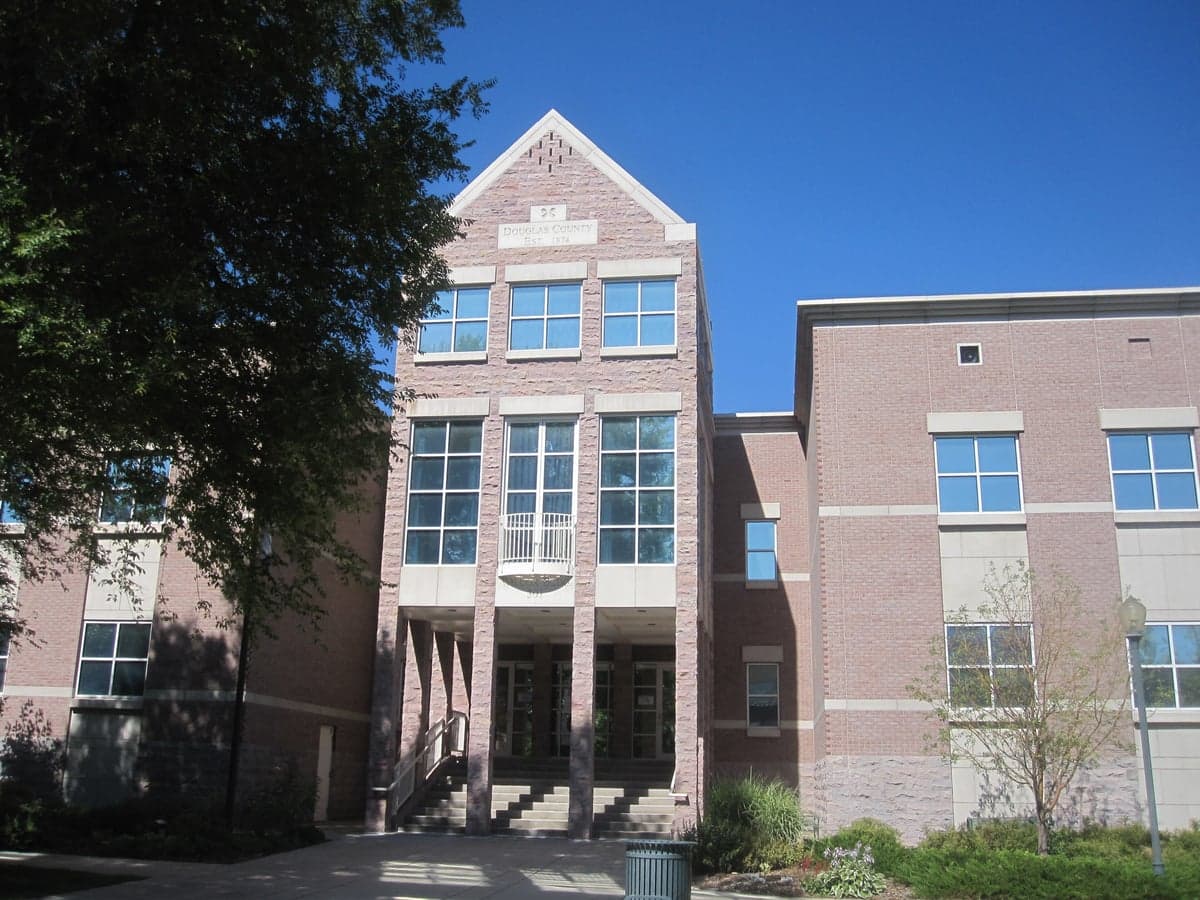
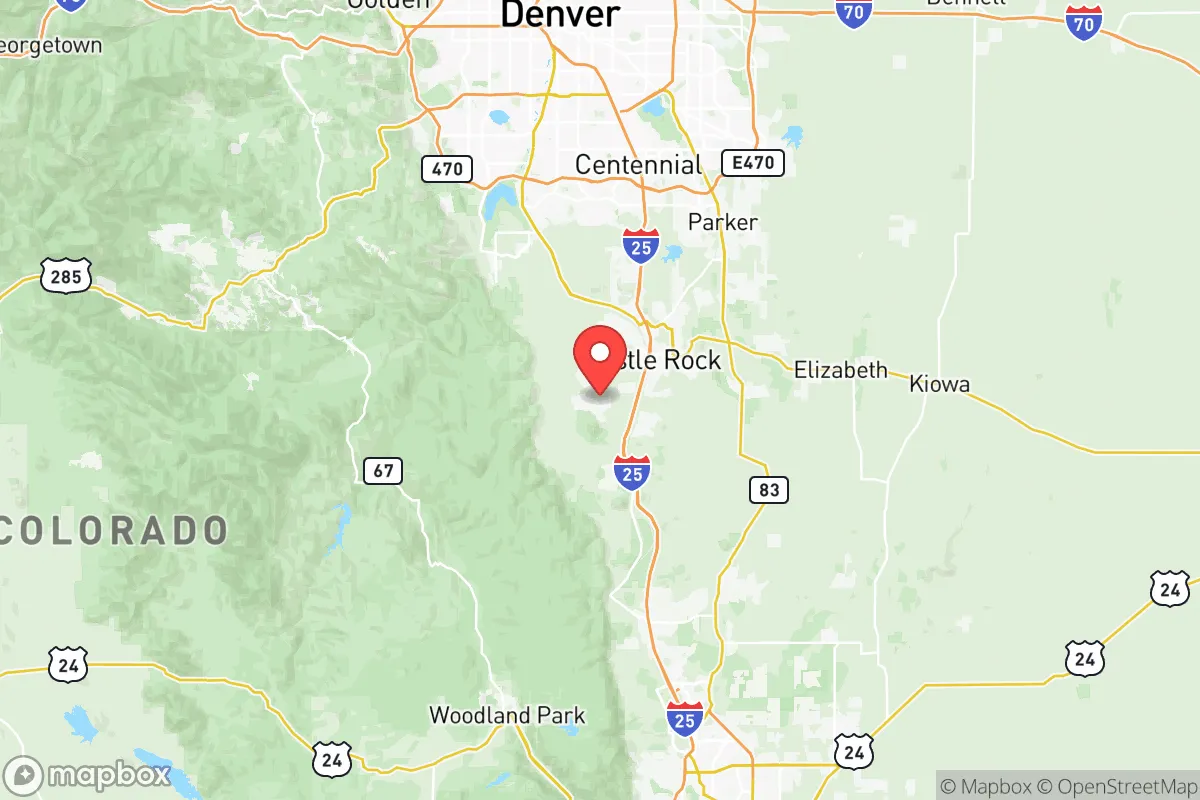
Photo: Wikipedia
Political ClimatePolitical Climate in Douglas County
Showing district-level results — no local-only data available.
Local Political AnalysisPolitical Analysis of Douglas County
Douglas County has long been one of the most reliably conservative strongholds in Colorado, and that reputation still holds true today. The Cook PVI rating of R+9 tells you the baseline, but if you’ve lived here as long as I have, you know the story runs deeper. Places like Castle Rock, Parker, and Highlands Ranch have been the backbone of that red vote for decades, and while the county as a whole still leans hard right, you’re starting to see some real cracks in the foundation—especially in the newer developments closer to the Denver metro line.
How it compares
The contrast with the rest of Colorado is stark. The state as a whole carries a Cook PVI of D+6, meaning it’s now a solidly blue state, driven largely by Denver, Boulder, and the Front Range urban corridor. Douglas County sits as a conservative island in that sea. In the 2024 presidential election, the county voted for the Republican candidate by a margin of roughly 15 points, while the state went blue by about 12. That’s a 27-point gap. But here’s where it gets interesting: the towns aren’t all the same. Castle Rock and Parker remain deeply red, with precincts routinely voting 60-70% Republican. Highlands Ranch, once the gold standard of suburban conservatism, has shifted slightly—some precincts near the C-470 corridor are now swing areas, with Democratic votes creeping into the 45-48% range. Lone Tree and the southern parts of Douglas County near the Colorado Springs line are still reliably conservative, but the newer master-planned communities like Sterling Ranch are attracting younger families from blue areas, and you can see the needle moving. The swing precincts are mostly in the northern tier, closest to Denver, where transplants bring their urban voting habits with them.
What this means for residents
For those of us who value limited government and personal freedoms, the trajectory is concerning. The county commission is still Republican-controlled, but the margin has narrowed. In 2022, a Democrat came within 4 points of winning a county commissioner seat in a district that includes parts of Highlands Ranch and Lone Tree—something unthinkable a decade ago. School board races have become battlegrounds, with progressive candidates winning seats in the Douglas County School District in 2023, pushing policies on curriculum transparency and parental rights that feel like a direct challenge to local control. Property taxes remain relatively low compared to neighboring counties, but there’s growing pressure to increase them for transit and affordable housing projects. The county’s stance on Second Amendment rights is still strong—concealed carry permits are issued without excessive red tape—but state-level laws from Denver are chipping away at that. If the trend continues, Douglas County could look more like Arapahoe County within a decade: still purple, but leaning blue in key races.
Culturally, Douglas County still feels like the Colorado I grew up in—where people wave from their trucks, kids play outside without constant supervision, and the local government mostly stays out of your business. But the influx of out-of-state residents, especially from California and the Northeast, is changing the feel. You see more “In This House We Believe” signs in Highlands Ranch and Lone Tree than you did five years ago. The county’s leadership is fighting to preserve its conservative character, but the battle is real. If you’re looking for a place where your vote still counts and your voice still matters, Douglas County is it—for now. Keep an eye on the 2026 midterms; that’ll tell you whether we hold the line or start sliding.

State Political ClimatePolitical Climate in Colorado
State Political AnalysisPolitical Environment in the State
Colorado has shifted from a classic purple swing state to a solidly blue-leaning state over the past two decades, with a Cook Partisan Voting Index of D+6. The dominant coalition is a mix of Denver-metro progressives, suburban moderates, and a growing number of out-of-state transplants, particularly from California and the Northeast. The trajectory has been a steady leftward march since 2004, when the state voted for George W. Bush, but the real acceleration came after 2016, with Democrats now controlling the governorship, both chambers of the legislature, and all statewide offices. For a conservative considering relocation, the state’s political culture is increasingly at odds with traditional values, though there are still pockets of resistance, particularly in the eastern plains and western slope.
Urban vs. rural divide
The political map of Colorado is a stark tale of two states. The Denver-Boulder corridor, including Denver, Boulder, and the inner-ring suburbs like Aurora and Lakewood, is the engine of Democratic dominance, with Boulder County routinely delivering 70-80% of its vote to Democrats. The Front Range suburbs that were once swing areas, such as Jefferson County (Jeffco) and Arapahoe County, have flipped decisively blue since 2016, driven by an influx of younger, college-educated professionals and out-of-state transplants. In contrast, the eastern plains—places like Yuma, Kit Carson, and Cheyenne counties—vote Republican by margins of 70-80%, but their populations are tiny and shrinking. The Western Slope, including Mesa County (Grand Junction) and Montrose County, remains reliably red, but even there, resort towns like Aspen and Telluride are deep-blue islands. The rural-urban divide is so pronounced that a conservative moving to Colorado must understand that your vote will likely be drowned out if you settle anywhere along the I-25 corridor from Fort Collins to Colorado Springs.
Policy environment
Colorado’s policy environment has become a laboratory for progressive governance. The state income tax is a flat 4.4%, but that’s paired with a high state sales tax (2.9% state, plus local add-ons that can push it over 10% in places like Denver). Property taxes are relatively low by national standards, but the state’s regulatory posture is aggressive. The Colorado Air Quality Control Commission has imposed strict emissions rules that effectively ban new gas-powered car sales by 2035, and the state has adopted California-style vehicle emissions standards. On education, Colorado has a robust school choice system, including charter schools and open enrollment, but the state’s Department of Education has pushed progressive curricula, including comprehensive sex education and critical race theory-inspired frameworks. Healthcare is dominated by the state-run Connect for Health Colorado exchange, and the state has expanded Medicaid under the Affordable Care Act. Election laws are among the most liberal in the nation: universal mail-in voting, same-day registration, and automatic voter registration are the norm. For a conservative, the policy environment feels like a slow but steady encroachment on local control and personal choice.
Trajectory & freedom
Colorado is becoming less free by any objective measure, especially for conservatives. The most glaring example is the Red Flag law (HB19-1177), passed in 2019, which allows courts to temporarily seize firearms from individuals deemed a risk to themselves or others, with no criminal conviction required. This was followed by a 2021 law requiring universal background checks for private firearm sales and a 2023 law raising the minimum age to purchase any firearm to 21. On parental rights, the 2023 Family Preservation Act weakened parental notification requirements for minors seeking reproductive care, and the state has codified abortion access as a “fundamental right” under the Reproductive Health Equity Act (2022). Medical autonomy took a hit with the state’s strict COVID-19 vaccine mandates for healthcare workers and state employees, which were upheld by courts. Property rights are under pressure from the state’s land-use reform bills (SB23-213 and SB24-174), which preempt local zoning to force higher-density housing near transit, overriding local control. The trajectory is clear: more state-level mandates, fewer local options, and a shrinking sphere of personal liberty.
Civil unrest & political movements
Colorado has seen its share of political flashpoints. The 2020 George Floyd protests in Denver turned violent, with property damage and clashes between police and demonstrators, and the city’s defund-the-police movement led to a temporary reduction in the police budget, though it was later restored. On the right, the Colorado Springs-based “Freedom Riders” and the Weld County “Three Percenter” movement have been active, though they lack mainstream influence. Immigration politics are a hot-button issue: Denver has declared itself a sanctuary city, and the state’s 2023 “Protect Our Neighbors” law limits cooperation between local law enforcement and federal immigration authorities. The influx of migrants from the southern border has strained Denver’s social services, leading to visible encampments and public backlash. Election integrity remains a concern for conservatives, with the state’s universal mail-in system and lack of voter ID requirements at the polls fueling distrust. The 2020 election audit in Mesa County, where a Republican clerk was indicted for allegedly allowing unauthorized access to voting machines, became a national flashpoint. A new resident will notice the political tension most acutely in the culture war over schools, with conservative parents in Douglas County and El Paso County organizing against progressive curricula.
Projection
Over the next 5-10 years, Colorado will likely become more blue and more centralized. Demographic trends are relentless: the Denver metro area continues to grow, attracting young, left-leaning professionals, while rural counties continue to depopulate. The state’s 2024 redistricting already cemented Democratic advantages in congressional seats, and the state’s independent redistricting commission is likely to keep maps tilted toward urban areas. The Colorado Democratic Party is pushing for a state-level wealth tax and a public option for health insurance, both of which could pass in the next few years. The only wildcard is the growing backlash in the suburbs—places like Douglas County, which flipped from red to purple in 2020 but may swing back if parents’ rights and school issues remain salient. However, the in-migration from blue states shows no signs of slowing, and the state’s economy, driven by tech, renewable energy, and outdoor recreation, attracts a workforce that aligns with progressive values. A conservative moving in now should expect to be a permanent minority in state politics, with limited ability to influence policy at the state level.
Bottom line for a new resident: If you’re a conservative considering Colorado, you’re moving into a state where your political voice will be muted at the state level, but you can still find community in the eastern plains, the Western Slope, or the conservative suburbs of Colorado Springs and Douglas County. You’ll pay higher taxes, deal with more regulations, and watch your gun rights erode, but you’ll also enjoy world-class outdoor amenities and a strong economy. The key is to choose your location carefully—avoid Denver, Boulder, and the inner suburbs if you want to live among like-minded neighbors. And be prepared for the culture war to be a constant presence in your daily life, from school board meetings to local elections. Colorado is a beautiful state, but it’s no longer a politically neutral one.
* Values derived from national, state, county, city and local statistics and may differ in a specific area. Last updated: 2026-05-12T11:55:31.000Z
Narrative content on this page is AI-generated and may contain mistakes. Verify any details that matter before acting on them.
ReloMaps may earn a commission from affiliate links at no extra cost to you.

