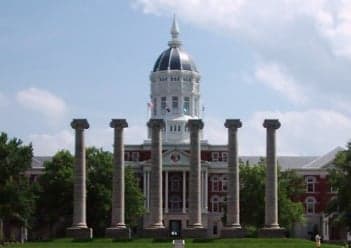
Photo: Wikipedia
Quality of Life in Columbia, MO
A high quality of life with strong walkability, manageable living costs, healthy neighborhood signals, and solid amenity access.
What does Quality of Life tell us?
Quality of Life blends cost of living, nearby amenities, socioeconomic signals, and neighborhood character. City-level scores represent the whole municipality; individual neighborhoods can differ.
What does this tell us?
Quality of Life blends cost of living, nearby amenities, socioeconomic signals, and neighborhood character. City-level scores represent the whole municipality; individual neighborhoods can differ.
Cost of Living
7% below national average
The Real Cost of Living in Columbia, MO for 2026
| Tier | Individual | Family (4) |
|---|---|---|
| Survival | $17k | $32k |
| Comfortable | $52k | $77k |
| Luxury | $116k+ | $181k+ |
| Elite (Top 5%) | $154k+ | $239k+ |
84%
The Area Signal
A metric tracking the socioeconomic signals of the area.
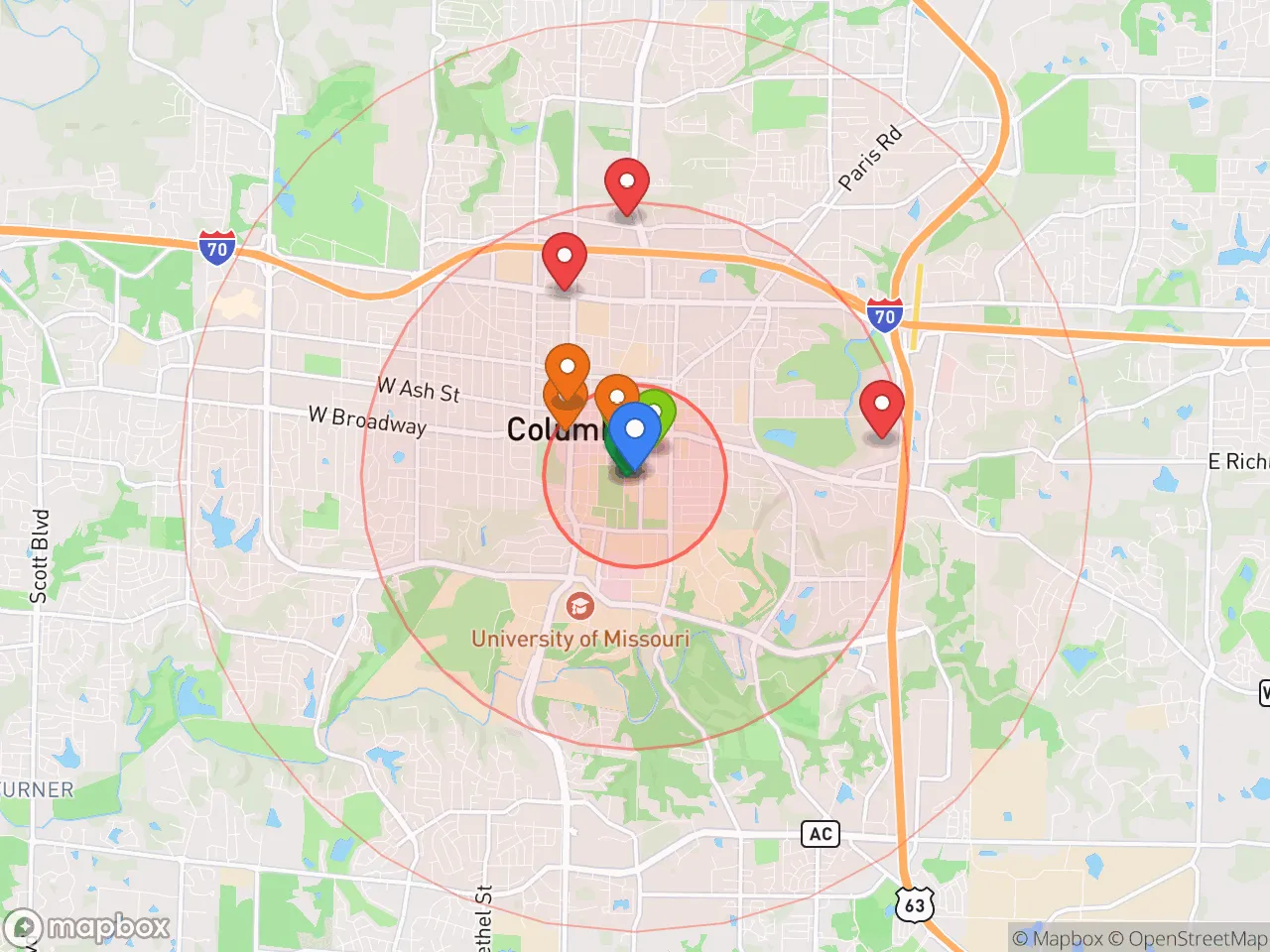
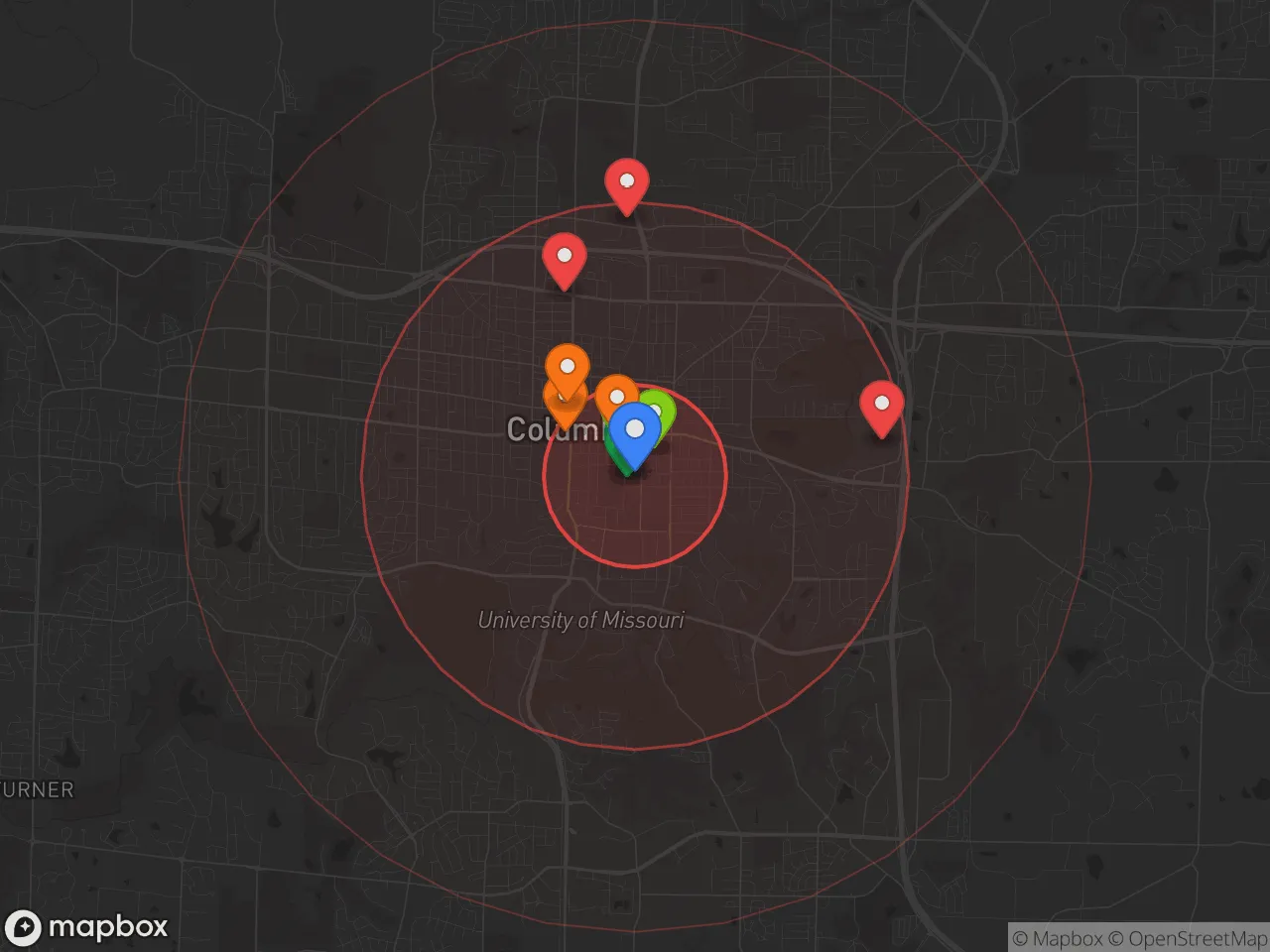
Hobbies
Explore the areaGroceries
6 within 10 miles
Gas
20 within 10 miles
Hospital
9 within 20 miles
Airport
MCI — Kansas City International
Post Office
USPS — Columbia, MO
Critical Amenities
Quality-of-Life Analysis
Columbia, Missouri, sits at a notable intersection of Midwestern affordability and college-town vitality, with a cost-of-living index of 93 (100 = U.S. average) that undercuts the national norm while offering a quality of life anchored by the University of Missouri. The city’s population of roughly 128,000 is a blend of university faculty, students, healthcare professionals, and remote workers drawn to a community where the median household income of $56,000 supports a comfortable lifestyle. This is not a high-gloss boomtown but a stable, educated enclave where everyday expenses leave room for leisure and savings.
Cost of living, housing, and how Columbia compares to nearby cities
Columbia’s housing market remains one of its strongest draws. The median home value of $268,300 is roughly $50,000 below the national median, while the median rent of $1,067 is nearly $300 less than the U.S. average. Compared to Jefferson City (30 miles south) or St. Louis (120 miles east), Columbia’s home prices are 10-15% higher, but the trade-off is a more robust job market and a younger demographic. The average commute of 16.7 minutes is a standout — nearly half the national average of 27 minutes — meaning residents reclaim significant time from traffic. Utility costs and grocery prices align closely with the state average, keeping the overall COL index at 93. For renters, the market is tight near the university campus but more negotiable in neighborhoods like West Columbia or the Arcadia District, where single-family rentals under $1,200 are still findable.
Schools, amenities, and what daily life feels like in Columbia
Daily life in Columbia revolves around its walkable downtown, the sprawling University of Missouri campus, and a network of parks that includes the 200-acre Stephens Lake Park and the 4,000-acre Rock Bridge Memorial State Park just south of town. The Columbia Public School District serves roughly 18,000 students and is consistently rated among Missouri’s top 10 districts, with Rock Bridge High School and Hickman High School both offering strong Advanced Placement programs and competitive athletics. For families, the city’s 30+ public parks, the Columbia Farmers Market (open April through October), and the annual True/False Film Festival provide a steady rhythm of community events. Healthcare access is excellent: Boone Hospital Center and MU Health Care anchor a system that draws patients from a 10-county region. The university also fuels a lively arts and dining scene — from the Missouri Theatre to locally owned restaurants like 44 Canteen and Barred Owl Butcher & Table — that gives the city a cultural pulse rare for its size.
Columbia is best suited for people who value a moderate cost of living, short commutes, and access to university-level amenities without big-city congestion. Families will find strong public schools and safe neighborhoods (the city’s violent crime rate is below the national average for metro areas of its size). Young professionals and graduate students benefit from a job market anchored by the university, the VA Hospital, and major employers like Shelter Insurance and Carfax. Retirees on fixed incomes will appreciate the low rent and property taxes (roughly 0.85% of assessed value). The trade-offs are a limited nightlife compared to larger metros and a humid continental climate with hot summers and cold winters. For those who prioritize walkability, education, and a tight-knit community over urban flash, Columbia delivers a consistently high quality of life at a price that remains hard to beat in the Midwest.

Crime in Columbia, MO
Crime rates similar to the national median for U.S. locations.
Violent CrimeViolent Crime Analysis
Property CrimeProperty Crime Analysis
Crime Analysis
Columbia, Missouri, reports a violent crime rate of 413.1 incidents per 100,000 residents and a property crime rate of 1,644.4 per 100,000, placing it above both the state and national averages for public safety risk. These figures indicate that while Columbia is not among the most dangerous cities in the country, it presents a higher-than-average likelihood of encountering crime compared to typical U.S. municipalities. The city's status as a college town and regional economic hub contributes to a dynamic but also challenging public safety environment.
Crime in context
Columbia's violent crime rate of 413.1 per 100,000 is roughly 18% higher than the national average and significantly exceeds the Missouri state average of approximately 350 per 100,000. Property crime in Columbia, at 1,644.4 per 100,000, is also elevated—about 30% above the national property crime rate of roughly 1,200 per 100,000. These numbers place Columbia in a higher-risk tier compared to similarly sized Midwestern cities like Lawrence, Kansas, or Iowa City, Iowa. A key contributing factor is the progressive judicial philosophy prevalent in Boone County, where liberal district attorneys and judges often prioritize rehabilitation and diversion programs over incarceration. While intended to reduce recidivism, this approach can result in repeat offenders cycling back onto the streets more quickly, directly undermining public safety and victim justice. Residents and prospective movers should weigh this systemic factor heavily when assessing long-term safety trends.
What residents experience
For those living in Columbia, property crime is the most tangible threat. Vehicle break-ins, bicycle thefts, and package thefts are common, particularly near the University of Missouri campus and in student-heavy neighborhoods like East Campus and the downtown district. Violent crime, while less frequent, is concentrated in specific areas and often involves disputes among acquaintances rather than random attacks. However, the presence of progressive prosecution policies means that even violent offenders may face reduced charges or early release, eroding deterrence and increasing the risk of repeat victimization. Daily life for families and professionals often involves taking proactive precautions: using security cameras, avoiding poorly lit areas at night, and locking vehicles and homes consistently. The Columbia Police Department has around 130 sworn officers, but staffing shortages can delay response times for non-emergency calls.
Neighborhood-level safety varies considerably. The southwestern and western parts of Columbia—including areas near the Forum Boulevard corridor and the Twin Lakes neighborhood—generally report lower crime rates. In contrast, the central city corridor along Business Loop 70 and parts of the north side near Vandiver Drive experience higher concentrations of both property and violent crime. Prospective residents should research block-level crime maps and consider visiting neighborhoods at different times of day to gauge real-world conditions. While Columbia offers cultural and educational amenities, its elevated crime rates and progressive justice system create a safety profile that demands careful, data-informed consideration.
* Values derived from national, state, county, city and local statistics and may differ in a specific area. Last updated: 2026-04-30T06:36:01.000Z
Narrative content on this page is AI-generated and may contain mistakes. Verify any details that matter before acting on them.
ReloMaps may earn a commission from affiliate links at no extra cost to you.

