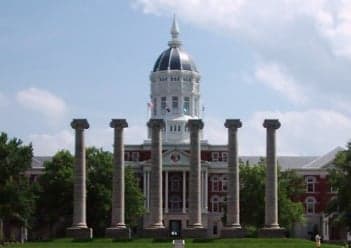
Photo: Wikipedia
Strategic Assessment of Columbia, MO
Workable tactical position. Some exposure to population density or targets, but generally defensible in a crisis.
What does the Strategic Assessment tell us?
Our Strategic Assessment grades tactical survivability of an area. Major population centers, military targets, fallout zones, natural disasters, and border exposure all drive risk — lower exposure means a more defensible position in a crisis.
This is heavily inspired by Joel Skousen's Strategic Relocation book. Highly recommended you checkout the book ($)What does this tell us?
Our Strategic Assessment grades tactical survivability of an area. Major population centers, military targets, fallout zones, natural disasters, and border exposure all drive risk — lower exposure means a more defensible position in a crisis.
This is heavily inspired by Joel Skousen's Strategic Relocation book. Highly recommended you checkout the book ($)Strategic Pillars

Key Distances
Regional Safe Places
Below is our recommended "safe zones" in Missouri and the surrounding area based on our strategic heuristics. For most people, it's unrealistic to live in a “safe zone” full-time due to work, family or other personal reasons. They tend to be more rural. However, many of these areas are perfect for second homes and retreat properties that double as a vacation home or even a short-term rental.


Important Note: For informational purposes only. This does not mean nothing bad ever happens in the green zones. Please use common sense. This is based on public data and modeled with AI. We tried to take a conservative approach but mistakes happen. We update this regularly as new information becomes available.
Solar Generator Recommendations
Backup power matters more here than in safer locations. We've picked three solar generators across budgets and capacity tiers — start with the budget unit if you only need a few essentials, or step up if you want to run a fridge and HVAC for days at a time.

Jackery Portable Power Station Explorer 300
Budget OptionPower on the Go: Weighing only 11 lbs, it's convenient to set up and store with book-sized foldable solar panels

BLUETTI Portable Power Station AC180
Designed for both indoor and outdoor scenarios, AC180 is highly capable as it has a robost capacity and continuous output power.

EF ECOFLOW DELTA Pro Ultra Power Station
Upgraded PickEcoFlow DELTA Pro Ultra is a whole-home energy system designed to grow with your family. Integrated with the Smart Home Panel 2, it scales to meet your evolving energy needs — keeping your home powered, intelligent, and secure through every stage of life.
We earn a commission, at no additional cost to you.
Strategic Assessment Analysis
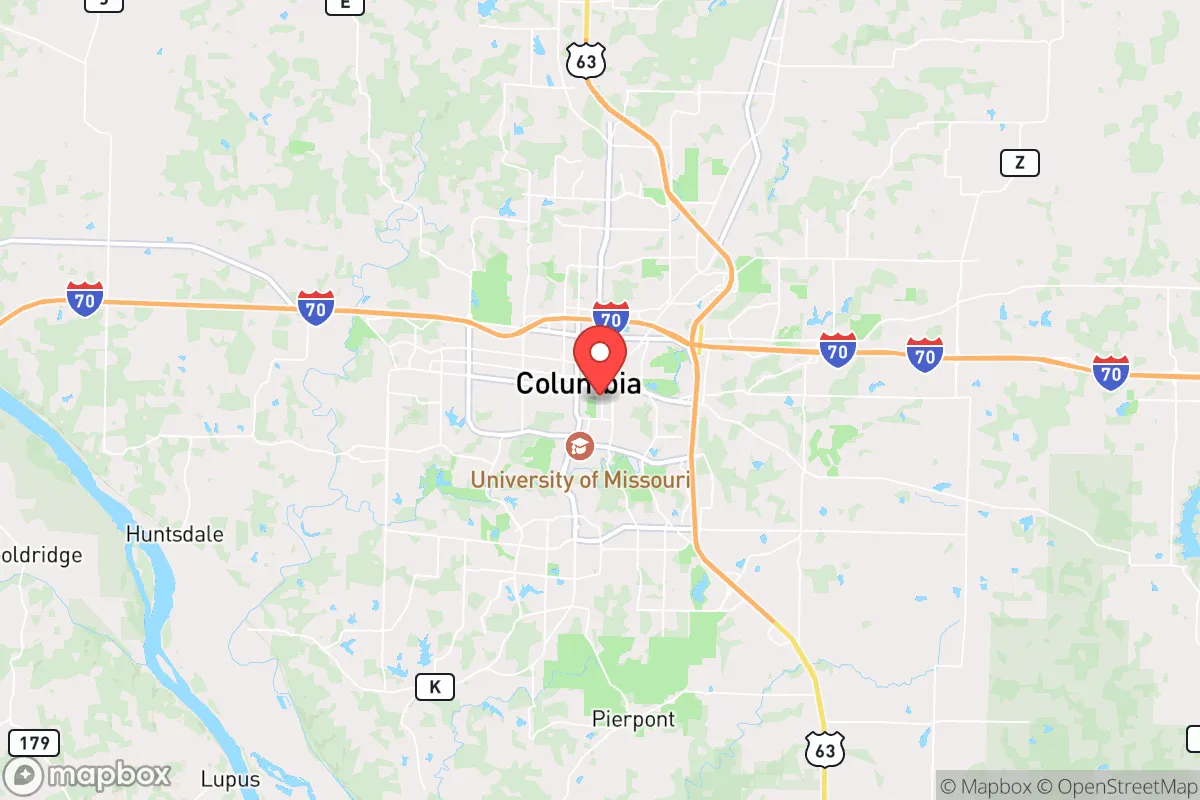
Columbia, Missouri, sits in a geographic sweet spot that offers more strategic depth than most Midwestern college towns. Located roughly midway between St. Louis and Kansas City, it’s far enough from both major metros to avoid the worst fallout of a major urban collapse—think mass evacuation gridlock, supply chain cutoff, or civil unrest spillover—yet close enough to access those cities’ resources if you plan ahead. The city’s population of around 130,000 gives it enough density to maintain essential services and a local economy, but not so much that it becomes a target or a tinderbox. For a relocator thinking in terms of decades, not election cycles, Columbia’s real advantage is its position in the heart of the Missouri River Valley, with rich agricultural land, reliable water sources, and a climate that supports year-round food production. It’s not a bunker, but it’s a solid base camp.
Geographic position and natural advantages for long-term stability
Columbia sits on the northern edge of the Ozark Plateau, where the rolling hills give way to the Missouri River floodplain. This topography provides natural drainage, decent soil for gardening, and enough tree cover to offer some visual and thermal concealment. The area is not prone to earthquakes, hurricanes, or wildfires—the big natural threats are tornadoes and occasional flooding along the river bottoms, both of which are manageable with proper planning. The Missouri River itself is a major asset: it’s a reliable surface water source for irrigation, livestock, and emergency supply, and it connects to the Mississippi River system, which could become a critical transport corridor if highways are compromised. The surrounding counties—Boone, Cooper, Howard—are among the most productive agricultural regions in the state, with corn, soybeans, hay, and cattle operations within a 30-minute drive. For a prepper, that means local food production is not theoretical; it’s already happening at scale. The climate is humid continental, with hot summers and cold winters, but the growing season averages 180 days, long enough for two crop cycles of most vegetables. Groundwater is abundant, and the city’s water utility draws from the Missouri River and deep aquifers, giving multiple redundancy layers. The biggest natural advantage, though, is the lack of choke points. Columbia is not a mountain pass, a bridge town, or a coastal bottleneck. There are multiple state highways and county roads leading in and out, which means you’re not trapped if one route gets blocked.
Risks, exposures, and proximity to fallout-relevant landmarks
No strategic assessment is honest without naming the liabilities. Columbia’s biggest exposure is its proximity to two major population centers: St. Louis (120 miles east) and Kansas City (125 miles west). In a national emergency—say, a pandemic, economic collapse, or widespread civil unrest—both cities would likely become humanitarian crises, and their populations would spill outward. Columbia sits on I-70, the main east-west artery across Missouri, which means it would be a natural funnel for evacuees. The city’s police force is around 130 officers, and the Boone County Sheriff’s Office adds another 60. That’s not enough to control a mass influx of desperate people. The University of Missouri campus, with its 30,000 students, is another risk factor. In a breakdown scenario, a large, transient, young population with limited local ties could become a source of instability—looting, protest escalation, or simply overwhelming local resources. There are also two state prisons within 30 miles: the Jefferson City Correctional Center and the Algoa Correctional Center. In a total system collapse, those facilities could become security liabilities. On the positive side, Columbia has no military bases, no nuclear plants, no major chemical storage facilities, and no obvious terrorist targets. The nearest nuclear reactor is the Callaway Plant, about 30 miles southeast near Fulton. That’s close enough to be a concern for fallout in a worst-case accident or attack, but far enough that a well-prepared household with a basement and a few weeks of supplies would likely be safe. The biggest risk is not a single event—it’s the slow bleed of a failing system, and Columbia’s position on the I-70 corridor makes it a pressure point.
Practical resilience for a relocator: food, water, energy, and defensibility
For a single person or family looking to set up a resilient household, Columbia offers a mix of suburban and rural options within a 20-minute drive of downtown. The key is to avoid the dense subdivisions near the university or the hospital complex—those areas would be the first to see resource competition. Instead, look at the outer ring: Hallsville, Harrisburg, or the area around Finger Lakes State Park. These spots have well water, septic systems, and enough land for a garden and a few chickens. The local soil is loamy and workable, and the growing season supports tomatoes, peppers, beans, squash, and root vegetables. For protein, deer are abundant in the surrounding woods, and the Missouri River offers catfish and carp. The city has a strong farmers’ market culture, with the Columbia Farmers Market operating year-round, which is a good way to build local supply relationships before things get tight. Energy resilience is mixed. Columbia Water and Light provides municipal electricity, and the grid is reasonably stable, but it’s not hardened against EMP or cyberattack. Solar is viable—the area gets about 200 sunny days per year—and there are no HOA restrictions in unincorporated Boone County that would prevent panels or a backup generator. Natural gas is available in most of the city, but rural properties rely on propane or wood. For defensibility, the terrain is not mountainous, but the rolling hills and tree lines provide decent cover. A rural property with a long driveway, a fence, and a clear view of approach routes is achievable for under $300,000. The local gun culture is strong, with several ranges and gun shops, and Missouri is a constitutional carry state. That means you can legally defend your home without bureaucratic hurdles. The biggest practical weakness is the lack of a deep, self-sufficient community of like-minded preppers. Columbia is a liberal college town, and most of your neighbors will not be thinking about collapse scenarios. You’ll need to be the one who builds the network, or you’ll be on your own.
Overall, Columbia is a B-tier strategic relocation option for a conservative-minded prepper. It’s not a remote mountain redoubt, and it’s not a self-sufficient homestead paradise. But it offers a realistic balance: good soil, reliable water, moderate climate, and a location that’s close enough to civilization to be useful but far enough to avoid the worst of a collapse. The biggest threat is the I-70 corridor and the university population, both of which could turn into liabilities in a crisis. If you’re willing to invest in a rural property on the outskirts, build a solid food and water stockpile, and keep a low profile, Columbia can work as a long-term base. It’s not a place to ride out a nuclear war, but for the more likely scenarios—economic instability, supply chain disruptions, localized unrest—it’s a defensible, productive, and livable choice. The key is to act now, before the next wave of coastal refugees discovers it.

* Values derived from national, state, county, city and local statistics and may differ in a specific area. Last updated: 2026-04-30T06:36:01.000Z
Narrative content on this page is AI-generated and may contain mistakes. Verify any details that matter before acting on them.
ReloMaps may earn a commission from affiliate links at no extra cost to you.

