Photo: Wikipedia
Demographics of Columbia, SC
Affluence Level in Columbia, SC
A below-average socioeconomic profile. Incomes, home values, and educational attainment trail the U.S., with higher poverty and unemployment.
People of Columbia, SC
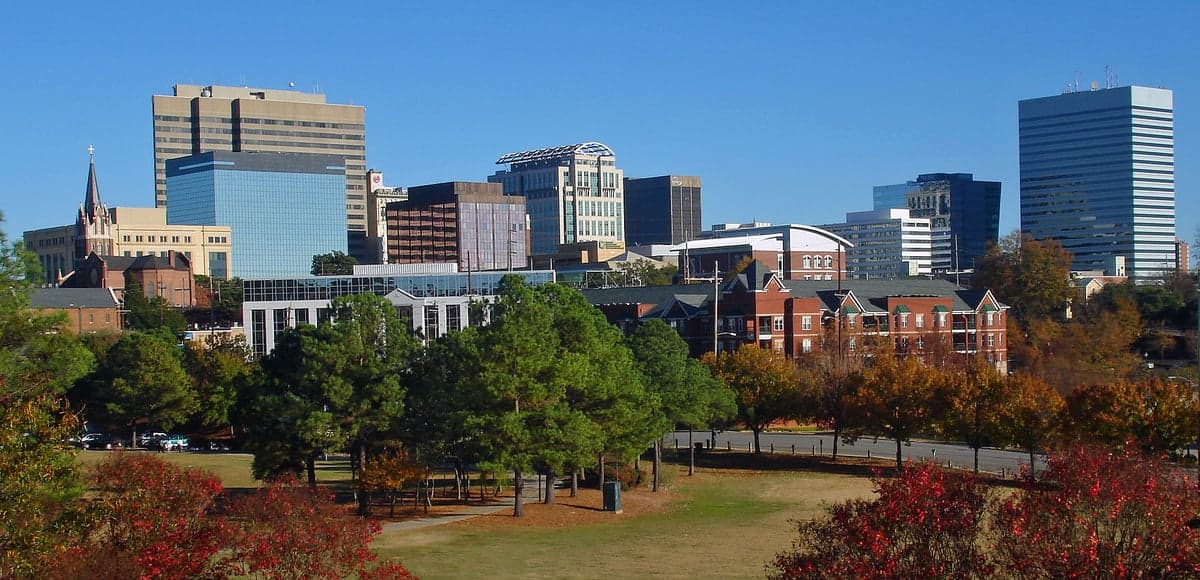
The people of Columbia, South Carolina, today form a city of 138,019 residents that is nearly evenly split between Black (39.0%) and White (47.9%) populations, with a small but growing Hispanic community (5.7%) and a modest East/Southeast Asian presence (1.7%). The city is notably well-educated—46.1% of adults hold a college degree—yet its foreign-born share is just 3.2%, well below the national average, reflecting a population shaped far more by domestic migration than international immigration. Distinctive identity markers include a strong state-government and university-anchored professional class, a historically significant African American community with deep roots, and a palpable tension between the progressive-leaning urban core and the more conservative surrounding suburbs.
How the city was settled and grew
Columbia was founded in 1786 as a planned state capital, deliberately situated at the fall line of the Congaree River to serve as a transportation and political hub. The original population was drawn from Lowcountry planters and upcountry farmers, with enslaved African Americans making up a substantial portion of the early labor force that built the city's public buildings and infrastructure. After the Civil War, freedmen and women established vibrant communities in neighborhoods such as Waverly and Earlewood, which became centers of Black entrepreneurship, education, and civic life. The early 20th century brought a wave of rural-to-urban migration by Black South Carolinians seeking industrial and domestic work, while the city's white population grew through the expansion of state government, the University of South Carolina, and textile mills along the Congaree. By 1950, Columbia was a segregated but economically diverse city of roughly 86,000, with distinct white and Black neighborhoods that remain recognizable today.
Modern era (post-1965)
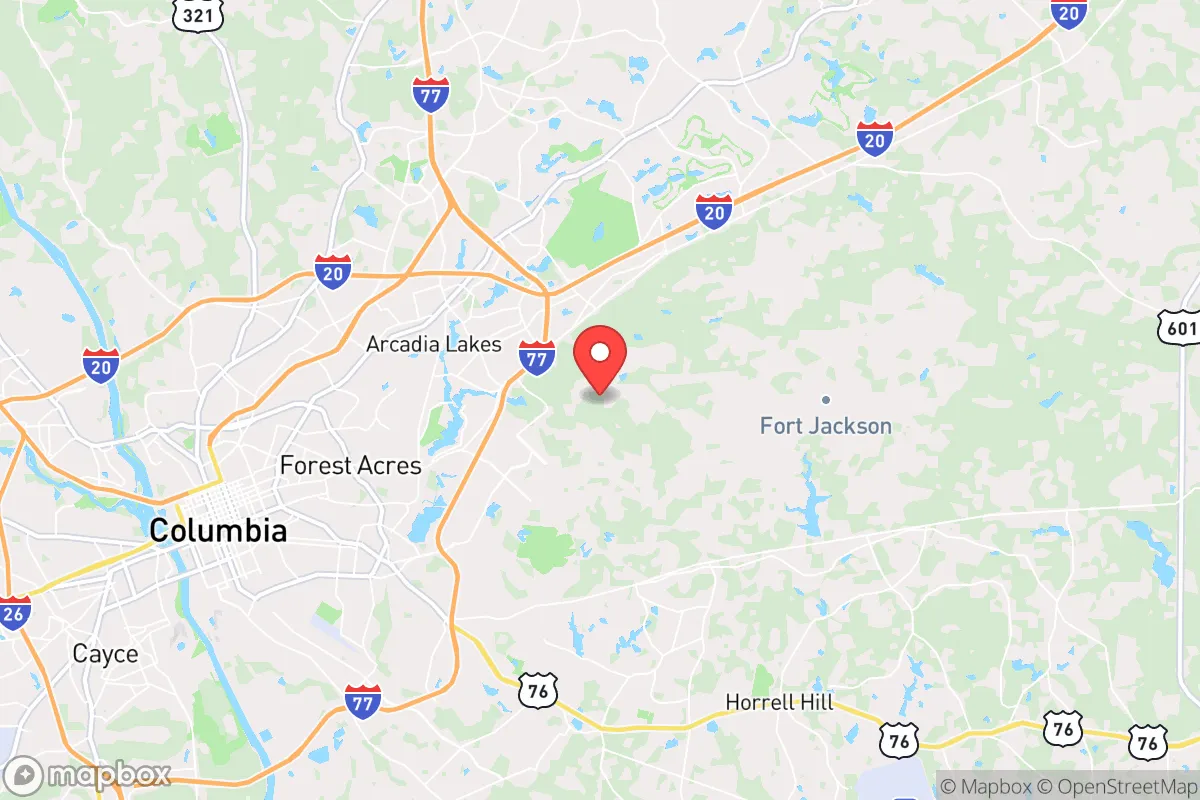
The post-1965 period reshaped Columbia's population through two major forces: the expansion of Fort Jackson and the growth of the University of South Carolina as a regional employer. The 1970s and 1980s saw significant white flight to suburban municipalities like Irmo and Lexington, while Black residents increasingly moved into neighborhoods such as Eau Claire and Belvedere that had previously been white. The city's foreign-born population remained tiny—hovering around 2-3%—as Columbia never attracted the large-scale immigrant streams seen in coastal Southern cities. Hispanic growth began in the 1990s, driven by construction and service jobs, with families settling in North Columbia and parts of Arthurtown. The East/Southeast Asian community, at 1.7%, is largely composed of Vietnamese and Korean families who arrived post-1975, many connected to military service at Fort Jackson. The Indian-subcontinent population (0.9%) is a more recent, professional cohort tied to the university and healthcare sectors, concentrated near the Shandon and Rosewood neighborhoods. Since 2000, the city has seen a modest reversal of white flight, with young professionals and empty-nesters moving into downtown and historic districts like Old Shandon and Melrose Heights.
The future
Columbia's population is trending toward a slow but steady diversification, though the pace is far slower than in Charlotte or Atlanta. The Hispanic share is projected to rise from 5.7% to perhaps 8-10% by 2040, driven by natural increase and continued service-sector demand. The Black share has been stable at roughly 39% for two decades, suggesting a plateau rather than decline. The White share is likely to continue its gradual decrease as the city attracts more non-white residents from elsewhere in South Carolina and the Southeast. The foreign-born share will remain low—likely under 5%—as Columbia lacks the industrial or tech job base that draws large immigrant populations. The most notable trend is the geographic sorting by income and education: college-educated professionals, regardless of race, are concentrating in the downtown and near-downtown neighborhoods, while working-class and lower-income residents are pushed to the outer edges of the city limits and into Richland County's unincorporated areas. This is creating a more economically polarized city, with the Five Points and Vista districts becoming increasingly affluent and the northern and eastern edges seeing less investment.
For someone moving to Columbia now, the city offers a stable, mid-sized Southern capital with a strong sense of place and a population that is more rooted than transient. The low foreign-born share means less cultural friction for conservative-leaning newcomers, but also less of the economic dynamism that immigration brings. The key demographic reality is that Columbia is becoming more educated and more economically stratified, with the best opportunities concentrated in the urban core and the best schools in the surrounding suburbs. It is a city where who you know and where you live matter more than in faster-growing metros, and where the population's character remains distinctly Southern, government-anchored, and family-oriented.

* Values derived from national, state, county, city and local statistics and may differ in a specific area. Last updated: 2026-04-23T04:57:37.000Z
Narrative content on this page is AI-generated and may contain mistakes. Verify any details that matter before acting on them.
ReloMaps may earn a commission from affiliate links at no extra cost to you.

