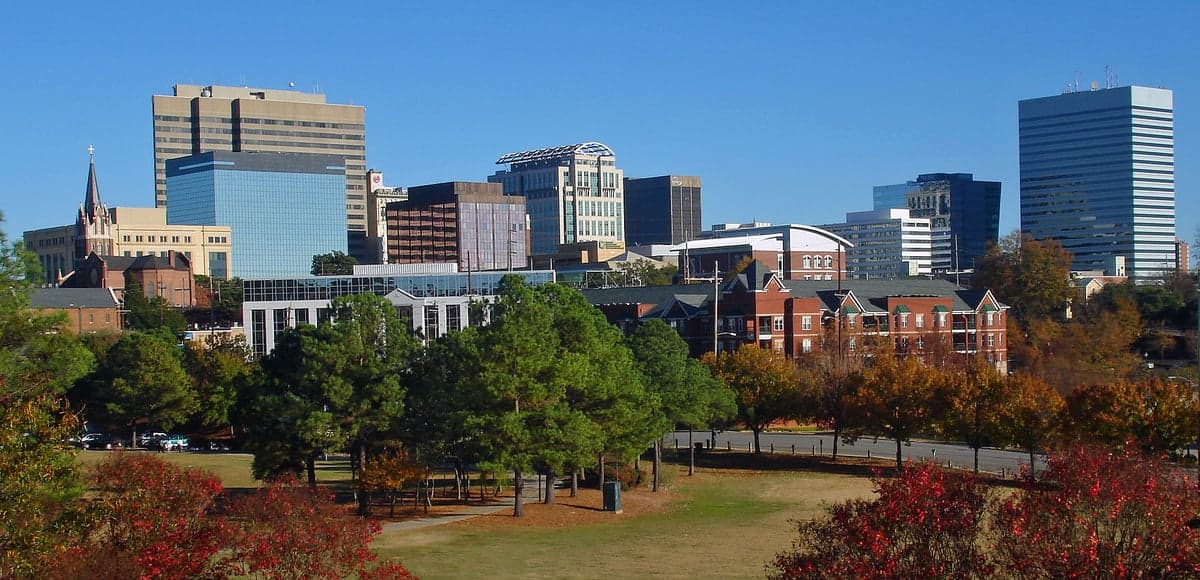
Photo: Wikipedia
Political ClimatePolitical Climate in Columbia, SC
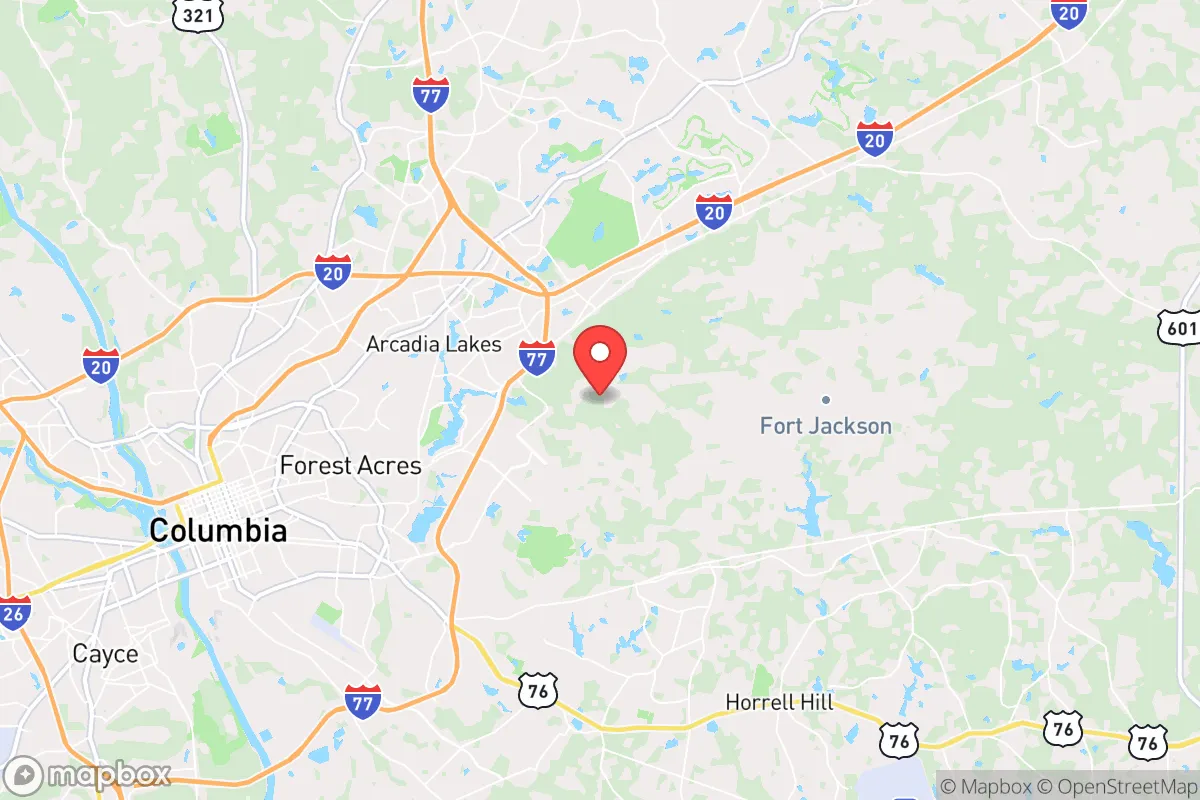
District shown is the primary district for this city’s centroid. Cities may span multiple districts.
Local Political AnalysisPolitical Analysis of Columbia, SC
Columbia sits in a peculiar political spot. The city itself, anchored by the state university and a growing government sector, has drifted noticeably left in recent years, but the surrounding Richland and Lexington counties keep the metro area’s overall tilt much more balanced. The Cook PVI for the region is R+7, which means the district leans Republican by seven points relative to the national average. That number feels about right if you look at the whole picture, but it masks a real split: drive ten minutes west into Lexington or Irmo and you’re in solid red territory, while downtown Columbia and the neighborhoods near USC vote reliably blue. The trajectory over the past decade has been a slow but steady shift toward progressive policies in the city core, while the suburbs have held firm or even hardened their conservative stance.
How it compares
If you want to see the contrast, just look at the towns surrounding Columbia. Lexington, about 15 minutes west, is a stronghold of traditional values—lower taxes, fewer regulations, and a school board that hasn’t bought into the latest social experiments. Irmo and Chapin are similar, with residents who tend to vote for limited government and local control. Head east toward Sumter or south toward Orangeburg, and you’ll find more conservative-leaning rural areas that are wary of Columbia’s urban agenda. The city itself, though, has become a bit of an island. The county council and city council have pushed through zoning changes and spending increases that would never fly in the surrounding counties. It’s a classic urban-suburban divide, and it’s getting wider every election cycle.
What this means for residents
For someone who values personal freedoms and limited government, the biggest concern is how much the city’s progressive tilt affects daily life. Property taxes in Richland County have climbed steadily, partly to fund expanded city services and public-sector salaries that many residents feel are out of step with the local economy. There’s also been a push for more regulations on short-term rentals, business licensing, and even lawn care—small things that add up to a feeling of government overreach. The school system, Richland School District One, has faced controversy over curriculum changes and discipline policies that some parents see as prioritizing ideology over academics. Meanwhile, Lexington County schools operate with a more traditional approach, and that difference is driving families to move west. If you’re looking to buy a home or start a business, the political climate in Columbia proper means you’ll deal with more red tape and higher costs than you would just a few miles away.
On the cultural side, Columbia has embraced a more progressive identity in recent years. The city flies the Pride flag year-round, hosts numerous social justice events, and the university’s influence pushes the local media and arts scene leftward. For a conservative resident, this can feel like a constant drumbeat of messaging that doesn’t reflect their values. The state legislature in Charleston and Columbia still holds a strong Republican majority, so there’s a check on the most extreme local proposals, but the city council has shown it’s willing to test those limits. Looking ahead, I’d expect the divide to deepen. More families and businesses will likely continue relocating to Lexington and the surrounding counties, leaving Columbia as a smaller, more progressive urban core. That’s not necessarily a bad thing if you like that environment, but for anyone who values personal liberty and fiscal restraint, the suburbs are where the sensible policies still hold sway.

State Political ClimatePolitical Climate in South Carolina
State Political AnalysisPolitical Environment in the State
South Carolina has long been a reliably red state, but the political climate here is more layered than the simple "Republican stronghold" label suggests. The state leans solidly Republican at the statewide level, with Donald Trump winning by 18 points in 2020 and 17 points in 2024, and the GOP holds supermajorities in both legislative chambers. However, the past 15 years have seen a slow but steady shift: the once-dominant "blue dog" Democrats in rural areas have all but vanished, while explosive growth in the coastal Lowcountry and the Upstate is reshaping the map in ways that both reinforce and complicate the conservative majority.
Urban vs. rural divide
The political geography of South Carolina is a tale of three regions. The Upstate, anchored by Greenville and Spartanburg, is the engine of the state's conservative majority. Greenville County itself is a GOP fortress, voting +30 points Republican in 2024, and the surrounding counties of Pickens, Oconee, and Anderson are even redder. The Midlands, centered on Columbia (Richland County), is the state's most reliably blue area, driven by the state capital's government workforce, the University of South Carolina, and a growing African American population. Richland County voted +28 points Democratic in 2024. The Lowcountry, particularly Charleston (Charleston County), is the state's most politically volatile region. Charleston County has been trending blue for a decade, voting Democratic by 12 points in 2024, driven by an influx of out-of-state professionals and tech workers. However, the suburban ring around Charleston—places like Mount Pleasant and Summerville—remain reliably red, creating a sharp urban-suburban split. The rural Black Belt counties along the I-95 corridor, like Allendale and Williamsburg, are deeply Democratic but shrinking in population, while rural white counties in the Pee Dee and the Lowcountry interior are among the most Republican in the nation.
Policy environment
South Carolina's policy environment is broadly conservative, but with notable nuances. The state has a flat income tax rate of 6.4% (phasing down to 6.0% by 2026), no state property tax on vehicles, and a homestead exemption for primary residences that keeps property taxes relatively low. The regulatory posture is business-friendly, with a right-to-work law and a tort reform system that caps noneconomic damages. On education, the state passed a universal school choice program in 2023 (the Education Scholarship Trust Fund), allowing any family to use state funds for private school tuition, homeschooling expenses, or tutoring—a major win for parental rights. Healthcare policy is mixed: the state did not expand Medicaid under the Affordable Care Act, but it also has a certificate-of-need law that restricts new hospital construction, which some conservatives view as government overreach. Election laws are strict: voter ID is required, early voting was expanded to two weeks in 2022, but absentee voting requires an excuse. The state also passed a 6-week abortion ban in 2023 (the Fetal Heartbeat Act), which has been a flashpoint but remains in effect.
Trajectory & freedom
Over the past five years, South Carolina has moved decisively in the direction of expanding personal liberty on several fronts, but with some concerning counter-trends. On the positive side, the state passed constitutional carry (permitless carry of handguns) in 2024, making it the 29th state to do so. The school choice law mentioned above is a major expansion of parental freedom. The state also passed a Parents' Bill of Rights in 2023, requiring schools to notify parents of any changes to a child's mental, emotional, or physical health—a direct response to the transgender movement in schools. On the concerning side, the state's certificate-of-need law remains a barrier to healthcare freedom, and the state has been aggressive in using eminent domain for economic development projects, particularly in the Charleston area. The state also passed a law in 2022 banning "critical race theory" in public schools, which most conservatives support, but the implementation has led to some curriculum controversies. The biggest freedom concern for many newcomers is the state's property tax system: while rates are low, reassessments can cause sudden spikes, and there is no statewide cap on annual increases.
Civil unrest & political movements
South Carolina has a relatively low level of visible civil unrest compared to states like Oregon or New York, but there are flashpoints. The most significant in recent memory was the 2020 protests in Columbia and Charleston following the George Floyd killing, which included some property damage and clashes with police, but were smaller and shorter-lived than in many other states. The state has a strong and active Second Amendment movement, with groups like the South Carolina Carry organization holding regular rallies at the Statehouse. Immigration politics are less heated than in border states, but there is a growing concern among conservatives about the influx of migrants through the I-95 corridor, particularly in Florence and Sumter. The state has no sanctuary cities, and a 2024 law requires local law enforcement to cooperate with ICE. Election integrity remains a live issue: the state's 2020 election was not seriously contested, but the 2022 law tightening absentee voting was driven by lingering distrust. The most visible political movement on the right is the "Moms for Liberty" chapter in Greenville, which has been active in school board races and library book challenges. On the left, the "Indivisible" group in Columbia has been organizing around abortion rights and voting access.
Projection
Looking ahead 5-10 years, South Carolina is likely to remain a red state, but the margin of Republican dominance will probably narrow. The key demographic driver is the influx of out-of-state migrants, particularly to the Charleston and Greenville metros. Many of these newcomers are conservative-leaning (retirees from the Northeast and Midwest, remote workers from California and New York), but a significant minority are moderate or liberal, especially in the coastal areas. The Charleston metro is projected to add 200,000 people by 2035, and if the trend continues, Charleston County could become a swing county within a decade. The Upstate, however, is growing even faster and is more reliably conservative, so the net effect may be a wash. The biggest wild card is the state's education policy: if the school choice program proves popular and effective, it could cement the state's conservative reputation and attract more families. If it leads to funding fights or legal challenges, it could create a backlash. The state's tax structure is likely to become more competitive, with the flat income tax rate potentially dropping to 5% or lower. For a new resident, the bottom line is this: South Carolina will remain a safe haven for conservative values for the foreseeable future, but the political culture is becoming more contested in the coastal cities, and the state's growth is bringing both opportunity and friction.
For someone moving to South Carolina today, the practical takeaway is that you will find a state that broadly respects your personal freedoms—on guns, education, taxes, and speech—but you should be aware of the growing cultural divide between the fast-growing coastal cities and the rest of the state. If you are looking for a place where your values are the norm and your rights are protected by law, the Upstate or the rural Lowcountry are your best bets. If you are drawn to the coast, be prepared for a more politically mixed environment, especially in Charleston proper. Either way, the state's trajectory is one of cautious conservatism, with a strong emphasis on parental rights and economic freedom, but with enough growing pains to keep things interesting.
* Values derived from national, state, county, city and local statistics and may differ in a specific area. Last updated: 2026-04-23T04:57:37.000Z
Narrative content on this page is AI-generated and may contain mistakes. Verify any details that matter before acting on them.
ReloMaps may earn a commission from affiliate links at no extra cost to you.

