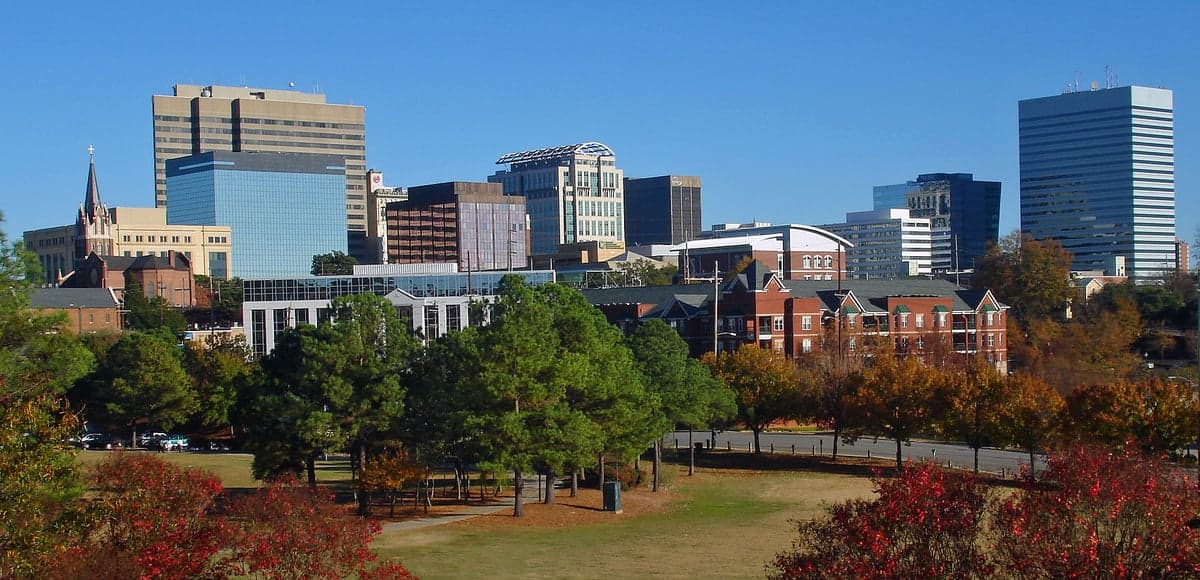
Photo: Wikipedia
Strategic Assessment of Columbia, SC
Meaningful friction. Expect exposure to either population pressure, blast zones, or natural disaster risk. Consider buying a retreat property.
What does the Strategic Assessment tell us?
Our Strategic Assessment grades tactical survivability of an area. Major population centers, military targets, fallout zones, natural disasters, and border exposure all drive risk — lower exposure means a more defensible position in a crisis.
This is heavily inspired by Joel Skousen's Strategic Relocation book. Highly recommended you checkout the book ($)What does this tell us?
Our Strategic Assessment grades tactical survivability of an area. Major population centers, military targets, fallout zones, natural disasters, and border exposure all drive risk — lower exposure means a more defensible position in a crisis.
This is heavily inspired by Joel Skousen's Strategic Relocation book. Highly recommended you checkout the book ($)Strategic Pillars

Key Distances
Regional Safe Places
Below is our recommended "safe zones" in South Carolina and the surrounding area based on our strategic heuristics. For most people, it's unrealistic to live in a “safe zone” full-time due to work, family or other personal reasons. They tend to be more rural. However, many of these areas are perfect for second homes and retreat properties that double as a vacation home or even a short-term rental.
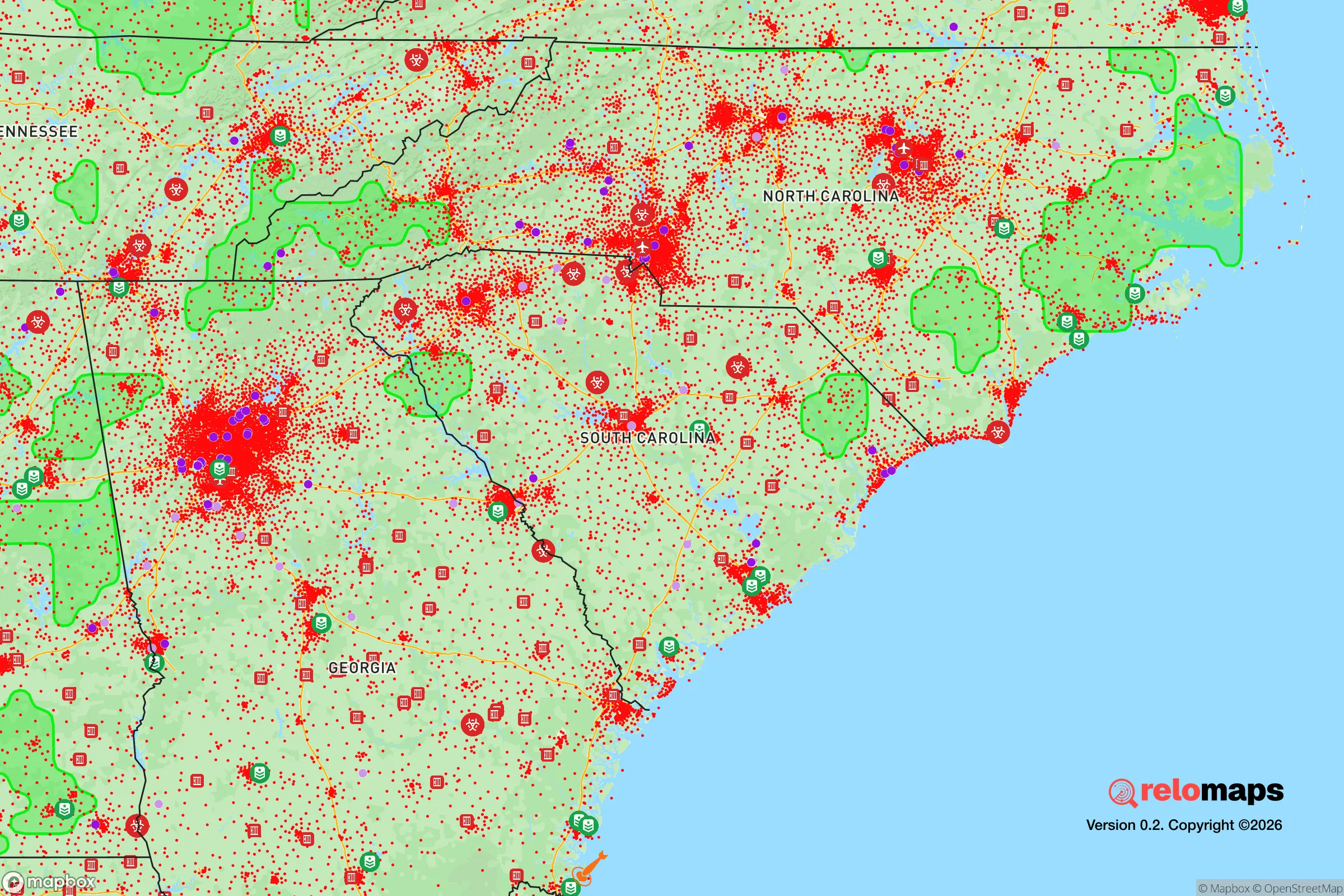
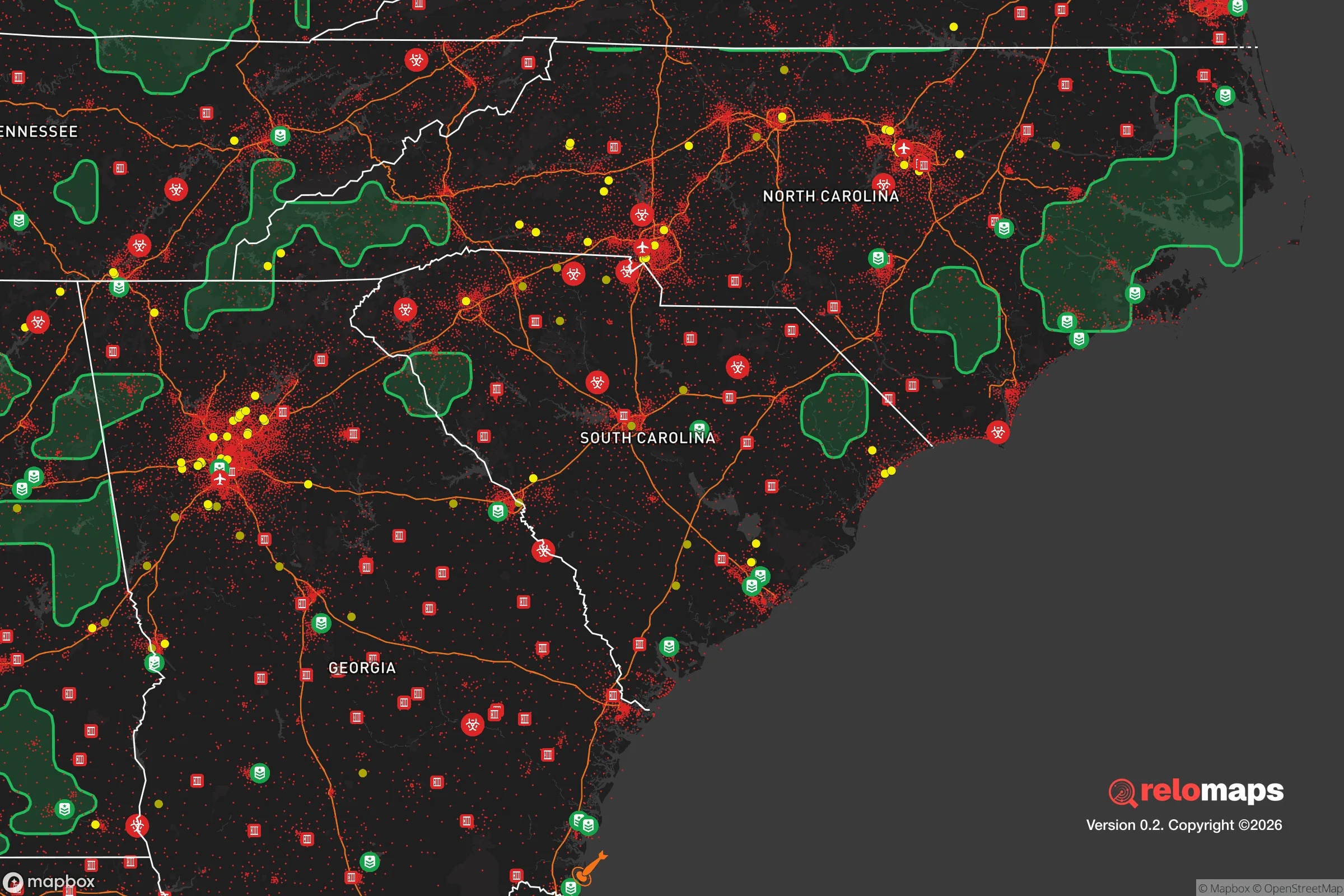


Important Note: For informational purposes only. This does not mean nothing bad ever happens in the green zones. Please use common sense. This is based on public data and modeled with AI. We tried to take a conservative approach but mistakes happen. We update this regularly as new information becomes available.
Solar Generator Recommendations
Backup power matters more here than in safer locations. We've picked three solar generators across budgets and capacity tiers — start with the budget unit if you only need a few essentials, or step up if you want to run a fridge and HVAC for days at a time.

Jackery Portable Power Station Explorer 300
Budget OptionPower on the Go: Weighing only 11 lbs, it's convenient to set up and store with book-sized foldable solar panels

BLUETTI Portable Power Station AC180
Designed for both indoor and outdoor scenarios, AC180 is highly capable as it has a robost capacity and continuous output power.

EF ECOFLOW DELTA Pro Ultra Power Station
Upgraded PickEcoFlow DELTA Pro Ultra is a whole-home energy system designed to grow with your family. Integrated with the Smart Home Panel 2, it scales to meet your evolving energy needs — keeping your home powered, intelligent, and secure through every stage of life.
We earn a commission, at no additional cost to you.
Strategic Assessment Analysis
Columbia, South Carolina, presents a mixed strategic picture for the conservative prepper or survivalist. While its location offers some genuine advantages in terms of regional stability and resource access, its proximity to major military and industrial targets, combined with the inherent vulnerabilities of a state capital, means it is not a safe haven in the traditional sense. For a relocator weighing resilience against risk, Columbia is best understood as a moderate-risk, moderate-reward hub that requires careful, deliberate preparation to make viable for long-term security.
Geographic position and natural advantages for long-term stability
Columbia’s primary strategic asset is its position at the confluence of three major rivers—the Broad, Saluda, and Congaree—which form the headwaters of the Congaree River. This provides a robust, renewable freshwater source that is less susceptible to drought than many other Southeastern cities. The surrounding Midlands region is characterized by rolling hills, mixed pine-hardwood forests, and a relatively low population density outside the immediate metro area. This terrain offers decent natural cover and defensible positions for those willing to relocate to the outer ring of counties like Richland, Lexington, or Kershaw. The climate is humid subtropical, with a long growing season that supports year-round food production, a critical factor for any long-term self-sufficiency plan. Winters are mild, reducing the risk of catastrophic freeze events that can devastate crops or infrastructure in northern states. The area is also far enough inland to avoid the direct storm surge of hurricanes, though it remains vulnerable to inland flooding and wind damage from tropical systems. For a relocator, the combination of abundant water, arable land, and moderate climate makes the Columbia region a viable base for a semi-rural or exurban homestead, provided you secure property outside the floodplains and away from major highway corridors.
Risks, exposures, and proximity to fallout-relevant landmarks
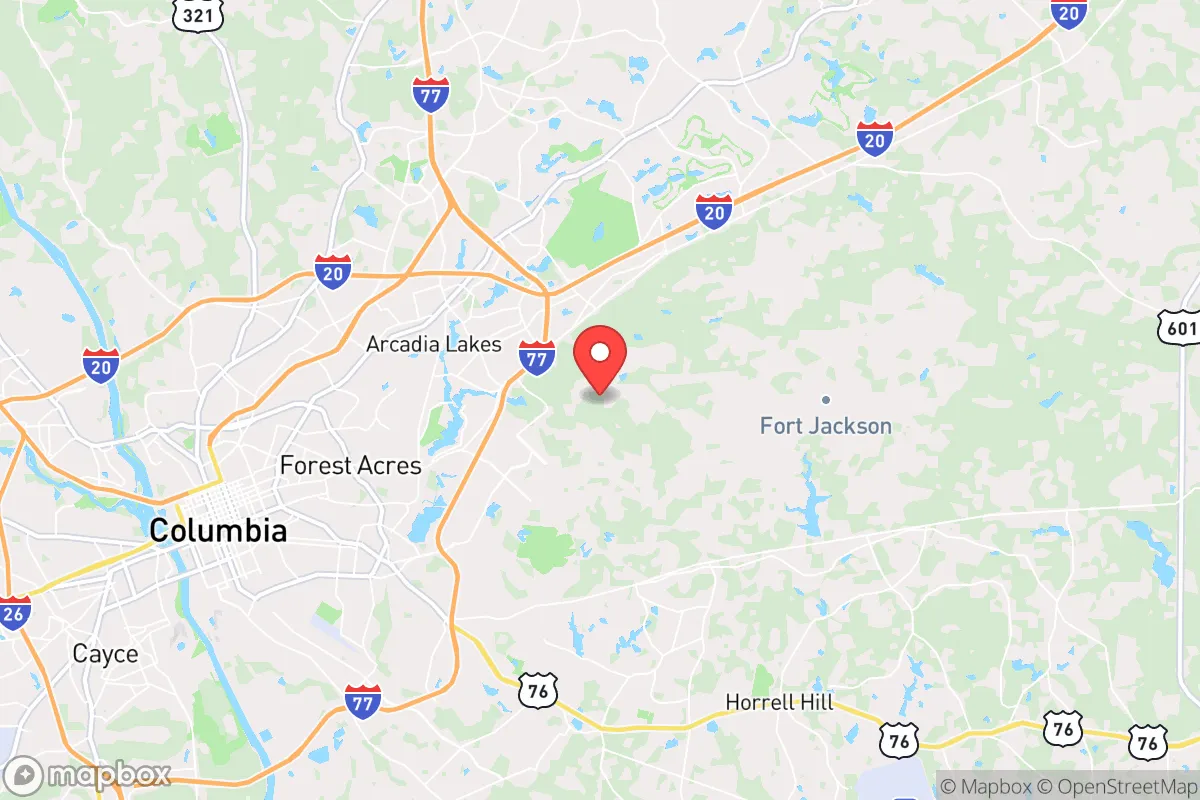
The most significant liability for Columbia is its proximity to multiple high-value military and industrial targets. Fort Jackson, one of the U.S. Army’s largest training installations, lies directly within the city limits. In a scenario involving conventional warfare or a major terrorist attack, this base is a primary target. Additionally, McEntire Joint National Guard Base is located just east of the city. The Savannah River Site, a nuclear weapons facility and waste storage complex, is roughly 70 miles southwest—close enough that a catastrophic release or attack there could render large portions of the Midlands uninhabitable due to radioactive contamination. Columbia is also within 100 miles of the Port of Charleston, a critical economic and military shipping hub that would be a high-priority target in any conflict. The city itself, as the state capital, would be a focal point for civil unrest, political demonstrations, and potential government overreach during a national crisis. The presence of the University of South Carolina adds another layer of potential instability, as large student populations can become flashpoints for protests or riots. For the prepper, these factors mean that Columbia is not a retreat location; it is a location that requires a plan for rapid evacuation or deep, hardened sheltering. The risk of fallout from a Savannah River Site incident alone makes the entire region a questionable long-term hold for anyone without a well-equipped underground shelter and a reliable air filtration system.
Practical resilience for a relocator: food, water, energy, and defensibility
For those who choose to settle here, practical resilience is achievable but demands significant upfront investment. Water is abundant, but municipal supplies are vulnerable to contamination and disruption. A well on private property, combined with a hand pump or solar-powered pump, is essential. Rainwater catchment from a metal roof is a reliable secondary source. Food production is feasible, with local soil generally suitable for gardening, though heavy clay in some areas requires raised beds or amending. The long growing season allows for multiple harvests of staples like corn, beans, squash, and sweet potatoes. Local farmers' markets and the S.C. State Farmers Market in Lexington provide good sources for seeds, livestock, and bulk goods during normal times. Energy independence is complicated by the region's frequent cloud cover and tree canopy, which reduce solar panel efficiency. A backup generator running on propane or diesel, with a secure fuel storage plan, is more reliable than solar alone. Wood heating is a viable option, as firewood is plentiful in the surrounding forests. Defensibility is the weakest point for most Columbia-area properties. The terrain is not mountainous, and the suburban sprawl of Lexington and Richland counties means many homes are on small lots with limited sightlines. A rural property with a long, single-access driveway, natural tree lines, and a cleared perimeter offers the best chance of security. The local gun culture is strong, and South Carolina has permissive concealed carry laws, which is a positive for self-defense. However, the proximity to a major city means that during a breakdown of order, you can expect looting and criminal migration from urban areas. A well-armed, tight-knit neighborhood or family group is the only realistic defense against this threat.
Overall, Columbia offers a strategic paradox. Its natural resources and climate are genuinely favorable for a self-sufficient lifestyle, and the cost of land and housing remains relatively low compared to the Northeast or West Coast. However, the concentration of military, nuclear, and political targets within a 100-mile radius creates a risk profile that is unacceptable for anyone seeking a true retreat. The best use of Columbia for a conservative prepper is as a staging ground or a secondary location—a place to build skills, store supplies, and establish a network before moving to a more remote, lower-risk area in the upstate or coastal plain. If you are determined to stay, your plan must prioritize deep water storage, a fallout shelter, and a reliable vehicle for a 200-mile evacuation east or west. Columbia is not a fortress; it is a base camp, and it demands that you treat it as such.

* Values derived from national, state, county, city and local statistics and may differ in a specific area. Last updated: 2026-04-23T04:57:37.000Z
Narrative content on this page is AI-generated and may contain mistakes. Verify any details that matter before acting on them.
ReloMaps may earn a commission from affiliate links at no extra cost to you.

