Photo: Wikipedia
Political ClimatePolitical Climate in Columbia, TN
District shown is the primary district for this city’s centroid. Cities may span multiple districts.
Inherited from parent state — no local data available.
Local Political AnalysisPolitical Analysis of Columbia, TN
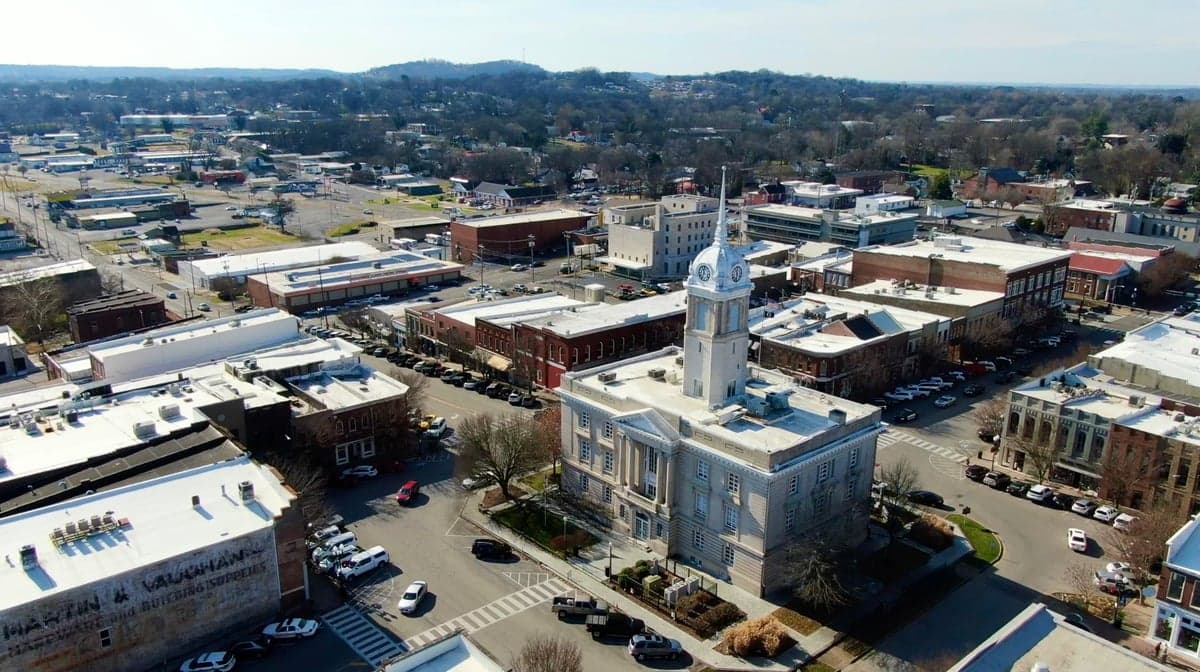
Columbia, Tennessee, has long been a solidly conservative community, and that hasn't changed much at the ballot box. The Cook PVI rating of R+8 tells you the district leans Republican by a comfortable margin, and that's been the reality for as long as most folks around here can remember. You'll see it in local elections, in the school board races, and in the general attitude that government ought to stay out of your business. But if you've been here a while, you'll notice the political winds are shifting, and not necessarily in a direction that sits well with the old guard.
How it compares
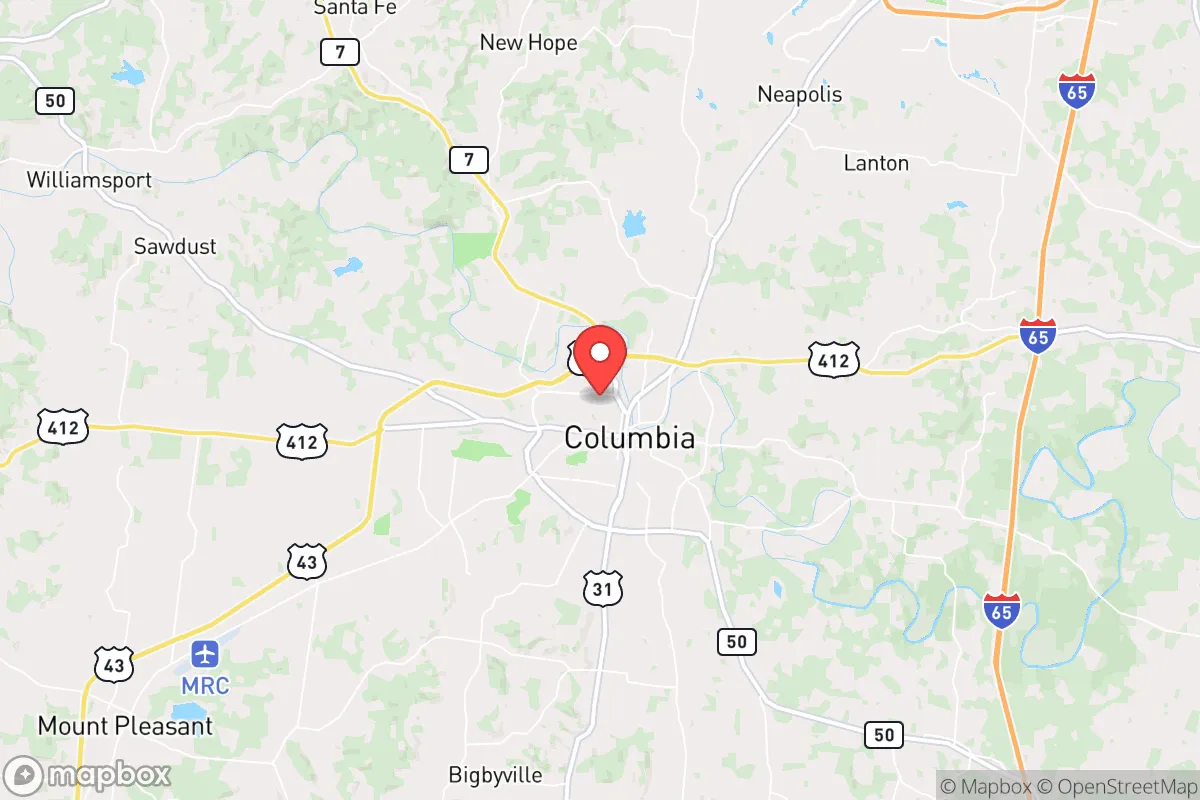
Columbia sits in Maury County, which is reliably red, but it's not an island. Drive 45 minutes north to Nashville, and you're in a whole different world—a deep blue city where progressive policies on taxes, zoning, and public safety are the norm. That contrast is stark, and it's why a lot of folks here feel like they're fighting to keep Columbia from becoming a bedroom community for Nashville's politics. To the south, you've got smaller towns like Pulaski and Lawrenceburg that are even more conservative, often voting +20 or more for Republican candidates. Columbia sits in the middle, politically speaking—conservative, but with a growing population of newcomers who bring different ideas. The worry is that as more people move in from blue areas, the local culture could get diluted.
What this means for residents
For the people who've lived here for generations, the R+8 lean is a comfort, but it's not a guarantee. The real concern is government overreach—whether it's from the state level or creeping in from county commissions. You see it in debates over property rights, school curriculum, and even how local law enforcement handles things. The conservative majority has kept a lid on most progressive pushes, but there's a constant pressure to adopt policies that feel like they're imported from Nashville or D.C. For a resident, this means you have to stay engaged. You can't just assume the vote will go your way. The school board meetings get heated, the county commission votes on zoning that could change the character of your neighborhood, and every election cycle feels like a battle to keep the government from getting too big for its britches.
One of the biggest cultural distinctions here is the strong sense of personal freedom. People in Columbia don't like being told what to do with their property, their businesses, or their families. That's why you see a lot of pushback on mask mandates, vaccine passports, and any kind of overreaching health orders. The local gun culture is strong, and the Second Amendment is taken seriously. There's also a deep-rooted tradition of self-reliance—folks help their neighbors, but they don't want the government stepping in to solve every problem. The long-term trajectory is uncertain. If the area keeps growing, and if the newcomers keep voting like they did in Nashville, you could see Columbia start to lean purple. But for now, the conservative values are holding, and the people who care about keeping it that way are the ones who show up to vote and speak their minds at town halls. It's a good place to live if you value your rights, but you've got to keep an eye on the horizon.

State Political ClimatePolitical Climate in Tennessee
State Political AnalysisPolitical Environment in the State
Tennessee has been a reliably red state for decades, with a strong conservative majority that has only solidified in recent years. The state’s political DNA is rooted in a deep-seated distrust of federal overreach and a fierce commitment to local control, but the real story is how that sentiment has shifted from a moderate, business-friendly conservatism to a more assertive, culturally-focused one. Over the last 10-20 years, the Volunteer State has moved from a purple-ish lean to a deep crimson, driven by a massive exodus of rural Democrats to the GOP and an influx of conservative migrants from blue states, particularly into the Nashville and Knoxville suburbs.
Urban vs. rural divide
The political map of Tennessee is a textbook study in the urban-rural split. The major metros—Nashville (Davidson County) and Memphis (Shelby County)—are deep blue strongholds, consistently voting 60-70% Democratic in presidential elections. Nashville’s growth has been fueled by a wave of out-of-state transplants, many from California and New York, which has turned the city into a progressive island with a city council that has pushed for things like sanctuary city policies and ranked-choice voting. Memphis remains a Democratic bastion, but its influence is waning as population growth stagnates. In contrast, the rest of the state is overwhelmingly red. Knoxville (Knox County) is a conservative anchor, though the city itself has a small but vocal progressive pocket around the University of Tennessee. The real engine of the state’s rightward shift is the suburban and exurban ring around Nashville—places like Williamson County (Franklin, Brentwood) and Rutherford County (Murfreesboro). Williamson County is one of the wealthiest and most Republican counties in the nation, voting over 70% for Trump in 2020. The rural counties of Middle and East Tennessee—like Lincoln County, Giles County, and Greene County—are deeply red, with GOP margins often exceeding 80%. The only real political distinction in these areas is between “establishment” Republicans and the more populist, America First wing.
Policy environment
Tennessee’s policy environment is a conservative’s dream, at least on paper. There is no state income tax on wages, a major draw for high-earners and retirees. The sales tax is high (around 9.5% in most areas), but the overall tax burden is low. The regulatory posture is aggressively pro-business, with a right-to-work law and very weak unions. On education, the state has embraced school choice, with a robust charter school sector and a new Education Savings Account (ESA) program that allows parents to use state funds for private school tuition, though it’s currently limited to a few counties. The state legislature has also passed a series of parental rights bills, including a law requiring schools to notify parents of any changes to a student’s health or emotional well-being—a direct response to the transgender activism seen in Nashville schools. On healthcare, Tennessee has not expanded Medicaid, and the state has some of the most restrictive abortion laws in the country, with a near-total ban after six weeks (the “Heartbeat Bill”) that went into effect after Roe v. Wade was overturned. Election laws have been tightened: voter ID is required, and the state has purged inactive voters from the rolls. The overall vibe is that the state government is actively trying to protect traditional values and limit the influence of progressive ideology, especially from Nashville.
Trajectory & freedom
On the freedom front, Tennessee is a mixed bag, but the trend is mostly positive for conservatives. The state has expanded gun rights significantly: in 2021, it passed a permitless carry law (Constitutional Carry), allowing any law-abiding adult to carry a handgun without a permit. This was a major win for Second Amendment advocates. On parental rights, the state has been a leader, passing the “Parental Bill of Rights” in 2022, which codifies a parent’s right to direct their child’s education and medical care. However, there are concerning signs of government overreach in the name of “public health.” During COVID, Governor Bill Lee initially imposed a stay-at-home order and mask mandates, though he later backed off. The state has also seen a push for more centralized control over local school boards, with the legislature overriding local decisions on mask mandates and library books. The biggest threat to personal liberty right now is the rapid growth of the state’s population, which is driving up housing costs and property taxes in places like Franklin and Murfreesboro. The influx of new residents is also diluting the state’s cultural conservatism, as many of these newcomers bring their blue-state voting habits with them. The question is whether the state’s political infrastructure can hold the line.
Civil unrest & political movements
Tennessee has seen its share of political flashpoints, but they are mostly localized. The most visible is in Nashville, where the city council has repeatedly clashed with the state legislature over issues like sanctuary city policies and the removal of Confederate monuments. In 2023, the expulsion of two Democratic state representatives (Justin Jones and Justin Pearson) for protesting gun control on the House floor after the Covenant School shooting created a national media firestorm. That event galvanized progressive activists in Nashville but also hardened conservative resolve across the rest of the state. Outside of Nashville, political activism is quieter but real. There are strong Second Amendment groups that hold regular rallies at the state capitol, and the “Moms for Liberty” movement has been very active in school board meetings, particularly in Williamson County and Rutherford County, pushing back against critical race theory and LGBTQ+ curriculum. Immigration politics are less of a flashpoint here than in border states, but there is a growing concern about illegal immigration, especially in the construction and hospitality sectors in Nashville. There have been no major sanctuary city showdowns since the state passed a law banning them in 2019. Election integrity has been a hot topic, with the state creating a new election integrity unit in 2022 to investigate voter fraud, though no widespread fraud has been found. The overall atmosphere is one of a state that is politically engaged but not in a state of constant crisis—unless you’re in Nashville, where the culture war is a daily reality.
Projection
Looking ahead 5-10 years, Tennessee is likely to remain a red state, but the nature of that red is changing. The biggest wild card is the demographic shift. The Nashville metro area is growing by about 100 people a day, and many of those new residents are coming from blue states. If this trend continues, the suburbs of Franklin and Murfreesboro could become more competitive, potentially flipping some state legislative seats. However, the rural areas are not shrinking as fast as in other states, and the state legislature has shown a willingness to preempt local control to prevent Nashville and Memphis from implementing progressive policies. Expect more fights over school choice, property taxes, and local zoning laws. The state’s economy is strong, and the lack of income tax will continue to attract conservative-leaning migrants from high-tax states like Illinois and California. The biggest risk for a conservative moving here is that the state’s cultural identity could be eroded by the sheer volume of newcomers. The state government is likely to double down on cultural issues—abortion, guns, parental rights—to keep the base energized. In a decade, Tennessee will probably look a lot like Texas: a red state with a few deep-blue cities that are constantly at war with the statehouse, but with enough rural and suburban muscle to keep the overall direction conservative.
Bottom line for a new resident: If you’re a conservative looking for a state that respects your Second Amendment rights, keeps taxes low, and fights for parental control over education, Tennessee is a solid choice. Just be aware that the blue-state influence is creeping in, especially if you settle in the Nashville suburbs. You’ll find a welcoming community of like-minded people in places like Franklin or Brentwood, but you’ll also see the cultural battle lines being drawn. The state is still a safe bet for freedom, but you’ll need to stay engaged to keep it that way.
* Values derived from national, state, county, city and local statistics and may differ in a specific area. Last updated: 2026-05-01T08:10:29.000Z
Narrative content on this page is AI-generated and may contain mistakes. Verify any details that matter before acting on them.
ReloMaps may earn a commission from affiliate links at no extra cost to you.

