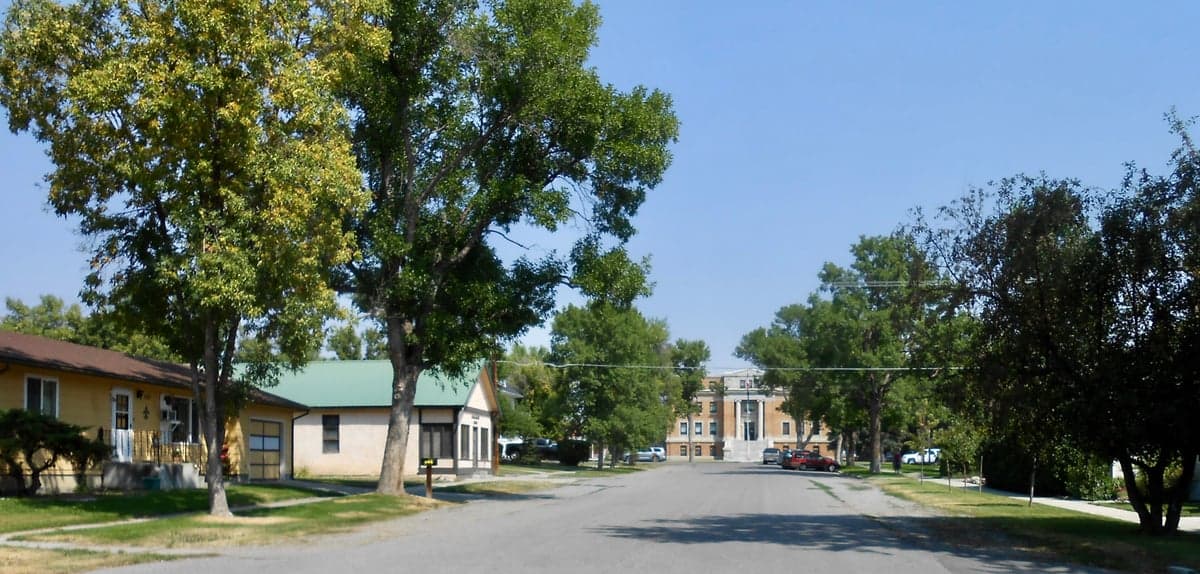
Photo: Wikipedia
Strategic Assessment of Columbus, MT
Strong survivability profile. Good buffer from population centers, with manageable environmental and tactical risks.
What does the Strategic Assessment tell us?
Our Strategic Assessment grades tactical survivability of an area. Major population centers, military targets, fallout zones, natural disasters, and border exposure all drive risk — lower exposure means a more defensible position in a crisis.
This is heavily inspired by Joel Skousen's Strategic Relocation book. Highly recommended you checkout the book ($)What does this tell us?
Our Strategic Assessment grades tactical survivability of an area. Major population centers, military targets, fallout zones, natural disasters, and border exposure all drive risk — lower exposure means a more defensible position in a crisis.
This is heavily inspired by Joel Skousen's Strategic Relocation book. Highly recommended you checkout the book ($)Strategic Pillars

Key Distances
Regional Safe Places
Below is our recommended "safe zones" in Montana and the surrounding area based on our strategic heuristics. For most people, it's unrealistic to live in a “safe zone” full-time due to work, family or other personal reasons. They tend to be more rural. However, many of these areas are perfect for second homes and retreat properties that double as a vacation home or even a short-term rental.
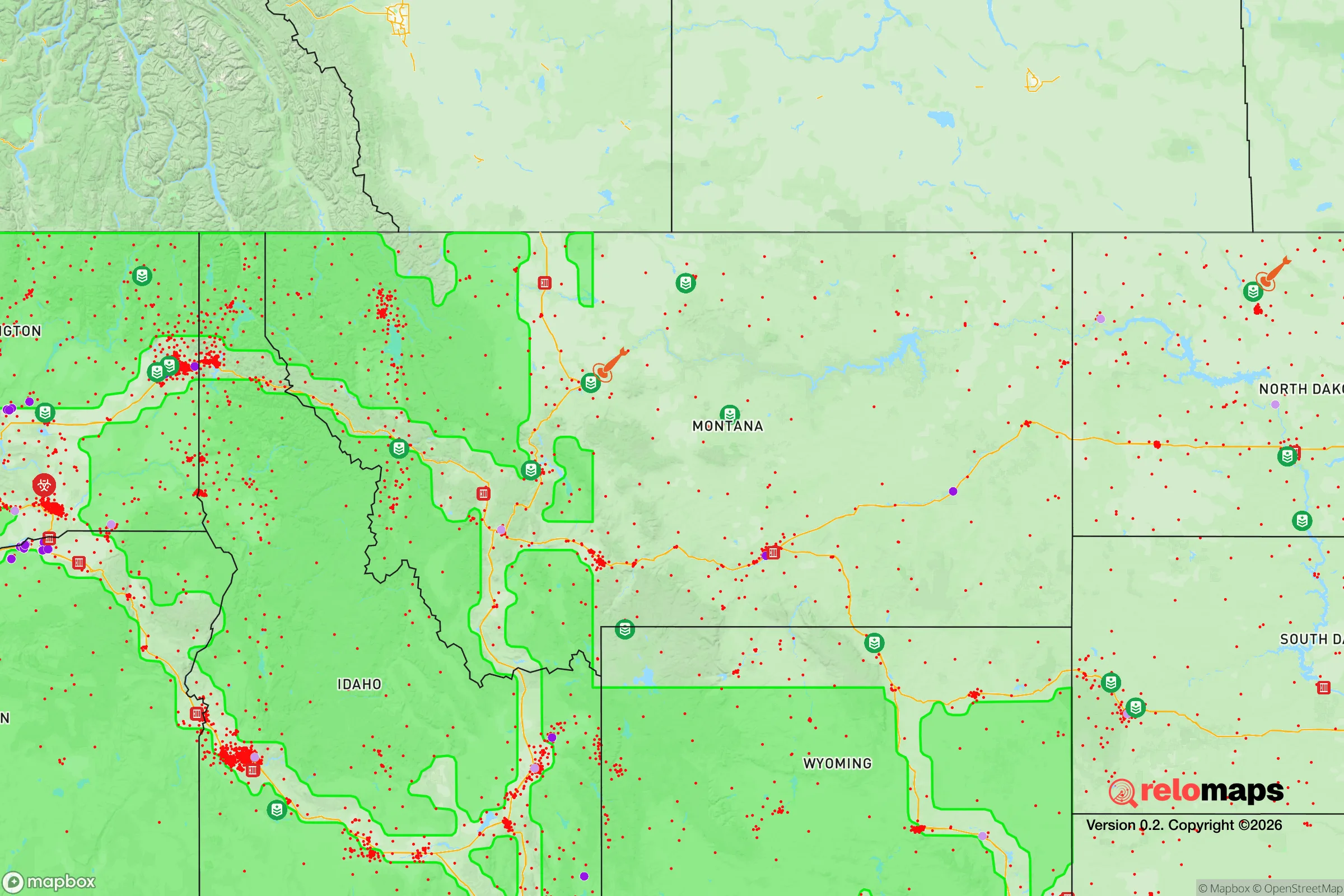


Important Note: For informational purposes only. This does not mean nothing bad ever happens in the green zones. Please use common sense. This is based on public data and modeled with AI. We tried to take a conservative approach but mistakes happen. We update this regularly as new information becomes available.
Solar Generator Recommendations
Backup power matters more here than in safer locations. We've picked three solar generators across budgets and capacity tiers — start with the budget unit if you only need a few essentials, or step up if you want to run a fridge and HVAC for days at a time.

Jackery Portable Power Station Explorer 300
Budget OptionPower on the Go: Weighing only 11 lbs, it's convenient to set up and store with book-sized foldable solar panels

BLUETTI Portable Power Station AC180
Designed for both indoor and outdoor scenarios, AC180 is highly capable as it has a robost capacity and continuous output power.

EF ECOFLOW DELTA Pro Ultra Power Station
Upgraded PickEcoFlow DELTA Pro Ultra is a whole-home energy system designed to grow with your family. Integrated with the Smart Home Panel 2, it scales to meet your evolving energy needs — keeping your home powered, intelligent, and secure through every stage of life.
We earn a commission, at no additional cost to you.
Strategic Assessment Analysis
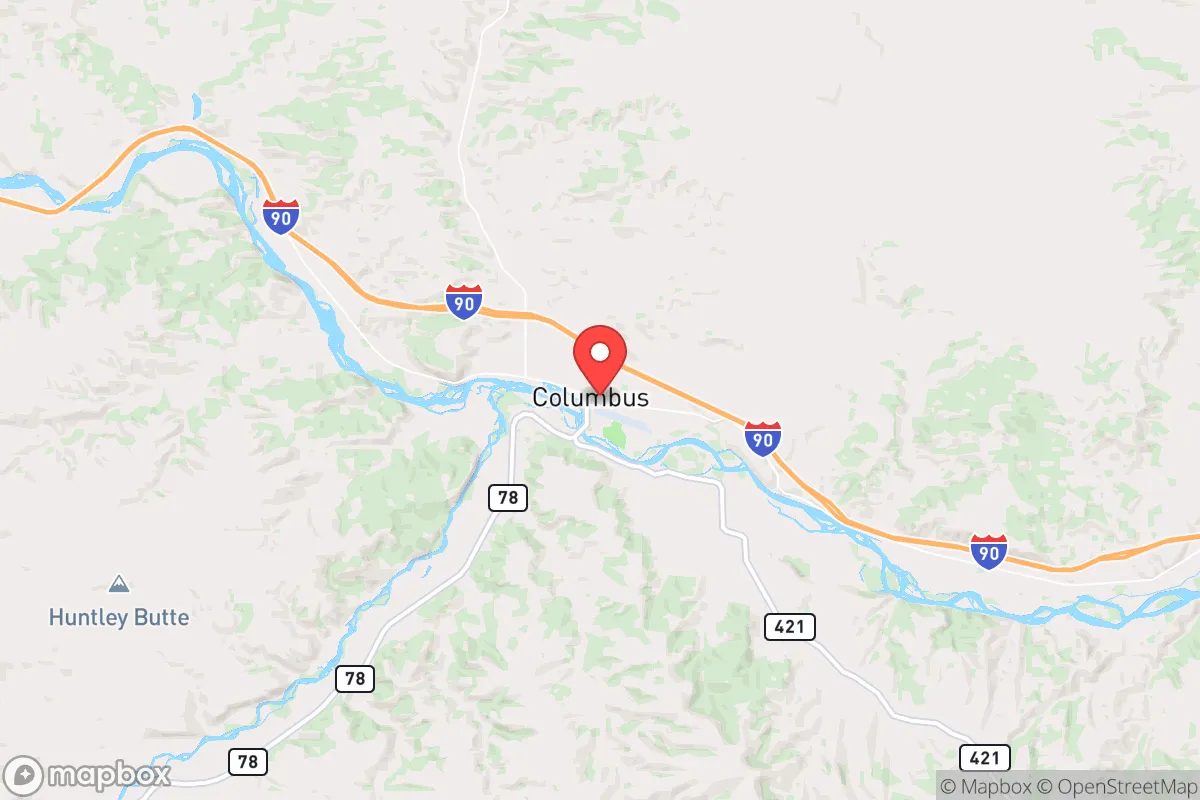
Columbus, Montana, presents a compelling case for the strategic relocator who prioritizes resilience, offering a blend of geographic isolation and practical self-sufficiency that is increasingly rare in the Lower 48. Situated along the Yellowstone River and at the crossroads of Interstates 90 and 94, this town of roughly 2,000 people sits in a sweet spot: far enough from major population centers to avoid the immediate chaos of a collapse, yet close enough to critical infrastructure and supply routes to matter. For the prepper or survivalist, Columbus is less a bug-out location and more a long-term sustainment hub, provided you understand its specific vulnerabilities and advantages.
Geographic position and natural advantages for long-term survival
Columbus’s primary strategic asset is its location in the sheltered Stillwater River Valley, a natural funnel that offers both defensibility and access. The town is flanked by the Beartooth Mountains to the south and the Bull Mountains to the north, creating a corridor that can be monitored and controlled with relative ease. This topography provides natural barriers against large-scale movement, which is a significant advantage during periods of civil unrest or mass migration. The Yellowstone River, which runs through the town, is a reliable water source that is less prone to contamination than smaller creeks, and the surrounding agricultural land—primarily hay, wheat, and cattle ranches—offers a local food base that many Western towns lack. The area’s low population density (Stillwater County has about 9,000 people total) means that in a crisis, you are not competing with millions for resources. Additionally, Columbus sits at an elevation of 3,600 feet, which provides a moderate climate with four distinct seasons, reducing the risk of extreme heat or cold that can cripple unprepared populations. The nearby Beartooth Highway (US-212) provides a secondary route into the high country, which could serve as a fallback position if the valley becomes compromised.
Risks, exposures, and proximity to fallout-relevant landmarks
No strategic assessment is complete without a hard look at the downsides, and Columbus has several that a serious prepper must weigh. The most immediate concern is proximity to the Yellowstone National Park supervolcano, which sits roughly 100 miles to the west. While a full-scale eruption is a low-probability event, the ash fallout from even a moderate event would blanket the area, potentially contaminating water sources and collapsing roofs. More pressing is the town’s location near the Stillwater Mine, one of the largest platinum and palladium mines in the world. This industrial complex is a potential target for sabotage or infrastructure failure, and its chemical processing operations could release hazardous materials into the air or water. Columbus is also within 50 miles of the Yellowstone River oil spill corridor (the 2011 ExxonMobil pipeline rupture occurred just upstream), meaning that a major industrial accident could compromise the river for months. On the human threat side, Columbus sits along I-90, a major east-west artery that connects Billings (100,000 people, 45 miles east) to Bozeman (55,000 people, 80 miles west). In a mass evacuation scenario, this highway could become a chokepoint for desperate populations, and the town would be a natural stop for refugees. The nearby Malmstrom Air Force Base (home to Minuteman III ICBMs) is 200 miles north, but the missile fields themselves extend into central Montana, meaning that Columbus is within the secondary fallout zone of a nuclear exchange targeting those silos. Finally, the town’s reliance on a single water treatment plant and a single electrical substation makes it vulnerable to a single-point-of-failure event.
Practical resilience for a relocator: food, water, energy, and defensibility
For the individual or family looking to establish a resilient foothold, Columbus offers a mixed bag of practical advantages and challenges. Water is the strongest suit: the Yellowstone River provides a year-round, gravity-fed source that can be filtered or boiled, and the local water table is high enough for shallow wells. However, the river is prone to seasonal flooding (the 1996 and 2011 floods caused significant damage), so any property should be elevated or set back from the banks. Food is a moderate positive: the Stillwater Valley has a handful of local farms and ranches that sell direct to consumers, and the town has a small but functional grocery store (IGA) that could be a resupply point in normal times. But for long-term self-sufficiency, you would need to establish your own garden and livestock, as the local growing season is short (about 100 frost-free days). Energy is a weak point: the grid is fed by a single substation, and while there is some local solar potential (the area averages 260 sunny days per year), the valley’s topography creates shading issues in winter. A propane or diesel generator with a large fuel cache is essential. Defensibility is where Columbus shines for the prepared relocator. The town’s layout—a compact grid with the river as a natural barrier on the south side—means that a small group could secure the key entry points (the two bridges over the Yellowstone and the I-90 interchange) with minimal manpower. The surrounding ranchland offers multiple fallback positions, and the Beartooth Mountains provide a high-altitude retreat that is inaccessible to vehicles for much of the year. The local population is predominantly conservative, rural, and armed, which means that in a crisis, you are likely to find neighbors who share your values and are willing to cooperate—but also that outsiders will be viewed with suspicion. The Stillwater County Sheriff’s Office is small (about 10 deputies) and would be overwhelmed in a major event, so self-reliance is not optional.
The overall strategic picture for Columbus, MT, is one of calculated risk. It is not a perfect fortress—the proximity to industrial targets, the supervolcano, and the I-90 corridor are real liabilities that cannot be ignored. But for the relocator who is willing to invest in off-grid water, food storage, and a robust energy system, Columbus offers a rare combination of natural resources, defensible terrain, and a like-minded community. The key is to treat it as a base of operations rather than a final redoubt: establish a property with a well, a garden, and a secure cache, but also maintain a vehicle capable of reaching the high country or the less-populated areas of eastern Montana if the valley becomes compromised. In a world where most relocation options are either too close to cities or too barren to sustain life, Columbus strikes a pragmatic balance. It is not a fantasy—it is a real place with real trade-offs, and for the serious prepper, that is exactly the kind of analysis that matters.

* Values derived from national, state, county, city and local statistics and may differ in a specific area. Last updated: 2026-04-29T21:22:13.000Z
Narrative content on this page is AI-generated and may contain mistakes. Verify any details that matter before acting on them.
ReloMaps may earn a commission from affiliate links at no extra cost to you.

