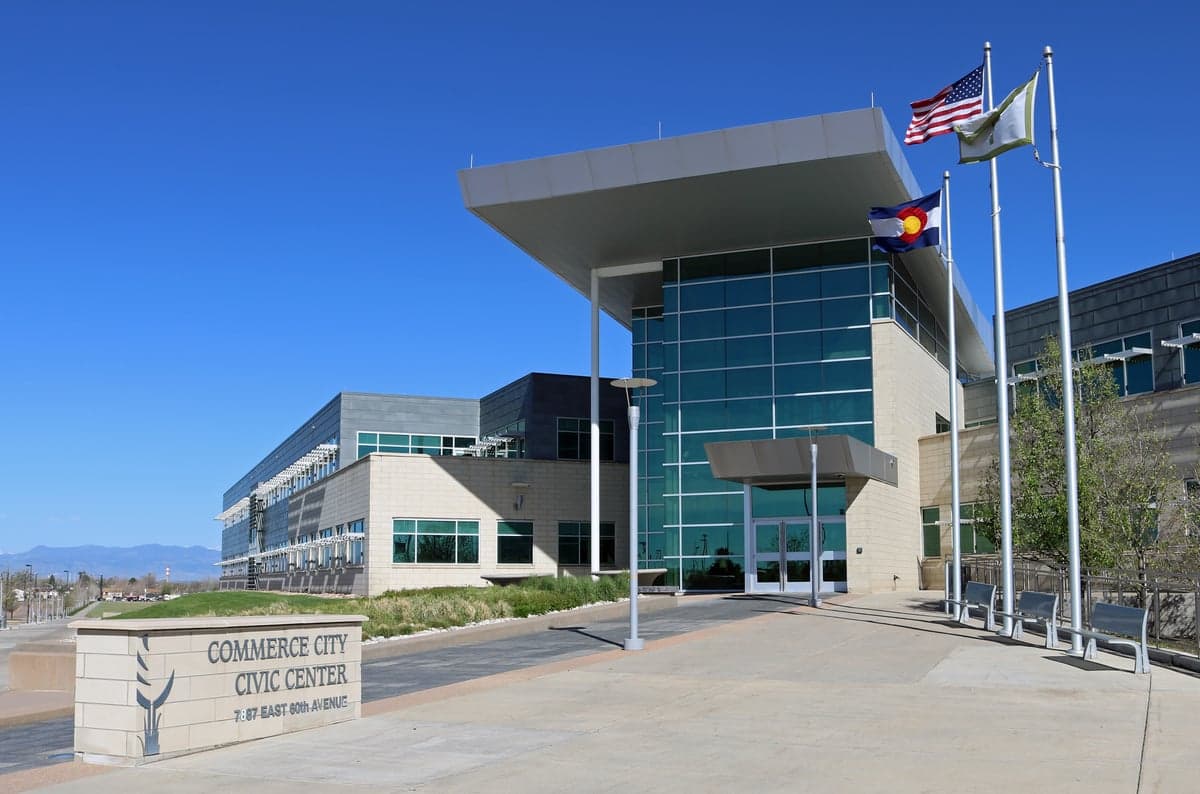
Photo: Wikipedia
Personal Sovereignty in Commerce City, CO
Viable for self-reliance. Generally workable, though some barriers may limit total independence.
What does Personal Sovereignty tell us?
Personal Sovereignty measures your capacity for self-reliance and independence with minimal government friction. Higher scores mean fewer barriers between you and the way you want to live... but it assumes you have the space you need and good neighbors.
What does this tell us?
Personal Sovereignty measures your capacity for self-reliance and independence with minimal government friction. Higher scores mean fewer barriers between you and the way you want to live... but it assumes you have the space you need and good neighbors.
State Policy
Energy independence: Net exporter (110% of energy produced in-state)
Personal Liberty
Homesteading

Personal Liberty Analysis
Commerce City, Colorado, presents a mixed picture for those prioritizing personal sovereignty, where the state's progressive tilt often clashes with local realities. While Colorado's constitution grants certain individual rights, the state legislature in Denver has increasingly preempted local control on key issues like gun laws and energy policy, creating a regulatory environment that demands careful navigation. For a survivalist or prepper mindset, the calculus involves weighing the area's proximity to open spaces and a relatively lower cost of living against a state government that has shown a willingness to restrict personal freedoms in the name of public safety or environmental goals. This analysis digs into the specific tax, regulatory, and legal factors that define the autonomy environment in Commerce City, offering a clear-eyed view for those who value self-reliance and minimal government overreach.
Tax burden and regulatory posture for independent living
Colorado's tax structure is a relative bright spot for those seeking to keep more of their own resources, though it is not without its creeping complexities. The state income tax is a flat 4.4% as of 2025, which is moderate compared to many high-tax states, but there is no guarantee this rate will hold as state spending pressures mount. Sales tax in Commerce City is a combined 8.31% (state, county, and city), which is noticeable but not crippling for everyday purchases. Property taxes are notably low, with an effective rate around 0.55% of assessed value, a direct result of the Taxpayer's Bill of Rights (TABOR) that limits government revenue growth. This is a critical advantage for property owners who want to avoid being taxed out of their homes. However, the regulatory posture is less friendly. Colorado's state-level building codes are increasingly stringent, particularly around energy efficiency and wildfire mitigation, which can add costs and bureaucratic hurdles for anyone building a new home or outbuilding. The state's aggressive push toward electric vehicles and renewable energy mandates also signals a top-down approach that can feel like government overreach for those who prefer to make their own energy and transportation choices. For a prepper, the low property tax is a win, but the creeping regulatory state is a clear warning sign.
Self-defense rights and gun law specifics in a restrictive state
This is the most contentious area for personal sovereignty in Commerce City. Colorado has moved decisively toward gun control in recent years, and local ordinances in the Denver metro area can add another layer. The state now requires universal background checks for all firearm transfers, including private sales, and has a red flag law (Extreme Risk Protection Order) that allows courts to temporarily seize firearms from individuals deemed a risk. Magazine capacity is limited to 15 rounds for handguns and 10 rounds for rifles, which directly impacts self-defense and prepping capabilities. Commerce City itself does not have additional local gun bans beyond state law, but the city council has shown a willingness to consider restrictions. Open carry is legal without a permit, but concealed carry requires a permit, which is shall-issue but can be delayed by local sheriffs. The political climate in Adams County is mixed, but the state legislature in Denver is firmly controlled by anti-gun majorities. For a survivalist, this means that while you can still own firearms, the legal environment is actively hostile to the kind of robust personal armory that many preppers consider essential. The red flag law is a particular concern, as it can be weaponized by neighbors or family members in disputes. This is not a free state for gun owners; it is a state where your rights are under constant legal pressure.
Self-reliance and homesteading viability: lot sizes, zoning, and off-grid feasibility
Commerce City's zoning is a mixed bag for those wanting to live off-grid or with significant self-reliance. The city is largely suburban and industrial, with most residential lots ranging from 6,000 to 10,000 square feet in standard subdivisions. There are some larger parcels in the northern and eastern fringes, closer to the Rocky Mountain Arsenal National Wildlife Refuge and open prairie, but these are increasingly being developed. Zoning codes generally require connection to municipal water and sewer, making true off-grid living (well, septic, solar) difficult or illegal within city limits. Chickens are allowed on residential lots up to a certain number, but livestock like goats or pigs are typically prohibited. Rainwater collection is legal in Colorado, but with strict limits on barrel size and usage, and the state has complex water rights laws that can complicate any serious agricultural endeavor. For a prepper looking to build a self-sufficient homestead, Commerce City is not the place. You would need to look further east into Adams County's unincorporated areas or toward Weld County, where zoning is more permissive and lot sizes can be 1-5 acres or more. The city's industrial history (oil refineries, chemical plants) also means that soil and water quality in some areas are compromised, which is a major concern for anyone wanting to grow their own food. The viability for self-reliance here is low; this is a suburb, not a frontier.
Personal liberties: parental rights, medical autonomy, speech, and property
Colorado's state-level policies have significantly eroded several key personal liberties that matter to a conservative, sovereignty-minded audience. Parental rights have been weakened by laws that allow minors to consent to certain medical procedures (including reproductive health and gender-related care) without parental knowledge or consent. The state also mandates comprehensive sex education in public schools, which many parents find intrusive. Medical autonomy took a major hit during the COVID-19 pandemic, with Colorado imposing some of the nation's strictest and longest-lasting mandates, including vaccine requirements for state employees and healthcare workers. The state has also expanded Medicaid and pushed for centralized health data systems, raising privacy concerns. Free speech is generally protected, but local governments in the Denver metro area have experimented with "hate speech" ordinances and restrictions on public protests that can chill political expression. Property rights are under constant threat from state-level land use planning, environmental regulations, and the potential for eminent domain for transit-oriented development. The state's "just transition" policies also create uncertainty for property owners near fossil fuel infrastructure, which is relevant in Commerce City given its oil and gas history. For a parent or individual who values the right to raise their children without state interference, make their own medical decisions, and control their property, Colorado's trajectory is deeply concerning. The state government in Denver views itself as a guardian of public welfare, and that often comes at the expense of individual sovereignty.
In the broader landscape of personal sovereignty, Commerce City offers a few tactical advantages—low property taxes, proximity to open land, and a relatively affordable cost of living—but the strategic picture is dominated by a state government that is actively hostile to many core conservative and prepper values. The gun laws are restrictive and getting worse, parental rights are being dismantled, and the regulatory environment is designed to discourage self-reliance in favor of centralized control. Compared to states like Texas, Idaho, or Montana, Commerce City is a poor choice for those prioritizing maximum personal autonomy. It is a location that requires constant vigilance and legal navigation, and for many in the survivalist community, the trade-offs simply are not worth it. If you are determined to live in Colorado, look to the eastern plains or the Western Slope, where local culture and county governments push back harder against Denver's overreach. Commerce City is a suburb of a blue state capital, and that reality defines its limits on personal sovereignty.

* Values derived from national, state, county, city and local statistics and may differ in a specific area. Last updated: 2026-04-19T09:27:46.000Z
Narrative content on this page is AI-generated and may contain mistakes. Verify any details that matter before acting on them.
ReloMaps may earn a commission from affiliate links at no extra cost to you.

