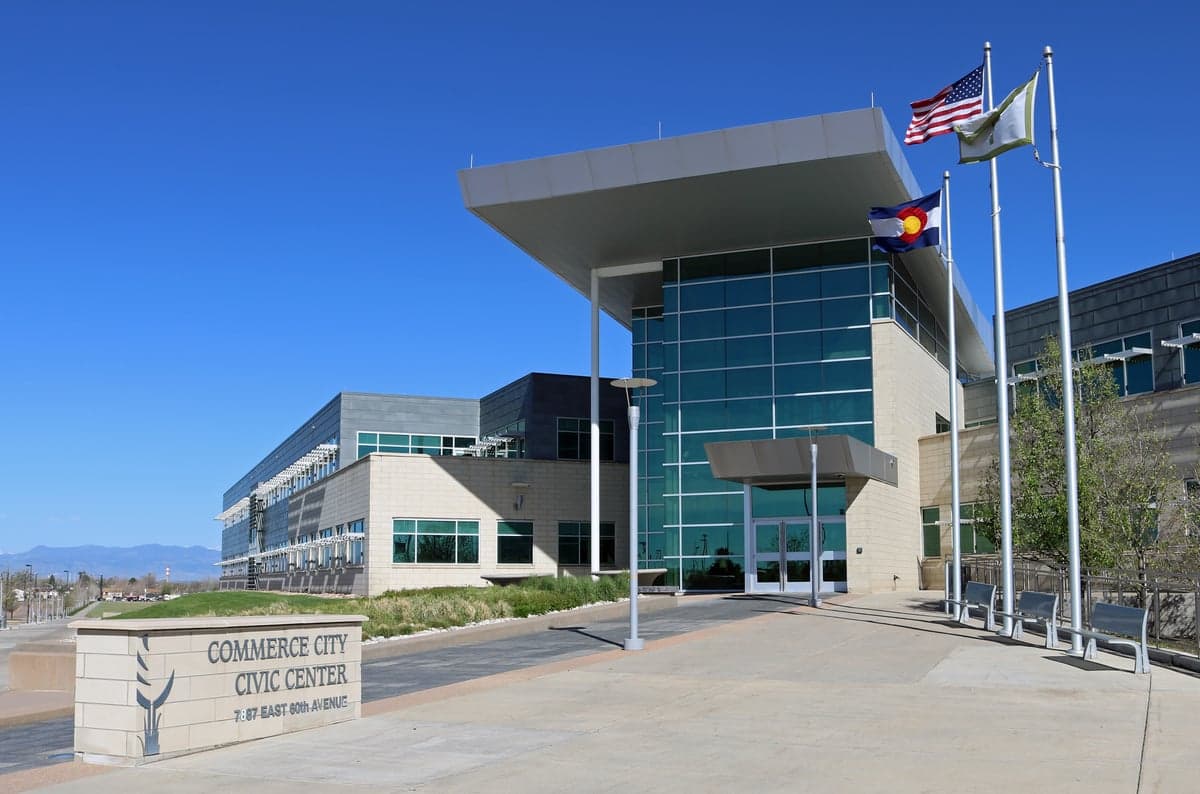
Photo: Wikipedia
Quality of Life in Commerce City, CO
Above-average quality of iife. The area offers a reasonable cost of living, decent mobility, and a mix of neighborhood amenities.
What does Quality of Life tell us?
Quality of Life blends cost of living, nearby amenities, socioeconomic signals, and neighborhood character. City-level scores represent the whole municipality; individual neighborhoods can differ.
What does this tell us?
Quality of Life blends cost of living, nearby amenities, socioeconomic signals, and neighborhood character. City-level scores represent the whole municipality; individual neighborhoods can differ.
Cost of Living
50% above national average
The Real Cost of Living in Commerce City, CO for 2026
| Tier | Individual | Family (4) |
|---|---|---|
| Survival | $26k | $49k |
| Comfortable | $90k | $132k |
| Luxury | $142k+ | $220k+ |
| Elite (Top 5%) | $167k+ | $259k+ |
81%
The Area Signal
A metric tracking the socioeconomic signals of the area.


Hobbies
Explore the areaGroceries
4 within 10 miles
Gas
0 within 10 miles
Hospital
3 within 20 miles
Airport
DEN — Denver International
Post Office
USPS — Denver, CO
Critical Amenities
Quality-of-Life Analysis
Commerce City, Colorado, presents a quality of life defined by its position as a more affordable, family-oriented alternative to Denver, with a cost of living index of 150 (50% above the U.S. average) that still undercuts many neighboring suburbs. The city attracts a diverse mix of young families, first-time homebuyers, and long-term residents who work in logistics, manufacturing, and the energy sector, drawn by its proximity to major employment hubs and the Rocky Mountain Arsenal National Wildlife Refuge. While not as affluent as Boulder or Cherry Creek, Commerce City offers a grounded, community-focused lifestyle where residents prioritize space, outdoor access, and a slower daily rhythm than downtown Denver.
Cost of living, housing affordability, and how it compares to nearby areas
Commerce City’s cost of living index of 150 is significantly lower than Denver’s index of roughly 130–140, but still well above the national baseline. The median home value of $463,200 is about $100,000 less than the Denver metro median, making it one of the more attainable entry points for homeownership in the region. Median rent sits at $1,626, which is roughly $200–$300 cheaper per month than comparable rentals in Aurora or Lakewood. However, housing costs have risen sharply since 2020, with home values increasing by over 40%, narrowing the affordability gap with neighboring cities like Thornton and Brighton. Property taxes in Adams County are moderate (around 0.6% of assessed value), but buyers should factor in higher-than-average homeowners insurance due to hail and wildfire risk. The average commute of 30 minutes is typical for the metro area, with most residents driving to jobs in Denver, the Denver International Airport corridor, or the Suncor Energy refinery complex within city limits.
Schools, amenities, and what daily life is like for families
Daily life in Commerce City revolves around its parks, schools, and community events, with the Rocky Mountain Arsenal National Wildlife Refuge offering 15,000 acres of hiking, biking, and bison viewing just minutes from downtown. The city is served by Adams County School District 14, which includes several elementary schools rated above average by the Colorado Department of Education, though high school options are more limited and many families opt for charter or private schools in nearby Brighton. The Prairie Gateway Open Space and the South Platte River Trail provide recreational corridors, while the city’s annual Commerce City Cinco de Mayo Festival and Fourth of July celebration anchor the social calendar. Retail and dining are concentrated along Highway 2 and 72nd Avenue, with a mix of national chains and local Mexican restaurants reflecting the city’s large Hispanic population (over 40%). For groceries and daily errands, residents typically drive 10–15 minutes to larger shopping centers in Thornton or Northfield Stapleton.
Commerce City is best suited for those who prioritize affordability and outdoor access over urban nightlife or top-tier school districts. Families and first-time buyers who can tolerate a 30-minute commute will find a welcoming, diverse community with lower housing costs than most of the Denver metro. Professionals working in logistics, manufacturing, or at Denver International Airport will appreciate the short drive to major employment centers, while nature lovers will value the wildlife refuge and nearby Rocky Mountain foothills. Those seeking elite schools, walkable downtowns, or a vibrant arts scene should look to Boulder or central Denver instead.

Crime in Commerce City, CO
Higher crime rates than 61% of comparable U.S. locations.
Violent CrimeViolent Crime Analysis
Property CrimeProperty Crime Analysis
Crime Analysis
Commerce City, Colorado, faces a serious public safety challenge, with violent crime rates significantly exceeding both state and national averages. The city’s violent crime rate stands at 740.5 incidents per 100,000 residents, more than double the national average, while property crime registers at 2,491.6 per 100,000. These figures reflect a broader trend in the Denver metro area, where progressive prosecutorial policies in surrounding jurisdictions—including Adams and Denver Counties—have been linked to reduced incarceration rates and increased recidivism, directly impacting community safety.
Crime in context
Commerce City’s violent crime rate is roughly 1.8 times the Colorado state average and approximately 2.1 times the national average. Property crime, while high, is closer to the state average but still elevated compared to the national benchmark. The city’s proximity to Denver and its status as a hub for industrial and logistics operations contribute to transient populations and property crime targets. However, the most significant driver is the region’s criminal justice philosophy: liberal district attorneys in Adams County and Denver have implemented policies such as cash bail reform, reduced charging for drug and property offenses, and early release programs. These measures, while intended to reduce mass incarceration, have resulted in more offenders cycling back onto the streets, eroding deterrence and increasing victimization rates.
What residents experience
Residents report a palpable sense of insecurity, particularly in areas near the I-76 and E-470 corridors. Auto theft, burglary, and theft from vehicles are daily concerns, with property crime rates translating to roughly 6.8 incidents per 1,000 residents per year. Violent crime, while less frequent, is more alarming: aggravated assaults and robberies are concentrated in commercial districts and near public transit stops. The city’s police department has struggled with staffing shortages, and response times for non-emergency property crimes can exceed 30 minutes. Many residents install security cameras and participate in neighborhood watch programs as a direct response to the perceived lack of deterrence from the justice system.
Neighborhood-level variation is notable. The Reunion and Buffalo Run areas—newer, master-planned communities in the northern part of the city—report significantly lower crime rates, closer to the national average. In contrast, older neighborhoods near the intersection of 72nd Avenue and Quebec Street, as well as areas adjacent to the Rocky Mountain Arsenal National Wildlife Refuge, experience the highest concentrations of both violent and property crime. Prospective residents should prioritize homes in the northern and eastern quadrants of the city and verify specific block-level data through local police reports or services like CrimeMapping.com. The overarching reality is that Commerce City’s safety profile is heavily influenced by the progressive criminal justice policies of the surrounding metro area, making it a location where vigilance is essential.
* Values derived from national, state, county, city and local statistics and may differ in a specific area. Last updated: 2026-04-19T09:27:46.000Z
Narrative content on this page is AI-generated and may contain mistakes. Verify any details that matter before acting on them.
ReloMaps may earn a commission from affiliate links at no extra cost to you.

