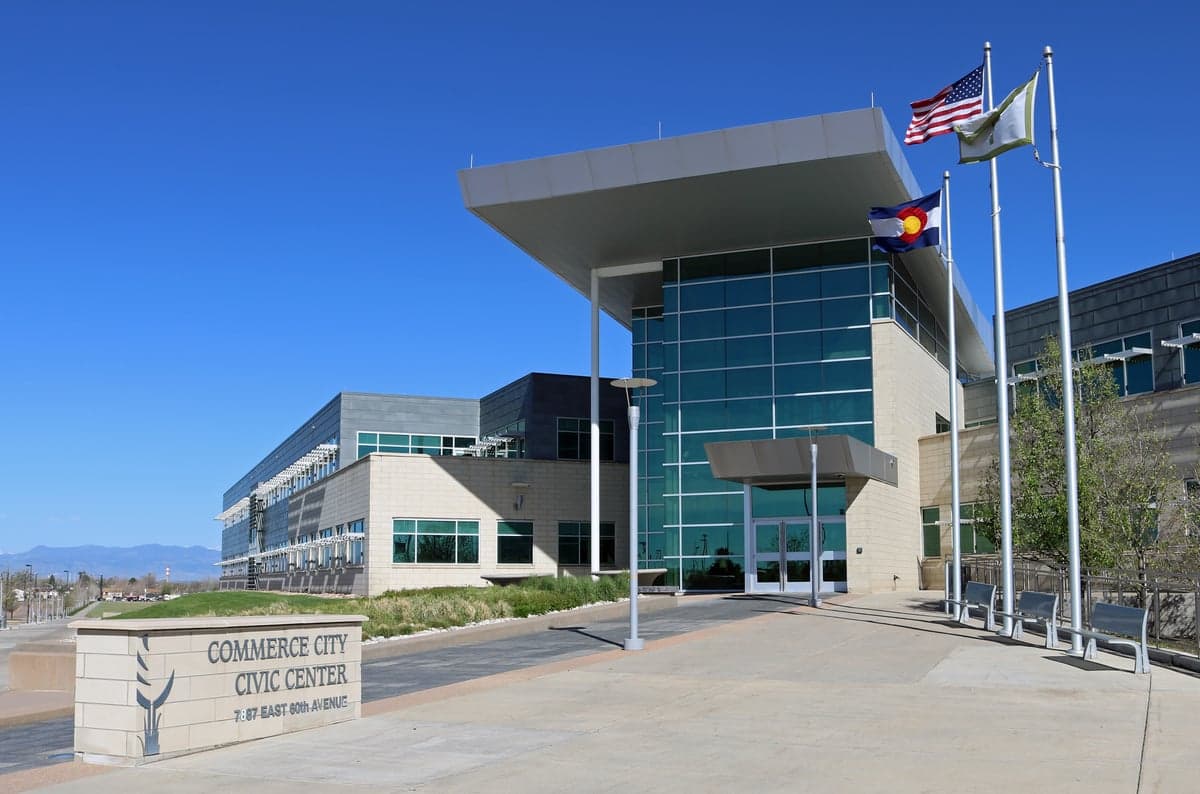
Photo: Wikipedia
Political ClimatePolitical Climate in Commerce City, CO
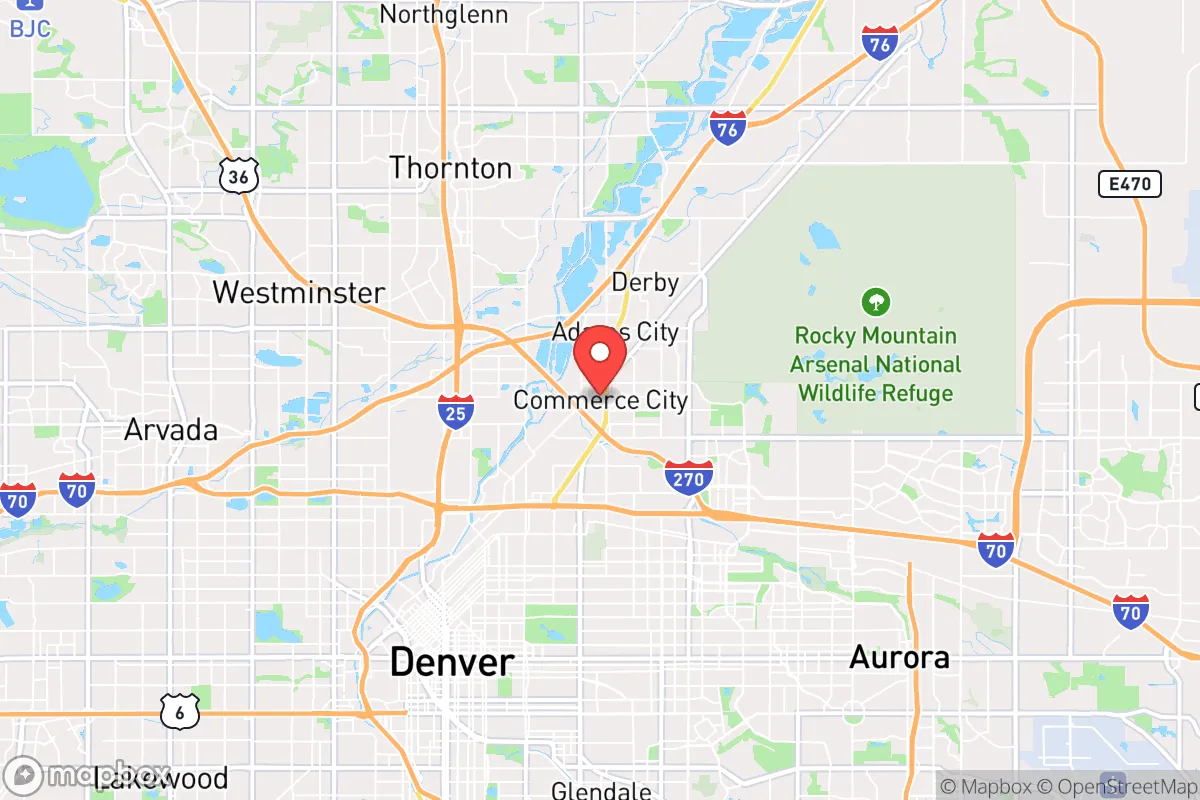
District shown is the primary district for this city’s centroid. Cities may span multiple districts.
Local Political AnalysisPolitical Analysis of Commerce City, CO
Commerce City, Colorado, has long been a bit of a political outlier in the Denver metro area, but the winds have shifted hard in recent years. For decades, this was a working-class, union-heavy town where folks didn't much care for either party's extremes—you could count on a split ticket and a healthy dose of skepticism toward any politician promising to fix everything. The Cook PVI rating of EVEN tells you exactly where we stand: a true toss-up, a place where every election feels like a coin flip. But that even rating masks a troubling trend. The progressive machine out of Denver and Aurora is pushing hard into Adams County, and the old-school, live-and-let-live vibe is getting squeezed by a wave of new regulations and top-down mandates that feel more like Denver's playbook than ours.
How it compares
Drive ten minutes west into Denver proper, and you're in a solidly blue stronghold where the city council doesn't blink at new taxes or land-use restrictions that make it harder to run a small business or park your RV on your own property. Head north to Brighton or east to Bennett, and you'll find communities that still lean more conservative—places where the county commissioners are more likely to tell the state to back off on mask mandates or property-rights overreach. Commerce City sits right in the middle, geographically and politically. We get the spillover from Denver's housing crisis and the traffic, but we also get the rural-tinged pushback from folks who remember when you could build a shed without a permit and three layers of environmental review. The tension is real: our city council has flipped back and forth, and every bond measure or zoning change feels like a proxy war between the old guard and the new wave of transplants who want to turn us into another suburb with bike lanes and density quotas.
What this means for residents
For those of us who've been here a while, the biggest red flag is how fast personal freedoms are eroding under the guise of "progress." We've seen the city push for stricter short-term rental rules, tighter noise ordinances, and a general attitude that government knows better than you do about your own property. The school board has become a battleground over curriculum and parental rights, and the county health department—which used to stay out of our business—now feels emboldened to issue mandates that treat adults like children. If you value the ability to run a home-based business, modify your house without a dozen inspections, or simply be left alone, you're going to feel the squeeze. The long-term trajectory is concerning: as more people flee Denver's high costs and bring their progressive voting habits with them, the EVEN rating could tip blue for good. That means more taxes, more red tape, and less say in how your own neighborhood operates.
Culturally, Commerce City still holds onto some of its blue-collar, independent spirit—you'll see more American flags and "Keep It Simple" bumper stickers than in most of the metro area. But the policy distinctions are narrowing. The city has embraced light-rail expansion and mixed-use developments that feel like a carbon copy of what's happening in Aurora, and the local government has become more aggressive about enforcing code violations on things like fence heights and vehicle storage. If you're looking for a place where you can still breathe free and make your own choices without a bureaucrat's permission, keep an eye on the next few election cycles. The old Commerce City is fighting for its life, but the newcomers are voting in droves.

State Political ClimatePolitical Climate in Colorado
State Political AnalysisPolitical Environment in the State
Colorado has shifted from a classic purple swing state to a solidly blue-leaning state over the past two decades, with Democrats now controlling the governorship, both U.S. Senate seats, and both chambers of the state legislature. The state voted for the Democratic presidential candidate by roughly 13 points in 2020 and 2024, a dramatic swing from the 2000s when it was a perennial battleground. This transformation is driven by massive in-migration from coastal states, explosive growth in the Denver metro and Front Range, and the near-total collapse of the state Republican Party’s ability to compete in statewide races.
Urban vs. rural divide
The political map of Colorado is a tale of two states. The Front Range urban corridor — Denver, Boulder, Aurora, and the suburbs of Jefferson and Adams counties — is overwhelmingly Democratic and accounts for roughly 80% of the state’s population. Boulder County is one of the most liberal jurisdictions in the nation, routinely voting 80%+ Democratic. Meanwhile, the Eastern Plains, the Western Slope, and the San Luis Valley are deeply red. El Paso County (Colorado Springs) is the largest reliably Republican county, but even there, the margin has shrunk from +20 points in 2012 to about +8 points in 2024. The once-reliable Republican strongholds of Weld County (Greeley) and Mesa County (Grand Junction) still vote red, but their margins are eroding as exurban growth brings in more moderate voters. The real story is the suburban ring around Denver — Douglas County flipped from +18 R in 2012 to +3 D in 2024, and Arapahoe County is now reliably blue. This urban-rural split means that statewide elections are effectively decided by the Denver metro area, with rural voters having little practical influence.
Policy environment
Colorado’s policy environment is increasingly progressive, with a tax-and-regulate posture that alarms many conservatives. The state income tax rate is a flat 4.4%, but voters in 2020 approved a measure that caps future growth — a rare win for fiscal restraint. However, property taxes have been rising sharply, especially in the Front Range, driven by soaring home values and local bond measures. The regulatory climate is heavy: Colorado has some of the nation’s strictest environmental regulations, including a 2024 law requiring all new buildings to be “net-zero” ready by 2030. On education, the state has a school choice system with charter schools and open enrollment, but the Denver Public Schools system has been plagued by progressive curriculum battles and declining test scores. Healthcare is dominated by the state-run Connect for Health Colorado exchange, and the state has expanded Medicaid under the Affordable Care Act. Election laws are among the most permissive in the country: Colorado automatically mails ballots to every registered voter, allows same-day registration, and has no voter ID requirement at the polls — a system that conservatives argue is ripe for fraud, though the state’s Republican secretary of state has defended its security.
Trajectory & freedom
Colorado is clearly trending less free for conservatives, especially on gun rights, parental rights, and taxation. In 2013, the state passed universal background checks and a 15-round magazine limit, prompting two counties to attempt secession (the failed “51st state” movement). Since then, the legislature has added a “red flag” law (2019), a ban on “ghost guns” (2022), and a 2024 law raising the purchase age for all firearms to 21. On parental rights, the 2023 “Healthy Families and Workplaces Act” expanded paid family leave, but the state has also passed laws protecting transgender youth from parental notification requirements — a flashpoint for many conservative families. Medical freedom took a hit with the 2020 passage of Proposition 115, which banned late-term abortions, but the 2024 “Reproductive Health Equity Act” codified abortion access and removed most restrictions. Property rights are under pressure from the 2023 “Land Use Act,” which preempts local zoning to force higher-density housing near transit — a move many rural counties see as a state power grab. The Taxpayer’s Bill of Rights (TABOR) remains the state’s strongest check on government growth, but Democrats have repeatedly found ways to work around it through fees and enterprise funds.
Civil unrest & political movements
Colorado has seen significant civil unrest, particularly in Denver. The 2020 George Floyd protests in Denver turned violent, with property damage and clashes between police and demonstrators. The city’s “Defund the Police” movement led to a 2021 budget cut of $8 million, though most of it was later restored. On the right, the “Colorado Republican Party” has fractured into warring factions, with the more conservative “MAGA” wing challenging establishment incumbents. The “Colorado Springs” area has become a hub for conservative activism, including the “Focus on the Family” headquarters and the “Colorado Freedom Coalition.” Immigration politics are heated: Denver has been a “sanctuary city” since 2017, and in 2023, the city declared a state of emergency over the influx of migrants bused from Texas, straining local resources. Election integrity remains a sore point: the 2020 election saw no major fraud cases, but many conservatives remain skeptical of the mail-ballot system. The “Weld County” clerk was convicted in 2022 for allowing unauthorized access to voting machines — a case that both sides cite as evidence of their concerns.
Projection
Over the next 5-10 years, Colorado will likely become more Democratic and more progressive. The state is growing by about 100,000 people per year, with the vast majority settling in the Denver metro and Boulder areas. These newcomers are disproportionately young, college-educated, and from blue states like California and New York — exactly the demographic that votes Democratic. The rural counties will continue to lose population and political influence. The state’s tax burden will likely increase as Democrats push for a progressive income tax and higher property taxes to fund expanded government programs. Gun rights will face further restrictions, possibly including a ban on semi-automatic firearms. Parental rights will continue to erode as the state codifies LGBTQ+ protections that override family decisions. The only wild card is the state’s housing crisis: if it becomes severe enough, it could slow in-migration and shift the political calculus. But for now, the trajectory is clear: Colorado is becoming a one-party state on the West Coast model.
For a conservative considering a move to Colorado, the bottom line is this: you will be living in a state where your vote for statewide office is effectively meaningless, your gun rights are under constant assault, your property taxes are rising, and your children’s schools will reflect progressive values. The rural areas and Colorado Springs offer some refuge, but they are islands in a blue sea. If you value low taxes, strong Second Amendment protections, and local control over education and land use, Colorado is likely not the right fit. If you can tolerate the political climate for the mountains and outdoor lifestyle, you’ll need to be prepared for a constant defensive battle to preserve your freedoms.
* Values derived from national, state, county, city and local statistics and may differ in a specific area. Last updated: 2026-04-19T09:27:46.000Z
Narrative content on this page is AI-generated and may contain mistakes. Verify any details that matter before acting on them.
ReloMaps may earn a commission from affiliate links at no extra cost to you.

