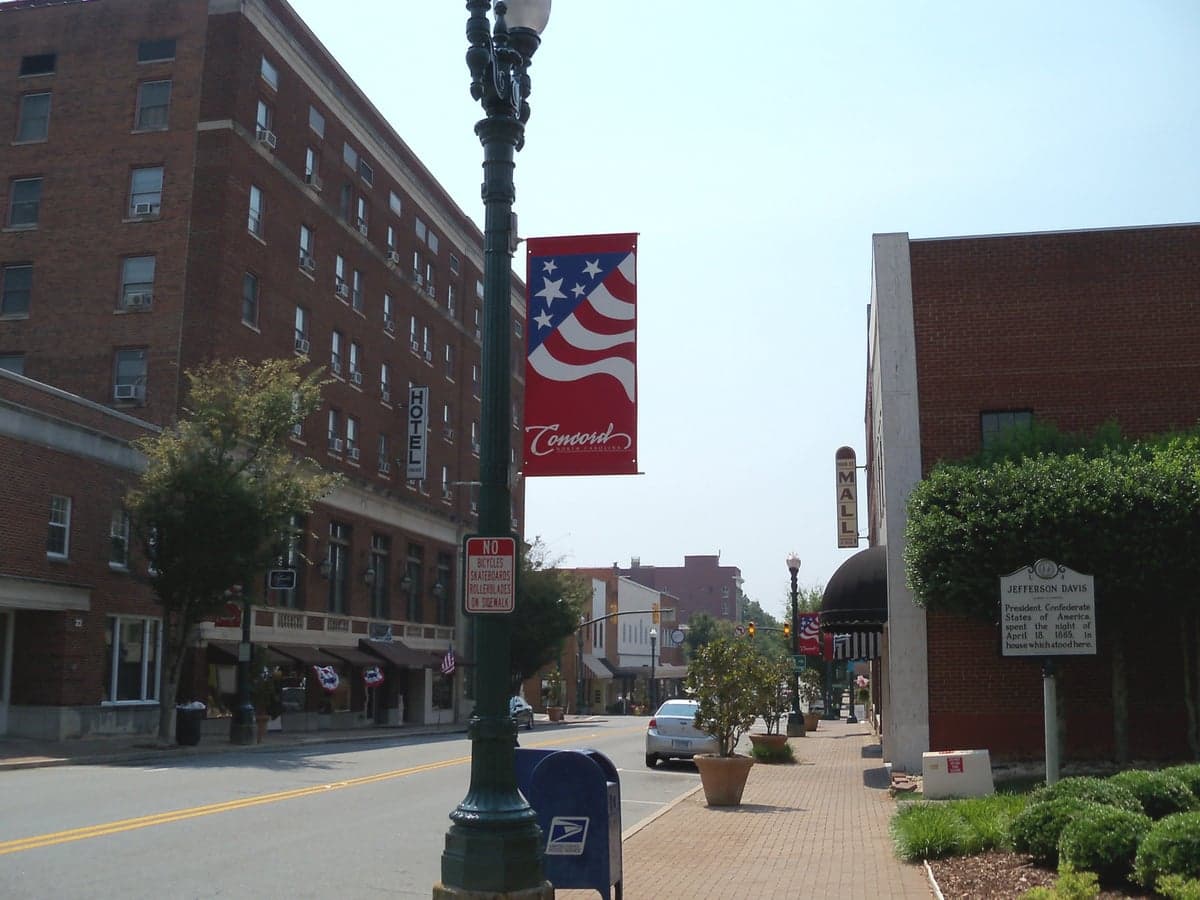
Photo: Wikipedia
Quality of Life in Concord, NC
A high quality of life with strong walkability, manageable living costs, healthy neighborhood signals, and solid amenity access.
What does Quality of Life tell us?
Quality of Life blends cost of living, nearby amenities, socioeconomic signals, and neighborhood character. City-level scores represent the whole municipality; individual neighborhoods can differ.
What does this tell us?
Quality of Life blends cost of living, nearby amenities, socioeconomic signals, and neighborhood character. City-level scores represent the whole municipality; individual neighborhoods can differ.
Cost of Living
17% above national average
The Real Cost of Living in Concord, NC for 2026
| Tier | Individual | Family (4) |
|---|---|---|
| Survival | $22k | $41k |
| Comfortable | $64k | $94k |
| Luxury | $150k+ | $232k+ |
| Elite (Top 5%) | $176k+ | $273k+ |
91%
The Area Signal
A metric tracking the socioeconomic signals of the area.
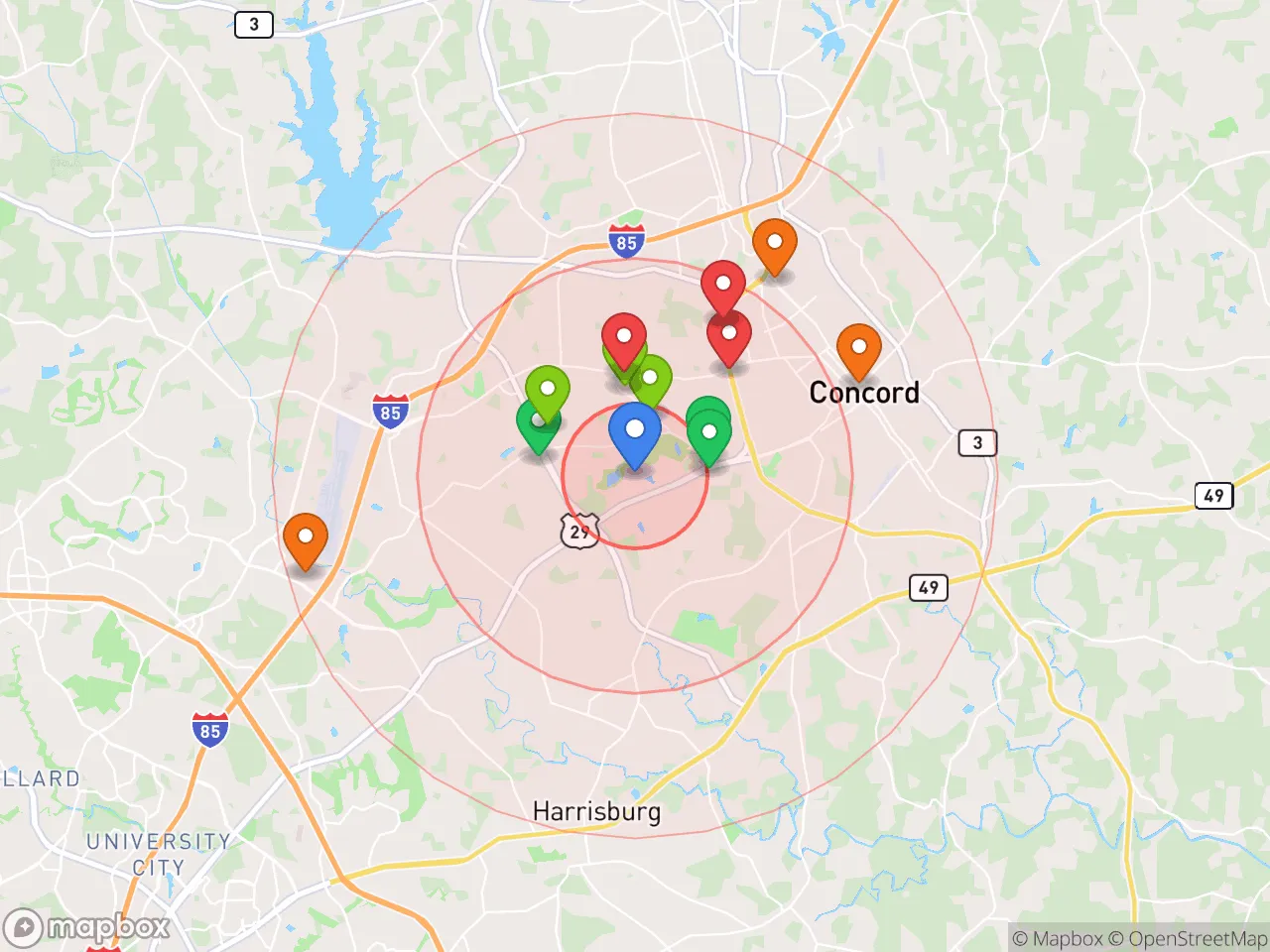
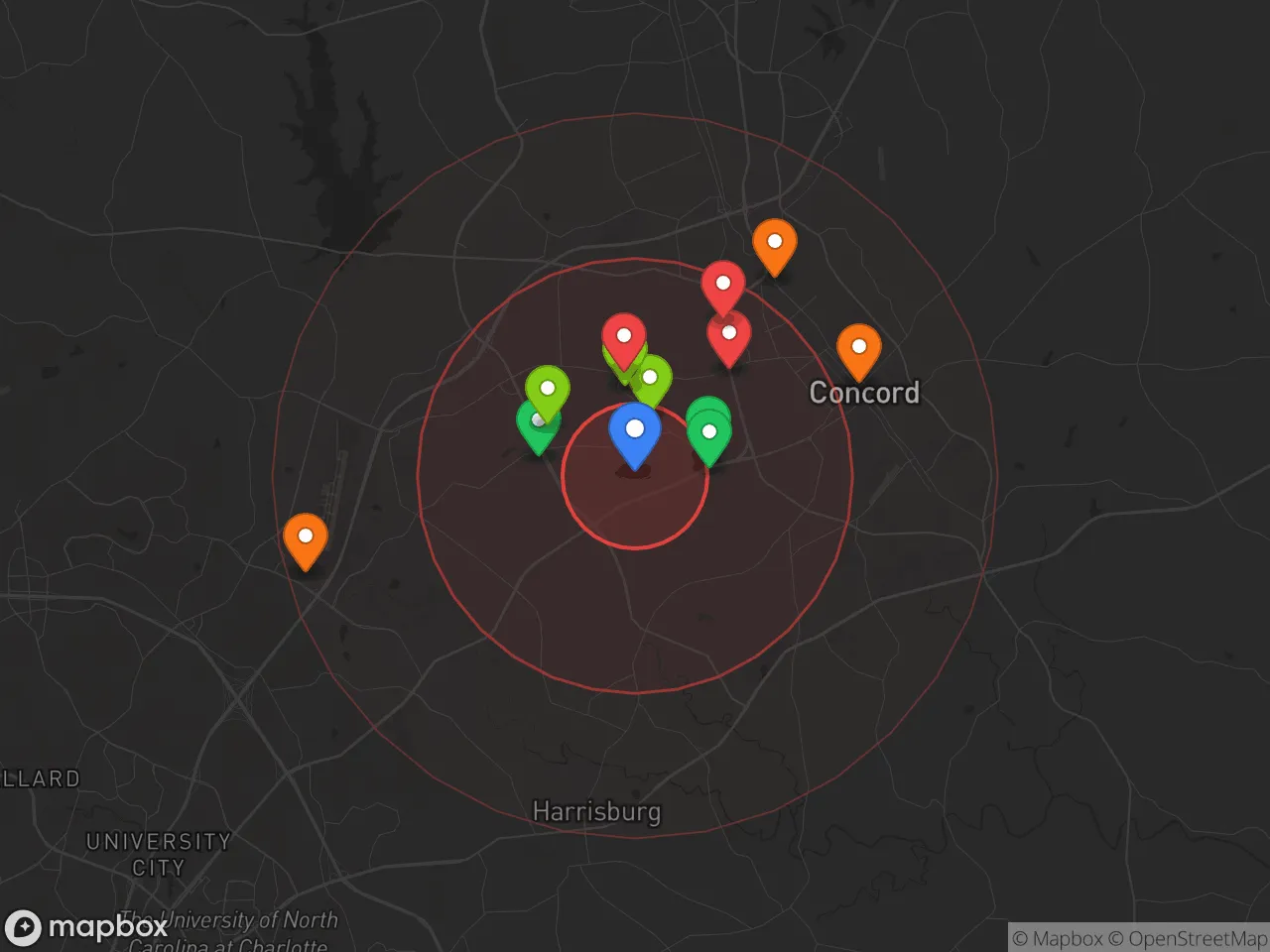
Hobbies
Explore the areaGroceries
7 within 10 miles
Gas
20 within 10 miles
Hospital
20 within 20 miles
Airport
CLT — Charlotte Douglas International
Post Office
USPS — Concord, NC
Critical Amenities
Quality-of-Life Analysis
Concord, North Carolina, presents a quality of life defined by steady suburban affluence, drawing a mix of young families, long-term residents, and Charlotte commuters who value space and stability over urban intensity. With a cost of living index of 117 (100 = U.S. average), the city sits above the national norm but remains notably more affordable than neighboring Mecklenburg County, where Charlotte’s index often exceeds 130. The population skews toward married couples with children, and the median household income hovers around $75,000, reflecting a solid middle-to-upper-middle-class base. This is a place where residents prioritize good schools, low crime relative to the metro core, and a predictable daily routine over nightlife or walkability.
Cost of living and housing affordability compared to Charlotte and surrounding suburbs
Housing is the primary driver of Concord’s cost profile, with a median home value of $327,600 and a median rent of $1,365—both roughly 15–20% below comparable properties in Charlotte proper or the upscale Lake Norman communities like Davidson. For context, a 1,500-square-foot home in Concord might cost $280,000–$320,000, while the same square footage in South Charlotte could run $450,000 or more. Renters fare similarly: a two-bedroom apartment in Concord averages $1,365, versus $1,600–$1,800 in Charlotte’s popular Dilworth or Plaza Midwood neighborhoods. The trade-off is a longer average commute of 27.8 minutes, as many residents drive I-85 or US-29 into Charlotte for work. Utility costs and groceries are near the national average, but property taxes in Cabarrus County (around 0.75% of assessed value) are lower than Mecklenburg’s 0.85%, offering modest annual savings for homeowners.
Everyday amenities, schools, and the daily-life rhythm for families
Daily life in Concord revolves around a handful of well-used anchors. The Cabarrus County Schools system serves most of the city, with several elementary and middle schools rated 7–9 out of 10 on GreatSchools, though high schools like Concord High and Jay M. Robinson draw mixed reviews—families often target the A.L. Brown STEM Academy or private options like Cannon School. For errands and dining, the Concord Mills mega-mall and the surrounding Gateway Boulevard corridor provide big-box retail, chain restaurants, and a movie theater, while the historic downtown district offers a quieter strip of local coffee shops, breweries, and the Cabarrus County Public Library. Parks are plentiful: Frank Liske Park (260 acres) features walking trails, sports fields, and a fishing pond, and the Charlotte Motor Speedway anchors the city’s identity with NASCAR events and concerts. The rhythm is car-dependent and family-oriented—weekends often involve youth sports leagues, church activities, or trips to nearby Lake Norman for boating. Walkability is low outside the downtown core, so a car is essential for most errands.
Concord is best suited for families and professionals who want a suburban buffer from Charlotte’s congestion and higher costs, without sacrificing access to the metro’s job market. Singles or young couples seeking nightlife, walkable neighborhoods, or a short commute will likely find the city too spread out and quiet. Retirees on fixed incomes may find the cost of living manageable but should note the lack of dense senior amenities. For those who prioritize affordable housing, good schools, and a low-key daily pace within a 30-minute drive of Charlotte’s employment centers, Concord delivers a stable, predictable quality of life that aligns with its reputation as a family-first suburb.

Crime in Concord, NC
Generally safer than 74% of comparable U.S. locations.
Violent CrimeViolent Crime Analysis
Property CrimeProperty Crime Analysis
Crime Analysis
Concord, North Carolina, reports a violent crime rate of 299.4 incidents per 100,000 residents and a property crime rate of 1,659.9 per 100,000, placing it in a middle tier for safety among mid-sized Southern cities. While these figures are below the national average for violent crime, the property crime rate closely tracks the national median, and the city's proximity to Charlotte introduces both economic opportunity and the criminal spillover effects common to large metro areas. Prospective residents should weigh these statistics against the local justice system's approach, as Cabarrus County's elected officials and judicial philosophy directly shape public safety outcomes.
Crime in context
Concord's violent crime rate of 299.4 per 100,000 is roughly 15% lower than the national average of 370 per 100,000, but property crime at 1,659.9 per 100,000 sits near the national figure of 1,954 per 100,000. Compared to North Carolina's statewide violent crime rate of approximately 350 per 100,000, Concord fares slightly better, though the gap narrows when factoring in property offenses. However, these raw numbers do not capture the influence of the broader Charlotte metro area, where progressive prosecutorial policies in Mecklenburg County have been linked to reduced incarceration rates and higher recidivism. While Cabarrus County itself has historically elected more conservative district attorneys, the regional trend toward lenient sentencing and diversion programs for repeat offenders creates a porous safety environment. Residents should be aware that liberal-leaning judicial reforms in neighboring jurisdictions can result in criminals crossing county lines, directly increasing the risk of property crimes and violent encounters in Concord.
What residents experience
Daily life in Concord involves a tangible awareness of property crime, particularly vehicle break-ins and package thefts in suburban neighborhoods and shopping districts like Concord Mills. Violent crime is less common but not absent, with incidents concentrated in specific areas rather than distributed evenly. The city's police department maintains a visible presence, but the effectiveness of law enforcement is undermined when district attorneys prioritize offender rehabilitation over victim protection. In practice, this means that individuals arrested for theft or assault in Concord may face reduced charges or diversion programs, returning to the streets more quickly than in jurisdictions with tougher sentencing. For families and retirees, this creates a persistent low-level concern: the justice system's sympathy toward offenders directly translates to more potential repeat offenders in the community.
Neighborhood-level safety varies considerably. Areas west of I-85 near the Charlotte border, including the Concord Mills corridor, see higher property crime volumes due to commercial density and transient populations. Established residential neighborhoods like the Country Club area and parts of southwest Concord report lower incident rates, while newer subdivisions on the city's eastern edge benefit from suburban isolation. No neighborhood is immune from the regional effects of progressive criminal justice policies, but choosing a home in a low-traffic, single-entry subdivision with active neighborhood watch programs can mitigate some risk. Prospective buyers should review Cabarrus County Sheriff's Office crime maps and consider that the city's overall statistics, while moderate, are influenced by a judicial climate that may not prioritize public safety over offender rehabilitation.
* Values derived from national, state, county, city and local statistics and may differ in a specific area. Last updated: 2026-05-03T20:27:25.000Z
Narrative content on this page is AI-generated and may contain mistakes. Verify any details that matter before acting on them.
ReloMaps may earn a commission from affiliate links at no extra cost to you.

