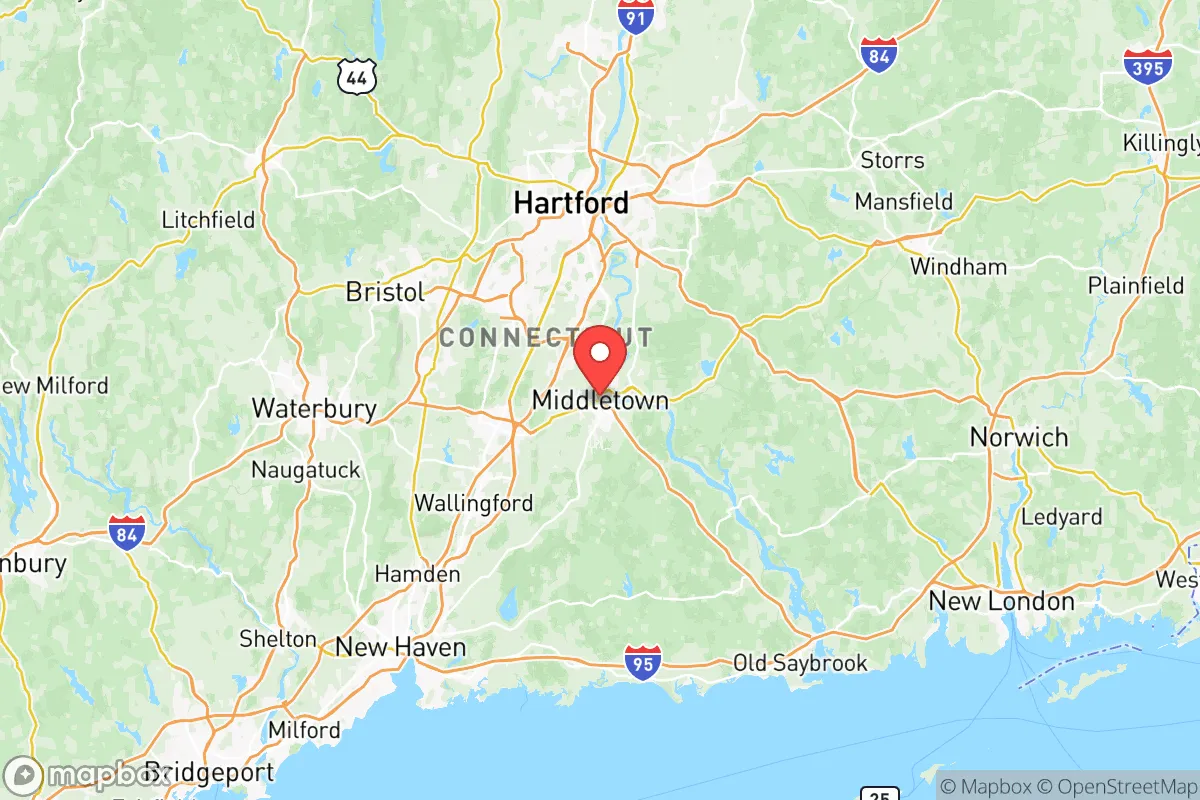
Political ClimatePolitical Climate in Lower Connecticut River Valley Planning Region County
Showing state-level results — no local-only data available.
Local Political AnalysisPolitical Analysis of Lower Connecticut River Valley Planning Region County
Look, I’ve lived in the Lower Connecticut River Valley my whole life, and I’ve watched this place drift from a quiet, independent-minded corner of the state into something that feels a lot more like the political machine down in Hartford. The Cook PVI here is D+12, which is four points more Democratic than the state’s D+8 average. That’s not just a number—it means the progressive wave has hit our towns harder than most of Connecticut. Twenty years ago, you could have a reasonable conversation about taxes or property rights at the town hall. Now, it feels like the agenda is set before anyone shows up to vote.
How it compares
The real story is in the towns. Old Saybrook and Essex still have a strong Republican presence—Essex went for Trump in 2020 by a slim margin, and Old Saybrook’s town council has a conservative majority that fights tooth and nail against state mandates. But then you’ve got Middletown and New London, which are deep blue strongholds. Middletown’s city council has been pushing zoning changes that make it harder to own a single-family home without jumping through bureaucratic hoops. Chester and Deep River are the swing precincts—they used to be reliably red, but now they’re splitting 50-50 as younger transplants from New York and Boston move in, bringing their politics with them. Compared to the rest of Connecticut, the Valley is more polarized. The state as a whole has a D+8 lean, but here the gap between the coastal liberal towns and the inland conservative ones is wider than anywhere else I’ve seen.
What this means for residents
If you value personal freedom—like the right to build a shed on your own land without a six-month permit review, or to keep a firearm without a waiting period that feels like a punishment—you’re going to feel the squeeze. The county government has been steadily adopting Hartford’s playbook: stricter environmental regulations that hit small farmers and contractors hardest, and school curriculum changes that push a progressive worldview on kids before they can read. Property taxes are climbing because the state keeps passing unfunded mandates down to the towns. In Lyme and Old Lyme, where a lot of folks are retired or on fixed incomes, that’s a real gut punch. The local school boards in East Haddam and Haddam have been fighting to keep parental rights intact, but the state Department of Education keeps overruling them.
On the ground, it means you can’t just trust that your town will protect your way of life anymore. The political machine in Hartford has its eyes on every local ordinance, and they’re not shy about using state preemption to override local votes. I’ve seen it happen with zoning, with school policies, even with how the town handles public meetings. The days of “live and let live” are fading fast.
Culturally, the Valley still has its charm—the river, the farms, the small-town feel—but the policy direction is unmistakable. Middletown has become a hub for progressive activism, with groups pushing for rent control and “equity” audits that sound good on paper but end up costing everyone more in fees and compliance. Meanwhile, Essex and Chester are holding the line, but they’re outnumbered at the county level. If you’re thinking of moving here, just know that the political climate is shifting fast, and it’s not shifting toward the kind of freedom most of us grew up with. Keep an eye on the local elections—that’s where the real fight is.

State Political ClimatePolitical Climate in Connecticut
State Political AnalysisPolitical Environment in the State
Connecticut is a solidly blue state with a Cook PVI of D+8, meaning it consistently votes for Democratic presidential candidates by about eight points more than the national average. Over the past 10-20 years, the state has shifted further left, driven by the dominance of its wealthy, educated suburbs and the urban cores of Hartford, New Haven, and Bridgeport. While the state was once a bastion of moderate Republicanism—think Lowell Weicker and John Rowland—the GOP has all but collapsed in statewide races, and the legislature has been under Democratic supermajority control for most of the last decade. For a conservative considering relocation, the political climate here is increasingly one-party rule, with all the policy overreach that entails.
Urban vs. rural divide
The political map of Connecticut is a tale of three regions. The Gold Coast—Fairfield County towns like Greenwich, Stamford, and Darien—votes reliably Democratic, driven by affluent, college-educated professionals who prioritize social liberalism and environmentalism. These towns are the engine of the state’s blue lean. The urban cores—Hartford, New Haven, Bridgeport, and Waterbury—are deep blue, with Democratic margins often exceeding 70%. Conversely, the eastern and northwestern rural areas—Litchfield County towns like Torrington and Winsted, and Windham County towns like Killingly and Plainfield—vote Republican, but their populations are too small to offset the suburbs. The suburban ring around Hartford (e.g., Glastonbury, West Hartford) and New Haven (e.g., Hamden, Branford) has flipped decisively blue over the past two decades, as moderate Republicans have been replaced by liberal Democrats. The only reliably red pockets are the rural northeast and northwest, plus a few exurban towns like Southbury and Oxford.
Policy environment
Connecticut’s policy environment is aggressively progressive. The state has the highest per capita tax burden in the nation, with a progressive income tax topping at 6.99% and some of the highest property taxes in the country—often exceeding 3% of assessed value. The Public Act 21-5 (the police accountability bill) passed in 2020, which limited qualified immunity and mandated body cameras, was seen by conservatives as a blow to law enforcement. In education, the state has mandated ethnic studies in high schools (Public Act 19-12) and requires schools to adopt policies supporting transgender students (Public Act 11-55). Election laws are among the most permissive in the nation: no-excuse absentee voting was made permanent in 2023, and the state has automatic voter registration and early voting. The paid family and medical leave program (Public Act 19-25) imposes a 0.5% payroll tax on all workers, a clear expansion of government into personal finances. For a conservative, the policy environment feels like a laboratory for left-wing governance, with little restraint from the minority party.
Trajectory & freedom
Connecticut is becoming less free by nearly any measure. On gun rights, the state passed some of the nation’s strictest laws after the Sandy Hook tragedy, including a ban on "assault weapons" and high-capacity magazines (Public Act 13-3), and in 2023 expanded the ban to include more firearms and raised the purchasing age to 21 (Public Act 23-53). On parental rights, the state has moved in the opposite direction of red states: in 2021, it passed a law (Public Act 21-1) that allows minors as young as 16 to consent to mental health and substance abuse treatment without parental notification. On medical freedom, Connecticut was one of the first states to mandate COVID-19 vaccines for schoolchildren (though that mandate was later suspended), and it maintains one of the most aggressive vaccine schedules in the country. Property rights are constrained by strict zoning laws that limit development, and the state’s convoluted tax structure makes it difficult to build wealth. The trend is clear: the state legislature is comfortable using government power to dictate personal choices, from what you can own to how you raise your kids.
Civil unrest & political movements
Connecticut has seen its share of political flashpoints. The Black Lives Matter protests in 2020 were large and sustained in Hartford and New Haven, with some turning violent—including looting in downtown Hartford. The state’s sanctuary city policies are a major issue: Hartford, New Haven, and Bridgeport all limit cooperation with federal immigration enforcement, and in 2023 the state legislature considered (but did not pass) a statewide "Trust Act" that would have gone further. The election integrity debate has been muted compared to swing states, but conservatives point to the 2020 expansion of absentee voting as a concern. On the right, the Connecticut Citizens Defense League (CCDL) is a well-organized gun rights group that holds annual rallies at the state capitol, drawing thousands. There have been secessionist murmurs in the rural northeast, with some towns like Killingly and Canterbury exploring joining a "Greater Idaho"-style movement to break away from the state, though it’s mostly symbolic. The most visible flashpoint for a new resident would be the annual debate over the state budget, where tax hikes and spending increases are a perennial source of tension.
Projection
Over the next 5-10 years, Connecticut is likely to become even more blue. Demographic trends favor the Democrats: the state’s population is aging, but the young, educated professionals moving into Fairfield County and the Hartford suburbs are overwhelmingly liberal. The rural Republican base is shrinking as young people leave for lower-cost states. The state’s fiscal crisis—with massive unfunded pension liabilities and a shrinking tax base—will likely force either drastic tax increases or spending cuts, but given the Democratic supermajority, tax hikes are the more probable outcome. A conservative moving in now should expect: higher taxes, more gun restrictions, continued erosion of parental rights, and a political culture that views government as the primary solution to every problem. The only wild card is a potential economic exodus: if enough high-earners leave, the tax base could collapse, forcing a reckoning. But for now, the trajectory is one of steady, one-party progressive governance.
Bottom line for a new resident: If you value low taxes, gun rights, parental control over your children’s education, and a government that stays out of your life, Connecticut is a tough place to call home. The state’s political climate is deeply entrenched in progressive ideology, and the trend is toward more government intervention, not less. You’ll find like-minded conservatives in the rural towns of Litchfield and Windham counties, but you’ll be fighting an uphill battle against a legislature that has little interest in your values. If you’re moving here for a job or family, be prepared to pay a premium—in taxes, in restrictions, and in the constant feeling that your voice is outnumbered.
* Values derived from national, state, county, city and local statistics and may differ in a specific area. Last updated: 2026-05-08T09:54:22.000Z
Narrative content on this page is AI-generated and may contain mistakes. Verify any details that matter before acting on them.
ReloMaps may earn a commission from affiliate links at no extra cost to you.

