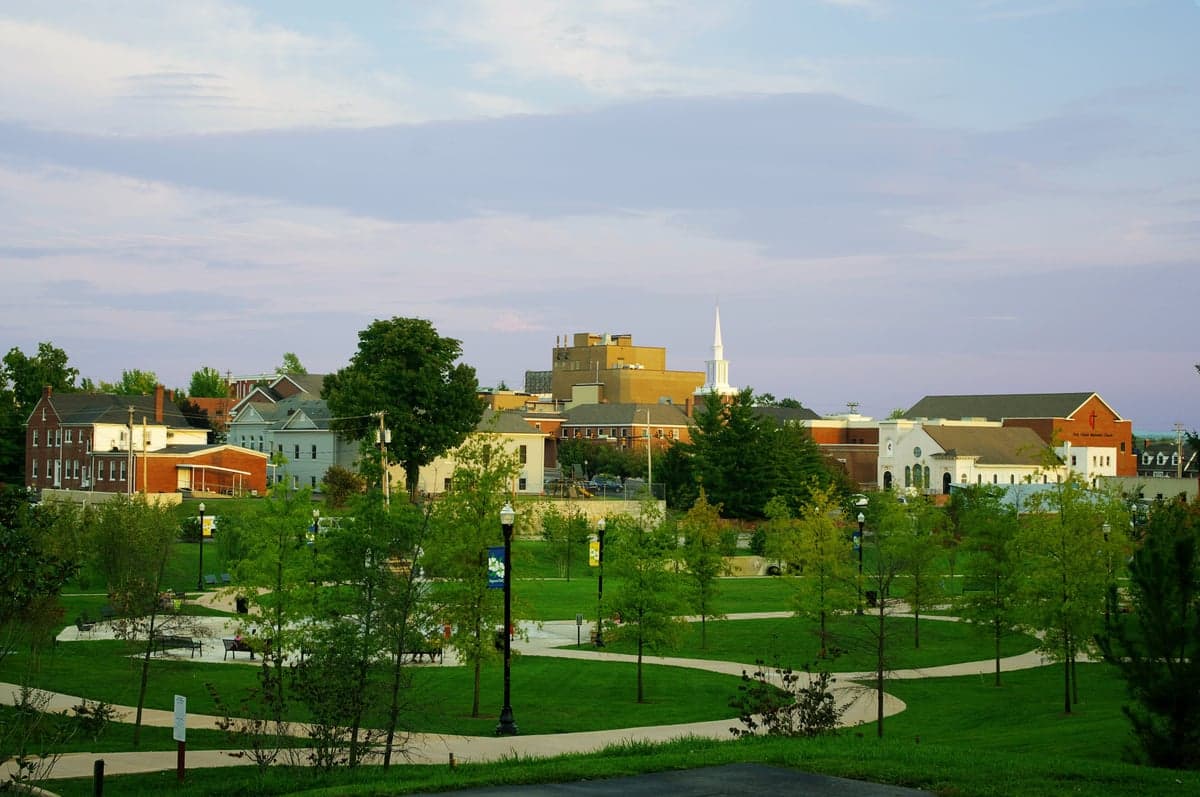
Photo: Wikipedia
Political ClimatePolitical Climate in Cookeville, TN
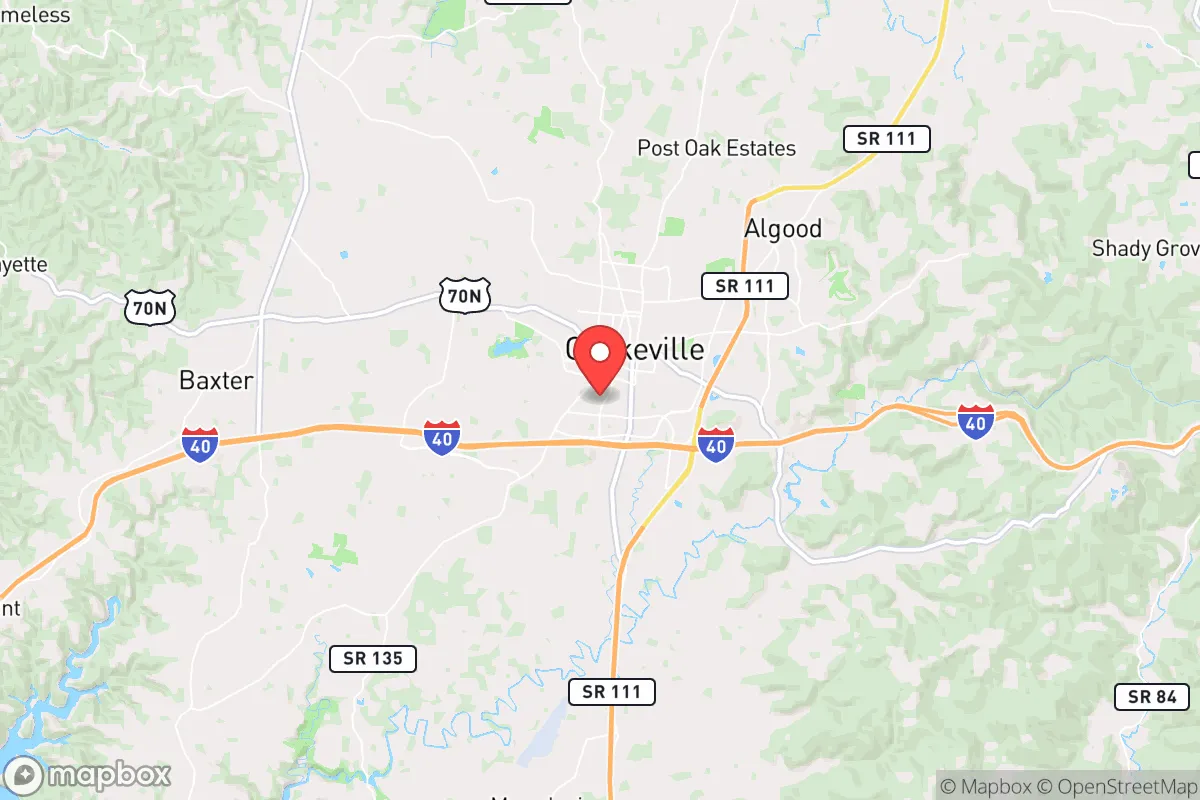
District shown is the primary district for this city’s centroid. Cities may span multiple districts.
Local Political AnalysisPolitical Analysis of Cookeville, TN
Cookeville, Tennessee, sits squarely in the heart of the Upper Cumberland region, and its politics reflect that deep-rooted, independent streak you find in folks who’ve lived here for generations. The Cook Partisan Voting Index (PVI) of R+17 tells the story plainly: this is a solidly conservative area, and it’s been that way for as long as anyone can remember. But if you’ve been around here for a while, you’ll notice the political climate isn’t just about party registration—it’s about a way of life that values personal responsibility, limited government, and a healthy skepticism of anyone in Nashville or Washington telling us how to live. The trajectory has been steady, but there are undercurrents worth watching, especially as the county seat grows with Tennessee Tech University and new folks move in from bluer states.
How it compares
To really understand Cookeville, you have to look at the towns around it. Drive an hour east to Knoxville, and you’ll find a more moderate, urban-leaning conservatism, with a growing progressive presence around the university. Head west to Nashville, and you’re in a deep-blue bubble where state-level politics often clash with local governance. Cookeville, by contrast, feels like a bulwark. Neighboring Putnam County votes reliably red, but the real contrast is with places like Algood or Baxter—smaller, even more rural communities where the conservative vote is even more pronounced. In Cookeville proper, you get a mix of longtime locals, Tennessee Tech faculty (some of whom lean left), and a growing number of retirees and remote workers from California or Illinois. That influx has brought some tension, but the overall political character remains firmly conservative. The R+17 PVI isn’t just a number; it’s a reflection of a community that consistently rejects progressive overreach, whether it’s on gun rights, school curriculum, or tax policy.
What this means for residents
For someone living here, the political climate translates into a daily life that feels free from the heavy hand of government. You won’t see the kind of zoning battles or mask mandates that dominate coastal cities. The local school board fights are more about parental rights and curriculum transparency than about critical race theory or gender ideology—though those battles are starting to creep in, and it’s concerning. Property taxes remain low, and there’s a general trust that local officials will keep it that way. But the shift is real: as Cookeville grows, you’re seeing more calls for “smart growth” policies that sound an awful lot like overregulation. The city council has stayed mostly conservative, but every election cycle brings a new wave of candidates who want to “modernize” things. For now, residents enjoy a low-tax, low-regulation environment where personal freedoms—like carrying a firearm or running a small business without endless permits—are still respected. That’s the kind of place Cookeville has always been, and most folks here want to keep it that way.
Culturally, Cookeville stands out for its fierce independence. You’ll hear people say, “We don’t need the state telling us what to do,” and they mean it. The local gun culture is strong, with multiple shooting ranges and a thriving hunting community. The policy distinction that matters most is the absence of any city-level income tax and a general resistance to adopting state-mandated progressive policies. But there’s a quiet worry among long-time residents: the same forces that turned Nashville into a liberal stronghold are slowly making their way up I-40. If you’re thinking of moving here, know that you’re coming to a place where conservative values aren’t just a talking point—they’re the foundation of daily life. Just keep an eye on the local elections, because that’s where the real fight for Cookeville’s soul is happening.

State Political ClimatePolitical Climate in Tennessee
State Political AnalysisPolitical Environment in the State
Tennessee has been a reliably Republican state for over two decades, with a political climate that has shifted decisively rightward since the early 2000s. The state’s dominant coalition is a blend of rural conservatives, suburban families, and evangelical voters, all united around low taxes, gun rights, and traditional values. In the 2024 presidential election, Donald Trump carried Tennessee by roughly 30 points, a margin that has only widened from the 26-point gap in 2020 and the 21-point gap in 2016. This trajectory reflects a state that is not just staying red but deepening its conservative identity, even as some neighboring states like Georgia and North Carolina have become more competitive.
Urban vs. rural divide
The political map of Tennessee is a study in stark contrasts. The major metros—Nashville (Davidson County) and Memphis (Shelby County)—are deep blue strongholds, with Nashville voting about 65% Democratic in 2024 and Memphis closer to 75%. These cities drive the state’s progressive minority, fueled by a growing population of young professionals, artists, and transplants from bluer states. However, the rest of the state is overwhelmingly red. Knoxville (Knox County) leans Republican by about 20 points, while Chattanooga (Hamilton County) is a purple battleground that has trended right in recent cycles, flipping from a 2-point Democratic win in 2020 to a 5-point Republican win in 2024. The real engine of Tennessee’s conservatism is its rural and exurban counties. Williamson County, just south of Nashville, is one of the wealthiest and most Republican counties in the nation, voting +45 R in 2024. Rutherford County (Murfreesboro) and Wilson County (Lebanon) are fast-growing suburbs that have shifted from purple to solid red over the past decade, driven by families fleeing Nashville’s rising taxes and progressive policies. Meanwhile, East Tennessee—places like Johnson City, Kingsport, and Bristol—remains some of the most reliably conservative territory in the country, with many counties voting 80%+ Republican.
Policy environment
Tennessee’s policy environment is a model of conservative governance. The state has no income tax—neither on wages nor on investment income—making it one of the most tax-friendly states in the nation. The sales tax is high (around 9.5% in most areas), but the absence of income tax is a major draw for relocating families and businesses. The regulatory posture is light: Tennessee is a right-to-work state, has no state-level minimum wage above the federal floor, and has aggressively cut business taxes and red tape under Governor Bill Lee. Education policy has been a flashpoint. The state passed a universal school voucher program in 2025, allowing any family to use public funds for private or homeschool expenses—a major win for parental rights. The state also banned critical race theory in public schools in 2021 and passed a law requiring schools to notify parents of any changes to a child’s health or emotional well-being (the “Parental Bill of Rights” in 2023). On healthcare, Tennessee has not expanded Medicaid under the Affordable Care Act, and the state has some of the strictest abortion laws in the country, with a near-total ban (no exceptions for rape or incest) that took effect in 2022 after the Dobbs decision. Election laws are secure: the state requires photo ID to vote, has strict voter roll maintenance, and banned ballot drop boxes in 2023. There is no early voting on Sundays, and absentee voting is restricted to those who meet specific criteria.
Trajectory & freedom
Tennessee is becoming more free, particularly in areas of personal liberty that matter most to conservatives. The state has expanded gun rights significantly: in 2021, Tennessee became a permitless carry state, allowing any law-abiding adult 21 or older to carry a concealed handgun without a permit. In 2023, the legislature passed a law prohibiting local governments from enforcing federal gun laws that conflict with state law (a “Second Amendment Sanctuary” measure). On parental rights, the 2023 “Parental Bill of Rights” gives parents the explicit right to direct their child’s education, medical care, and religious upbringing, and requires schools to get parental consent before administering any mental health survey. The state also passed a law in 2024 banning gender transition procedures for minors, with criminal penalties for doctors who violate it. On medical autonomy, Tennessee has some of the strongest vaccine freedom laws in the country, including a 2023 ban on vaccine passports and a prohibition on employers mandating COVID-19 vaccines. Property rights are strong: the state has no statewide zoning mandates, and local governments are limited in their ability to impose rent control or inclusionary zoning. The only area where freedom has contracted is on abortion, where the near-total ban has been controversial even among some conservatives, but the legislature has held firm. Overall, the trajectory is toward more individual liberty, less government overreach, and a clear rejection of progressive social engineering.
Civil unrest & political movements
Tennessee has seen its share of political flashpoints, but they have been relatively contained compared to states like Oregon or Washington. The most visible unrest occurred in Nashville in 2020, when Black Lives Matter protests turned violent, resulting in property damage and a police precinct being burned. The city’s progressive mayor at the time, John Cooper, was criticized for not cracking down harder, and the backlash helped fuel Republican gains in the suburbs. In 2023, a mass shooting at a Nashville Christian school (The Covenant School) sparked a wave of protests from gun control activists, but the Republican supermajority in the legislature responded by passing a law to increase armed security at schools rather than restricting gun access. Immigration politics have been relatively quiet, as Tennessee is not a border state, but the legislature passed a law in 2024 requiring local law enforcement to cooperate with ICE and banning sanctuary city policies. There has been no serious secession or nullification rhetoric, though some rural counties have passed resolutions declaring themselves “Second Amendment Sanctuaries.” Election integrity controversies have been minimal; the state’s 2020 election was widely seen as secure, and the legislature passed a series of reforms in 2021 (including signature verification requirements and a ban on private funding of elections) that have kept the system trusted. A new resident would notice that political activism is mostly confined to the blue cities; in the suburbs and rural areas, life is calm and politically homogeneous.
Projection
Over the next 5-10 years, Tennessee is likely to become even more conservative, but with a growing tension between the blue metros and the red hinterlands. In-migration is a key factor: the state is gaining about 80,000 new residents per year, many from California, Illinois, and New York. These newcomers are disproportionately conservative-leaning—families and remote workers seeking lower taxes and more freedom—but a significant minority are progressives moving to Nashville for the music industry or tech jobs. The net effect is that the suburbs are growing faster than the cities, which should further entrench Republican dominance. The state’s congressional delegation is likely to remain 8-1 Republican (the lone Democrat is from Memphis), and the state legislature will stay under a Republican supermajority. The biggest wildcard is Nashville: if its progressive policies (like the recent push for a light rail tax and affordable housing mandates) continue to drive up costs and crime, more families will flee to Williamson, Rutherford, and Wilson counties, accelerating the rightward shift. Governor Bill Lee is term-limited in 2026, but the likely Republican successors are all staunch conservatives. Expect more school choice expansion, further tax cuts, and continued resistance to federal overreach on environmental and labor regulations. A new resident moving in now should expect to find a state that is stable, safe, and increasingly aligned with traditional values, with no serious risk of flipping blue in the foreseeable future.
For a new resident, the bottom line is clear: Tennessee offers a political environment where your tax dollars stay in your pocket, your children’s education is under your control, and your Second Amendment rights are protected. The state is not perfect—the sales tax is high, and the blue cities can be frustrating—but the overall trajectory is toward more freedom and less government intrusion. If you’re looking for a place where conservative values are not just tolerated but celebrated, and where the political winds are blowing in your direction, Tennessee is one of the safest bets in the country.
* Values derived from national, state, county, city and local statistics and may differ in a specific area. Last updated: 2026-05-01T16:02:44.000Z
Narrative content on this page is AI-generated and may contain mistakes. Verify any details that matter before acting on them.
ReloMaps may earn a commission from affiliate links at no extra cost to you.

