Political ClimatePolitical Climate in Coppell, TX
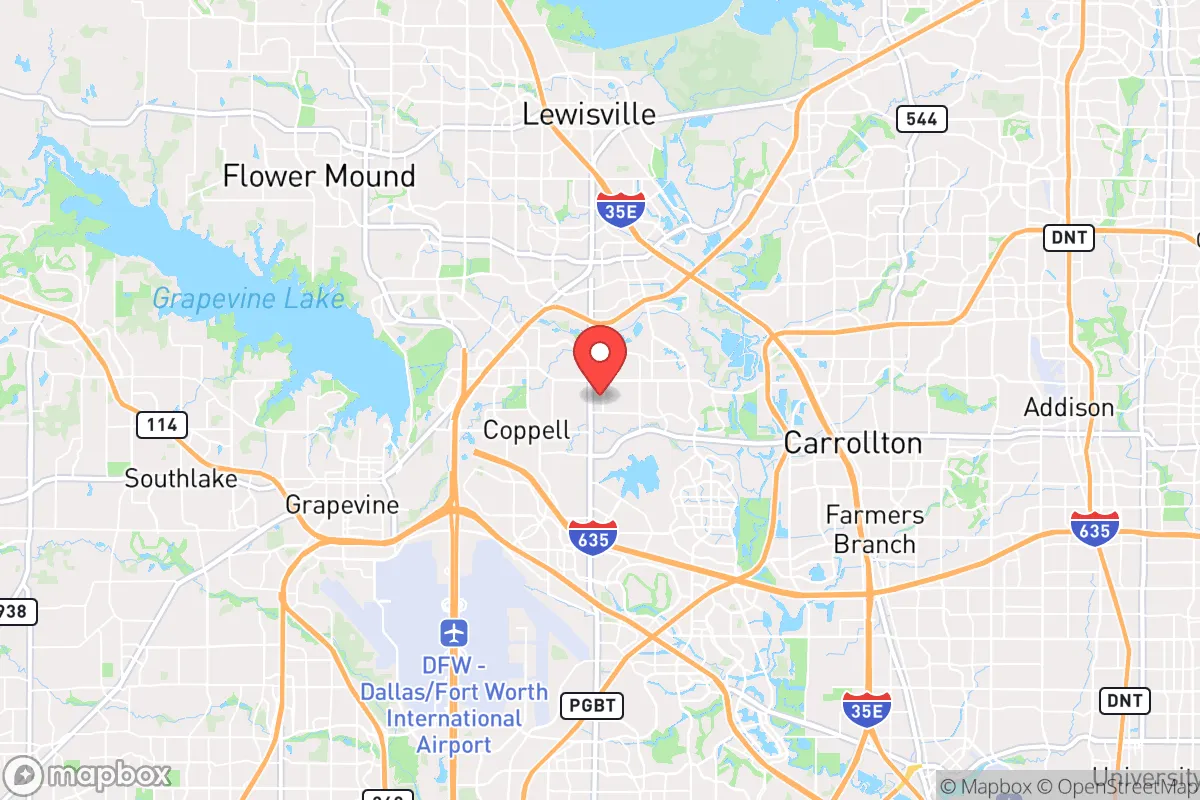
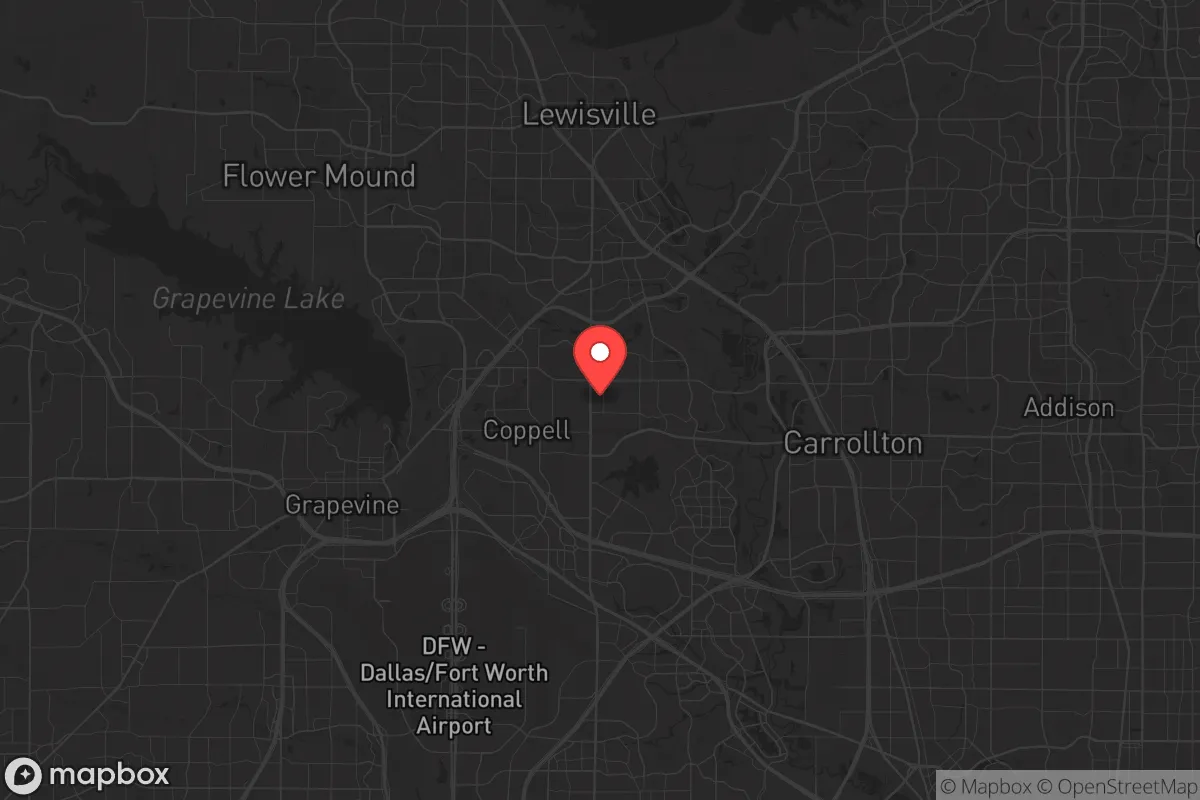
District shown is the primary district for this city’s centroid. Cities may span multiple districts.
Local Political AnalysisPolitical Analysis of Coppell, TX
Coppell has long been a reliably conservative community, but like much of the Dallas-Fort Worth metroplex, it’s seen a slow but noticeable drift leftward over the past decade. The area’s Cook Partisan Voting Index (PVI) sits at R+7, meaning it votes about seven points more Republican than the national average—still solidly red, but less so than it was ten or fifteen years ago. That shift is real, and if you’ve lived here a while, you’ve probably felt it in local school board meetings and city council races. The surrounding state of Texas, by contrast, carries a PVI of R+4, so Coppell remains a bit more conservative than the state as a whole, but the gap is narrowing.
How it compares
When you stack Coppell against nearby cities, the political contrasts are stark. Head east to Irving or north to Carrollton, and you’ll find communities that have swung harder toward progressive policies—especially on zoning, school curriculum, and public spending. Coppell still holds the line better than most, but it’s not the fortress it once was. Compare it to Flower Mound or Southlake to the north, and you’ll see those towns have held onto their conservative character more tightly, with PVI numbers closer to R+12 or R+15. The difference comes down to density and demographics: Coppell’s newer, more diverse population has brought in voters who lean left on issues like taxes and regulation, even if they’re still moderate on crime and national security. That’s a concern for anyone who values limited government and personal freedom—because once the door cracks open on progressive ideology, it’s hard to shut.
What this means for residents
For folks living here, the practical impact is mostly felt in local governance. School board meetings have gotten louder, with debates over curriculum transparency and parental rights heating up. The city council has shown a willingness to entertain new regulations—think stricter building codes and more public-private partnerships—that would have been laughed off a decade ago. If you’re the kind of person who worries about government overreach into your family’s decisions, this trend is worth watching. Property taxes remain high, as they are across Texas, but Coppell’s tax base is strong enough that there’s less pressure to hike rates—for now. The real test will come in the next few election cycles, as more progressive candidates test the waters. If you value your Second Amendment rights and want to keep school choice alive, staying engaged locally is non-negotiable.
Culturally, Coppell still feels like a place where neighbors look out for each other and community events lean traditional—think Fourth of July parades and high school football. But the policy distinctions are creeping in. Unlike Southlake, which has pushed back hard on progressive school policies, Coppell has taken a more middle-of-the-road approach, which some see as a slippery slope. The long-term trajectory depends on whether the current conservative majority can hold the line against the tide of change washing over the metroplex. For now, it’s a good place to raise a family if you keep your eyes open and your voice heard at the ballot box.

State Political ClimatePolitical Climate in Texas
State Political AnalysisPolitical Environment in the State
Texas has been a solidly Republican state for decades, with a Cook Partisan Voting Index of R+4, but that label masks a complex and shifting political landscape. The dominant coalition has long been a mix of social conservatives, fiscal libertarians, and rural voters, but explosive population growth—especially in the suburbs and metros—is slowly chipping away at that foundation. Over the last 10-20 years, the state has moved from deep red to a lighter shade, with Democrats making gains in fast-growing urban corridors while the rural and exurban base holds firm.
Urban vs. rural divide
The political map of Texas is a tale of two worlds. The major metros—Houston, Dallas-Fort Worth, San Antonio, and Austin—are the engines of Democratic growth. Austin, in particular, has become a progressive stronghold, with Travis County consistently voting blue by margins of 40 points or more. Harris County (Houston) and Dallas County have also trended left, flipping from red to blue in presidential elections over the past decade. Meanwhile, the rural and small-town expanses—places like Lubbock, Midland, and the Panhandle—remain deeply Republican, often voting +50 to +70 points for the GOP. The real battleground is the suburbs: Collin County (north of Dallas) and Fort Bend County (southwest of Houston) were once reliably red but are now competitive, with Collin County voting for Trump by only 5 points in 2020 after supporting him by 15 in 2016. This urban-rural split is the defining feature of Texas politics today.
Policy environment
Texas’s policy environment is a study in contrasts. On the plus side for conservatives, the state has no personal income tax, a business-friendly regulatory posture, and strong property rights protections. The Texas Constitution limits government spending growth and requires a balanced budget. On education, the state has expanded school choice through programs like the Texas Education Agency’s charter school authorizations and the recent push for Education Savings Accounts (ESAs), though full universal school choice remains a work in progress. Healthcare policy is a mixed bag: Texas refused Medicaid expansion under Obamacare, keeping the system leaner, but that leaves many rural hospitals struggling. Election laws have tightened in recent years—Senate Bill 1 (2021) restricted mail-in voting, added ID requirements, and banned 24-hour and drive-through voting, which critics call suppression but supporters see as integrity measures. The overall posture is one of limited government, but the state’s rapid growth is straining infrastructure and forcing hard choices.
Trajectory & freedom
On the freedom front, Texas has been a mixed bag over the last decade. The good news: constitutional carry (permitless carry of handguns) became law in 2021, a major expansion of Second Amendment rights. The state also passed a Heartbeat Act (SB 8) in 2021, effectively banning most abortions after six weeks and empowering private citizens to enforce it—a bold move that has withstood legal challenges. Parental rights were strengthened with the Parental Bill of Rights (HB 730) in 2023, giving parents more say in their children’s education and medical decisions. On the concerning side, the state has seen a rise in government overreach during the pandemic—business closures and mask mandates in some cities, though the state legislature later banned such mandates. Property taxes remain high, despite repeated attempts at reform, and the state’s reliance on sales and property taxes means homeowners bear a heavy burden. Medical autonomy took a hit with the Texas Medical Board’s new rules on gender transition care for minors (effectively banned in 2023), which some see as protecting children and others as government intrusion. Overall, Texas is moving toward more personal freedom in some areas (guns, parental rights) but less in others (taxes, healthcare choices).
Civil unrest & political movements
Texas has seen its share of political flashpoints. The 2020 protests in Austin over George Floyd’s death turned into weeks of demonstrations, with the city’s progressive leadership clashing with state Republicans over police funding. The “Defund the Police” movement briefly gained traction in Austin, but the state legislature retaliated by passing a law (HB 1900) that penalizes cities that cut police budgets. Immigration politics are a constant flashpoint: the “Operation Lone Star” border security initiative, launched by Governor Abbott in 2021, has deployed state troopers and National Guard to the border, bused migrants to sanctuary cities like New York and Chicago, and sparked legal battles with the Biden administration. The “sanctuary city” debate is alive and well—Texas passed SB 4 in 2017, banning such policies and allowing law enforcement to inquire about immigration status. Secession talk, or “Texit,” flares up periodically, especially after controversial federal rulings, but it remains fringe. Election integrity remains a hot-button issue: the 2020 election saw Trump win Texas by 5.6 points, but Democrats claimed fraud in Harris County, while Republicans pointed to irregularities in mail-in ballots. The result is a polarized electorate where trust in elections is low on both sides.
Projection
Looking ahead 5-10 years, Texas is likely to become more competitive at the statewide level, but not necessarily blue. The in-migration of Californians and other out-of-staters is often cited as a Democratic wave, but many of these newcomers are actually moderates or conservatives fleeing high taxes and crime in their home states. The suburbs of Dallas-Fort Worth, Houston, and San Antonio will continue to be the battlegrounds, with fast-growing counties like Comal (north of San Antonio) and Kaufman (east of Dallas) trending red while inner-ring suburbs like Richardson and Plano become more purple. The state’s Hispanic population, long assumed to be a Democratic lock, is showing signs of shifting right—especially in border communities like El Paso and the Rio Grande Valley, where Trump made gains in 2020. The biggest wildcard is the state’s ability to manage growth: if infrastructure, schools, and property taxes become unbearable, the political consensus could fracture. Expect more fights over school choice, property tax reform, and water rights. A new resident moving in now should expect a state that remains conservative at the core but is increasingly divided between the libertarian-leaning, growth-oriented suburbs and the traditionalist rural areas.
For a new resident, the bottom line is this: Texas offers a low-tax, business-friendly environment with strong protections for gun rights and parental control, but it’s not a libertarian paradise. Property taxes are high, the state is deeply involved in social issues (abortion, gender care, immigration enforcement), and the political climate is increasingly polarized. If you value personal freedom and limited government, you’ll find plenty to like, but you’ll also need to navigate a state that is growing fast and struggling to keep its identity. The best bet is to pick a county that matches your values—rural areas for traditional conservatism, exurbs for growth-oriented libertarianism, and avoid the deep-blue urban cores if you want to avoid progressive policies.
* Values derived from national, state, county, city and local statistics and may differ in a specific area. Last updated: 2026-05-11T19:13:56.000Z
Narrative content on this page is AI-generated and may contain mistakes. Verify any details that matter before acting on them.
ReloMaps may earn a commission from affiliate links at no extra cost to you.

