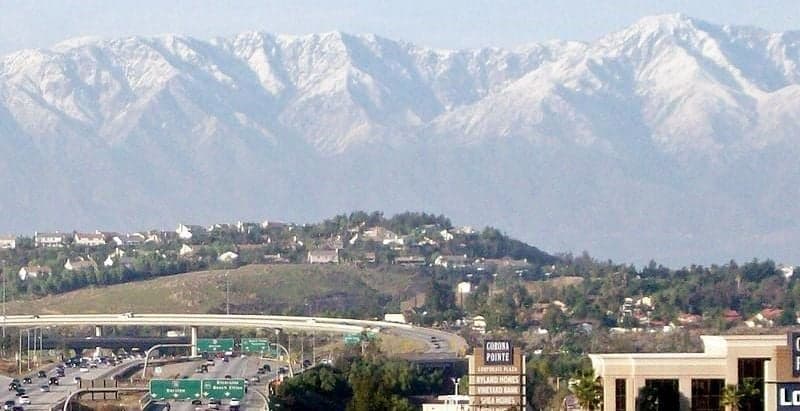
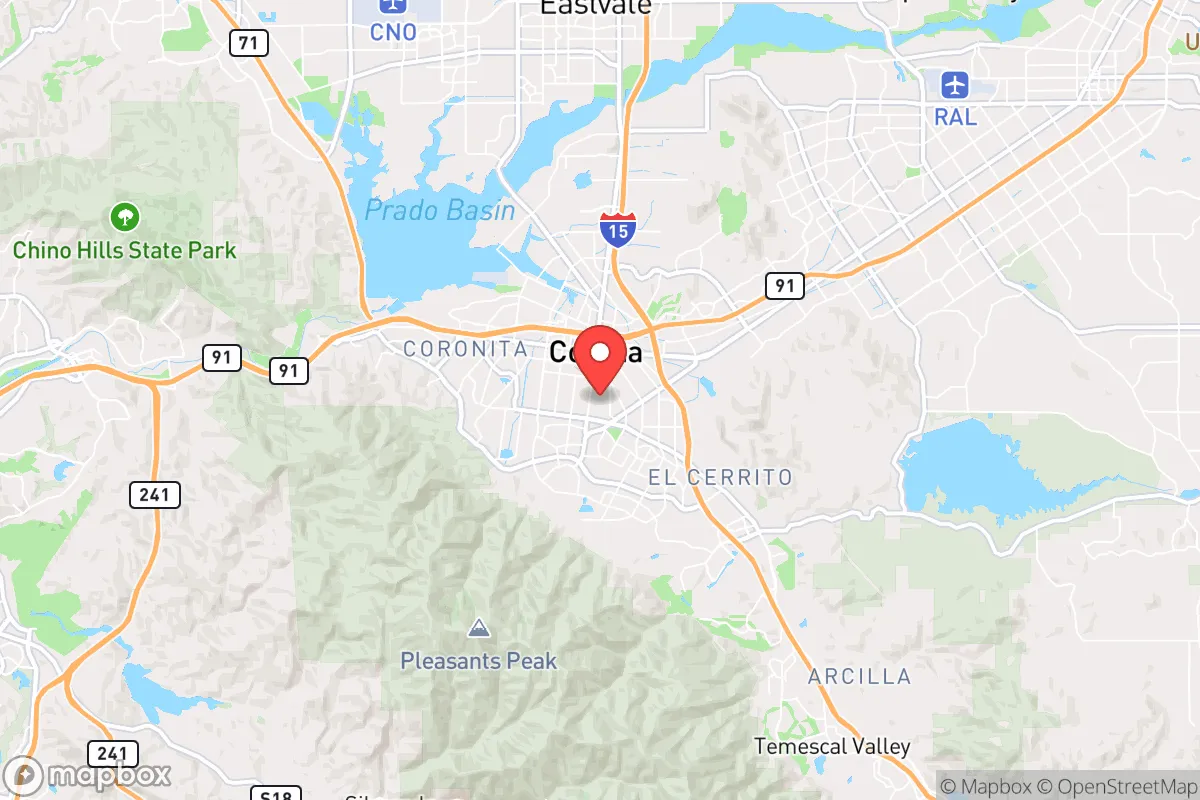
Photo: Wikipedia
Demographics of Corona, CA
Affluence Level in Corona, CA
A middle-class area roughly in line with national averages across income, home values, education, and employment.
People of Corona, CA
Corona, California, is a predominantly Hispanic (48.3%) and White (31.4%) city of 158,839 residents, shaped by its history as a citrus-growing hub and later as a master-planned suburban bedroom community for the Inland Empire and Orange County. The city’s population is notably less foreign-born (9.3%) than many neighboring areas, reflecting a mature, second- and third-generation Hispanic community alongside a significant East/Southeast Asian (8.8%) and Indian (2.3%) presence. With 30.9% of adults holding a college degree, Corona is a middle-class, family-oriented city where a strong sense of local identity and conservative-leaning politics are common.
How the city was settled and grew
Corona was founded in 1886 as a planned community by the South Riverside Land and Water Company, built around the citrus industry. The city’s original Anglo-American settlers were drawn by the promise of fertile land and a Mediterranean climate ideal for growing lemons and oranges. The historic Grand Boulevard district, a one-mile circle designed to be the largest in the world, became the commercial and social heart of the early town. Mexican laborers arrived in significant numbers during the early 1900s to work the citrus groves, settling in what is now the South Corona neighborhood, near the original packing houses and railroad lines. By the 1940s, Corona’s population was a mix of Anglo landowners and a growing Mexican-American working class, with the citrus industry remaining the dominant employer until the post-war era.
Modern era (post-1965)
The post-1965 era transformed Corona from a citrus town into a sprawling suburb. The Immigration and Nationality Act of 1965 opened the door for new waves of immigration, but Corona’s foreign-born share (9.3%) remains relatively low because much of its Hispanic growth came from domestic migration—families moving from Los Angeles and Orange County seeking affordable housing. The Horsethief Canyon and Eagle Glen master-planned communities, built in the 1980s and 1990s, attracted upwardly mobile White and Asian families from coastal areas, drawn by newer homes and good schools. East/Southeast Asian communities (8.8%) concentrated in these newer northern neighborhoods, while Indian families (2.3%) settled in similar areas like Green River and the Corona Hills district. The Hispanic population, now 48.3%, became more geographically dispersed but remains heavily rooted in the older South Corona and Downtown areas, where multi-generational households are common. The Black population (4.9%) is smaller but has grown modestly, with families settling in the central and northern parts of the city.
The future
Corona’s demographic future points toward continued Hispanic majority status, with the White share (31.4%) likely to decline further as older Anglo residents age out and younger Hispanic families move in. The city is not tribalizing into distinct ethnic enclaves; instead, it is homogenizing around a Hispanic-majority, middle-class identity, with significant Asian and Indian minorities assimilating into the same suburban lifestyle. The East/Southeast Asian and Indian populations are expected to grow slowly, driven by continued migration from coastal California, but they will remain smaller shares than in neighboring cities like Irvine or Chino Hills. The foreign-born share (9.3%) is likely to remain low, as Corona’s appeal is to domestic movers—families leaving high-cost areas for more space and lower taxes. The college-educated share (30.9%) may rise slightly as more professionals are priced out of Orange County, but Corona will remain a predominantly blue-collar and service-sector city.
For someone moving in now, Corona is a stable, family-oriented suburb where the population is becoming more Hispanic and more middle-class, but not dramatically more diverse or cosmopolitan. The city’s identity is rooted in its citrus-era past and its present as a practical, affordable alternative to coastal California, with a conservative-leaning electorate and a strong sense of community in neighborhoods like South Corona and the master-planned northern districts. New residents should expect a place where demographic change is gradual, not disruptive, and where the dominant culture is a blend of traditional American suburban values and a deep Hispanic heritage.

* Values derived from national, state, county, city and local statistics and may differ in a specific area. Last updated: 2026-04-24T13:29:41.000Z
Narrative content on this page is AI-generated and may contain mistakes. Verify any details that matter before acting on them.
ReloMaps may earn a commission from affiliate links at no extra cost to you.

