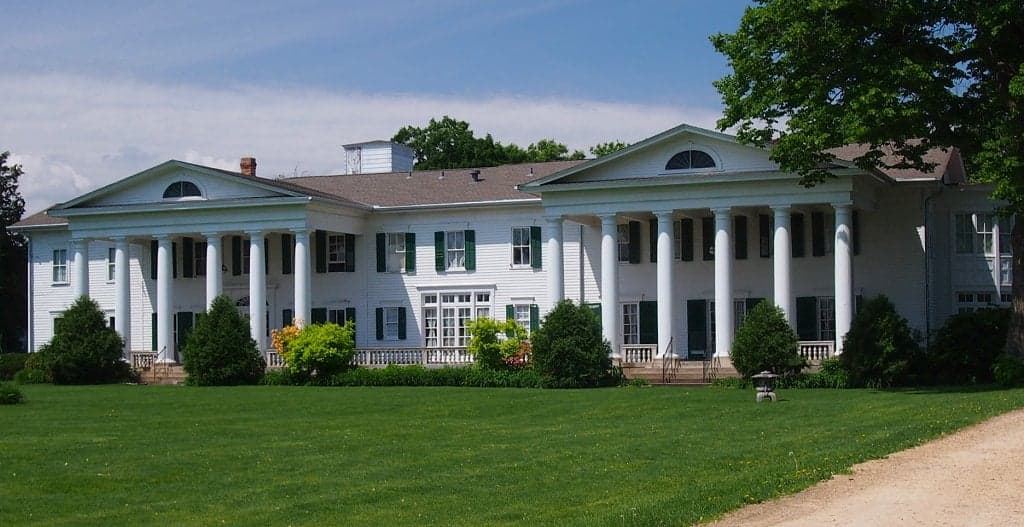
Photo: Wikipedia
Strategic Assessment of Cottage Grove, MN
Meaningful friction. Expect exposure to either population pressure, blast zones, or natural disaster risk. Consider buying a retreat property.
What does the Strategic Assessment tell us?
Our Strategic Assessment grades tactical survivability of an area. Major population centers, military targets, fallout zones, natural disasters, and border exposure all drive risk — lower exposure means a more defensible position in a crisis.
This is heavily inspired by Joel Skousen's Strategic Relocation book. Highly recommended you checkout the book ($)What does this tell us?
Our Strategic Assessment grades tactical survivability of an area. Major population centers, military targets, fallout zones, natural disasters, and border exposure all drive risk — lower exposure means a more defensible position in a crisis.
This is heavily inspired by Joel Skousen's Strategic Relocation book. Highly recommended you checkout the book ($)Strategic Pillars

Key Distances
Regional Safe Places
Below is our recommended "safe zones" in Minnesota and the surrounding area based on our strategic heuristics. For most people, it's unrealistic to live in a “safe zone” full-time due to work, family or other personal reasons. They tend to be more rural. However, many of these areas are perfect for second homes and retreat properties that double as a vacation home or even a short-term rental.
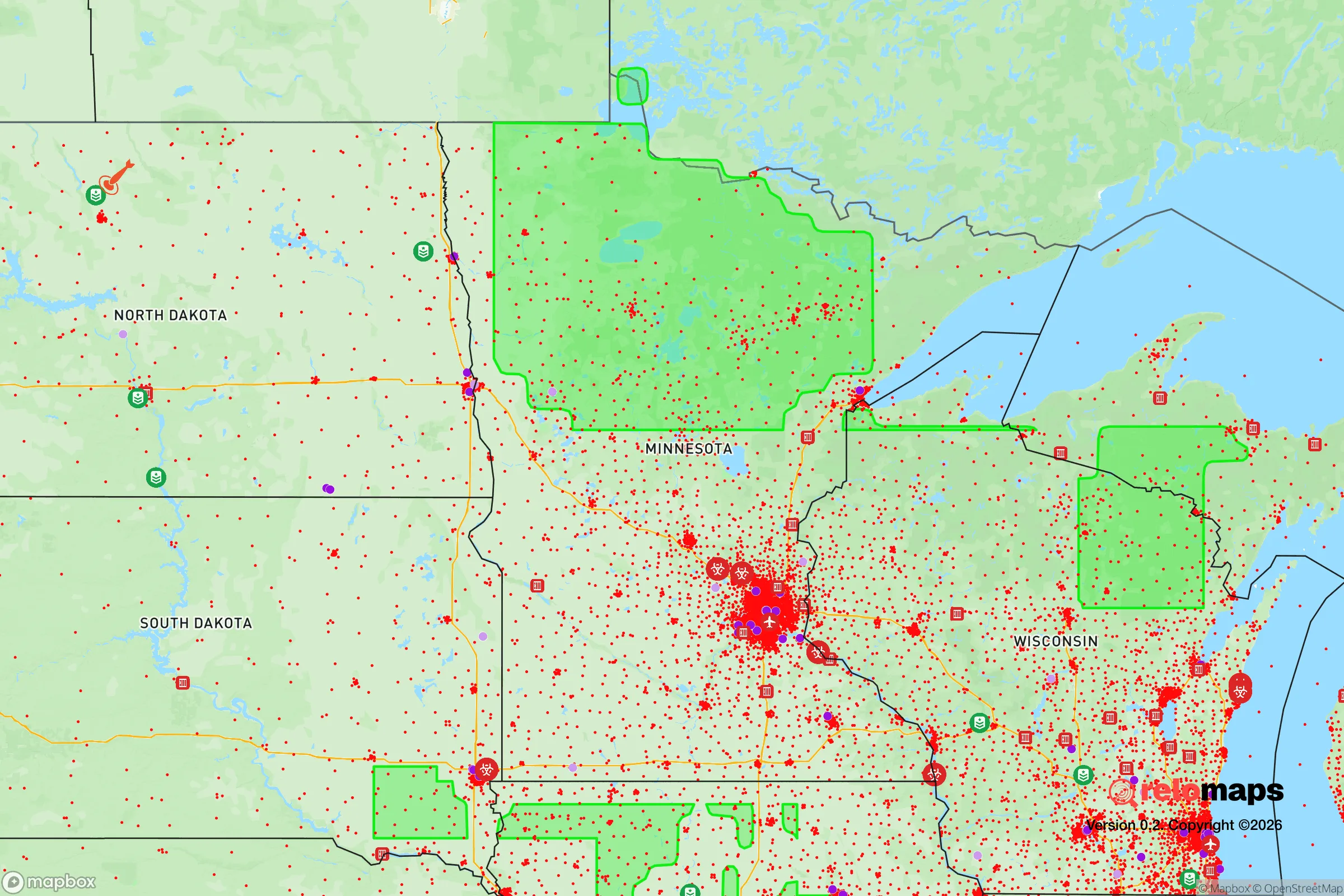
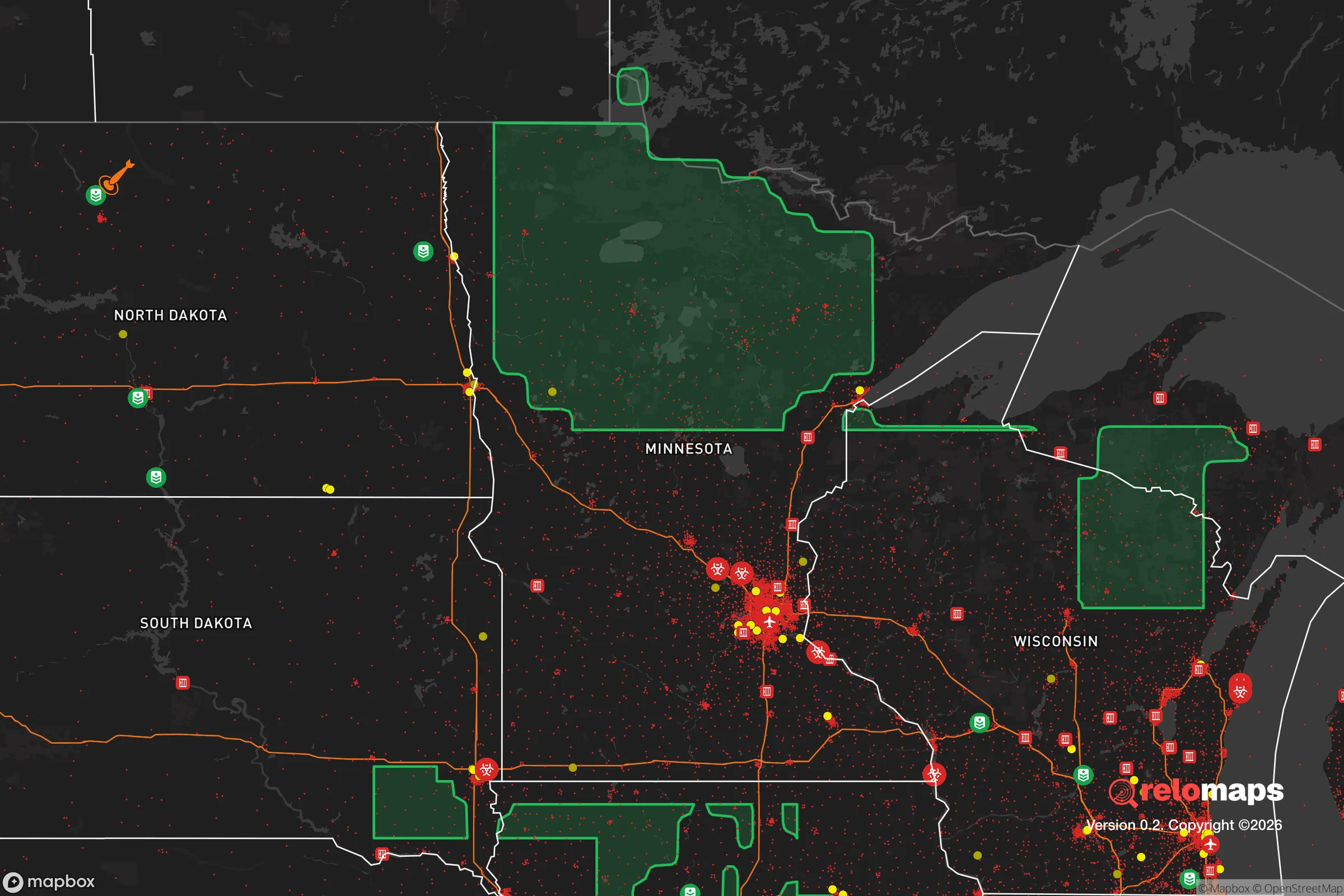


Important Note: For informational purposes only. This does not mean nothing bad ever happens in the green zones. Please use common sense. This is based on public data and modeled with AI. We tried to take a conservative approach but mistakes happen. We update this regularly as new information becomes available.
Solar Generator Recommendations
Backup power matters more here than in safer locations. We've picked three solar generators across budgets and capacity tiers — start with the budget unit if you only need a few essentials, or step up if you want to run a fridge and HVAC for days at a time.

Jackery Portable Power Station Explorer 300
Budget OptionPower on the Go: Weighing only 11 lbs, it's convenient to set up and store with book-sized foldable solar panels

BLUETTI Portable Power Station AC180
Designed for both indoor and outdoor scenarios, AC180 is highly capable as it has a robost capacity and continuous output power.

EF ECOFLOW DELTA Pro Ultra Power Station
Upgraded PickEcoFlow DELTA Pro Ultra is a whole-home energy system designed to grow with your family. Integrated with the Smart Home Panel 2, it scales to meet your evolving energy needs — keeping your home powered, intelligent, and secure through every stage of life.
We earn a commission, at no additional cost to you.
Strategic Assessment Analysis
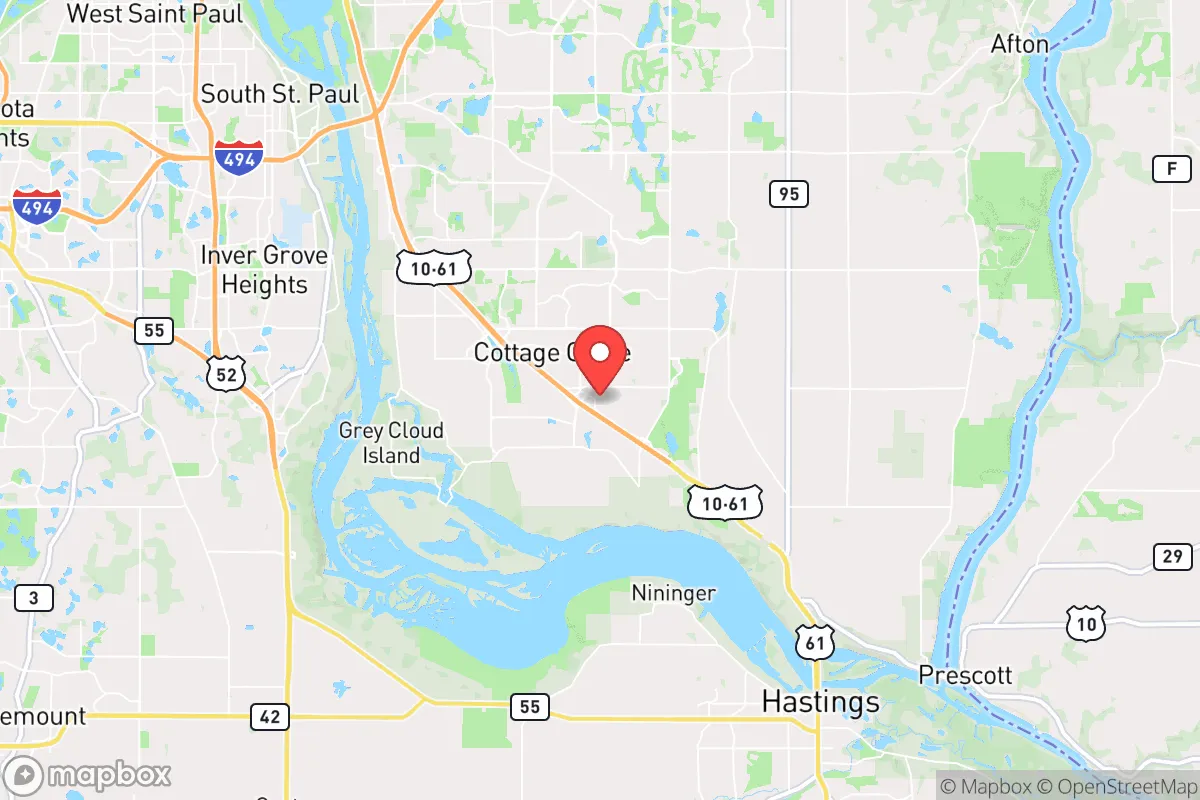
Cottage Grove, Minnesota, occupies a strategic position that balances proximity to the Twin Cities with a degree of geographic insulation, but for a survivalist or prepper mindset, its resilience is a mixed bag. Located about 15 miles southeast of St. Paul along the Mississippi River, this suburb of roughly 38,000 offers access to major highways (US-61 and I-94) and regional infrastructure, yet its very location introduces vulnerabilities that demand careful consideration. For those focused on long-term preparedness—civic unrest, mass casualty events, or natural disasters—Cottage Grove provides some natural advantages but also exposes relocators to risks that could undermine self-sufficiency in a crisis.
Geographic position and natural advantages for long-term survival
Cottage Grove sits on the eastern edge of Dakota County, bordered by the Mississippi River to the east and the St. Croix River to the northeast, creating a natural water boundary that could serve as a defensive barrier or a resource in a grid-down scenario. The area is part of the Mississippi River Valley, with rolling hills, wooded bluffs, and fertile floodplains that offer opportunities for subsistence farming, foraging, and water collection. The river itself provides a reliable water source—though treatment would be essential—and the surrounding wetlands and state parks (like the 2,500-acre Grey Cloud Dunes Scientific and Natural Area) offer cover and biodiversity for hunting or trapping. The region’s temperate climate, with cold winters and moderate summers, means a relocator must plan for heating, food storage, and water freezing, but the growing season (roughly 150 days) is sufficient for crops like potatoes, squash, and hardy greens. The proximity to the Mississippi also means potential for hydroelectric power or water-driven milling, though such setups require expertise and investment. For a prepper, the key advantage is that Cottage Grove is not a dense urban core—its suburban layout with single-family homes, yards, and some undeveloped land allows for gardening, rainwater catchment, and discreet storage. However, the area’s flatness near the river increases flood risk, and the lack of significant elevation changes limits defensive positions.
Risks, exposures, and proximity to fallout-relevant landmarks
The most significant vulnerability for Cottage Grove is its proximity to the Twin Cities metropolitan area, a population center of over 3.7 million people that would be a primary target for civil unrest, terrorist attacks, or nuclear strikes. The city lies within 20 miles of downtown St. Paul and 30 miles from Minneapolis, placing it within the blast and fallout zones of any major event targeting the region’s infrastructure—such as the Minneapolis–St. Paul International Airport, the Mall of America, or the numerous corporate headquarters (e.g., Target, 3M, U.S. Bancorp). In a mass casualty event or societal collapse, Cottage Grove would likely see a surge of refugees from the cities, overwhelming local resources and creating security risks. The Mississippi River, while a resource, also serves as a corridor for movement, potentially funneling displaced populations southward. Additionally, the area is near the Prairie Island Indian Community’s nuclear power plant (about 20 miles south), which, while generally safe, presents a fallout risk in the event of a catastrophic failure or attack. The region’s transportation networks—I-94, US-61, and the nearby rail lines—are chokepoints that could be targeted or become congested during evacuations. For a conservative-leaning relocator concerned with government overreach or civil breakdown, the city’s status as a suburb of a politically liberal metro area means local governance may not align with self-reliance values, potentially leading to restrictions on firearms, water rights, or land use in a crisis.
Practical resilience for a relocator: food, water, energy, and defensibility
For a single individual or family looking to establish a resilient homestead, Cottage Grove offers a mixed picture. Water access is a strong point: the Mississippi River is a year-round source, but purification via filtration, boiling, or chemical treatment is mandatory due to agricultural runoff and industrial pollution upstream. Well water is common in the area, but many suburban homes rely on municipal supplies, which could fail during a grid-down event. Installing a hand pump or rainwater catchment system (the area averages 30 inches of rain annually) is advisable. Food production is feasible with a large garden, but soil quality varies—some areas have sandy loam, while others are clay-heavy—so raised beds or soil amendments may be needed. Local farmers’ markets and co-ops (like the Cottage Grove Farmers Market) indicate a community interest in local food, but reliance on grocery stores (e.g., Cub Foods, Walmart) is a vulnerability. Energy independence is challenging: the grid is reliable under normal conditions, but solar potential is moderate (about 4.5 peak sun hours per day), and winter cloud cover reduces output. Backup generators or battery systems are essential, and wood stoves are common for heating, given the abundance of local timber. Defensibility is mediocre: the suburban layout with cul-de-sacs and open yards offers limited concealment, and the flat terrain near the river provides few natural chokepoints. A rural property on the bluffs west of town (toward Hastings or Afton) would offer better security. The city’s police and fire services are adequate for routine incidents, but in a widespread crisis, response times would lengthen, and mutual aid from neighboring jurisdictions (like Woodbury or Newport) could be strained. For a prepper, the best strategy is to establish a retreat with multiple layers of security—fencing, reinforced doors, and a defensible perimeter—while maintaining a low profile to avoid drawing attention.
Overall, Cottage Grove is a moderate-risk, moderate-reward location for a strategic relocator with a survivalist mindset. Its natural water access and suburban space for self-sufficiency are genuine assets, but the proximity to a major metropolitan target zone and the lack of rugged terrain for defense are significant liabilities. For those willing to invest in off-grid infrastructure—solar, well water, food storage, and security—and who can navigate the political and social dynamics of a blue-state suburb, it offers a viable base for weathering short-term disruptions. However, for long-term collapse scenarios, a more remote location in the Driftless Area of southeastern Minnesota or western Wisconsin would provide greater isolation and defensibility. The key takeaway: Cottage Grove works as a staging area or a bug-out location for those with ties to the region, but it is not a fortress. Prepare accordingly, and keep your options open for a secondary retreat further from the cities.

* Values derived from national, state, county, city and local statistics and may differ in a specific area. Last updated: 2026-04-24T11:30:39.000Z
Narrative content on this page is AI-generated and may contain mistakes. Verify any details that matter before acting on them.
ReloMaps may earn a commission from affiliate links at no extra cost to you.

