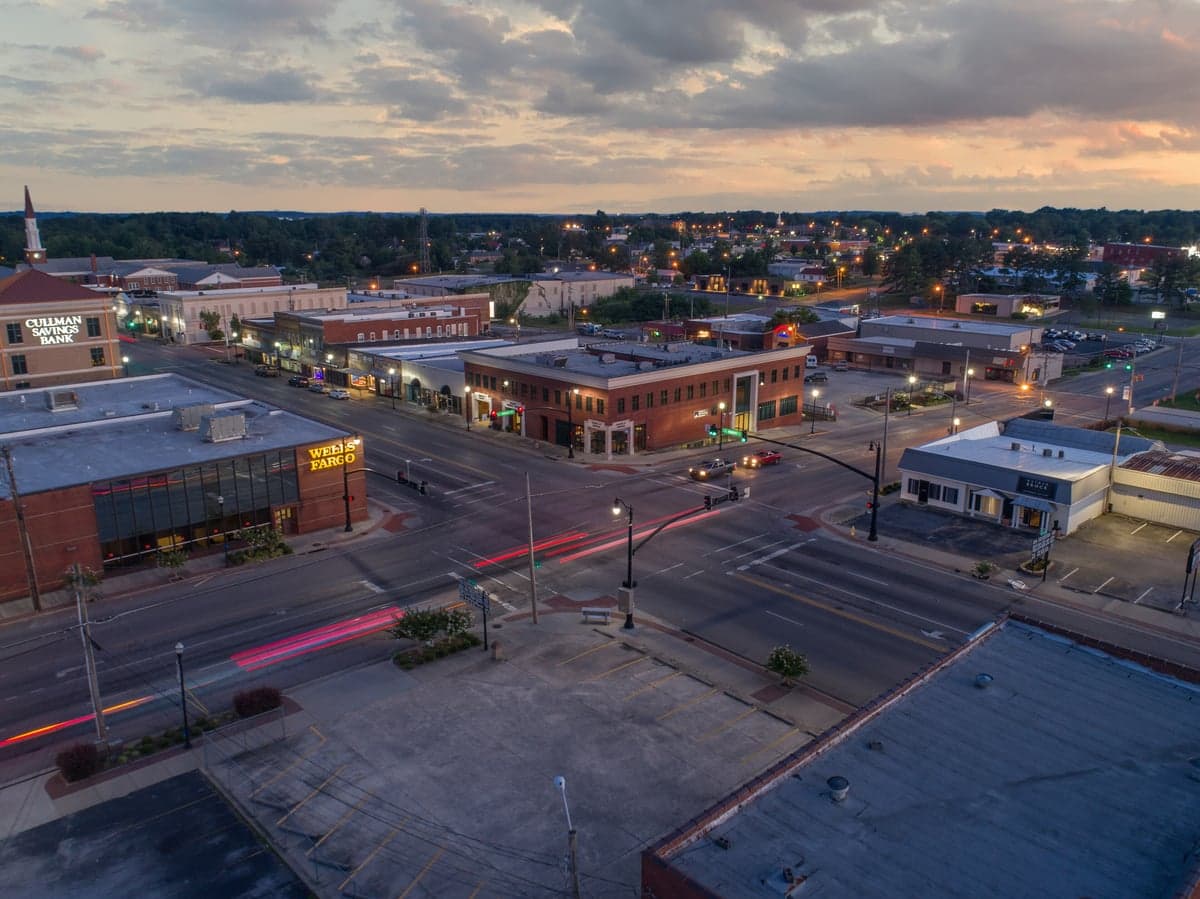
Photo: Wikipedia
Quality of Life in Cullman, AL
A high quality of life with strong walkability, manageable living costs, healthy neighborhood signals, and solid amenity access.
What does Quality of Life tell us?
Quality of Life blends cost of living, nearby amenities, socioeconomic signals, and neighborhood character. City-level scores represent the whole municipality; individual neighborhoods can differ.
What does this tell us?
Quality of Life blends cost of living, nearby amenities, socioeconomic signals, and neighborhood character. City-level scores represent the whole municipality; individual neighborhoods can differ.
Cost of Living
22% below national average
The Real Cost of Living in Cullman, AL for 2026
| Tier | Individual | Family (4) |
|---|---|---|
| Survival | $15k | $28k |
| Comfortable | $42k | $61k |
| Luxury | $109k+ | $168k+ |
| Elite (Top 5%) | $128k+ | $198k+ |
104%
The Area Signal
A metric tracking the socioeconomic signals of the area.


Hobbies
Explore the areaGroceries
3 within 10 miles
Gas
0 within 10 miles
Hospital
3 within 20 miles
Airport
BNA — Nashville International
Post Office
USPS — Cullman, AL
Critical Amenities
Quality-of-Life Analysis
Cullman, Alabama, presents a quality of life defined by small-town stability, strong community ties, and a cost of living that significantly undercuts national averages. The area attracts a mix of families seeking affordable homeownership, retirees looking to stretch their savings, and workers commuting to Huntsville or Birmingham for higher wages. With a cost of living index of 78 (where 100 equals the U.S. average), Cullman offers a notably lower financial barrier to entry than many Southern suburbs, while maintaining a slower, more predictable daily rhythm.
How housing costs and affordability compare to Huntsville and Birmingham
Cullman’s affordability is its strongest draw. The median home value sits at $215,200, roughly half the median of Huntsville ($430,000) and well below Birmingham’s metro average ($260,000). Median rent is $921, making it one of the most budget-friendly rental markets in North Alabama. The average commute of 21.8 minutes is notably shorter than the national average of 26 minutes, and far less than the 30+ minute drives common in Huntsville or Birmingham suburbs. This combination means residents can often own a three-bedroom home on a single moderate income, a reality increasingly rare in larger metro areas. Property taxes in Cullman County remain low, typically around 0.4% of assessed value, further reducing monthly housing costs.
What daily life is like for families: schools, amenities, and local rhythm
Daily life in Cullman revolves around a walkable downtown square, local festivals like the Bloomin’ Festival, and access to Smith Lake for recreation. The Cullman City School System consistently earns B+ ratings from Niche, with Cullman High School noted for strong test scores and a low student-teacher ratio. For healthcare, Cullman Regional Medical Center provides a full-service hospital, reducing the need to drive to Huntsville for routine care. Shopping and dining are concentrated along Highway 157 and the downtown district, with national chains like Walmart and Lowe’s supplemented by local restaurants such as Johnny’s Bar-B-Q and All Steak Restaurant. The area lacks major entertainment venues or a robust nightlife, but residents gain proximity to the Bankhead National Forest and the Sipsey Wilderness for hiking and camping. The pace is deliberately slow—most businesses close by 9 p.m., and Sunday remains a quiet day for many families.
Who thrives here? Cullman is best suited for those who prioritize low housing costs, short commutes, and a predictable, family-oriented environment over urban amenities or career diversity. Remote workers, retirees, and young families with ties to the region will find the most value. Professionals seeking high-paying tech or finance jobs may need to commute to Huntsville (45 minutes) or Birmingham (50 minutes), but the trade-off is a mortgage payment that can be half of what those cities demand. For anyone tired of traffic, high rent, and constant noise, Cullman offers a quieter, more financially sustainable alternative without sacrificing basic healthcare or schooling.

Crime in Cullman, AL
Generally safer than 56% of comparable U.S. locations.
Violent CrimeViolent Crime Analysis
Property CrimeProperty Crime Analysis
Crime Analysis
Cullman, Alabama, presents a mixed safety profile that demands careful consideration from potential residents. The city’s overall crime rate is elevated compared to national benchmarks, driven primarily by a high property crime rate of 2,665.4 incidents per 100,000 residents. While violent crime is less frequent, with a rate of 231.8 per 100,000, the property crime figure is a significant concern, particularly for those moving from areas with lower theft and burglary rates.
Crime in context
To understand Cullman’s safety landscape, it is essential to compare its rates to broader averages. The city’s violent crime rate of 231.8 per 100,000 is roughly 60% higher than the national average of approximately 145 per 100,000, though it is slightly below the Alabama state average. The property crime rate of 2,665.4 per 100,000 is nearly double the national average of roughly 1,350 per 100,000 and significantly exceeds the state average. This disparity indicates that while the risk of a violent encounter is elevated, the far more likely threat is property-related—theft, burglary, and motor vehicle theft. It is worth noting that Cullman is not a large metro area; however, its proximity to Huntsville and Birmingham means it can be influenced by regional crime trends. In jurisdictions with progressive judicial philosophies—such as those seen in larger metro areas—lenient sentencing for property crimes can contribute to recidivism and a higher concentration of offenders on the street. Cullman’s local justice system, operating within a more conservative Alabama legal framework, may mitigate this effect, but the raw numbers still warrant caution.
What residents experience
Daily life in Cullman for most residents involves a heightened awareness of property security. Car break-ins, package thefts, and residential burglaries are the most commonly reported incidents. The city’s police department is active, but the sheer volume of property crime means that prevention often falls on individual homeowners and renters. Violent crime, while less common, is not isolated to any single area and can include aggravated assaults and robberies. Residents frequently report feeling safe in their immediate neighborhoods during the day, but caution is advised after dark, especially in commercial districts and near major thoroughfares like Highway 278. The presence of a strong community policing effort helps, but the data suggests that property crime is a persistent, everyday reality.
Neighborhood-level variation in Cullman is notable. Areas closer to the downtown core and along major commercial corridors tend to experience higher rates of property crime, while more established, quieter residential subdivisions on the city’s outskirts generally report lower incident rates. Newer developments near the Cullman Regional Medical Center and the Sportsman Lake area are often considered safer, though no neighborhood is immune. Prospective residents should consult local police department crime maps and speak with neighbors to gauge specific block-level risks. Overall, Cullman offers a lower cost of living and a slower pace of life than nearby metro areas, but the elevated property crime rate is a tangible trade-off that requires proactive security measures.
* Values derived from national, state, county, city and local statistics and may differ in a specific area. Last updated: 2026-04-19T18:46:17.000Z
Narrative content on this page is AI-generated and may contain mistakes. Verify any details that matter before acting on them.
ReloMaps may earn a commission from affiliate links at no extra cost to you.

