Photo: Wikipedia
Political ClimatePolitical Climate in Cullman, AL
District shown is the primary district for this city’s centroid. Cities may span multiple districts.
Local Political AnalysisPolitical Analysis of Cullman, AL
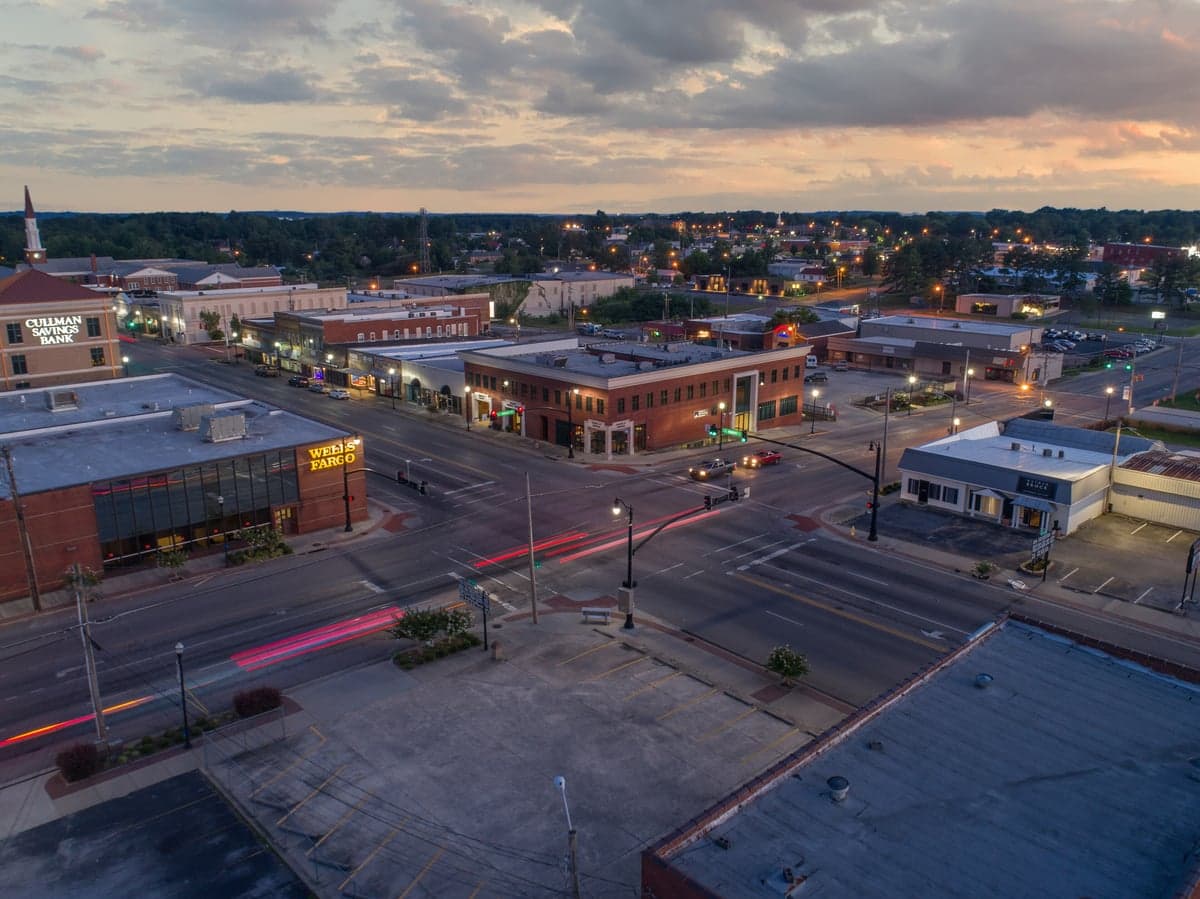
Cullman, Alabama, sits deep in the heart of conservative Alabama, and it’s not just a feeling—it’s baked into the numbers. The area carries a Cook Partisan Voting Index of R+33, meaning it votes about 33 points more Republican than the national average. That’s not a fluke; it’s a tradition. For as long as anyone around here can remember, Cullman has leaned hard red, and the trajectory hasn’t budged much. If anything, the local politics have gotten more entrenched over the last decade, with local elections rarely contested by Democrats and national races seeing margins that make other parts of the state look purple. You don’t see much hand-wringing about shifting allegiances here—folks know what they believe, and they vote that way.
How it compares
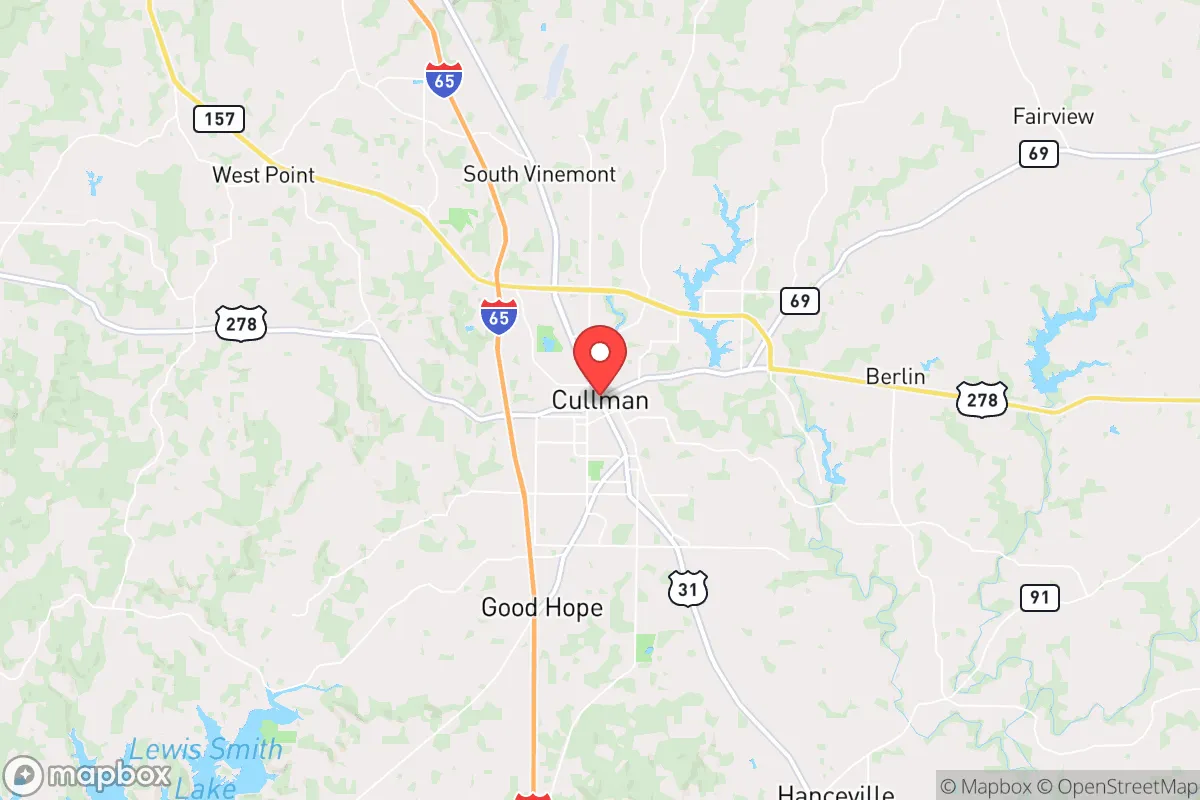
Drive thirty minutes south to Birmingham, and you’re in a different world—politically, culturally, and in terms of what people expect from their government. Jefferson County, where Birmingham sits, leans reliably Democratic, and you’ll see a lot more progressive energy in city council meetings and school board races. Head north toward Huntsville, and while it’s still conservative, the influx of tech and defense workers has nudged it a bit more moderate, especially on economic issues. Cullman, by contrast, feels like a holdout. It’s more aligned with the rural counties to the east and west—places like Blount and Winston—where the political culture is deeply traditional, church-oriented, and skeptical of federal intervention. If you’re looking for a place where the local government isn’t trying to reinvent the wheel every election cycle, Cullman’s your spot. The contrast with Birmingham isn’t just about party registration; it’s about how people talk about freedom, taxes, and the role of government in daily life.
What this means for residents
For someone living here, the political climate translates into a pretty straightforward daily reality. You’re not going to see a lot of government overreach into personal freedoms—things like mask mandates, business closures, or heavy-handed zoning rules are rare and usually met with serious pushback. The local school board and city council tend to keep things simple: low taxes, minimal regulation, and a focus on public safety and infrastructure. That said, there’s a growing unease among long-time residents about the slow creep of progressive ideas filtering in through state-level politics or federal funding strings. People here watch closely when state lawmakers talk about expanding Medicaid or when federal grants come with strings attached about diversity initiatives or climate goals. The concern isn’t about change for change’s sake—it’s about preserving the kind of community where you can raise a family without the government telling you how to live. If you’re moving here from a blue state, you’ll notice the difference immediately: less red tape, more neighborly trust, and a general expectation that the government stays out of your business unless absolutely necessary.
Culturally, Cullman stands out for its strong sense of local identity and a policy landscape that reflects it. The city has a long history of being a dry county—alcohol sales were banned until the 2010s—and while that’s loosened up, the underlying sentiment about personal responsibility and community standards hasn’t faded. You’ll find a lot of support for Second Amendment rights, with few local restrictions on firearms compared to urban areas. Property taxes are low, and there’s no city income tax. The biggest policy debates tend to revolve around land use—how much development to allow, whether to annex new subdivisions, and how to keep the downtown area from getting too commercialized. For a conservative-minded person, Cullman feels like a place where the government is still a servant, not a master. The trajectory looks stable, but folks here are keeping an eye on the horizon, wary of any shift that might bring the kind of top-down control they see in other parts of the country.

State Political ClimatePolitical Climate in Alabama
State Political AnalysisPolitical Environment in the State
Alabama is a deeply conservative state, with a Republican trifecta that has held the governor’s mansion, both legislative chambers, and all statewide offices for over a decade. The state voted for Donald Trump by a margin of +25 points in 2024, a slight tightening from the +26 point margin in 2020, but still one of the most reliably red states in the country. The dominant coalition is a mix of rural white evangelicals, suburban families, and a growing number of conservative-leaning transplants from the Midwest and West Coast, though the state’s Democratic base is almost entirely concentrated in the Black Belt counties and the city of Birmingham.
Urban vs. rural divide
The political map of Alabama is a textbook case of the urban-rural split. The state’s largest metro, Birmingham (Jefferson County), is a Democratic stronghold, delivering about 60% of its vote to Joe Biden in 2020. But that’s an island of blue in a sea of red. The state’s second-largest city, Montgomery, is also reliably Democratic, but its influence is diluted by the surrounding rural counties that vote Republican by 70-80% margins. The fastest-growing part of the state is the Gulf Coast, anchored by Mobile and Baldwin County. Baldwin County, which includes the beach towns of Gulf Shores and Orange Beach, is one of the most Republican counties in the state, voting +45 points for Trump in 2024. Meanwhile, the Huntsville metro area, home to the Redstone Arsenal and a booming aerospace sector, is a fascinating mix: the city of Huntsville itself is trending purple, with a growing tech workforce that leans slightly more moderate, but the surrounding Madison County is still solidly red. The rural Black Belt, stretching from Greene County to Lowndes County, is overwhelmingly Democratic and heavily African American, but these counties have shrinking populations and little political power outside of the state legislature’s gerrymandered districts.
Policy environment
Alabama’s policy environment is aggressively conservative, with a strong emphasis on low taxes and limited government. The state has no state-level property tax to speak of (the average effective rate is around 0.4%), and the income tax is a flat 5% on all income over $3,000. Sales tax is high, often over 10% in many cities when local add-ons are included, but the overall tax burden is among the lowest in the nation. The regulatory posture is business-friendly, with a right-to-work law and minimal zoning restrictions outside of major metros. On education, the state has a robust school choice movement: the Alabama Accountability Act provides tax credits for private school tuition, and the new CHOOSE Act (passed in 2024) created education savings accounts (ESAs) worth up to $7,000 per child for families below 300% of the federal poverty line. Healthcare policy is a mixed bag: the state did not expand Medicaid under the Affordable Care Act, leaving a coverage gap for about 200,000 low-income adults, but the state has also passed laws protecting direct primary care agreements and cash-pay medical practices. Election laws are strict: voter ID is required, absentee voting requires a notarized witness or two witnesses, and the state purges inactive voters regularly. The 2024 legislative session also passed a law banning ranked-choice voting and requiring all ballots to be hand-counted in precincts with fewer than 500 voters.
Trajectory & freedom
Alabama is moving in a direction that many conservatives would call freer, but with some notable caveats. On gun rights, the state is a constitutional carry state (permitless carry for adults 21 and older, passed in 2022), and the 2024 session passed a law prohibiting the enforcement of any federal gun control measures that don’t exist in state law. On parental rights, the state passed the “Parents’ Bill of Rights” in 2023, which requires schools to notify parents of any medical or mental health services offered to their children and prohibits classroom instruction on sexual orientation or gender identity in K-5. The “Don’t Say Gay” style law was expanded to all grades in 2024. On medical autonomy, the state has a near-total abortion ban (the Human Life Protection Act of 2019), with no exceptions for rape or incest, only for the life of the mother. This has caused some friction with the medical community, as OB-GYNs have left the state or stopped offering high-risk pregnancy care. On property rights, the state has strong eminent domain protections, and the 2023 session passed a law requiring just compensation for any regulatory taking that reduces property value by more than 20%. The biggest freedom concern for new residents is the state’s high incarceration rate (the highest in the nation), which is driven by mandatory minimum sentences and a three-strikes law that can put someone away for life for a nonviolent property crime.
Civil unrest & political movements
Alabama has seen relatively little civil unrest compared to other states, but there are flashpoints. The Black Belt has a long history of civil rights activism, and the legacy of the Selma to Montgomery marches still shapes local politics. In 2020, there were protests in Birmingham and Montgomery after the George Floyd killing, but they were largely peaceful. The state has seen a rise in organized conservative activism, particularly around school board meetings and library boards. The “Moms for Liberty” chapter in Madison County has been particularly active, pushing for book bans and curriculum transparency. Immigration politics are less heated here than in border states, but the 2024 legislative session passed a law requiring all law enforcement to check the immigration status of anyone they arrest and to cooperate with ICE detainers. There is no sanctuary city movement in Alabama; in fact, the state has a law (HB 56, passed in 2011) that is one of the strictest anti-sanctuary laws in the country, though parts of it were struck down in court. Election integrity has been a hot topic: the 2022 election saw a controversy in Coffee County, where a private firm was allowed to access voting machines as part of a “forensic audit” effort, leading to ongoing litigation. The state’s Secretary of State, Wes Allen, has made voter roll maintenance a priority, removing over 100,000 inactive voters in 2024.
Projection
Over the next 5-10 years, Alabama is likely to become even more conservative, but with a more suburban, tech-driven flavor. The Huntsville metro is expected to add another 100,000 residents by 2030, driven by the Space Force and defense contracting, and these newcomers tend to be moderate conservatives who care about schools and infrastructure more than culture war issues. The Gulf Coast will continue to grow, attracting retirees and remote workers from the Northeast and Midwest, which will reinforce the Republican lean. The Black Belt will continue to lose population, further diluting the Democratic vote. The biggest wild card is the state’s prison system: the federal government has sued the state over conditions in its prisons, and the state is building two new mega-prisons to address overcrowding, but the cost (over $1 billion) could strain the budget. On the policy front, expect more school choice expansion (possibly universal ESAs), further tax cuts (the state has a $3 billion surplus), and continued resistance to Medicaid expansion. The biggest threat to the state’s freedom trajectory is the prison system and the criminal justice reform movement, which could lead to sentencing reforms that some conservatives view as soft on crime.
For a new resident, the bottom line is this: Alabama offers a low-tax, low-regulation environment with strong protections for gun rights, parental rights, and religious liberty. The cost of living is among the lowest in the country, and the housing market is still affordable, especially in the Huntsville and Mobile areas. The trade-offs are a weak healthcare safety net, a high incarceration rate, and a public school system that ranks near the bottom nationally, though school choice options are expanding. If you value personal freedom in the traditional sense—low taxes, minimal government interference, and the ability to live your life without a lot of red tape—Alabama is a solid bet. Just be aware that the state’s definition of freedom doesn’t always extend to criminal justice reform or healthcare access, and the political climate is unlikely to change on those fronts anytime soon.
* Values derived from national, state, county, city and local statistics and may differ in a specific area. Last updated: 2026-04-19T18:46:17.000Z
Narrative content on this page is AI-generated and may contain mistakes. Verify any details that matter before acting on them.
ReloMaps may earn a commission from affiliate links at no extra cost to you.

