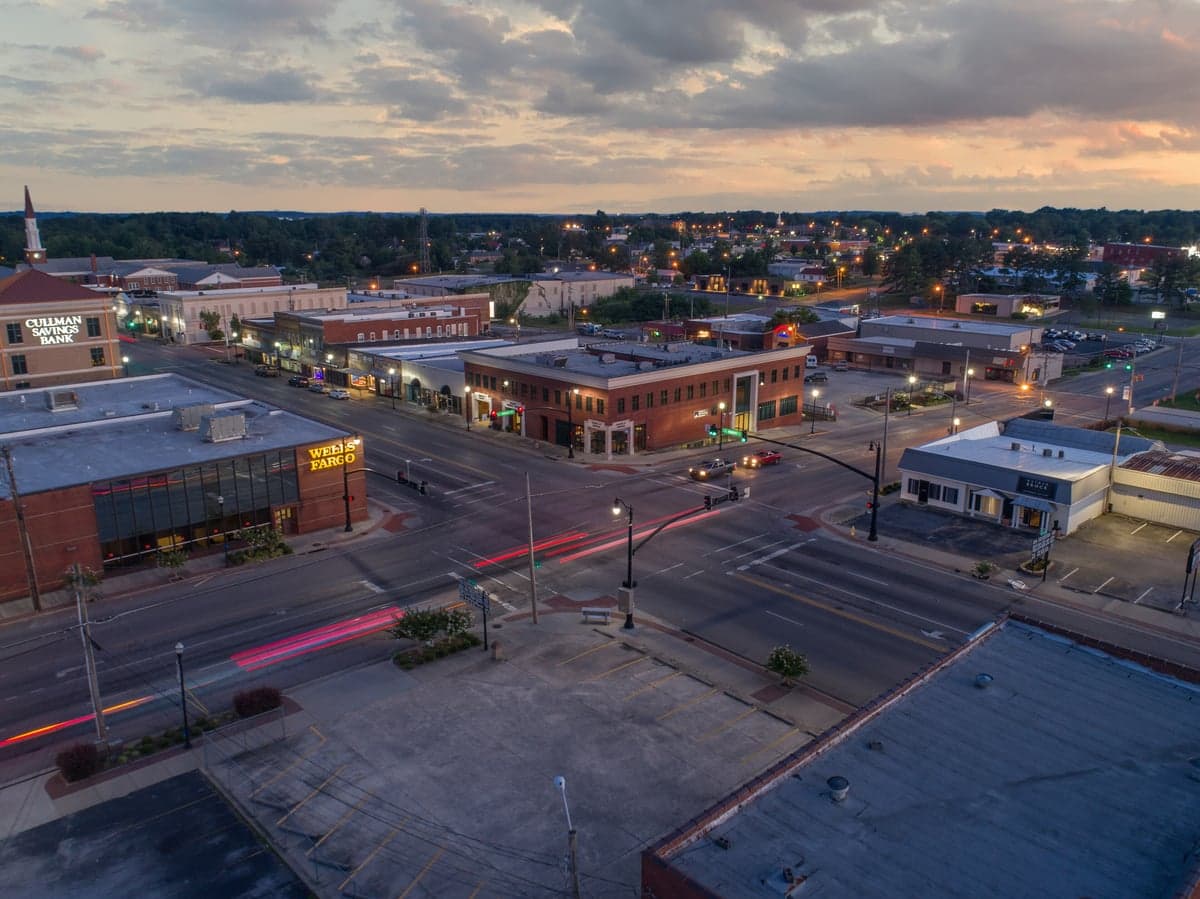
Photo: Wikipedia
Strategic Assessment of Cullman, AL
Workable tactical position. Some exposure to population density or targets, but generally defensible in a crisis.
What does the Strategic Assessment tell us?
Our Strategic Assessment grades tactical survivability of an area. Major population centers, military targets, fallout zones, natural disasters, and border exposure all drive risk — lower exposure means a more defensible position in a crisis.
This is heavily inspired by Joel Skousen's Strategic Relocation book. Highly recommended you checkout the book ($)What does this tell us?
Our Strategic Assessment grades tactical survivability of an area. Major population centers, military targets, fallout zones, natural disasters, and border exposure all drive risk — lower exposure means a more defensible position in a crisis.
This is heavily inspired by Joel Skousen's Strategic Relocation book. Highly recommended you checkout the book ($)Strategic Pillars

Key Distances
Regional Safe Places
Below is our recommended "safe zones" in Alabama and the surrounding area based on our strategic heuristics. For most people, it's unrealistic to live in a “safe zone” full-time due to work, family or other personal reasons. They tend to be more rural. However, many of these areas are perfect for second homes and retreat properties that double as a vacation home or even a short-term rental.
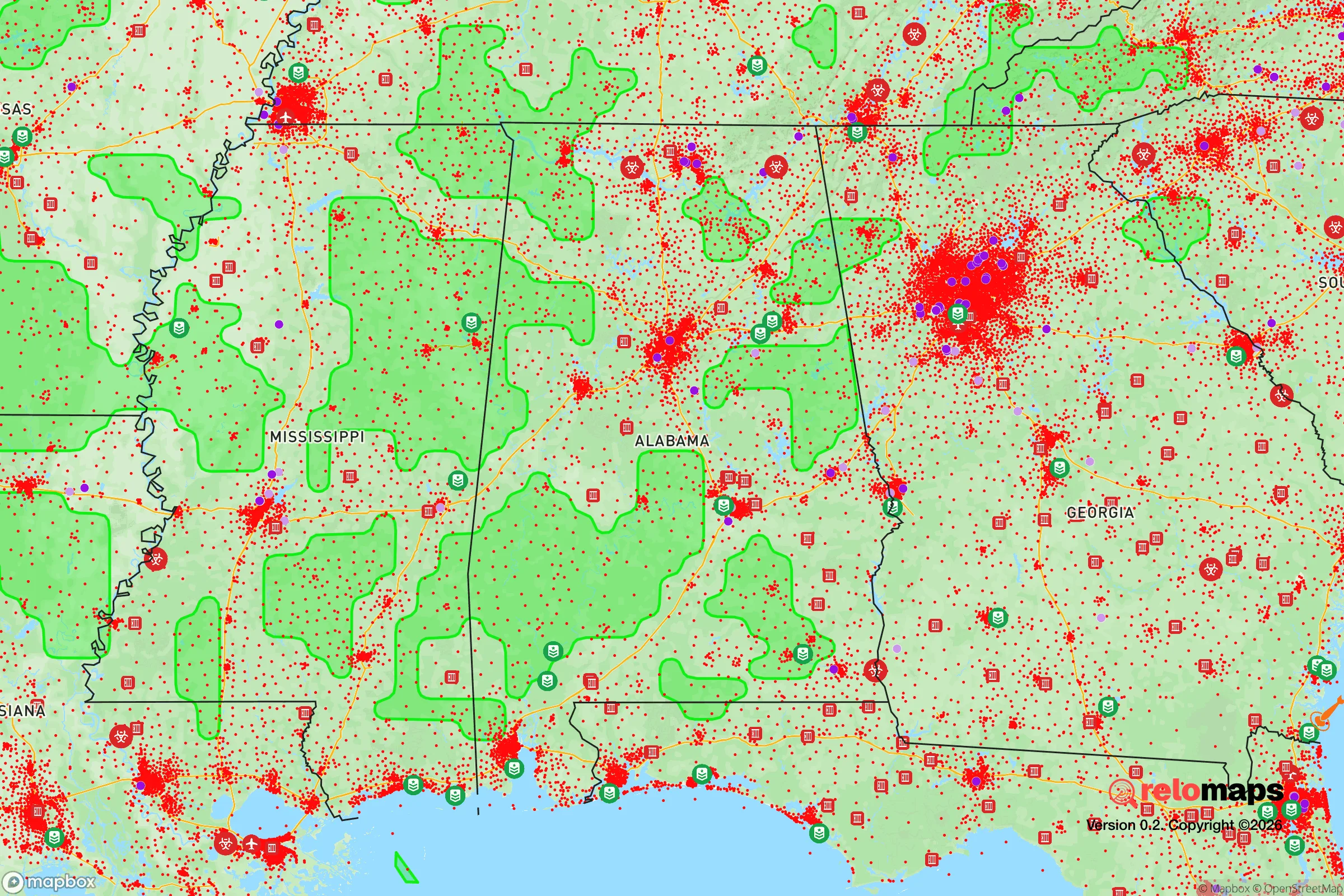
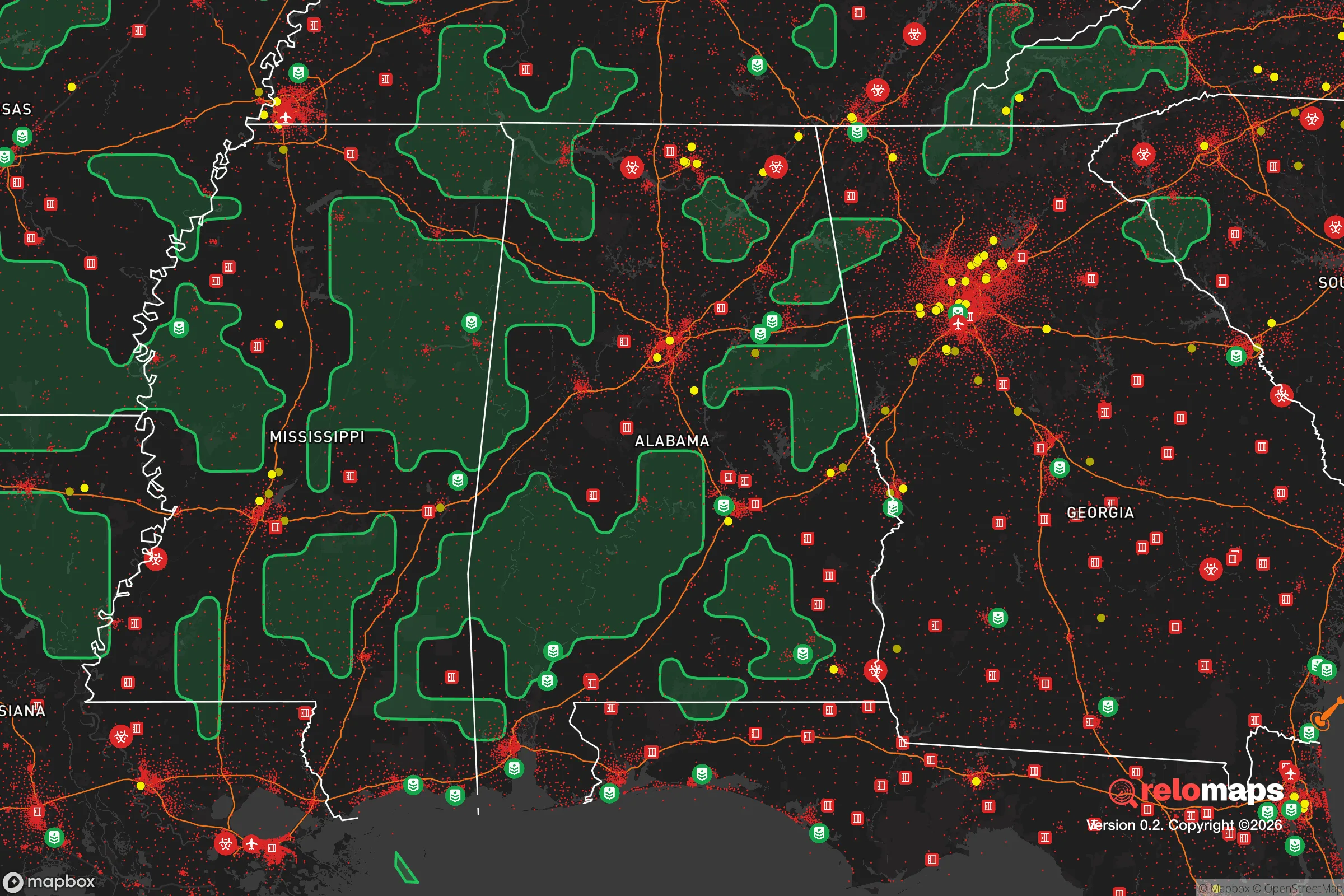


Important Note: For informational purposes only. This does not mean nothing bad ever happens in the green zones. Please use common sense. This is based on public data and modeled with AI. We tried to take a conservative approach but mistakes happen. We update this regularly as new information becomes available.
Solar Generator Recommendations
Backup power matters more here than in safer locations. We've picked three solar generators across budgets and capacity tiers — start with the budget unit if you only need a few essentials, or step up if you want to run a fridge and HVAC for days at a time.

Jackery Portable Power Station Explorer 300
Budget OptionPower on the Go: Weighing only 11 lbs, it's convenient to set up and store with book-sized foldable solar panels

BLUETTI Portable Power Station AC180
Designed for both indoor and outdoor scenarios, AC180 is highly capable as it has a robost capacity and continuous output power.

EF ECOFLOW DELTA Pro Ultra Power Station
Upgraded PickEcoFlow DELTA Pro Ultra is a whole-home energy system designed to grow with your family. Integrated with the Smart Home Panel 2, it scales to meet your evolving energy needs — keeping your home powered, intelligent, and secure through every stage of life.
We earn a commission, at no additional cost to you.
Strategic Assessment Analysis
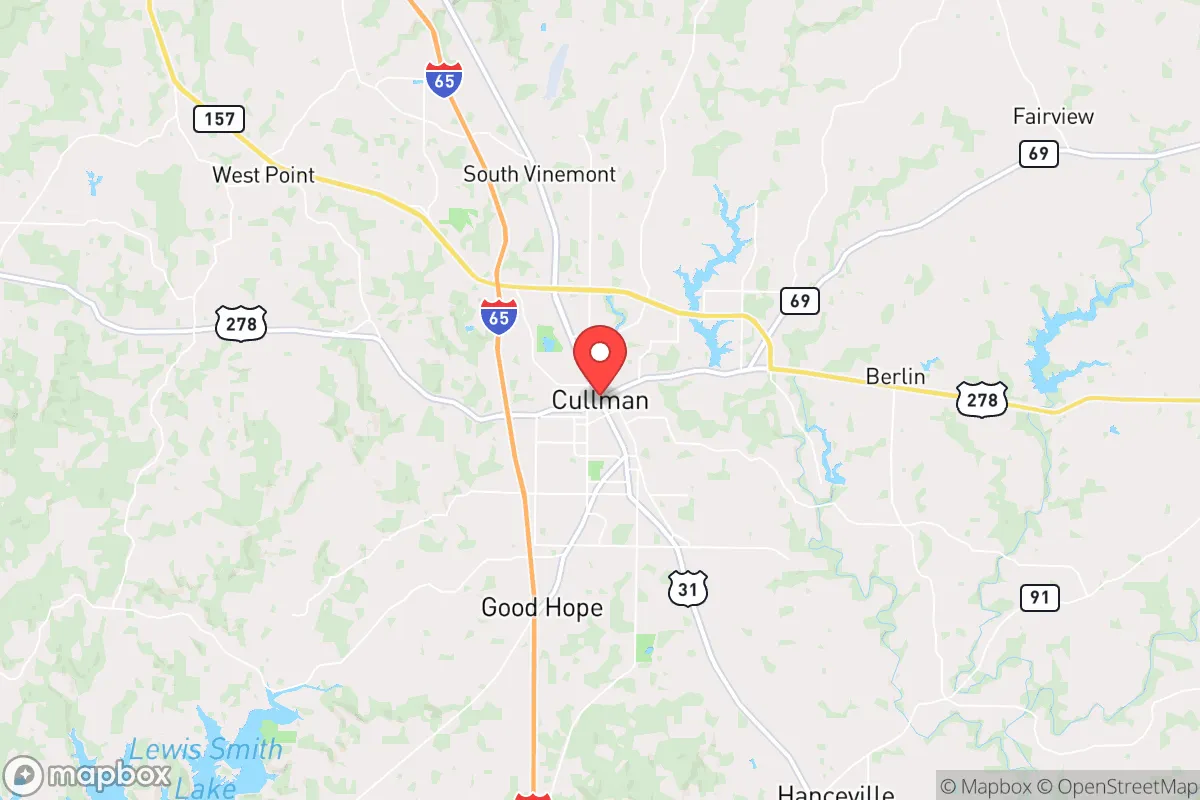
Cullman, Alabama, occupies a strategic sweet spot in the American Southeast that resilience-minded relocators should take seriously. Situated roughly 50 miles north of Birmingham and 80 miles south of Huntsville, it sits far enough from major metro centers to avoid the worst of urban collapse scenarios—riots, supply chain failures, or mass casualty events—yet close enough to access specialized medical care and heavy infrastructure if needed. The city’s location along Interstate 65 provides a reliable north-south corridor, while its position in the Appalachian foothills offers natural terrain advantages that flatland areas simply cannot match. For those assessing long-term survivability, Cullman’s combination of distance from primary targets, agricultural capacity, and relatively low population density makes it a location worth serious consideration.
Geographic position and natural advantages for long-term security
Cullman sits in Cullman County, a region defined by rolling hills, limestone bluffs, and abundant spring-fed creeks. This topography is a double-edged sword in the best sense: it provides natural defensibility against both human threats and weather extremes. The hills create visual and physical barriers that slow movement and channel traffic, making the area inherently harder to patrol or control by outside forces during a breakdown of civil order. The county’s position along the southern edge of the Appalachian Plateau means it receives more rainfall than the coastal plain—averaging around 55 inches annually—which supports reliable groundwater recharge and year-round surface water in streams like the Mulberry Fork of the Black Warrior River. For a prepper, that water availability is non-negotiable. The soil, while rocky in places, is workable for small-scale agriculture, and the growing season stretches from April to October, allowing for two crop cycles of staples like corn, beans, and squash. Cullman’s elevation—roughly 800 feet above sea level—also puts it above the worst of the flash flooding that plagues lower-lying parts of Alabama, while still being low enough to avoid the severe winter weather that can isolate mountain communities in the Appalachians further north.
Risks, exposures, and proximity to fallout-relevant landmarks
No location is without vulnerabilities, and Cullman has several that a strategic relocator must weigh. The most immediate concern is its proximity to Birmingham, a major population center and industrial hub that would be a likely target for civil unrest, terrorist attacks, or—in a worst-case scenario—a nuclear detonation. Birmingham sits just 50 miles south, well within the fallout plume radius of a 10-kiloton device under prevailing southerly winds. Huntsville, home to Redstone Arsenal and NASA’s Marshall Space Flight Center, is 80 miles north and represents a high-value military and aerospace target. Cullman lies directly between these two cities, meaning that a mass evacuation from either could funnel tens of thousands of panicked people straight through the area on I-65, creating choke points, resource shortages, and security risks. The county itself has no major military installations, but the nearby Browns Ferry Nuclear Plant (about 40 miles northwest in Limestone County) is a potential radiological hazard in the event of a meltdown or sabotage. Additionally, Cullman sits in a region with moderate tornado risk—the 2011 Super Outbreak produced an EF-4 that struck the county—so any prepping plan must account for storm shelters and redundant infrastructure. On the positive side, the area has no major chemical plants, refineries, or ports that would draw targeted attacks, and its rural character means fewer eyes on your movements.
Practical resilience for a relocator: food, water, energy, and defensibility
For a single individual or family looking to establish a sustainable base, Cullman offers a surprisingly robust foundation. The local water table is high and clean, with many properties having access to shallow wells that produce potable water at depths of 50 to 150 feet—far less vulnerable than municipal systems that could be compromised by cyberattacks or contamination. The Tennessee Valley Authority (TVA) provides the electrical grid, which is relatively stable but still subject to the same vulnerabilities as any centralized system; solar panels with battery storage are a wise investment here, given the region’s 215 sunny days per year. Food resilience is strong: Cullman County is one of Alabama’s top agricultural producers, with a thriving poultry industry (including the massive Wayne Farms plant in nearby Union Grove), cattle operations, and row crops like soybeans and corn. Local farmers’ markets operate year-round in Cullman city, and the presence of multiple feed-and-seed stores means you can source seeds, tools, and livestock supplies without drawing attention. Defensibility comes from the terrain and community structure: the county is dotted with small crossroads communities like Hanceville, Holly Pond, and Vinemont, each with its own volunteer fire departments and tight-knit social networks. These networks are a double-edged sword—outsiders are viewed with suspicion—but for a relocator who integrates quietly, they provide a layer of mutual aid that urban preppers can only dream of. The local gun culture is strong, with multiple gun shops and ranges, and Alabama’s constitutional carry law means no permit is needed for concealed carry, simplifying legal risk during a crisis.
The overall strategic picture for Cullman is one of calculated trade-offs. It is not a remote mountain redoubt—you will have neighbors, traffic on I-65, and the occasional tourist stopping for fried chicken at the famous All Steakhouse. But that very accessibility is also its strength: you can stockpile supplies via Amazon or local hardware stores, drive to Huntsville for specialized medical care in under an hour, and still be far enough from the blast zones and riot corridors that define the modern American landscape. The county’s political leanings are deeply conservative—Cullman County voted 80% for Trump in 2020—which means local law enforcement and community norms align with self-reliance, firearm ownership, and a general distrust of federal overreach. For the prepper who wants a place that balances proximity to resources with genuine strategic depth, Cullman deserves a spot on the short list. Just don’t expect to keep it a secret for long—word is getting out.

* Values derived from national, state, county, city and local statistics and may differ in a specific area. Last updated: 2026-04-19T18:46:17.000Z
Narrative content on this page is AI-generated and may contain mistakes. Verify any details that matter before acting on them.
ReloMaps may earn a commission from affiliate links at no extra cost to you.

