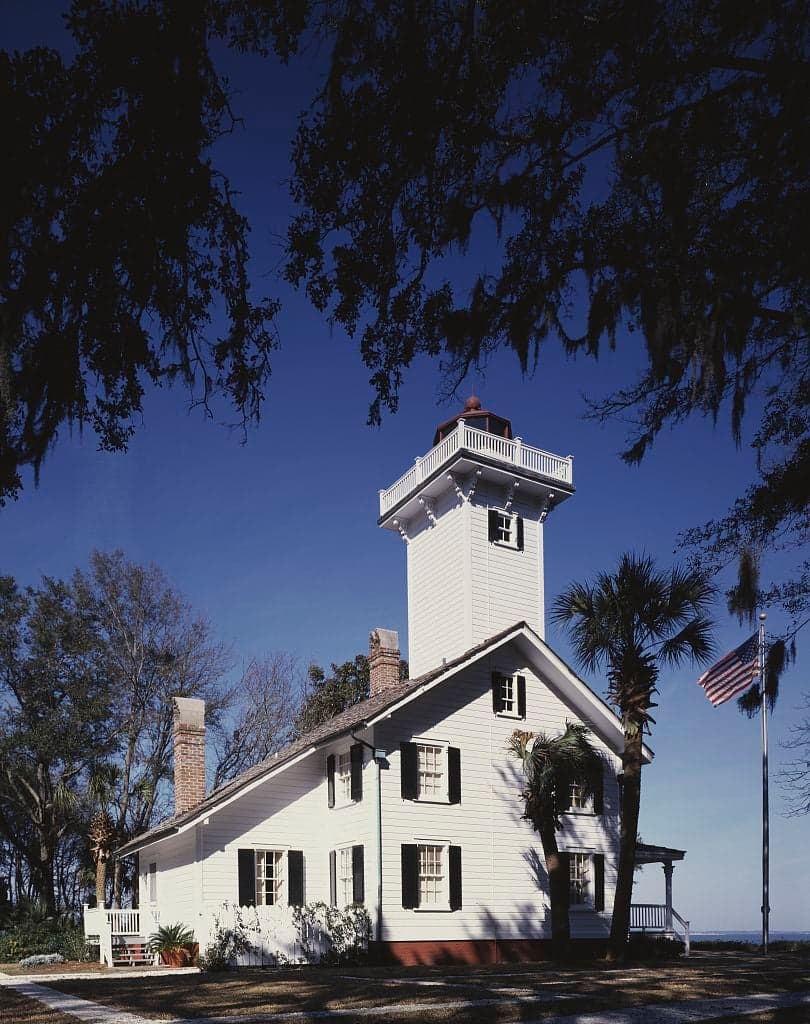
Photo: Wikipedia
Personal Sovereignty in Daufuskie Island, SC
Viable for self-reliance. Generally workable, though some barriers may limit total independence.
What does Personal Sovereignty tell us?
Personal Sovereignty measures your capacity for self-reliance and independence with minimal government friction. Higher scores mean fewer barriers between you and the way you want to live... but it assumes you have the space you need and good neighbors.
What does this tell us?
Personal Sovereignty measures your capacity for self-reliance and independence with minimal government friction. Higher scores mean fewer barriers between you and the way you want to live... but it assumes you have the space you need and good neighbors.
State Policy
Energy independence: Importer (25% of energy produced in-state)
Personal Liberty
Homesteading

Personal Liberty Analysis
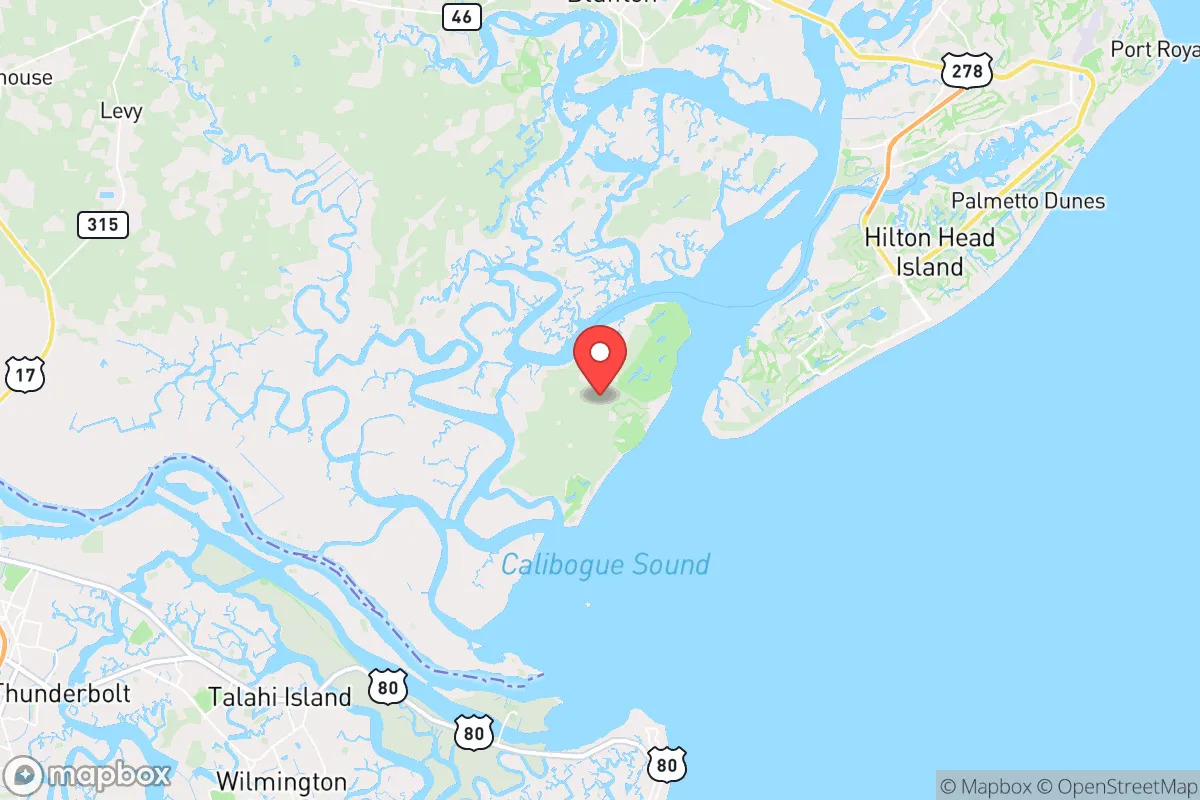
For the individual or family prioritizing maximum personal sovereignty, Daufuskie Island, South Carolina, offers a rare environment where physical isolation from mainland government centers and a low-density population create a de facto buffer against many forms of regulatory overreach. Accessible only by boat, this barrier island community of roughly 300 year-round residents operates under a unique dynamic: the Beaufort County Sheriff’s Office provides law enforcement, but the island’s remoteness means that day-to-day life is largely self-governed. There is no bridge, no traffic light, and no chain retail—just a quiet, coastal setting where the state’s presence is felt primarily through property taxes and basic county services. For those seeking to minimize friction with government while maximizing control over their own lives, Daufuskie represents a compelling, if niche, option within the broader Lowcountry.
Tax burden and regulatory posture: How South Carolina’s policies affect island autonomy
South Carolina’s overall tax climate is favorable for those seeking to keep more of their earnings. The state levies a flat income tax rate of 6.4% (as of 2025), with a standard deduction of roughly $4,630 for single filers and $9,260 for married couples filing jointly. There is no state-level estate or inheritance tax, which matters for long-term wealth preservation. Property taxes in Beaufort County are assessed at 4% of the fair market value for owner-occupied primary residences, with a millage rate that typically lands around 0.5% to 0.7% of assessed value annually—moderate by coastal South Carolina standards. However, Daufuskie’s unique geography means that many properties are classified as “high-value waterfront,” which can push effective rates higher than inland Beaufort County parcels. The regulatory posture on the island is notably light: there is no municipal government, no local zoning board beyond Beaufort County’s general land development regulations, and no building permit fees beyond standard county requirements. This absence of a local administrative layer means fewer opportunities for bureaucratic friction, but it also means that residents must handle their own waste disposal (septic systems are standard), water supply (wells or cisterns), and road maintenance on private lanes. For the prepper-minded, this is a feature, not a bug—self-reliance is not optional; it is the default.
Self-defense and gun law specifics: What the Second Amendment looks like on Daufuskie
South Carolina is a “shall-issue” state for concealed carry permits, with no discretionary denial by local sheriffs. As of 2024, the state also enacted permitless (constitutional) carry for residents 18 and older who are legally eligible to possess a firearm, meaning no permit is required to carry a concealed handgun. This is a significant advantage for those who view self-defense as a fundamental right. On Daufuskie, the practical implications are straightforward: there are no local ordinances restricting firearm possession, no county-level magazine bans, and no waiting periods beyond the federal background check for purchases from licensed dealers. The Beaufort County Sheriff’s Office has a small substation on the island, but response times can exceed 30 minutes due to ferry schedules and road conditions. For the survivalist, this reinforces the necessity of being one’s own first responder. The island’s isolation also means that any potential threat—whether from wildlife (alligators, feral hogs) or human actors—must be addressed personally. There are no gun ranges on the island, but residents can practice on private property, provided they follow state laws regarding discharge near dwellings (minimum 300 feet from an occupied structure). For those moving from restrictive states like New York or California, Daufuskie offers a dramatic expansion of personal liberty in this domain.
Self-reliance and homesteading viability: Lot sizes, zoning, and off-grid feasibility
Daufuskie’s land-use framework is permissive enough to support serious homesteading. Minimum lot sizes in the island’s primary residential areas (such as Haig Point, Melrose, and Oak Ridge) range from 0.5 to 1.5 acres, with many parcels exceeding 2 acres. Beaufort County’s zoning for the island is classified as “R-2” (rural residential), which allows for agricultural uses including livestock (chickens, goats, and even small cattle operations) without special permits, as long as the property is at least 1 acre. Off-grid living is not only feasible but common: many homes rely on solar panels, rainwater catchment systems, and propane generators because the island’s electrical grid (served by Palmetto Electric Cooperative) is prone to outages during storms. There is no municipal water or sewer—every home must have its own well and septic system, which gives residents complete control over their water supply and waste management. The county does require a septic permit and periodic inspections, but these are minimal compared to mainland suburban requirements. For the prepper, the ability to generate power, collect water, and raise food without interference from a homeowners’ association (most of the island’s planned communities have HOAs, but they are less restrictive than mainland equivalents) is a major draw. The island’s year-round growing season (USDA Zone 8b) allows for nearly continuous vegetable production, and the surrounding salt marshes provide seafood that can be harvested without a license for personal consumption.
Personal liberties: Parental rights, medical autonomy, speech, and property
South Carolina generally aligns with conservative values on parental rights and medical autonomy. The state has a “Parents’ Bill of Rights” (enacted in 2023) that affirms parents’ authority over their children’s education, healthcare, and moral upbringing. On Daufuskie, there is no public school—the island’s children are homeschooled or attend schools on Hilton Head Island via ferry—which gives parents near-total control over curriculum and values. Medical autonomy is less clear-cut: South Carolina does not have a broad right-to-try law for experimental treatments beyond federal provisions, and the state’s vaccine mandate policies have been subject to litigation. However, the island’s isolation means that residents can largely avoid public health enforcement actions that might occur in denser areas. Free speech protections are robust under both the U.S. Constitution and South Carolina law, with no local ordinances restricting expressive activity. Property rights are strong: Beaufort County has no rent control, no inclusionary zoning mandates, and no transfer taxes beyond the standard state deed recording fee. For the survivalist, the key takeaway is that Daufuskie allows for a high degree of personal sovereignty in the areas that matter most—family, health, expression, and land—without the constant threat of government overreach that characterizes more urbanized or heavily regulated jurisdictions.
In the broader context of personal sovereignty across the United States, Daufuskie Island occupies a unique niche. It combines the legal advantages of South Carolina’s conservative governance—low taxes, constitutional carry, parental rights, and minimal zoning—with the practical advantages of geographic isolation. The trade-offs are real: limited access to emergency services, no public infrastructure, and a reliance on ferries that can be disrupted by weather. But for the individual or family willing to accept those trade-offs, Daufuskie offers a level of autonomy that is increasingly rare in the Lower 48. It is not a libertarian utopia—county and state laws still apply—but it is as close to a self-governing enclave as most Americans will find within the framework of a constitutional republic. For those whose primary concern is preserving their freedom to live, defend, and provide for themselves without interference, Daufuskie deserves serious consideration.

* Values derived from national, state, county, city and local statistics and may differ in a specific area. Last updated: 2026-05-11T15:12:29.000Z
Narrative content on this page is AI-generated and may contain mistakes. Verify any details that matter before acting on them.
ReloMaps may earn a commission from affiliate links at no extra cost to you.

