
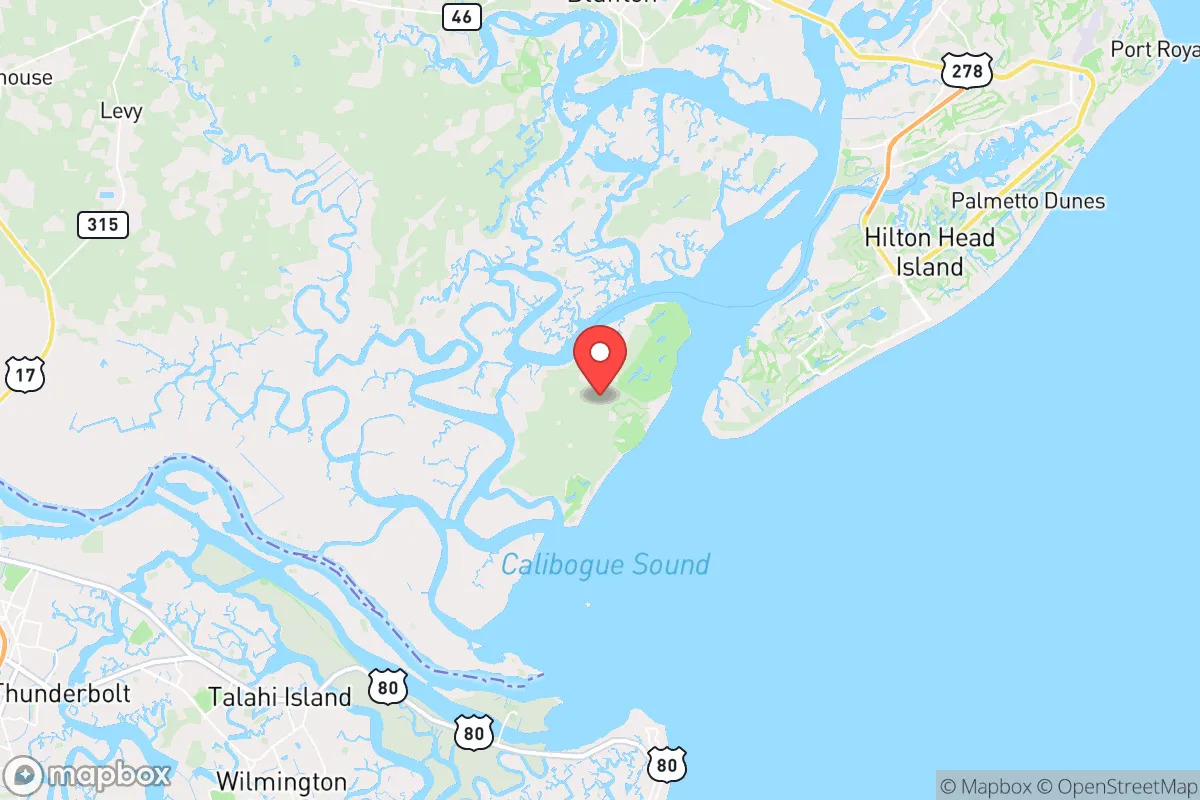
Photo: Wikipedia
Political ClimatePolitical Climate in Daufuskie Island, SC
District shown is the primary district for this city’s centroid. Cities may span multiple districts.
Local Political AnalysisPolitical Analysis of Daufuskie Island, SC
Daufuskie Island, South Carolina, leans reliably conservative, with a Cook PVI of R+6, though its political character is more nuanced than the surrounding state’s R+8 rating might suggest. This small, car-free barrier island off Hilton Head has long been a place where folks value personal freedom, low taxes, and a quiet, self-reliant lifestyle—core tenets that still hold strong among the year-round community. However, the island’s unique isolation and reliance on ferry access have created a distinct political dynamic, where local governance is less about party labels and more about preserving the island’s character against outside pressures. In recent years, I’ve seen a subtle shift as more second-home owners and retirees from blue states move in, bringing with them a preference for more progressive environmental regulations and social policies, which has caused some friction with the old guard.
How it compares
Compared to South Carolina as a whole, Daufuskie Island is slightly less conservative, but that gap is deceptive. The state’s R+8 PVI reflects a deeply red electorate in places like Bluffton and Beaufort, where Republican candidates routinely win by double digits. On Daufuskie, the R+6 rating is pulled left by a vocal minority of newcomers who push for tighter development controls and more government oversight of the island’s fragile ecosystem. For example, while the county council in Beaufort leans heavily conservative, Daufuskie’s local advisory board has seen contentious debates over ferry service funding and short-term rental restrictions—issues that often split along ideological lines. The nearby city of Savannah, Georgia, just a short boat ride away, is a stark contrast with its more liberal leanings, and some residents worry that Daufuskie could drift in that direction if progressive transplants continue to gain influence. The key difference is that South Carolina’s rural and suburban areas have largely resisted these trends, while Daufuskie’s small population makes it more susceptible to ideological shifts.
What this means for residents
For those of us who call Daufuskie home, the political climate directly affects daily life in ways that mainlanders might not expect. The push for stricter environmental rules, for instance, sounds good on paper but often translates to bureaucratic hurdles for property owners who just want to maintain their land without government red tape. I’ve watched neighbors get tangled in permitting processes for simple dock repairs or tree removal, all in the name of conservation—a classic case of well-intentioned overreach. The real concern, though, is the creeping influence of progressive ideology on local schools and community standards. While the island’s small population means there’s no public school here, the county’s education policies are increasingly shaped by state-level mandates that prioritize diversity initiatives over academic rigor. For a place that prides itself on independence, any move toward centralized control feels like a threat to the very lifestyle that makes Daufuskie special.
Looking ahead, I see the island at a crossroads. The long-term trajectory depends on whether the year-round community can hold the line against the tide of outside influence. If the trend toward progressive governance continues, we could see more restrictions on property rights, higher taxes to fund ferry subsidies, and a loss of the rugged, do-it-yourself ethos that defines this place. For now, Daufuskie remains a conservative haven, but it’s a fragile one—and those of us who value personal freedom over government convenience are keeping a close eye on every election and every zoning meeting.

State Political ClimatePolitical Climate in South Carolina
State Political AnalysisPolitical Environment in the State
South Carolina has long been a reliably red state, with a Cook PVI of R+8, but the political climate here is more layered than the raw numbers suggest. The state’s dominant coalition is a mix of traditional conservatives, evangelical Christians, and a growing number of fiscally-minded transplants from the Northeast and Midwest, who are drawn by low taxes and a slower pace of life. Over the last 10-20 years, the state has shifted from a solidly Democratic-leaning Southern state (it voted for Bill Clinton in 1992) to a deep red stronghold, driven by suburbanization, the realignment of white working-class voters, and the exodus of liberals from rural areas into a few urban islands. That said, the political energy here is not uniform—you’ll find stark contrasts between the booming coastal suburbs and the quiet, traditional upstate.
Urban vs. rural divide
The political map of South Carolina is a tale of two landscapes. The state’s largest metro, Charleston, is a blue-leaning island in a red sea, driven by a mix of tourism, a growing tech sector, and a highly educated, younger population. The city itself and its immediate suburbs like Mount Pleasant and James Island vote reliably Democratic, but the surrounding counties—Berkeley and Dorchester—are increasingly purple, with many newcomers bringing moderate-to-conservative views. Columbia, the capital, is another blue pocket, anchored by the University of South Carolina and state government workers, but the surrounding Lexington County is one of the most conservative in the state. Greenville is the real story: once a sleepy textile town, it’s now a booming conservative hub, with a vibrant downtown and a flood of transplants from California and New York who are explicitly seeking lower taxes and fewer regulations. The rural Lowcountry, places like Beaufort and Hilton Head, lean Republican but are tempered by a significant retiree population that tends to vote pragmatically. The real red meat is in the Upstate—counties like Spartanburg, Anderson, and Oconee—where evangelical churches and manufacturing jobs anchor a deeply conservative, Trump-friendly electorate. The rural “Corridor of Shame” along I-95, from Florence down to Allendale, is poor, majority-minority, and votes heavily Democratic, but its population is shrinking, diluting its political influence.
Policy environment
South Carolina’s policy environment is a conservative’s dream, but with some notable wrinkles. The state has a flat income tax rate of 6.2% (phasing down to 6.0% by 2026), no estate tax, and a relatively low property tax burden thanks to a 1990s-era law that caps annual increases. The regulatory posture is business-friendly, with a right-to-work law and a tort reform system that keeps lawsuit costs low. On education, the state has a robust school choice program—the Education Scholarship Trust Fund allows families to use state funds for private school tuition, and there’s a growing charter school network, especially in Greenville and Lexington. Healthcare is a mixed bag: the state refused Medicaid expansion under Obamacare, which keeps taxes low but leaves rural hospitals struggling. Election laws are strict—voter ID is required, early voting is limited to two weeks, and absentee voting requires an excuse. The state legislature is firmly Republican, with a supermajority in both chambers, and Governor Henry McMaster is a Trump ally who has signed bills banning abortion at six weeks (the “Fetal Heartbeat Act”) and restricting transgender athletes in school sports. The biggest policy concern for conservatives is the growing influence of the “Charleston coalition”—a mix of coastal elites and corporate interests that sometimes push for more moderate positions on issues like energy regulation and land use.
Trajectory & freedom
On the freedom front, South Carolina has been moving in a decidedly positive direction for conservatives, but there are warning signs. The state expanded gun rights significantly in 2021 with the “Constitutional Carry” law, allowing permitless carry of concealed firearms for anyone 18 or older who can legally own a gun. Parental rights got a boost in 2023 with the “Parents’ Bill of Rights,” which requires schools to notify parents about curriculum changes and medical services. Medical autonomy is a mixed bag: the state banned nearly all abortions at six weeks, but it also legalized medical marijuana in a limited form (only for patients with severe epilepsy or terminal illness). Property rights are strong, with no state income tax on retirement income and a homestead exemption for seniors. The biggest threat to freedom, in my view, is the creeping influence of local government overreach in the cities. Charleston and Columbia have passed “sensitive places” ordinances that restrict where guns can be carried, and there’s a growing push for “green” building codes that drive up housing costs. The state legislature has pushed back with preemption laws, but the battle is ongoing. The real test will be the next few years: if the state can keep taxes low and regulations light while managing the influx of new residents, it will remain a beacon of freedom. If it starts to mimic the policies of the states people are fleeing, that’s a red flag.
Civil unrest & political movements
South Carolina has a relatively low level of visible civil unrest compared to states like Oregon or New York, but there are flashpoints. The most significant recent movement was the 2020 Black Lives Matter protests in Charleston and Columbia, which were large but largely peaceful, though there were isolated incidents of property damage. The state’s history with the Confederate flag—removed from the Statehouse grounds in 2015 after the Charleston church shooting—still simmers, with periodic debates about monuments and school names. On the right, the “Moms for Liberty” movement has been very active, particularly in Lexington and Greenville, pushing for book bans and curriculum transparency. Immigration politics are relatively quiet, as South Carolina is not a border state, but there’s a growing concern about the influx of undocumented workers in the construction and agriculture sectors. The state passed a strict E-Verify law in 2011, and there’s little sanctuary city sentiment—Charleston considered it but backed down after state threats to withhold funding. Election integrity is a hot topic: the state’s 2020 election was secure, but the legislature passed a law in 2021 banning ballot drop boxes and tightening absentee ballot rules. The most visible political movement is the “Upstate conservative renaissance,” where groups like the Greenville County Republican Party are actively recruiting candidates to run for school boards and city councils, aiming to keep the state’s trajectory firmly red.
Projection
Looking ahead 5-10 years, South Carolina is likely to become even more conservative, but with a more suburban, tech-savvy flavor. The in-migration from blue states—especially to Greenville, Spartanburg, and the Charleston suburbs—is accelerating, and these newcomers are overwhelmingly conservative or libertarian-leaning. The state’s population is projected to grow by 10-15% by 2030, with most of that growth in the Upstate and coastal areas. The rural Democratic strongholds along I-95 will continue to shrink, reducing the Democratic base. The biggest wildcard is the Charleston metro: if it continues to attract tech workers and remote professionals, it could become a blue-leaning powerhouse that shifts the state’s overall lean. But even there, the suburbs are reddening—Summerville and Goose Creek are now reliably Republican. The state legislature will likely remain under Republican supermajority control, and the next governor (McMaster is term-limited in 2026) will almost certainly be a conservative. The key issues will be managing growth without losing the state’s character—keeping taxes low, protecting gun rights, and resisting the urge to adopt California-style environmental regulations. For someone moving in now, expect a state that is solidly red, with a vibrant conservative culture, but with a few blue pockets that are more about lifestyle than politics.
For a conservative individual or family looking to relocate, South Carolina offers a rare combination of low taxes, strong gun rights, and a growing economy that still feels like the South. The practical takeaway is this: if you want a place where your vote counts, your values are respected, and your freedoms are protected, the Upstate and the suburban Lowcountry are your best bets. Avoid the urban cores of Charleston and Columbia if you want to avoid progressive local policies, and stick to counties like Greenville, Lexington, or Beaufort for a community that matches your worldview. The state is on a good trajectory, but it’s not immune to the national trends—stay engaged locally, because the fight for freedom is won at the school board and city council level.
* Values derived from national, state, county, city and local statistics and may differ in a specific area. Last updated: 2026-05-11T15:12:29.000Z
Narrative content on this page is AI-generated and may contain mistakes. Verify any details that matter before acting on them.
ReloMaps may earn a commission from affiliate links at no extra cost to you.

