Photo: Wikipedia
Demographics of Davie, FL
Affluence Level in Davie, FL
A middle-class area roughly in line with national averages across income, home values, education, and employment.
People of Davie, FL
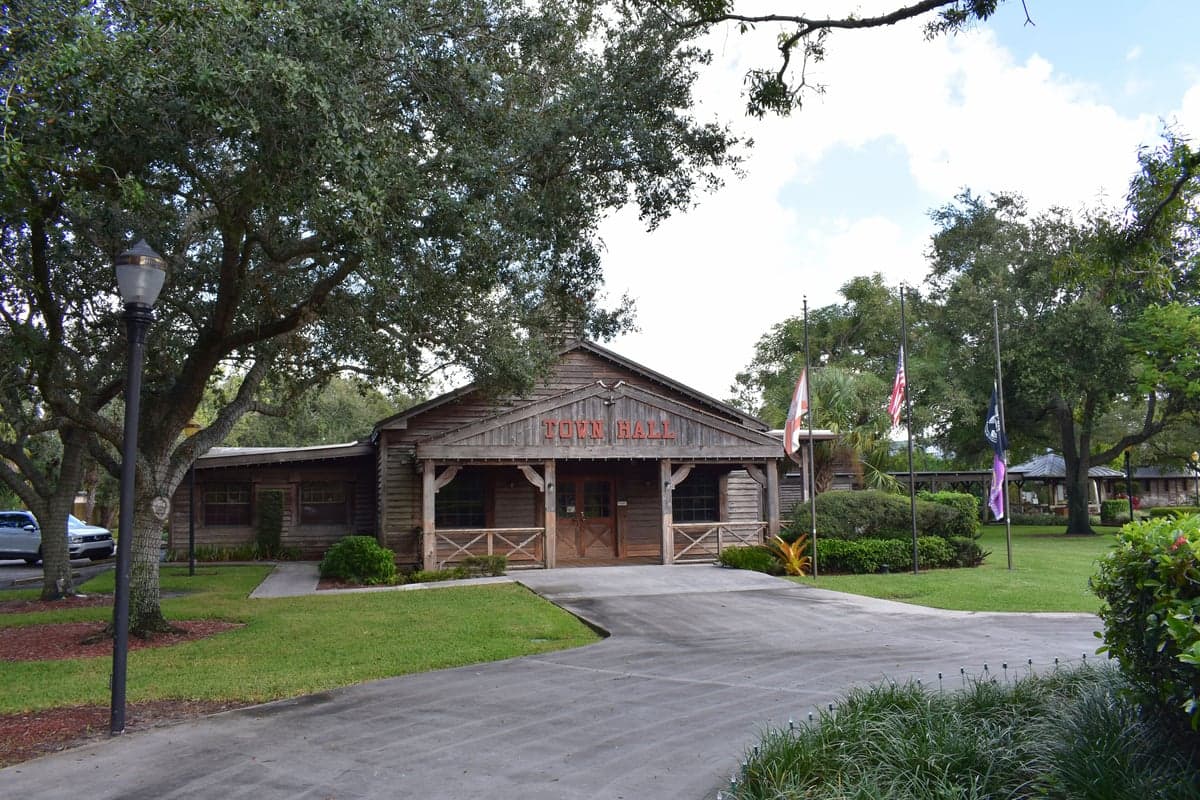
Davie, Florida, is a city of roughly 106,400 residents defined by its unusual blend of suburban Western heritage and dense, multicultural growth. Unlike many South Florida suburbs, Davie retains a distinct equestrian and rural character, with zoning that allows horse trails and ranch-style homes, even as its population has become majority Hispanic (41.1%) and significantly diverse. The city’s identity is shaped by a white population of 38.8%, a Black population of 8.2%, and growing East/Southeast Asian (3.7%) and Indian-subcontinent (3.3%) communities, all living within a moderately educated populace where 39.1% hold a college degree. This is a place where the old Florida cowboy culture meets a new wave of immigrant and domestic arrivals, creating a unique social landscape for families and individuals seeking space and stability.
How the city was settled and grew
Davie’s human history begins not with Spanish colonization but with the draining of the Everglades in the early 20th century. The city was officially founded in 1909 by Robert P. Davie, a land developer who purchased 27,000 acres of swamp and sold parcels to Midwestern farmers and Northern retirees. The original population was overwhelmingly white and Protestant, drawn by cheap land and the promise of a rural, agricultural life. The historic Davie Town Center area, around Griffin Road and University Drive, became the hub for these early settlers, who built small frame houses and started dairy farms and citrus groves. A second wave arrived during the 1940s and 1950s, when the nearby Fort Lauderdale Naval Air Station brought military families and defense workers. These newcomers settled in the Ranchlands neighborhood, a planned community of ranch-style homes on large lots that reinforced Davie’s Western-themed identity. By 1960, the population was still under 5,000, nearly all white, and the city’s character was firmly rural and conservative.
Modern era (post-1965)
The 1965 Hart-Cellar Immigration Act and the subsequent Mariel boatlift (1980) transformed Davie’s demographics. Cuban exiles and later Central American immigrants, particularly from Nicaragua and Honduras, began moving into the Flowing Lakes and Rolling Hills subdivisions, drawn by affordable housing and proximity to construction and service jobs in Broward County. By the 1990s, Davie’s Hispanic population had surged past 20%, and it now stands at 41.1%, the largest single ethnic group. This wave was not a single event but a steady influx of families, many of whom bought homes in the Nob Hill Estates area, where larger lots and good schools appealed to upwardly mobile immigrant parents. Simultaneously, domestic in-migration from the Northeast and Midwest continued, with white retirees and young professionals settling in the Pine Island Ridge gated community, a golf-course development that remains predominantly white and affluent. The Black population, now 8.2%, grew more slowly, concentrated in the Sunshine Ranches area and parts of western Davie, often drawn by employment at Nova Southeastern University or the nearby Seminole Hard Rock Hotel & Casino. The East/Southeast Asian community (3.7%) and Indian-subcontinent community (3.3%) are newer, arriving since 2000, with many professionals working in healthcare and tech settling in the Westridge and Davie Ranchettes neighborhoods, where newer construction and good school districts are key draws.
The future
Davie’s population is heading toward greater ethnic diversity and suburban densification, but not toward homogenization. The Hispanic share is likely to plateau near 45-48% over the next decade, as second-generation families assimilate and move to newer suburbs further west, like Weston or Parkland. The white population, currently 38.8%, is aging and declining slowly, as retirees are replaced by younger, more diverse families. The East/Southeast Asian and Indian communities are growing steadily, driven by professional migration to Nova Southeastern University and the expanding healthcare sector, but they remain small enclaves rather than citywide presences. The city is not tribalizing into hostile camps; instead, it is developing distinct neighborhood identities: Pine Island Ridge remains a white, affluent bubble; Flowing Lakes is solidly Hispanic and middle-class; Sunshine Ranches is a mixed-race, working-class area. The biggest demographic shift is the slow decline of the rural Western identity—new developments are smaller lots, fewer horse trails, and more townhomes, attracting younger, less land-obsessed residents. The foreign-born share (13.5%) is below the national average for a South Florida suburb, suggesting that Davie is more of a second-stage destination for immigrants who have already spent time in Miami or Fort Lauderdale.
For someone moving to Davie now, the city offers a rare combination: a conservative-leaning, family-oriented suburb with genuine diversity and a fading but cherished Western heritage. The population is becoming more Hispanic, more professional, and slightly less white, but the core values of space, safety, and schools remain intact. New arrivals should expect a place where neighbors still wave from horseback in some areas and speak Spanish in others, and where the future is likely more suburban and less rural, but still distinctively Davie.

* Values derived from national, state, county, city and local statistics and may differ in a specific area. Last updated: 2026-04-27T14:44:47.000Z
Narrative content on this page is AI-generated and may contain mistakes. Verify any details that matter before acting on them.
ReloMaps may earn a commission from affiliate links at no extra cost to you.

