Photo: Wikipedia
Political ClimatePolitical Climate in Davie, FL
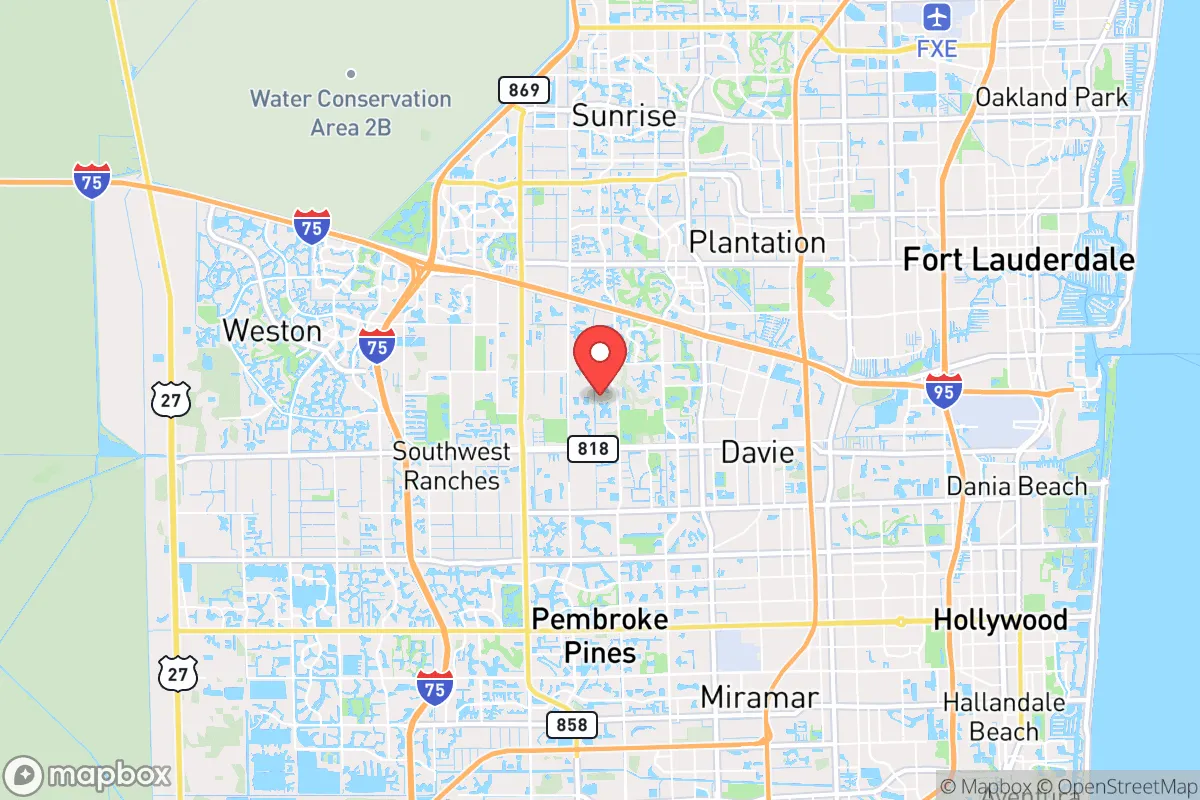
District shown is the primary district for this city’s centroid. Cities may span multiple districts.
Local Political AnalysisPolitical Analysis of Davie, FL
Davie, Florida, sits in a bit of a political tug-of-war, and if you’ve been here a while, you’ve felt the shift. The Cook PVI rating of D+5 tells you the district leans Democrat, but that number doesn’t capture the local flavor. Davie’s roots are in ranching and rural living, and a lot of us remember when this was a sleepy, conservative town where folks kept their politics to themselves and the government stayed out of your business. Today, you’ve got a mix of old-timers, new families from up north, and a growing influence from nearby Fort Lauderdale and Hollywood, which are much more progressive. The trajectory feels like a slow drift leftward, and for those of us who value personal freedoms—like the right to make your own choices about your property, your business, and your family—that’s a real concern.
How it compares
Drive ten minutes east to Fort Lauderdale, and you’re in a solidly blue area with a very different vibe—more government programs, more regulations, and a louder push for progressive social policies. Head west to Weston or Southwest Ranches, and you’ll find communities that lean much more conservative, where people still wave the flag and expect the county to keep its hands off their land. Davie sits right in the middle, but it’s getting squeezed. The town council has seen more debates over things like mask mandates, zoning restrictions, and even how local schools handle curriculum. Compared to neighboring Pembroke Pines, which is also trending left, Davie still has a stronger independent streak, but the pressure is mounting. The contrast is stark: in Davie, you can still keep chickens in your backyard and run a small horse farm, but the county commissioners are increasingly eyeing new ordinances that chip away at that lifestyle.
What this means for residents
For the average resident, this political climate means you need to stay engaged. If you value low taxes and minimal interference, you’ll want to pay attention to local elections—those school board and city council races have a bigger impact on your daily life than who’s in the White House. The shift toward progressive ideology has brought things like stricter building codes, more fees on small businesses, and a push for “equity” policies that can feel like government overreach. Property taxes have crept up, and there’s talk of adding more public transit and affordable housing mandates, which sound nice on paper but often mean more bureaucracy and less freedom for homeowners. The good news? Davie still has a strong sense of community, and many residents are pushing back. You’ll see folks at town hall meetings fighting to keep their property rights intact and their kids’ education focused on basics, not politics.
One cultural distinction that sets Davie apart is its Western heritage—the annual rodeo, the horse trails, the open spaces. That’s under threat as development and denser housing proposals come in. The long-term outlook? If the trend continues, Davie could become another suburb of Fort Lauderdale, with all the regulations and higher costs that come with it. But if enough of us show up and speak out, we can keep this place the way it was meant to be: a town where you’re free to live your life without the government breathing down your neck. It’s not about party labels—it’s about principle. And right now, that principle is worth fighting for.

State Political ClimatePolitical Climate in Florida
State Political AnalysisPolitical Environment in the State
Florida has transformed from a classic swing state into a solidly Republican-leaning powerhouse over the past two decades, with registered Republicans now outnumbering Democrats by over 800,000 voters as of 2025. The state delivered a +3.3-point margin for Donald Trump in 2020 and a decisive +13-point margin in 2024, driven by a massive influx of conservative-leaning transplants from blue states and a rightward shift among Hispanic voters, particularly in Miami-Dade County. This isn’t your grandfather’s Florida—the coalition has shifted from a mix of moderate retirees and blue-dog Democrats to a younger, more culturally conservative base that prizes low taxes, parental rights, and Second Amendment protections.
Urban vs. rural divide
The political map of Florida is starkly divided, with the I-4 corridor acting as the traditional battleground that has now tilted decisively red. Miami-Dade County, once a Democratic stronghold, flipped to Trump in 2024 by a 10-point margin, driven by Cuban-American and Venezuelan voters who see the GOP as the party of anti-socialism and economic freedom. Meanwhile, the Panhandle—places like Pensacola, Panama City, and Tallahassee’s surrounding rural counties—votes 65-70% Republican, with timber and military families forming the backbone. The urban cores of Orlando, Tampa, and Jacksonville still lean Democratic, but their suburbs—like St. Johns County (St. Augustine) and Sarasota County—have become reliably red. The real story is the collapse of Democratic margins in the Miami suburbs: Hialeah and Doral now vote like rural Alabama, not like the blue enclaves they were in the 1990s. The rural-urban split is sharper than ever, but the rural and suburban growth is outpacing the cities.
Policy environment
Florida’s policy environment is a case study in conservative governance that has attracted hundreds of thousands of new residents. There is no state income tax, a constitutional cap on property tax increases (the Save Our Homes amendment), and a regulatory framework that Governor Ron DeSantis has aggressively streamlined—permitting for new homes and businesses often takes weeks, not months. Education policy is a flashpoint: the state’s Parental Rights in Education Act (HB 1557, 2022) prohibits classroom instruction on sexual orientation and gender identity in grades K-3, and the “Don’t Say Gay” law has been expanded through high school. School choice is universal, with vouchers available for any family, regardless of income, to attend private or religious schools. On healthcare, Florida did not expand Medicaid under the ACA, and the state has banned gender-affirming care for minors (SB 254, 2023). Election integrity is a priority: the state requires photo ID to vote, limits drop boxes, and conducts regular voter roll purges. The result is a policy environment that prioritizes parental authority, fiscal conservatism, and limited government—exactly what many relocating families are seeking.
Trajectory & freedom
Florida is unequivocally becoming more free in the areas that matter most to conservatives, though some civil libertarians raise concerns about state power. The Second Amendment is robust: permitless carry (HB 543) became law in 2023, allowing any law-abiding adult to carry a concealed firearm without a permit, and “stand your ground” laws remain strong. Property rights were strengthened by the 2024 passage of SB 250, which limits homeowners’ association (HOA) fines and gives owners more power to fight overreaching covenants. On medical freedom, the state banned vaccine passports and COVID-19 mandates for private employers in 2021 (SB 2006), and in 2023, DeSantis signed a law prohibiting mRNA vaccine mandates for any entity receiving state funds. However, critics note that the state has used its power aggressively against local governments—for example, the “Preemption” laws that strip cities of the ability to pass their own minimum wage or rental control ordinances. The trajectory is clear: Florida is moving toward maximum individual liberty on guns, education, and medical choice, while centralizing authority at the state level to prevent local progressive overreach.
Civil unrest & political movements
Florida has seen remarkably little civil unrest compared to states like Oregon or New York, but the political movements are intense and organized. The most visible flashpoint is immigration: the state passed SB 1718 in 2023, which requires businesses with 25+ employees to use E-Verify, bans local “sanctuary” policies, and makes it a felony to transport undocumented immigrants into the state. This has led to protests from immigrant advocacy groups in Miami and Orlando, but the law enjoys broad support among the state’s large Cuban and Venezuelan populations. On the left, the “Dream Defenders” and other activist groups have organized against the Parental Rights law and the ban on gender-affirming care, but their protests in Tallahassee have been small and largely ineffective. On the right, the “Moms for Liberty” movement is highly active, with chapters in nearly every county pushing for school board candidates who support parental rights and curriculum transparency. Election integrity remains a live issue: the 2020 and 2022 elections in Florida were widely seen as clean, but activists on both sides continue to monitor for fraud. A new resident will notice that political bumper stickers and yard signs are common, but the atmosphere is generally civil—people disagree without the street-level hostility seen in other states.
Projection
Over the next 5-10 years, Florida will likely become even more conservative as the demographic trends accelerate. The state is adding roughly 900 new residents per day, most of whom are coming from high-tax, high-regulation states like New York, California, and Illinois. These transplants are disproportionately white, middle-class, and conservative-leaning, and they are settling in the fast-growing suburbs of Tampa (Pasco County), Orlando (Lake County), and Jacksonville (St. Johns County). The Hispanic vote will continue to shift right, especially as younger Cuban-Americans and Venezuelans who fled socialism become a larger share of the electorate. The Democratic Party in Florida is in disarray, with no obvious statewide candidate and a shrinking base in the urban cores. The biggest wildcard is climate change: rising sea levels and hurricane risk could eventually slow growth in coastal areas like Miami Beach and Fort Myers, but inland cities like Ocala, Gainesville, and Lakeland are booming. A person moving to Florida now should expect to find a state that is firmly red, with policies that favor individual freedom, low taxes, and parental control—and that is unlikely to change for at least a decade.
For a new resident, the bottom line is simple: Florida offers a political environment where your tax dollars stay in your pocket, your children’s education is under your control, and your Second Amendment rights are protected. The state is not without its challenges—hurricanes, insurance costs, and traffic are real—but the political climate is stable, predictable, and aligned with conservative values. If you’re looking for a place where the government sees itself as your servant, not your master, Florida is the destination.
* Values derived from national, state, county, city and local statistics and may differ in a specific area. Last updated: 2026-04-27T14:44:47.000Z
Narrative content on this page is AI-generated and may contain mistakes. Verify any details that matter before acting on them.
ReloMaps may earn a commission from affiliate links at no extra cost to you.

