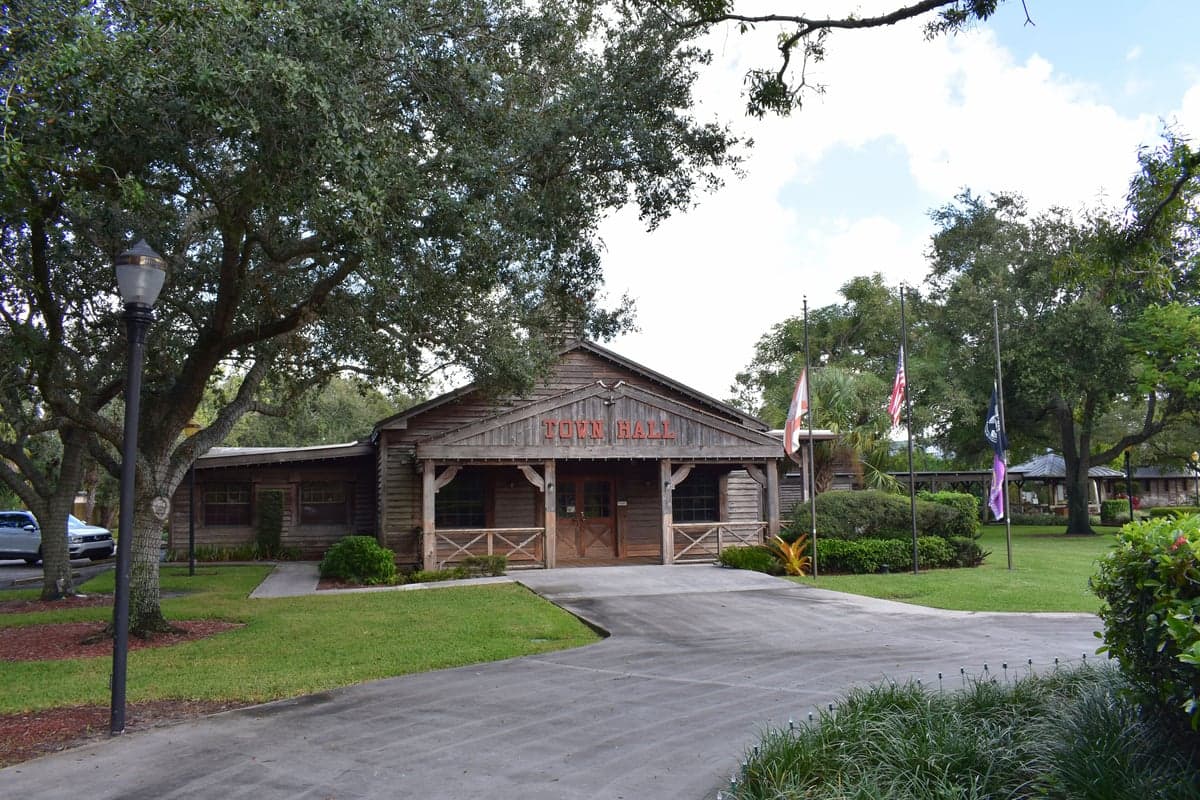
Photo: Wikipedia
Strategic Assessment of Davie, FL
Multiple tactical vulnerabilities. Population density, target proximity, or disaster risk are likely compounding. A retreat property and exit planning is required.
What does the Strategic Assessment tell us?
Our Strategic Assessment grades tactical survivability of an area. Major population centers, military targets, fallout zones, natural disasters, and border exposure all drive risk — lower exposure means a more defensible position in a crisis.
This is heavily inspired by Joel Skousen's Strategic Relocation book. Highly recommended you checkout the book ($)What does this tell us?
Our Strategic Assessment grades tactical survivability of an area. Major population centers, military targets, fallout zones, natural disasters, and border exposure all drive risk — lower exposure means a more defensible position in a crisis.
This is heavily inspired by Joel Skousen's Strategic Relocation book. Highly recommended you checkout the book ($)Strategic Pillars

Key Distances
Regional Safe Places
Below is our recommended "safe zones" in Florida and the surrounding area based on our strategic heuristics. For most people, it's unrealistic to live in a “safe zone” full-time due to work, family or other personal reasons. They tend to be more rural. However, many of these areas are perfect for second homes and retreat properties that double as a vacation home or even a short-term rental.

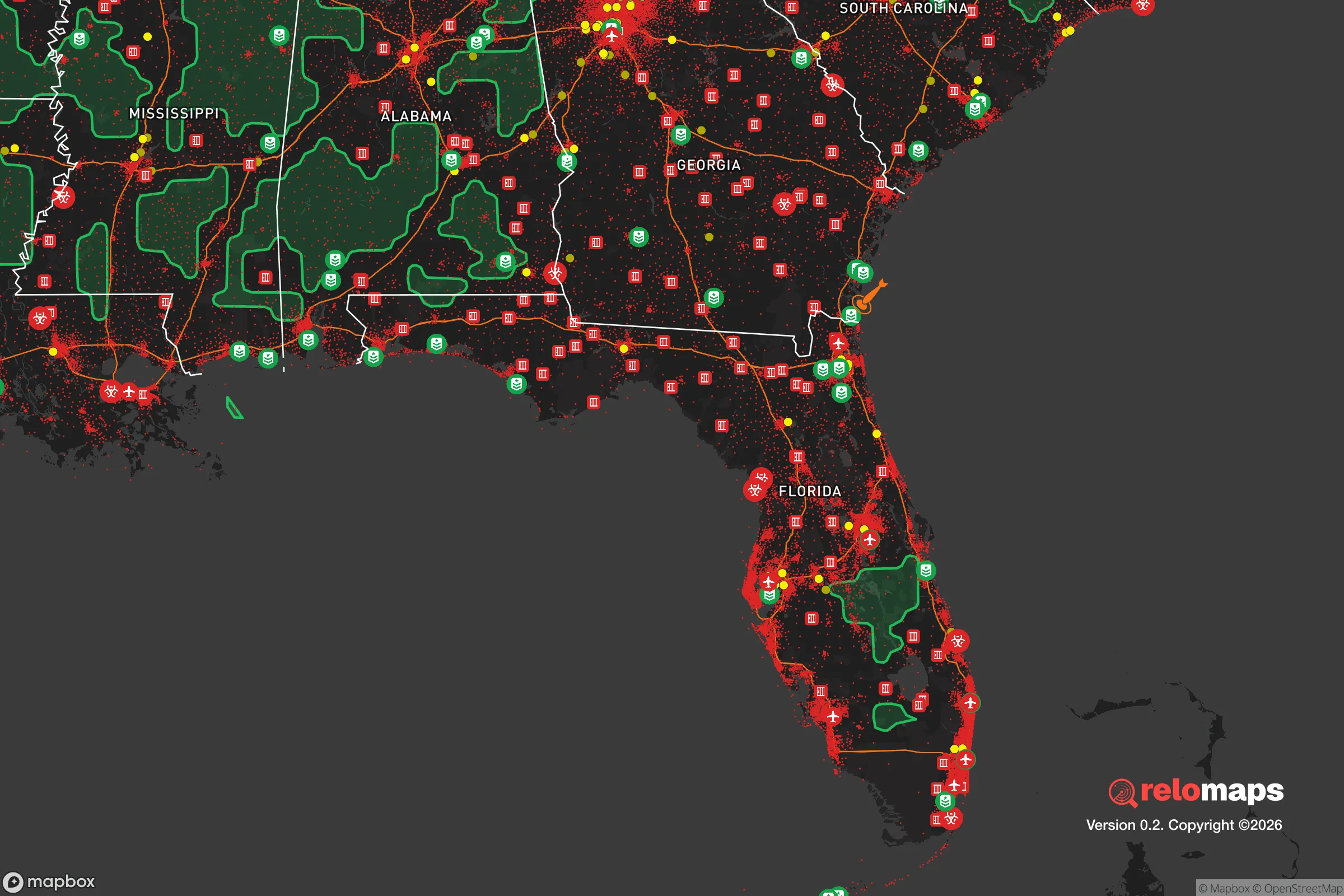


Important Note: For informational purposes only. This does not mean nothing bad ever happens in the green zones. Please use common sense. This is based on public data and modeled with AI. We tried to take a conservative approach but mistakes happen. We update this regularly as new information becomes available.
Solar Generator Recommendations
Backup power matters more here than in safer locations. We've picked three solar generators across budgets and capacity tiers — start with the budget unit if you only need a few essentials, or step up if you want to run a fridge and HVAC for days at a time.

Jackery Portable Power Station Explorer 300
Budget OptionPower on the Go: Weighing only 11 lbs, it's convenient to set up and store with book-sized foldable solar panels

BLUETTI Portable Power Station AC180
Designed for both indoor and outdoor scenarios, AC180 is highly capable as it has a robost capacity and continuous output power.

EF ECOFLOW DELTA Pro Ultra Power Station
Upgraded PickEcoFlow DELTA Pro Ultra is a whole-home energy system designed to grow with your family. Integrated with the Smart Home Panel 2, it scales to meet your evolving energy needs — keeping your home powered, intelligent, and secure through every stage of life.
We earn a commission, at no additional cost to you.
Strategic Assessment Analysis
Davie, Florida, presents a mixed bag for the strategic relocator. Its location offers some genuine advantages, but it also carries significant liabilities that a prepper or survivalist must weigh carefully. While the town itself has a rural-ish character with its horse farms and equestrian zoning, it sits squarely within the gravitational pull of the Miami-Fort Lauderdale metroplex, which is a major liability in any scenario involving civic unrest, infrastructure collapse, or a mass casualty event. The key question is whether Davie’s local resilience can outweigh its proximity to one of the most densely populated and geopolitically exposed regions in the country.
Geographic position and natural advantages for long-term survival
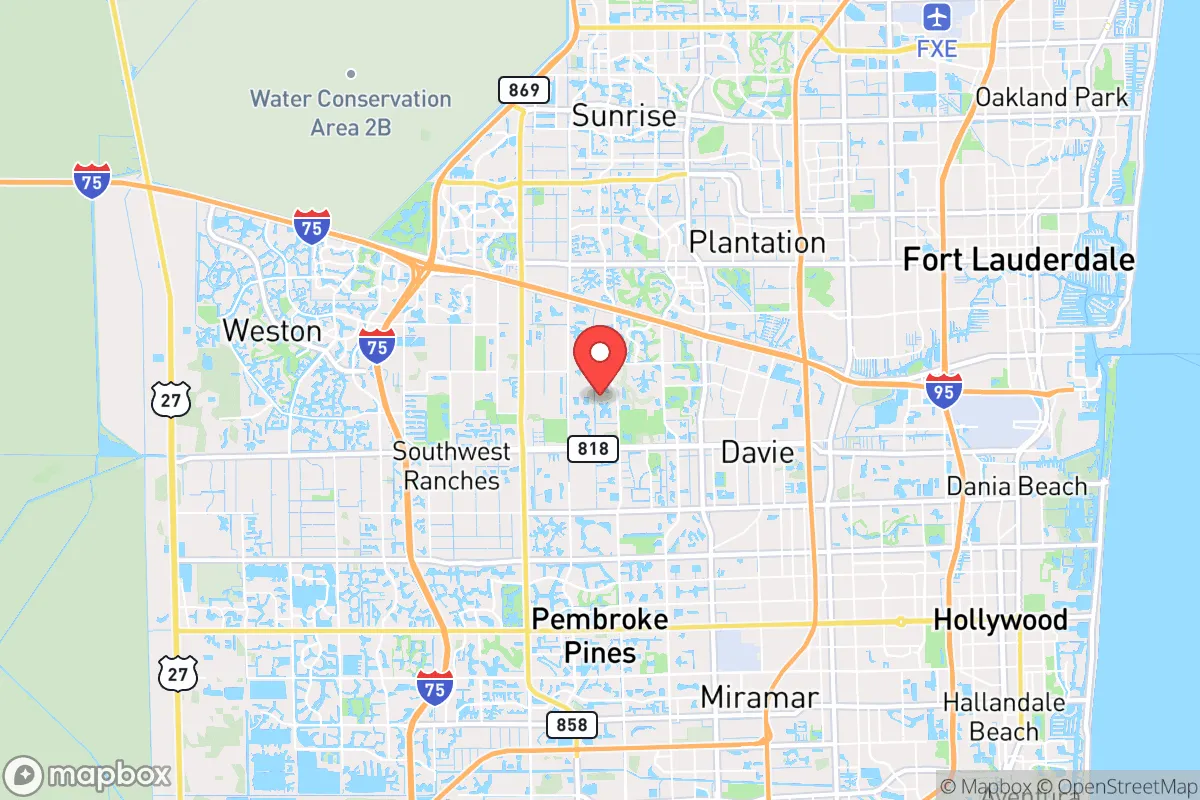
Davie’s geographic position is a double-edged sword, but let’s start with the positives. The town is located in central Broward County, roughly 20 miles inland from the Atlantic coast. This inland buffer provides some protection against storm surge from hurricanes, which is a critical consideration for anyone serious about long-term survival in South Florida. Unlike coastal cities like Fort Lauderdale or Miami Beach, Davie sits at an average elevation of about 9 feet above sea level, which is relatively high for the region. The area is also crisscrossed by the New River and several canals, offering potential water sources, though these are heavily managed and not pristine. The town’s zoning laws, which preserve large lots and equestrian uses, mean that many properties have space for gardens, rainwater catchment, and even small livestock—a rare commodity in South Florida. This semi-rural character, combined with its proximity to the Everglades to the west, gives a relocator a potential retreat corridor if things go sideways. The Everglades themselves are a massive, sparsely populated wilderness that could serve as a bug-out zone, though they come with their own hazards (alligators, mosquitoes, and law enforcement scrutiny). For a conservative-minded individual looking to avoid the chaos of a major city, Davie’s inland position and open-space zoning are genuine assets.
Risks, exposures, and proximity to fallout-relevant landmarks
Now for the hard truths. Davie’s proximity to major population centers and critical infrastructure is a serious vulnerability. The town is less than 10 miles from Fort Lauderdale-Hollywood International Airport and about 25 miles from Miami International Airport—both prime targets for any coordinated attack or mass casualty event. The Port Everglades seaport, a major hub for fuel and cargo, is just 12 miles east. In a scenario involving a national emergency, these choke points would become epicenters of panic, looting, and potential secondary attacks. The I-595 and I-75 corridors, which run through or near Davie, would be clogged with evacuees within hours of any major event. Additionally, the Turkey Point Nuclear Generating Station, located about 40 miles south in Homestead, is a significant concern. While not immediately adjacent, a catastrophic failure there—whether from sabotage, natural disaster, or age-related issues—could render large portions of South Florida uninhabitable for years. Davie is within the 50-mile emergency planning zone, meaning fallout or evacuation orders could directly impact the area. The town’s population density, while lower than Miami’s, is still around 1,500 people per square mile, which is high enough that civil unrest or resource shortages could escalate quickly. For a prepper, the risk of being caught in a mass evacuation or a supply-chain collapse is real and should not be underestimated.
Practical resilience for a relocator: food, water, energy, and defensibility
Let’s get practical about what daily life looks like for a survival-minded relocator in Davie. Water is the first concern. The municipal water supply comes from the Biscayne Aquifer, which is shallow and vulnerable to saltwater intrusion, especially during droughts or after a major storm. A well is possible on larger lots, but permits are strict, and the water table is high, meaning septic systems and wells can conflict. Rainwater catchment is legal in Florida, but the average rainfall of about 60 inches per year means you’ll need significant storage capacity to get through the dry season. Food production is more feasible. Davie’s zoning allows for backyard chickens, goats, and even horses on many properties. The growing season is year-round, so a well-planned garden can produce citrus, avocados, bananas, and tropical vegetables. Local farmers’ markets and the nearby Redland Agricultural Area (about 30 minutes south) offer sources for seeds, plants, and bulk produce. Energy independence is a mixed bag. Solar is viable—Florida gets plenty of sun—but the region’s frequent thunderstorms and hurricane risks mean panels need to be robustly mounted and backed up by a generator. Natural gas is available in many parts of Davie, which is a plus for cooking and heating during grid failures. Defensibility is the weakest link. Davie is not a fortress. The town is flat, with open fields and canals that offer little natural cover. The main roads are straight and easily blocked. In a collapse scenario, you’d be relying on a tight-knit neighborhood watch or a prepper group to secure your immediate area. The local police department is professional, but in a widespread emergency, they’d be overwhelmed. The best strategy is to live on a dead-end street or a cul-de-sac with a single point of entry, and to have a bug-out vehicle ready to head west into the Everglades or north toward Lake Okeechobee if needed.
The overall strategic picture for Davie is one of cautious opportunity. It is not a remote survivalist paradise, but it offers a better starting point than most of South Florida for someone who wants to be prepared. The key is to treat Davie as a base of operations rather than a final redoubt. Stockpile supplies for at least 90 days, invest in a reliable vehicle with off-road capability, and establish relationships with like-minded neighbors. The proximity to the Everglades and the agricultural areas to the south and west provides a buffer and a potential escape route. However, the risks from nearby population centers, critical infrastructure, and the nuclear plant are real and cannot be ignored. For a conservative-leaning individual or family who values self-reliance and is willing to put in the work, Davie can work—but only if you go in with your eyes open and a plan for the worst-case scenario. If you’re looking for a place to ride out the storm, this is a decent staging ground. If you’re looking for a place to disappear, keep looking north.

* Values derived from national, state, county, city and local statistics and may differ in a specific area. Last updated: 2026-04-27T14:44:47.000Z
Narrative content on this page is AI-generated and may contain mistakes. Verify any details that matter before acting on them.
ReloMaps may earn a commission from affiliate links at no extra cost to you.

