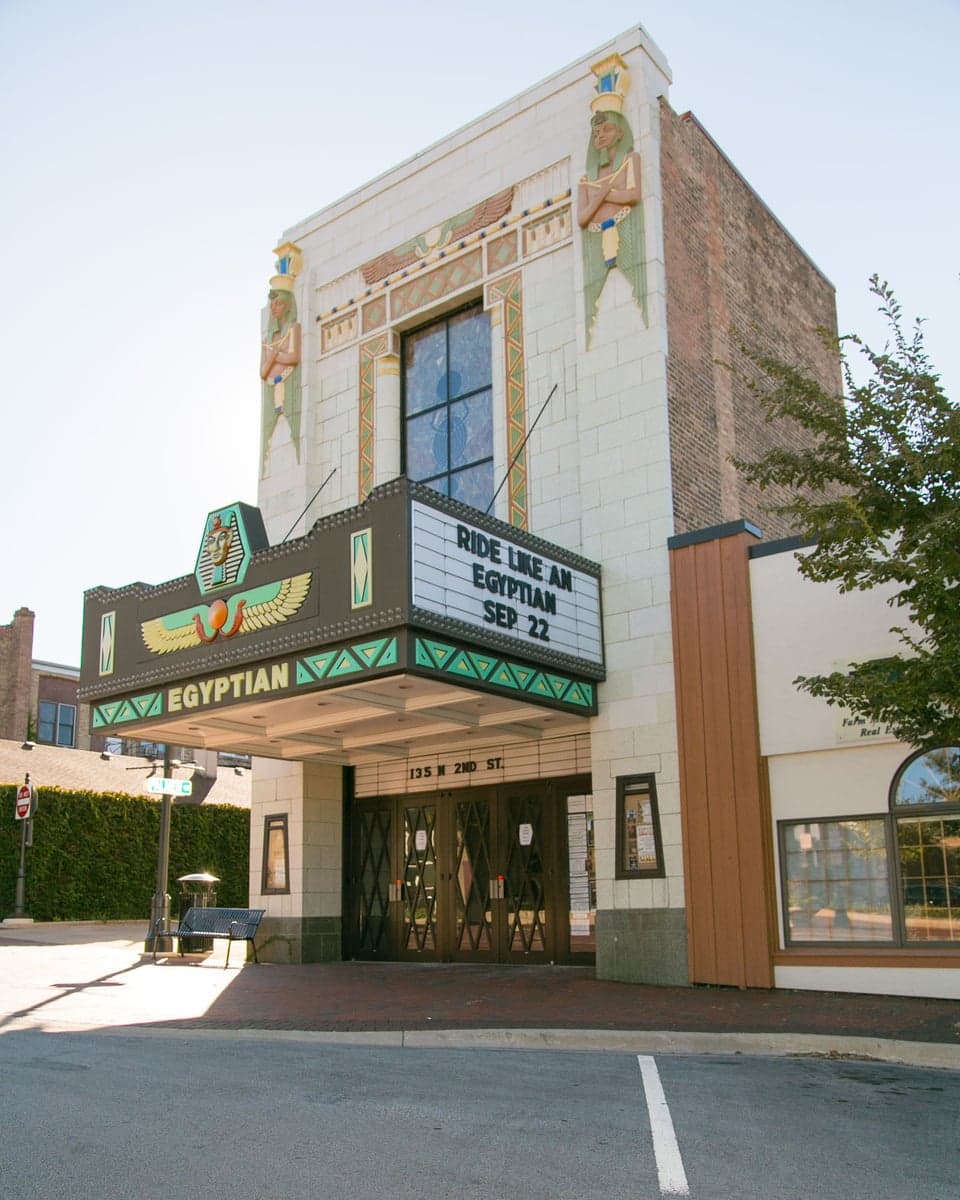
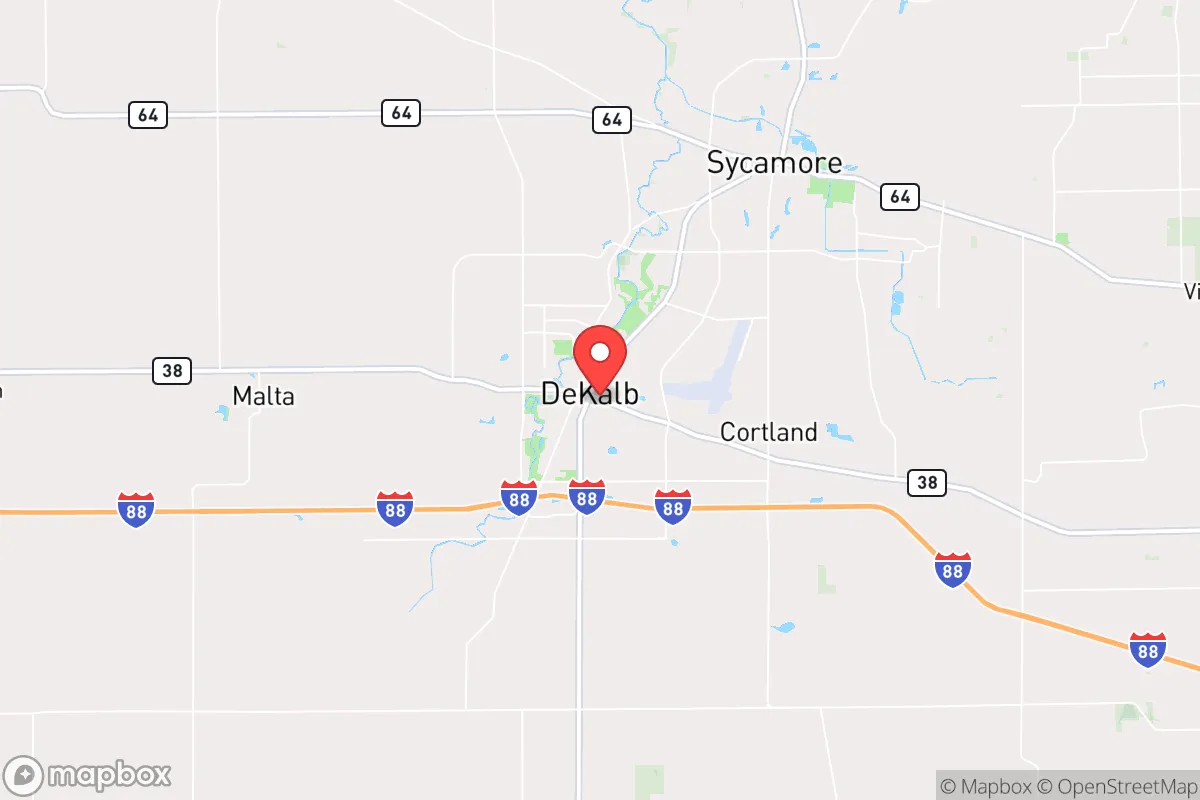
Photo: Wikipedia
Demographics of Dekalb, IL
Affluence Level in Dekalb, IL
A low-income area with significant economic hardship. Household wealth and educational attainment are well below national averages.
People of Dekalb, IL
The 40,464 residents of DeKalb, Illinois, form a community shaped by its identity as a Midwestern college town and manufacturing hub, with a population that is 57.5% white, 18.4% Hispanic, 15.1% Black, 2.3% East/Southeast Asian, and 1.4% Indian. The city is notably more diverse than surrounding rural DeKalb County, driven by the presence of Northern Illinois University (NIU) and a history of industrial employment. A relatively young population—with a median age around 28—and a 35.7% college-educated rate reflect the university’s influence, while the city’s character remains distinctly working-class outside the campus core.
How the city was settled and grew
DeKalb’s original population arrived in the 1830s and 1840s, drawn by the fertile prairie soil and the construction of the Galena and Chicago Union Railroad in 1853. The earliest settlers were Yankee farmers from New England and upstate New York, who established the town’s agricultural base. The invention of barbed wire by Joseph Glidden in 1873 transformed DeKalb into a manufacturing center, attracting waves of German and Irish immigrants to work in the wire mills. These groups settled in the West Side neighborhood, near the factories along the railroad tracks, and in the North Grove area, where modest worker cottages still stand. By the early 20th century, Swedish and Polish immigrants joined the workforce, clustering in the South Side district around South Fourth Street, building the area’s first Catholic and Lutheran churches. The founding of Northern Illinois University in 1895 as a teachers’ college brought a new class of residents—faculty and students—who concentrated in the University Village area, a historic district of early 20th-century homes near the campus.
Modern era (post-1965)
The 1965 Immigration and Nationality Act, combined with NIU’s expansion, reshaped DeKalb’s demographics. The university actively recruited international students, leading to the growth of East/Southeast Asian communities—primarily Chinese, Korean, and Vietnamese—who settled in the Hillcrest neighborhood, a post-war subdivision of ranch homes near the campus’s eastern edge. Indian subcontinent families, largely professionals and graduate students, arrived in smaller numbers and concentrated in the Linden Place area, a newer development of single-family homes built in the 1990s. Domestic migration also shifted: African American residents, who had been a small minority since the Great Migration, grew significantly after 1970 as NIU’s affirmative action programs and manufacturing jobs at companies like 3M and General Electric attracted Black families from Chicago and the South. They settled primarily in the East Side neighborhood, east of the railroad tracks, where housing was more affordable. Hispanic immigration accelerated in the 1990s and 2000s, driven by agricultural and food-processing jobs at local plants like the Nestlé facility. Mexican and Central American families established a strong presence in the Southwest DeKalb area, near the industrial parks, creating a corridor of Hispanic-owned businesses along South Annie Glidden Road. By 2020, the white share had fallen from over 80% in 1980 to 57.5%, while the Hispanic share rose to 18.4% and the Black share to 15.1%.
The future
DeKalb’s population is likely to continue diversifying, though at a slower pace than in the 1990s and 2000s. The Hispanic population is the fastest-growing segment, driven by both immigration and higher birth rates, and is expected to approach 25% by 2035, with the Southwest DeKalb corridor becoming a more established ethnic enclave. The East/Southeast Asian and Indian populations are plateauing, as NIU’s international enrollment has stabilized and many graduates leave for larger job markets. The Black population is holding steady, with some out-migration to Chicago suburbs offset by new arrivals drawn to NIU’s programs. The white population, while still a majority, is aging and declining slightly, as younger white families often move to nearby Sycamore or rural townships for larger lots and lower taxes. The city is not tribalizing into hostile enclaves—neighborhoods remain mixed—but distinct cultural corridors are solidifying. For a new resident, DeKalb offers a genuinely diverse, college-town atmosphere with a working-class backbone, but the economic anchor remains NIU, making the city’s future closely tied to the university’s enrollment trends and state funding.
DeKalb is becoming a more Hispanic-influenced, stable college town where diversity is a daily reality rather than a statistic. For a conservative-leaning individual or family, the city offers a moderate cost of living and a community where traditional values of hard work and neighborliness coexist with the liberal tilt of a university campus. The key trade-off is between the cultural and educational amenities of a diverse college town and the political and social dynamics that come with it.

* Values derived from national, state, county, city and local statistics and may differ in a specific area. Last updated: 2026-04-29T23:57:08.000Z
Narrative content on this page is AI-generated and may contain mistakes. Verify any details that matter before acting on them.
ReloMaps may earn a commission from affiliate links at no extra cost to you.

