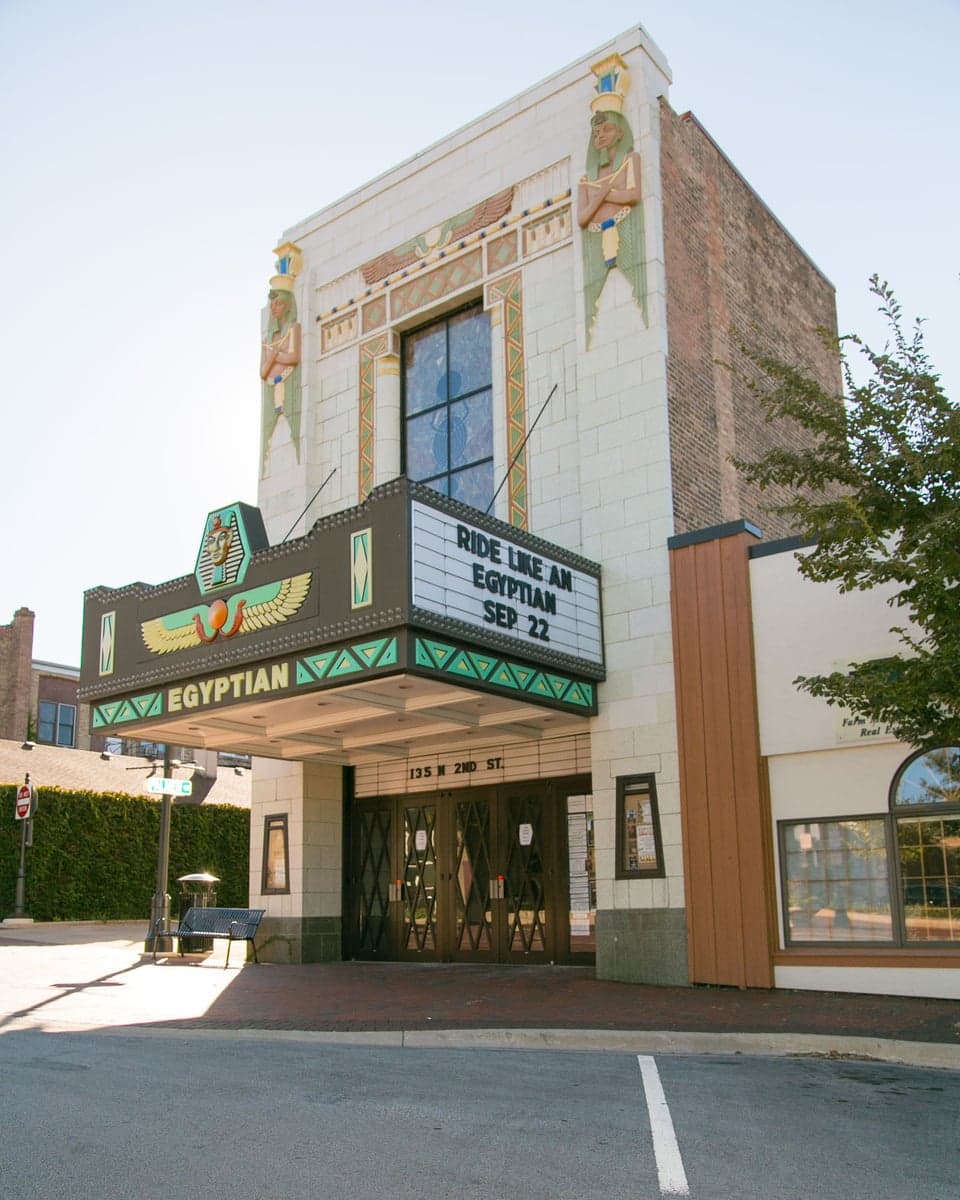
Photo: Wikipedia
Personal Sovereignty in Dekalb, IL
Viable for self-reliance. Generally workable, though some barriers may limit total independence.
What does Personal Sovereignty tell us?
Personal Sovereignty measures your capacity for self-reliance and independence with minimal government friction. Higher scores mean fewer barriers between you and the way you want to live... but it assumes you have the space you need and good neighbors.
What does this tell us?
Personal Sovereignty measures your capacity for self-reliance and independence with minimal government friction. Higher scores mean fewer barriers between you and the way you want to live... but it assumes you have the space you need and good neighbors.
State Policy
Energy independence: Importer (45% of energy produced in-state)
Personal Liberty
Homesteading

Personal Liberty Analysis
For the individual who values personal sovereignty above all else, DeKalb, Illinois presents a deeply conflicted picture. While the city’s small-town feel and agricultural surroundings offer a veneer of independence, the reality is that you are operating within one of the most aggressively regulated states in the union. Illinois’s legal framework—from its firearm restrictions to its tax structure—systematically erodes the autonomy that a survivalist or prepper would consider non-negotiable. DeKalb is not a place where you can simply disappear into the woods and live by your own rules; it is a place where you must constantly navigate a thicket of state-level mandates that prioritize collective compliance over individual liberty.
Tax burden and regulatory posture in DeKalb County
The financial cost of living in DeKalb is a direct assault on self-reliance. Illinois’s state income tax is a flat 4.95%, but the real weight comes from property taxes, which in DeKalb County average roughly 2.5% of assessed home value—among the highest in the nation. On a $250,000 home, that’s over $6,000 annually, money that could otherwise fund your own supplies, land, or training. The state’s sales tax, when combined with local rates in DeKalb, pushes past 8.25%. Every purchase you make is taxed to fund a sprawling government apparatus that shows no signs of shrinking. Regulatory posture is equally hostile to independence. Illinois mandates strict building codes, environmental permits for even minor land alterations, and a complex web of business licensing that makes starting a side hustle or home-based trade a bureaucratic nightmare. The state’s energy policies, including the phased closure of nuclear plants and mandates for renewable energy, have driven electricity costs roughly 30% above the national average. For a prepper, this means your monthly overhead is higher, leaving less capital for stockpiling, land acquisition, or off-grid infrastructure.
Self-defense realities and Illinois gun law specifics
If personal sovereignty includes the right to defend yourself and your family, DeKalb is a legal minefield. Illinois is a “may-issue” state for concealed carry, but in practice, the process is onerous: you need a Firearm Owner’s Identification (FOID) card, a concealed carry license (CCL) that requires 16 hours of training, and you must navigate a patchwork of local restrictions. DeKalb itself has ordinances that ban firearms in public parks and municipal buildings, and state law prohibits carry in libraries, hospitals, and any establishment that serves alcohol. The state’s 2023 “Protect Illinois Communities Act” banned the sale of many common semi-automatic rifles and standard-capacity magazines—the very tools a survivalist would consider essential for home defense and long-term security. Magazine capacity is capped at 10 rounds for long guns and 15 for handguns. Magazines that hold more than 10 rounds that were legally owned before the ban must be registered with the state, a de facto gun registry that many see as a precursor to confiscation. Stand-your-ground laws do not exist in Illinois; you have a “duty to retreat” in public spaces before using deadly force. Castle doctrine applies only inside your home, and even then, the legal burden is on you to prove you were in reasonable fear of death or great bodily harm. For the prepper mindset, this is not a freedom-friendly environment—it is a system designed to make armed self-defense legally risky and logistically difficult.
Self-reliance and homesteading viability: lot sizes, zoning, and off-grid feasibility
DeKalb’s zoning code is a major obstacle for anyone wanting to live off the grid or pursue serious homesteading. Within city limits, standard residential lots are typically one-quarter to one-third of an acre, and zoning ordinances prohibit keeping livestock—no chickens, goats, or bees—in most neighborhoods. Even gardening is restricted by rules against “unsightly” vegetation and compost piles. To get any meaningful acreage, you must move to unincorporated DeKalb County, where lot sizes of 1 to 5 acres are more common, but still subject to county-level regulations. Off-grid living is effectively illegal in Illinois: state law requires connection to the electrical grid for any habitable structure, and rainwater collection is heavily restricted—you can only capture water from your roof, and it cannot be used for potable purposes without a permit. Solar panels are allowed, but net metering policies are complex, and the state’s utility monopolies make it difficult to disconnect entirely. Septic systems are permitted in rural areas, but they require costly permits and inspections. For a prepper, the message is clear: you can have a garden and a backup generator, but true self-sufficiency—living without utility bills, raising your own protein, and being independent of the grid—is not a realistic goal within DeKalb’s regulatory framework.
Personal liberties: parental rights, medical autonomy, speech, and property
On paper, Illinois protects free speech, but in practice, the state has a long history of using public health and safety powers to override individual choice. Parental rights have been a flashpoint: Illinois law mandates comprehensive sex education in public schools, and parents cannot opt their children out of specific topics—only the entire program. Medical autonomy is severely limited. Illinois has some of the strictest vaccine mandates in the country, including for school attendance, and during public health emergencies, the governor has broad authority to mandate treatments or restrictions. The state also has a “red flag” law that allows courts to temporarily seize firearms from individuals deemed a risk, based on reports from family members or law enforcement—a process that can be triggered without a criminal conviction. Property rights are similarly constrained. Eminent domain is used aggressively for infrastructure projects, and the state’s environmental regulations can restrict what you do with your own land, from cutting trees to draining wetlands. For the survivalist, these are not abstract concerns; they represent a government that views individual judgment as subordinate to state-defined “public good.”
When you stack DeKalb against other regions in the Midwest, the sovereignty picture is bleak. Compare it to rural Indiana or Missouri, where property taxes are half as high, gun laws are permissive, and off-grid living is a practical option. In DeKalb, you are trading a lower cost of living than Chicago for a regulatory environment that still treats you as a subject rather than a sovereign individual. The city’s location near I-88 and its agricultural base offer some logistical advantages for a prepper—access to supplies, farmland, and a lower population density than the suburbs—but the legal and financial constraints are significant. If personal sovereignty is your highest priority, DeKalb is a place you would pass through, not settle in. The state’s appetite for control is simply too large, and the margins for independent living too narrow.

* Values derived from national, state, county, city and local statistics and may differ in a specific area. Last updated: 2026-04-29T23:57:08.000Z
Narrative content on this page is AI-generated and may contain mistakes. Verify any details that matter before acting on them.
ReloMaps may earn a commission from affiliate links at no extra cost to you.

