Photo: Wikipedia
Quality of Life in Dekalb, IL
A high quality of life with strong walkability, manageable living costs, healthy neighborhood signals, and solid amenity access.
What does Quality of Life tell us?
Quality of Life blends cost of living, nearby amenities, socioeconomic signals, and neighborhood character. City-level scores represent the whole municipality; individual neighborhoods can differ.
What does this tell us?
Quality of Life blends cost of living, nearby amenities, socioeconomic signals, and neighborhood character. City-level scores represent the whole municipality; individual neighborhoods can differ.
Cost of Living
18% below national average
The Real Cost of Living in Dekalb, IL for 2026
| Tier | Individual | Family (4) |
|---|---|---|
| Survival | $16k | $31k |
| Comfortable | $39k | $58k |
| Luxury | $84k+ | $130k+ |
| Elite (Top 5%) | $110k+ | $170k+ |
80%
The Area Signal
A metric tracking the socioeconomic signals of the area.
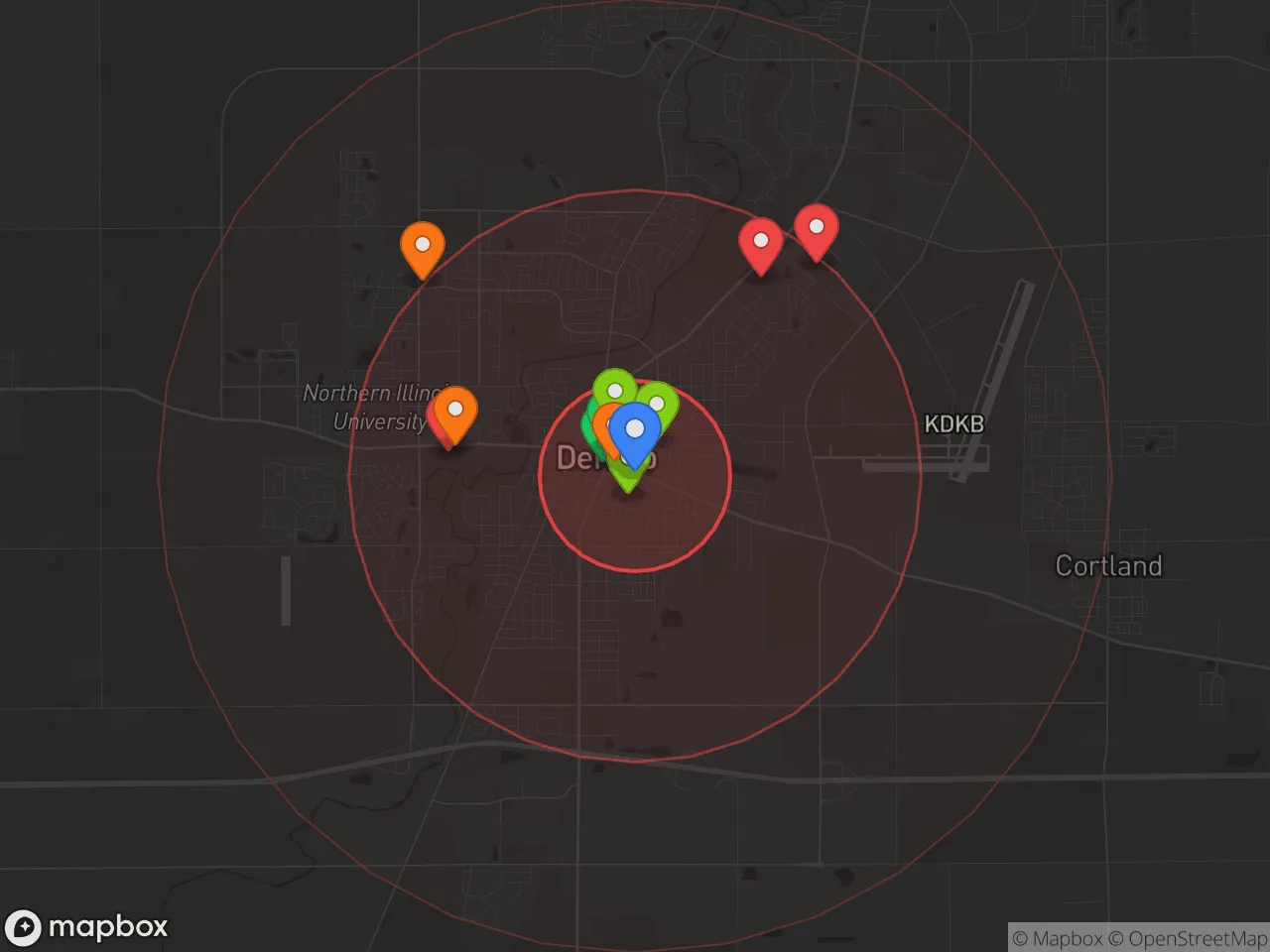
Hobbies
Explore the areaGroceries
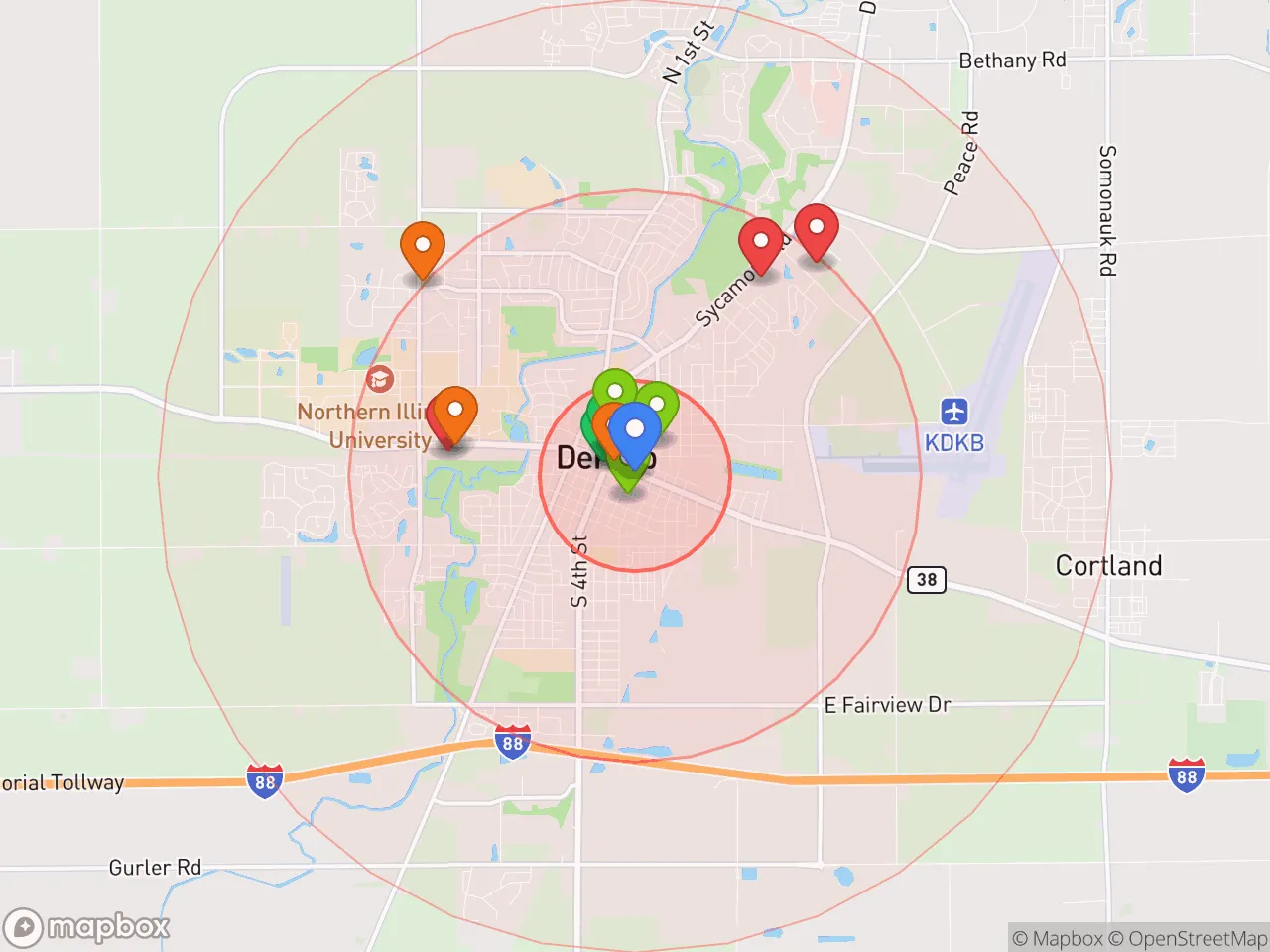
6 within 10 miles
Gas
20 within 10 miles
Hospital
4 within 20 miles
Airport
ORD — O'Hare International
Post Office
USPS — Dekalb, IL
Critical Amenities
Quality-of-Life Analysis
DeKalb, Illinois, offers a notably affordable quality of life that attracts a mix of Northern Illinois University students, young professionals, and families seeking lower costs than the Chicago metro area. With a cost-of-living index of 82 (18% below the U.S. average), the city provides a middle-class lifestyle that feels financially accessible compared to nearby suburbs like Naperville or Geneva. The population skews younger due to the university presence, but the city also supports a stable base of long-term residents employed in manufacturing, healthcare, and education.
Cost of living, housing affordability, and how DeKalb compares to nearby areas
DeKalb’s housing market is a primary draw for those priced out of the western Chicago suburbs. The median home value sits at $202,900, roughly half the median in Naperville ($450,000+) and significantly below the Illinois state median of about $250,000. Median rent is $1,030, making it one of the most affordable rental markets in DeKalb County. For context, a one-bedroom apartment in DeKalb typically rents for $800–$1,000, compared to $1,400+ in nearby St. Charles or Batavia. The average commute of 23 minutes is manageable, with most residents driving to jobs at NIU, Kishwaukee Hospital, or local manufacturers like 3M and Nestlé. However, those commuting to Chicago (about 65 miles east) face a 90-minute drive or a Metra train ride from the Elburn station, 15 miles south. Property taxes in DeKalb County are moderate for Illinois, averaging around 2.1% of assessed value, which is lower than in Cook County but higher than in many rural downstate areas.
What daily life is like for families, students, and professionals
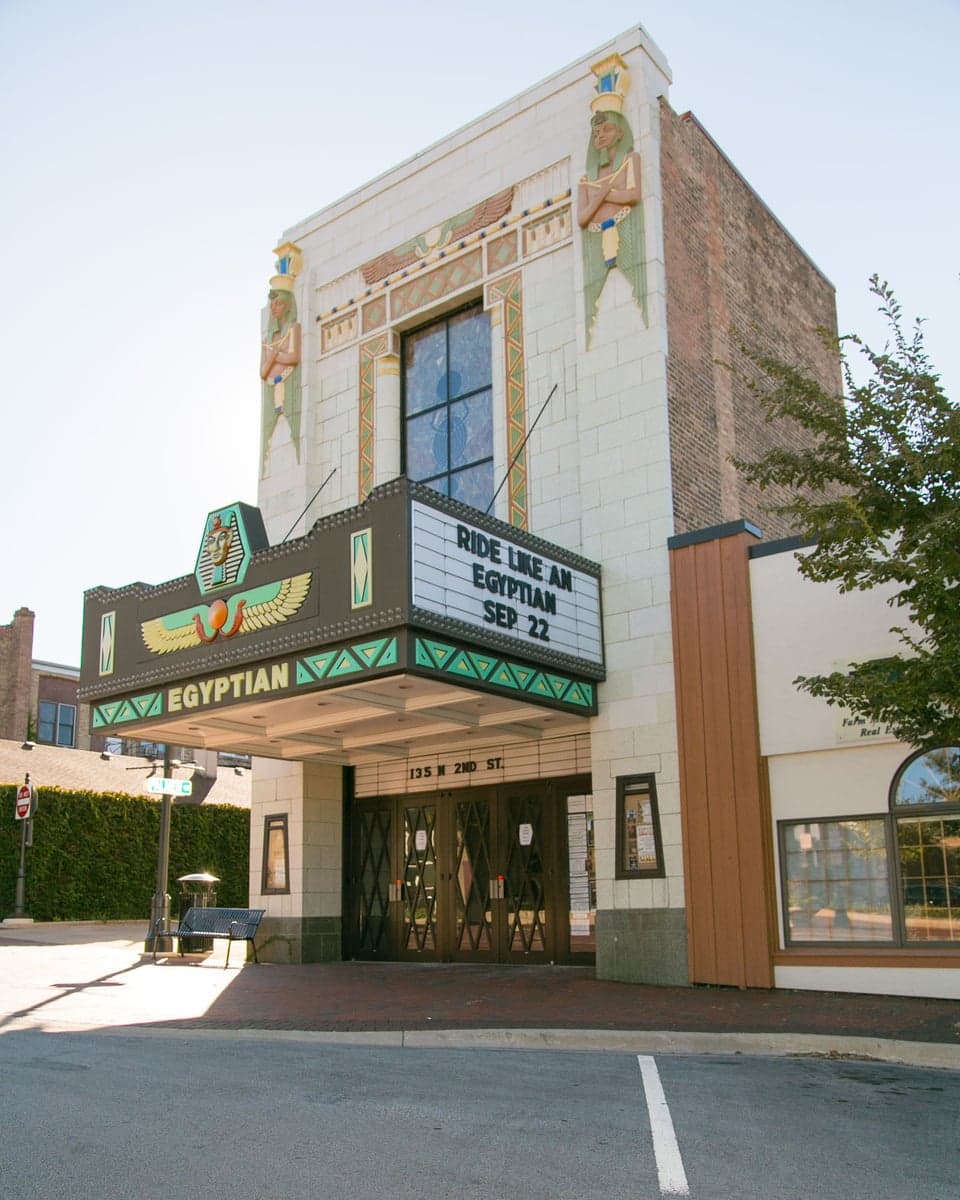
Daily life in DeKalb revolves around the university calendar and a compact downtown core. Northern Illinois University anchors the local economy and culture, offering public events, Division I athletics, and the NIU Art Museum. For families, the DeKalb School District 428 includes several elementary schools, Huntley Middle School, and DeKalb High School, which has an 86% graduation rate and offers dual-credit programs. The city’s park district maintains 20+ parks, including the 40-acre Hopkins Park with a pool, disc golf, and the DeKalb County History Center. Grocery access is solid, with a Meijer, Aldi, and Walmart Supercenter, but dining leans toward fast-casual chains and local spots like Fatty’s Pub & Grille. The downtown area has seen reinvestment, with the Egyptian Theatre (a restored 1920s movie palace) hosting concerts and films. For outdoor recreation, the 12-mile Great Western Trail runs through DeKalb, connecting to Sycamore and points west. The city’s crime rate is slightly above the national average, with property crime being the primary concern, though violent crime is concentrated near the university campus and downtown bars.
DeKalb is best suited for budget-conscious buyers, university-affiliated individuals, and those who value a slower pace with easy access to Chicago’s job market. The low cost of housing and short commute make it a practical choice for remote workers or NIU faculty who want a house without a six-figure mortgage. Families should weigh the school district’s performance against nearby Sycamore (which has higher-rated schools but slightly higher home prices). Retirees may find the property tax burden manageable, but the city lacks the upscale medical facilities and cultural amenities of larger suburbs. For students and young renters, the $1,030 median rent and walkable campus area offer a low-stress entry into independent living. Overall, DeKalb delivers a functional, affordable base for those who prioritize financial breathing room over prestige or nightlife.

Crime in Dekalb, IL
Generally safer than 59% of comparable U.S. locations.
Violent CrimeViolent Crime Analysis
Property CrimeProperty Crime Analysis
Crime Analysis
DeKalb, Illinois, presents a mixed safety profile for potential residents. The city’s violent crime rate of 266.3 incidents per 100,000 residents is notably lower than the national average, but its property crime rate of 2,191.9 per 100,000 is significantly higher, creating a situation where theft and burglary are the primary public safety concerns. As a small city within the Chicago metropolitan area, DeKalb’s crime dynamics are influenced by broader regional trends and local justice policies that warrant careful consideration.
Crime in context
DeKalb’s violent crime rate sits well below the U.S. average of roughly 380 per 100,000, making it safer than many comparably sized Illinois towns. However, the property crime rate is nearly 30% higher than the national figure of about 1,700 per 100,000. This disparity means residents face a higher-than-average risk of vehicle break-ins, residential burglaries, and theft from porches or yards. The city’s proximity to Interstate 88 and its role as a college town (home to Northern Illinois University) contribute to transient populations that can elevate property crime opportunities. Property crime in DeKalb is roughly 1.3 times the national average, while violent crime is about 0.7 times the national average.
What residents experience
Daily life in DeKalb involves a heightened awareness of property security. Residents commonly report package theft, bicycle theft, and unlocked vehicle entries, particularly near campus and in older neighborhoods near downtown. Violent incidents are less frequent but tend to cluster in specific areas, often linked to disputes or late-night activity near bars. The local criminal justice system operates within a county (DeKalb County) that has seen a shift toward progressive prosecution policies in recent years. Progressive district attorneys and judges in the region have prioritized diversion programs and reduced cash bail, which critics argue leads to repeat offenders cycling through the system without meaningful accountability. For residents, this can translate into frustration when known property criminals are released quickly, potentially re-offending in the same neighborhoods. The city’s police department maintains a visible presence, but limited resources mean response times for non-emergency property crimes can be slow.
Neighborhood-level variation is significant. The area immediately surrounding the NIU campus experiences the highest concentration of property crime, driven by student turnover and foot traffic. West-side neighborhoods near DeKalb High School and newer subdivisions generally report lower crime rates, while older housing stock east of Annie Glidden Road sees more incidents. The downtown core has moderate crime levels, with occasional disturbances from bar crowds. Prospective residents should research specific block-level data through the DeKalb Police Department’s online crime map, as a home just a few streets away from a high-crime corridor can offer a markedly different safety experience. Overall, DeKalb requires a practical approach to home security and vehicle locking habits, but violent crime is not a dominant concern for most residents.
* Values derived from national, state, county, city and local statistics and may differ in a specific area. Last updated: 2026-04-29T23:57:08.000Z
Narrative content on this page is AI-generated and may contain mistakes. Verify any details that matter before acting on them.
ReloMaps may earn a commission from affiliate links at no extra cost to you.

