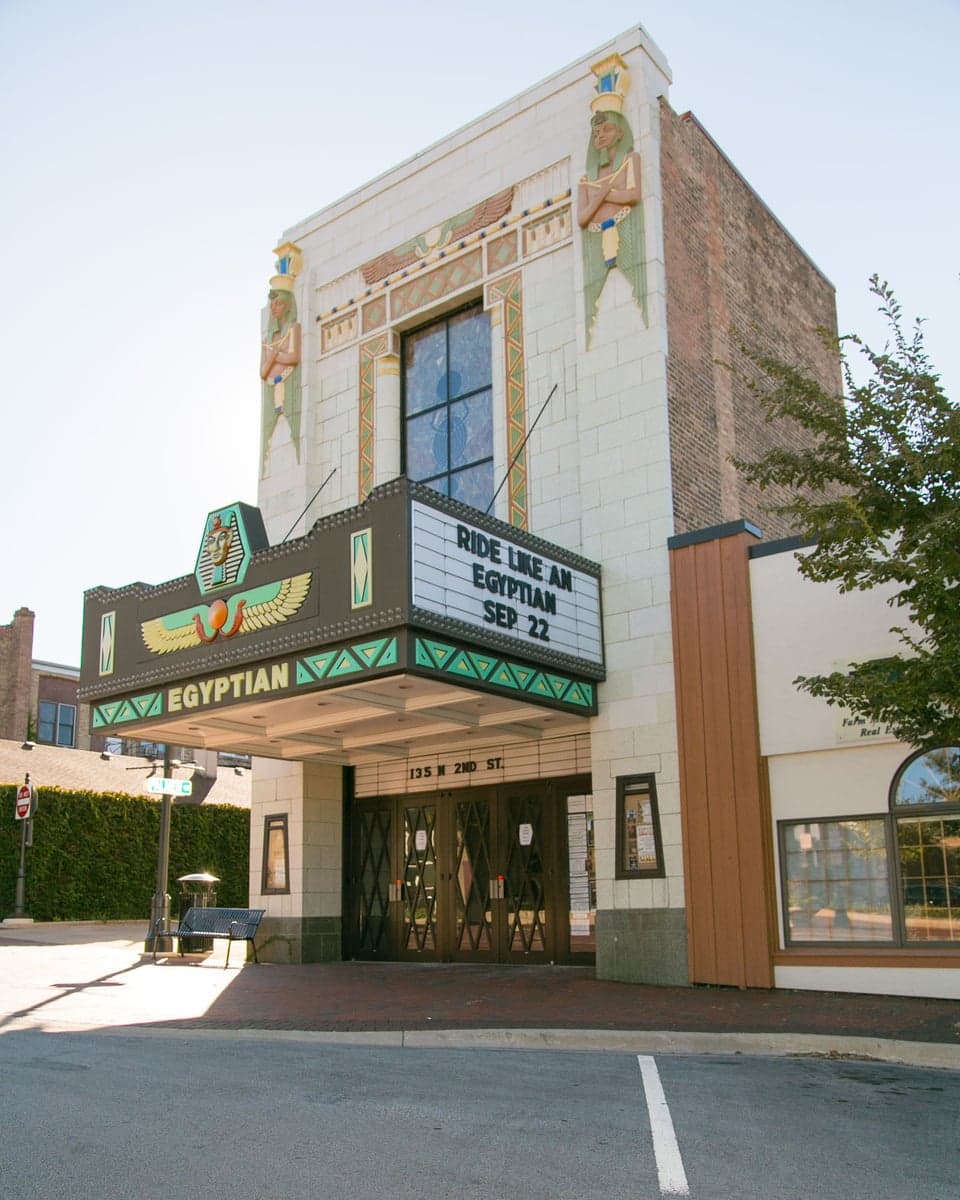
Photo: Wikipedia
Political ClimatePolitical Climate in Dekalb, IL
District shown is the primary district for this city’s centroid. Cities may span multiple districts.
Local Political AnalysisPolitical Analysis of Dekalb, IL
Dekalb, Illinois, has a political climate that leans left, with a Cook PVI of D+3, meaning it votes about three points more Democratic than the national average. But if you’ve lived here as long as I have, you know that’s a relatively recent shift—the area used to be a lot more balanced, with a strong conservative undercurrent that’s still visible in the surrounding farm country. The city itself has drifted steadily leftward over the past decade, driven largely by Northern Illinois University’s influence and an influx of younger, more progressive residents. That trajectory is concerning if you value limited government and personal freedoms, because the local policy trends suggest more regulation and higher taxes are on the horizon.
How it compares
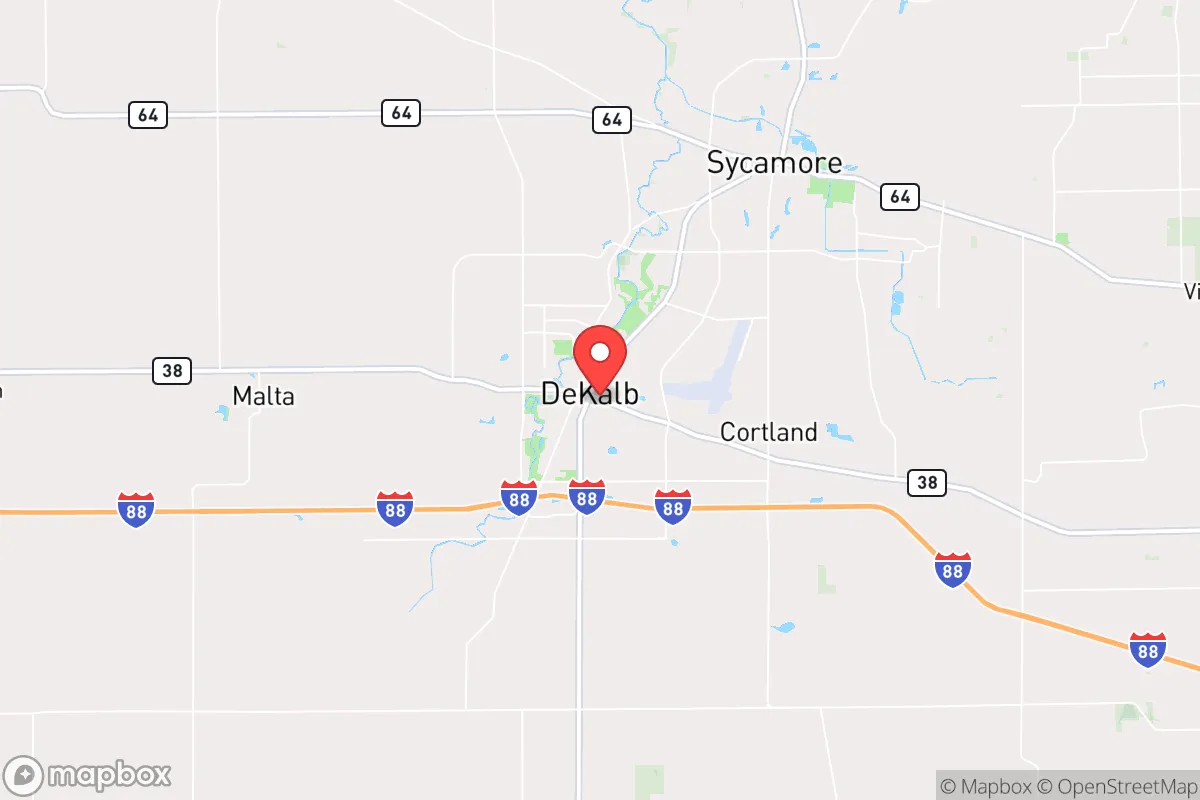
Drive just 15 minutes east to Sycamore, and you’ll feel a different political vibe—it’s more of a toss-up, with a stronger Republican presence in local elections. Head south to Waterman or Cortland, and you’re in deep-red territory where folks are skeptical of the kind of progressive policies you see in Dekalb. Even within DeKalb County, the contrast is stark: the rural townships consistently vote conservative, while the city of Dekalb itself is the Democratic stronghold. That divide means state-level representation often leans left because of the city’s population weight, but local county board seats still have a conservative voice. The real worry is how the city council has been moving—things like zoning restrictions and spending on social programs that feel like government overreach into how you run your property or your business.
What this means for residents
For a conservative-leaning resident, the practical impact is that you’ll see more ordinances that nibble at your personal freedoms. There’s been talk of stricter rental regulations, which sounds like a small thing until you realize it’s a foot in the door for more housing controls. Property taxes are already high in Illinois, and Dekalb’s progressive tilt means there’s little pushback on new spending measures—school referendums and city bond issues pass more easily here than in neighboring towns. If you’re a gun owner, you’ll want to keep an eye on local debates, because the city council has shown sympathy for state-level restrictions that go beyond what rural counties tolerate. The upside? You’ve still got a community of like-minded folks in the outlying areas, and the local Republican party is active, even if it’s outnumbered in city hall.
One cultural distinction that stands out is how Dekalb handles public events and public space. The city has embraced things like Pride parades and sustainability initiatives that feel more like social engineering than community building. It’s not that anyone’s against neighborliness, but there’s a sense that the local government is pushing a specific worldview rather than just keeping the streets clean and the lights on. Long-term, if the trend continues, Dekalb could become a place where conservative residents feel like outsiders in their own town—kind of like what’s happened in larger Illinois cities. For now, it’s still a decent place to raise a family if you keep your head down and your vote informed, but the political winds are blowing in a direction that should give any freedom-minded person pause.

State Political ClimatePolitical Climate in Illinois
State Political AnalysisPolitical Environment in the State
Illinois is a deeply blue state in statewide elections, but it’s far from a monolith. The Democratic coalition is powered by Chicago and its inner suburbs, while the rest of the state—downstate and the collar counties—has been trending red or purple for the past two decades. Over the last 10-20 years, the state has shifted left on social and fiscal policy, driven by a supermajority in Springfield that has passed progressive legislation on taxes, guns, and education. But the map tells a different story: outside Cook County, voters have been pushing back, and the rural-urban divide has never been sharper.
Urban vs. rural divide
The political map of Illinois is essentially two states. Chicago and its immediate suburbs—places like Evanston, Oak Park, and Naperville—vote overwhelmingly Democratic. Cook County alone delivers about 40% of the state’s total vote, and it’s reliably blue by 30-40 points. The collar counties (DuPage, Lake, Kane, Will, McHenry) have been trending blue in recent cycles, especially in suburban areas like Arlington Heights and Schaumburg, where college-educated voters have shifted left. But drive an hour west or south, and the landscape changes fast. Downstate cities like Peoria, Springfield, and Carbondale are more purple, but the rural counties—think Effingham, Macoupin, and Williamson—vote Republican by 30-50 points. The 2020 presidential election saw Illinois’s 102 counties split 94-8 for Trump in terms of county wins, but Biden won the state by 17 points thanks to Chicago’s massive margins. That divide is only widening: rural counties are losing population, while Chicago and its suburbs are growing, cementing the Democratic lock on statewide power.
Policy environment
Illinois’s policy environment is a mixed bag that leans heavily progressive. The state has a flat income tax rate of 4.95%, but a 2020 constitutional amendment to allow a graduated income tax was voted down by a wide margin—a rare win for fiscal conservatives. Property taxes are among the highest in the nation, averaging over 2% of home value, which is a major pain point for homeowners in places like Lake Forest and Naperville. The regulatory posture is business-friendly in some sectors (agriculture, logistics) but hostile in others (energy, firearms). Education policy is dominated by the Chicago Teachers Union, which has pushed for progressive funding formulas and social-emotional learning mandates. On election law, Illinois has no voter ID requirement, automatic voter registration, and same-day registration—policies that conservatives argue undermine election integrity. The state also has a sanctuary state law (the TRUST Act), which limits local cooperation with federal immigration enforcement. For a conservative-leaning family, the policy environment feels like a one-party state where Chicago’s priorities override the rest of Illinois.
Trajectory & freedom
Over the last five years, Illinois has moved decisively toward less personal freedom in several key areas. The Firearm Owners Identification (FOID) Card Act was tightened in 2023 with the Protect Illinois Communities Act, which banned the sale of many semi-automatic rifles and high-capacity magazines. This was a major flashpoint: downstate gun owners in places like Marion and Murphysboro feel their Second Amendment rights are being trampled by Chicago lawmakers. On parental rights, the state passed a law in 2024 requiring schools to allow students to use preferred names and pronouns without parental consent, which has sparked lawsuits and school board battles in conservative suburbs like Oswego and Yorkville. Medical autonomy took a hit with the 2023 expansion of abortion access, removing parental notification requirements for minors. On the tax front, the state’s pension debt—over $140 billion—means property taxes are likely to keep rising, eating into personal financial freedom. The trajectory is clear: Illinois is becoming less free for gun owners, parents, and taxpayers, while expanding government control over social and medical decisions.
Civil unrest & political movements
Illinois has seen its share of civil unrest, particularly in Chicago, where the 2020 George Floyd protests turned into widespread looting and property damage in the Loop and along the Magnificent Mile. Since then, organized activist movements have been active on both sides. On the left, groups like the Chicago Alliance Against Racist and Political Repression push for police reform and defunding, while the Illinois Coalition for Immigrant and Refugee Rights advocates for sanctuary policies. On the right, the Illinois Family Institute and local gun rights groups like the Illinois State Rifle Association have been vocal, organizing rallies at the state capitol in Springfield. Immigration politics are a constant flashpoint: the TRUST Act has led to tensions between Chicago and downstate communities like Cairo, where border enforcement is a hot-button issue. Election integrity controversies have simmered since 2020, with conservative groups challenging mail-in ballot procedures in counties like McHenry and DuPage. A new resident in a place like Champaign or Bloomington would notice the political polarization in local news and school board meetings, where debates over curriculum and library books are increasingly common.
Projection
Looking ahead 5-10 years, Illinois is likely to become even more Democratic at the state level, but with growing internal friction. Demographic trends favor the blue coalition: Chicago’s population is stabilizing after pandemic losses, while the collar counties continue to diversify and shift left. Downstate, rural counties will keep losing people, reducing their political clout. The state’s pension crisis will force either massive tax hikes or service cuts—neither of which will be popular. The gun ban will likely face legal challenges that could reach the Supreme Court, but for now, it’s the law. In-migration from blue states like California and New York is modest, but it’s concentrated in Chicago’s suburbs, reinforcing the progressive tilt. For a conservative-leaning family moving in now, expect to see more progressive policies on education, taxes, and guns, with limited ability to change them at the ballot box due to the Chicago-driven supermajority. The best bet for like-minded communities is in the outer collar counties (McHenry, Kendall) or downstate cities like Edwardsville and Quincy, where local governance can still reflect conservative values.
For a new resident, the bottom line is this: Illinois offers strong job markets in Chicago and its suburbs, with world-class universities and healthcare, but it comes with high taxes, a restrictive gun environment, and a political system that prioritizes Chicago’s agenda. If you’re willing to live in a red pocket like the Metro East area near St. Louis or the far western suburbs, you can find a community that shares your values—but you’ll still be subject to state laws that feel increasingly out of step with conservative principles. It’s a trade-off: economic opportunity versus personal freedom, and the balance is tipping in favor of the latter elsewhere.
* Values derived from national, state, county, city and local statistics and may differ in a specific area. Last updated: 2026-04-29T23:57:08.000Z
Narrative content on this page is AI-generated and may contain mistakes. Verify any details that matter before acting on them.
ReloMaps may earn a commission from affiliate links at no extra cost to you.

