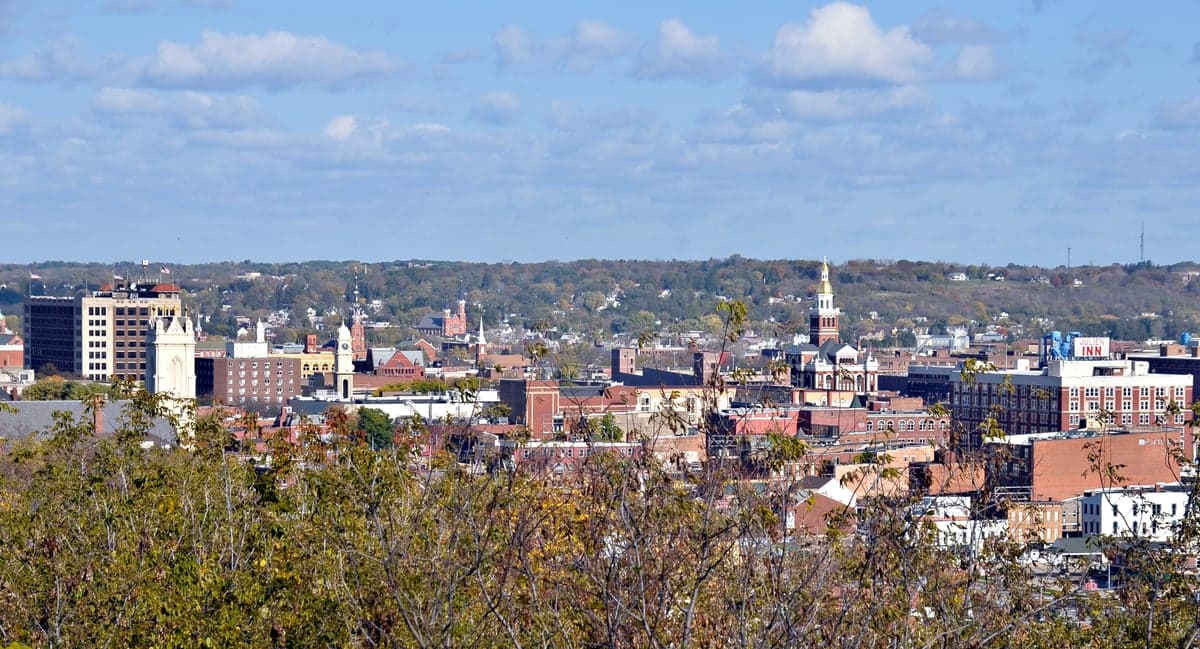
Photo: Wikipedia
Personal Sovereignty in Dubuque, IA
Viable for self-reliance. Generally workable, though some barriers may limit total independence.
What does Personal Sovereignty tell us?
Personal Sovereignty measures your capacity for self-reliance and independence with minimal government friction. Higher scores mean fewer barriers between you and the way you want to live... but it assumes you have the space you need and good neighbors.
What does this tell us?
Personal Sovereignty measures your capacity for self-reliance and independence with minimal government friction. Higher scores mean fewer barriers between you and the way you want to live... but it assumes you have the space you need and good neighbors.
State Policy
Energy independence: Importer (50% of energy produced in-state)
Personal Liberty
Homesteading

Personal Liberty Analysis
Dubuque, Iowa, offers a notably higher degree of personal sovereignty than many of its Midwestern peers, particularly when measured against the regulatory climates of neighboring Illinois and Wisconsin. For the individual or family operating from a survivalist or prepper mindset, the city sits in a state that has consciously preserved a legal framework favoring self-reliance, property rights, and limited government intrusion. While no location is a libertarian utopia, Dubuque’s combination of low taxes, permissive gun laws, and practical homesteading opportunities creates a strategic buffer against the kind of overreach that increasingly defines life in coastal and Great Lakes states.
Tax burden and regulatory posture: how Dubuque compares to neighboring states
Iowa’s tax and regulatory environment is a clear net positive for those seeking to keep more of their own earnings and operate without excessive bureaucratic friction. The state has been aggressively flattening its income tax, with a 2022 law moving toward a single rate of 3.9% by 2026, a stark contrast to Illinois’s flat 4.95% rate that is paired with a massive unfunded pension liability and a reputation for fiscal instability. Property taxes in Dubuque County run around 1.5% of assessed value, which is moderate for the region but notably lower than the 2%+ rates common in many Illinois counties. Sales tax in Dubuque is 7%, a combination of state (6%) and local (1%) rates, which is competitive. More importantly, Iowa has no inheritance tax and no estate tax, allowing families to pass on property and savings without the state taking a cut. The regulatory posture in Dubuque is business-friendly but not lawless; zoning is enforced, but the city’s planning department is known for being pragmatic rather than obstructionist. For someone running a small-scale trade, a home-based business, or a preparedness-oriented side operation, the licensing and permitting burden is light compared to states like California or New York. The state’s right-to-work status further reinforces an environment where employment is voluntary and union membership is not a condition of work, a factor that appeals to those who view compulsory association as an infringement on personal liberty.
Self-defense and gun law specifics: what Iowa’s permitless carry means for you
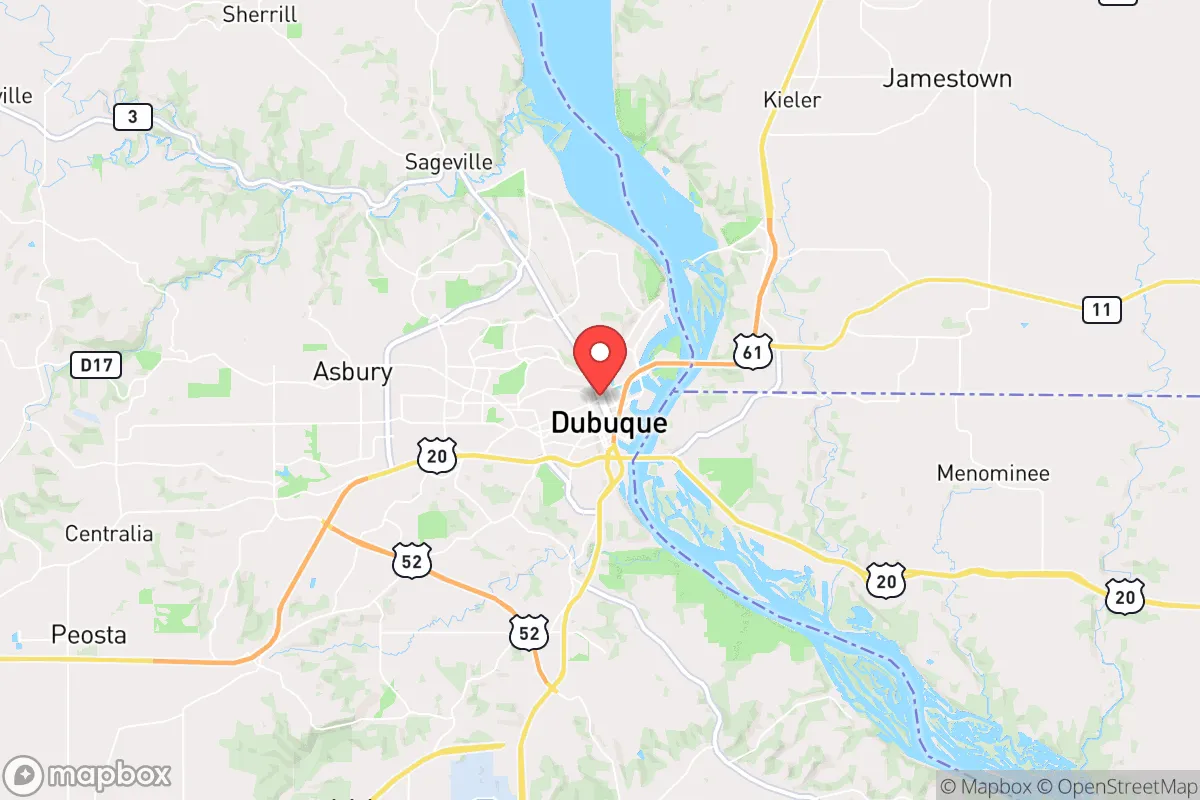
Iowa became a permitless carry state in 2021, meaning any law-abiding adult 21 or older can carry a concealed firearm without a permit, background check beyond the point of purchase, or training requirement. This is a significant sovereignty win. Dubuque sits directly on the border with Illinois, which still requires a Firearm Owner’s Identification (FOID) card and a separate concealed carry license with a 16-hour training course, and Wisconsin, which requires a permit for concealed carry but has no permit for open carry. In Dubuque, you can carry openly or concealed without asking the government for permission. The state also has strong preemption laws, meaning Dubuque cannot pass its own gun ordinances stricter than state law—a critical protection against local overreach. Stand-your-ground laws are in effect, with no duty to retreat in any place you are lawfully present. Castle doctrine protections apply to your home, vehicle, and place of business. There is no state-level assault weapons ban, no magazine capacity limit, and no registry. For the prepper, this means you can stockpile, train, and carry without the state tracking your inventory or requiring you to justify your choices. The only notable restriction is that private sales do not require a background check, but federal law still applies to licensed dealers. If you cross the river into Illinois, you lose nearly all of these protections—a fact that makes Dubuque a strategic outpost for those who view the Second Amendment as a non-negotiable right.
Self-reliance and homesteading viability: lot sizes, zoning, and off-grid feasibility
Dubuque’s geography and zoning code offer real opportunities for self-reliance, though the city itself is more constrained than the surrounding rural areas. Inside the city limits, standard residential lots range from 5,000 to 10,000 square feet, which is enough for a substantial garden, a small chicken coop, and rainwater collection, but not for livestock or large-scale food production. The city’s zoning code does allow for backyard chickens in most residential districts, with a permit and a limit of six hens (no roosters). Beekeeping is also permitted. However, off-grid living inside city limits is effectively impossible; the city requires connection to municipal water and sewer, and building codes mandate grid-tied electrical service for new construction. The real sovereignty play is in the unincorporated areas of Dubuque County or the adjacent rural townships, where lot sizes of one to five acres are common and affordable—often under $50,000 for raw land. In those areas, you can install solar panels, dig a well, and use a septic system without significant pushback. The county’s building code is minimal outside city limits, and there are no county-level restrictions on rainwater harvesting or composting toilets. For the serious prepper, the ideal strategy is to live in Dubuque for the economic opportunities and proximity to services, while owning a rural parcel within 20 minutes for long-term storage, livestock, and a retreat location. The Mississippi River provides a reliable water source, and the surrounding bluffs offer natural concealment and defensible terrain.
Personal liberties: parental rights, medical autonomy, speech, and property
Iowa has been a battleground for parental rights, and the current legal landscape is favorable for those who believe parents should have primary authority over their children’s education and medical decisions. The state passed a Parents’ Bill of Rights in 2021, which requires schools to notify parents of any medical or mental health services offered to students and prohibits instruction on sexual orientation and gender identity in kindergarten through sixth grade. This is a direct check on the kind of school-based overreach that has become common in blue states. Medical autonomy is more mixed; Iowa does not have a state-level vaccine mandate for adults, and COVID-era mandates were lifted early, but the state does require certain vaccinations for school attendance (with medical and religious exemptions available). The state has also passed restrictions on abortion, banning the procedure after a heartbeat is detected (around six weeks), which aligns with the values of many conservative readers but also signals that the state is willing to regulate medical decisions—a double-edged sword for those who want full bodily autonomy. Speech protections are strong; Iowa has no hate speech laws that criminalize political or religious expression, and public universities have been directed to uphold free speech principles. Property rights are robust, with strong eminent domain protections and no statewide rent control. The state’s approach to property is generally “use it as you see fit, as long as it doesn’t harm your neighbor,” which is the closest approximation to a sovereignty-friendly philosophy in the region.
Overall, Dubuque offers a sovereignty profile that is significantly stronger than what you will find in Illinois, Wisconsin, or Minnesota, but it is not a free-for-all. The city itself is more regulated than the surrounding county, and Iowa’s state government, while conservative-leaning, still imposes taxes, licensing, and building codes that a hardcore survivalist would find intrusive. However, for the strategic relocator who wants a balance of economic opportunity, legal protections, and the ability to live a self-reliant life without constant government interference, Dubuque is one of the better options in the Upper Midwest. The key is to use the city as a base while securing rural land for the heavy lifting of preparedness. Compared to the regulatory hellscapes of the coasts or the declining industrial states of the Great Lakes, Dubuque feels like a place where the individual still has room to breathe, plan, and defend their own.

* Values derived from national, state, county, city and local statistics and may differ in a specific area. Last updated: 2026-04-19T08:38:11.000Z
Narrative content on this page is AI-generated and may contain mistakes. Verify any details that matter before acting on them.
ReloMaps may earn a commission from affiliate links at no extra cost to you.

