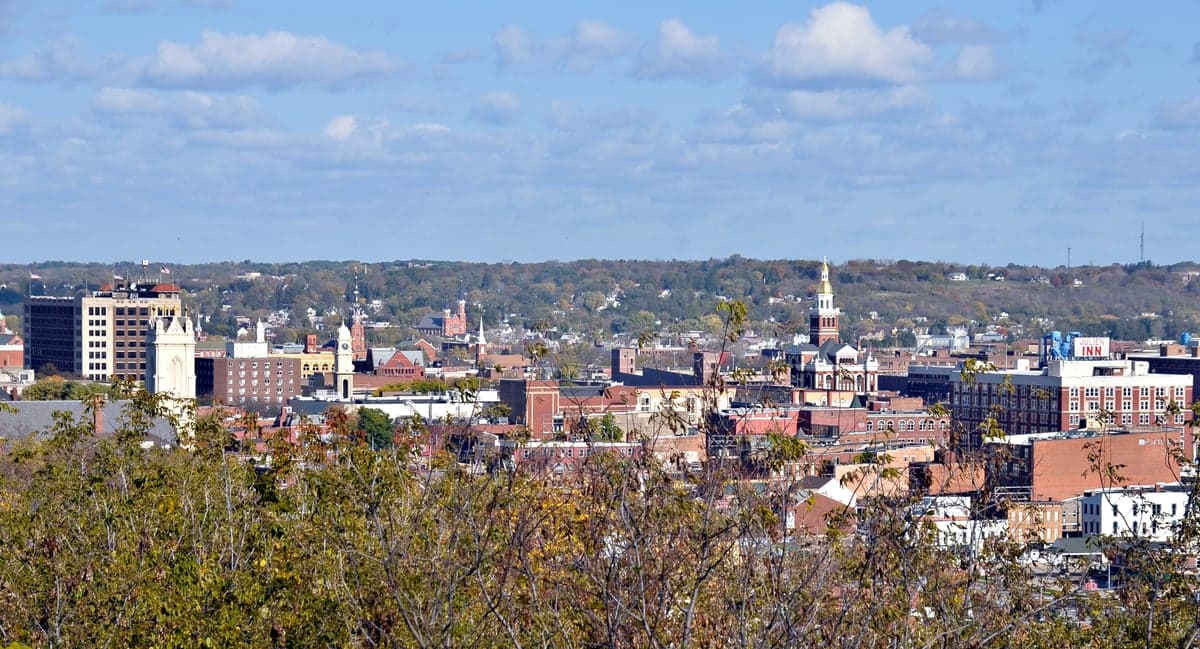
Photo: Wikipedia
Strategic Assessment of Dubuque, IA
Meaningful friction. Expect exposure to either population pressure, blast zones, or natural disaster risk. Consider buying a retreat property.
What does the Strategic Assessment tell us?
Our Strategic Assessment grades tactical survivability of an area. Major population centers, military targets, fallout zones, natural disasters, and border exposure all drive risk — lower exposure means a more defensible position in a crisis.
This is heavily inspired by Joel Skousen's Strategic Relocation book. Highly recommended you checkout the book ($)What does this tell us?
Our Strategic Assessment grades tactical survivability of an area. Major population centers, military targets, fallout zones, natural disasters, and border exposure all drive risk — lower exposure means a more defensible position in a crisis.
This is heavily inspired by Joel Skousen's Strategic Relocation book. Highly recommended you checkout the book ($)Strategic Pillars

Key Distances
Regional Safe Places
Below is our recommended "safe zones" in Iowa and the surrounding area based on our strategic heuristics. For most people, it's unrealistic to live in a “safe zone” full-time due to work, family or other personal reasons. They tend to be more rural. However, many of these areas are perfect for second homes and retreat properties that double as a vacation home or even a short-term rental.
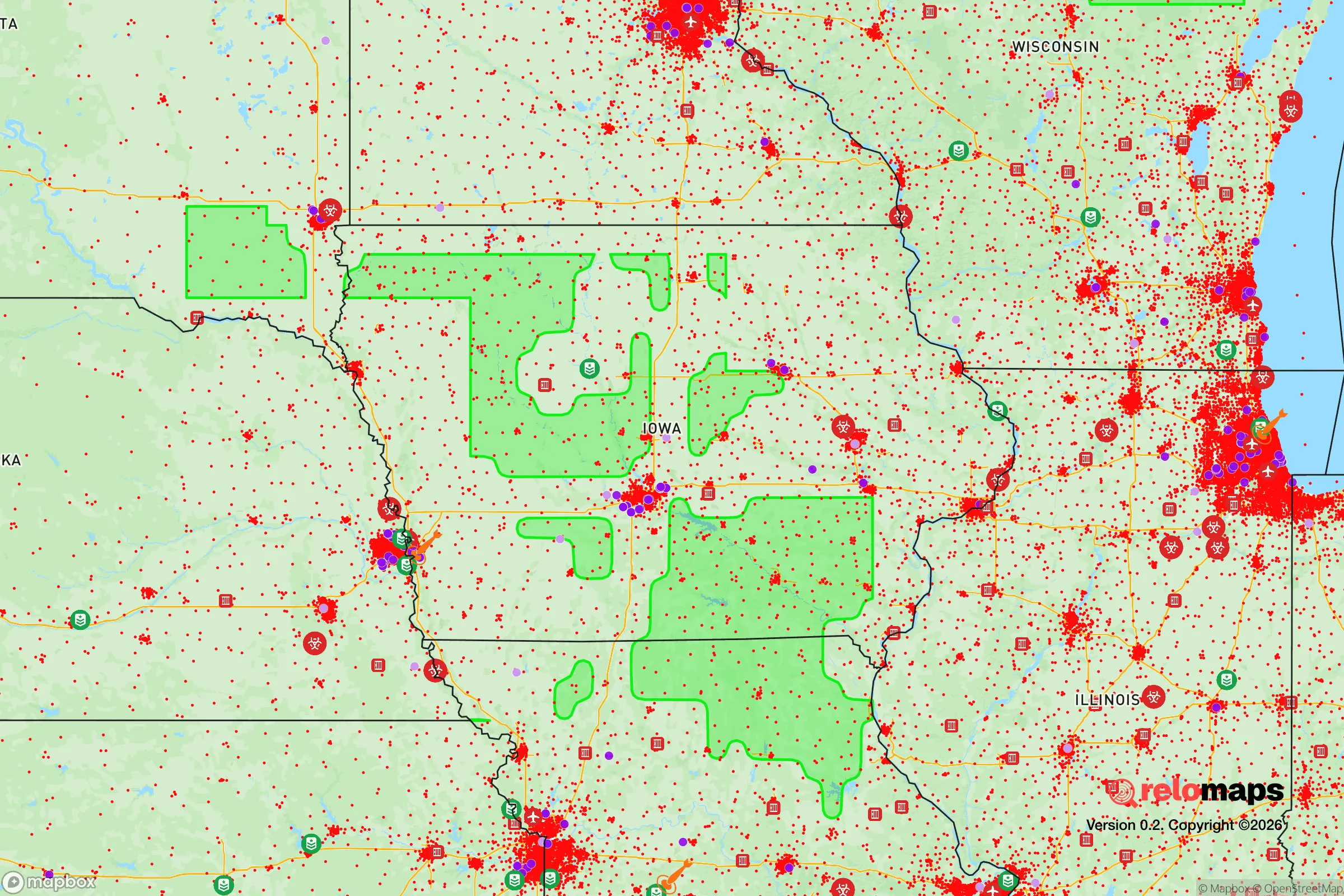
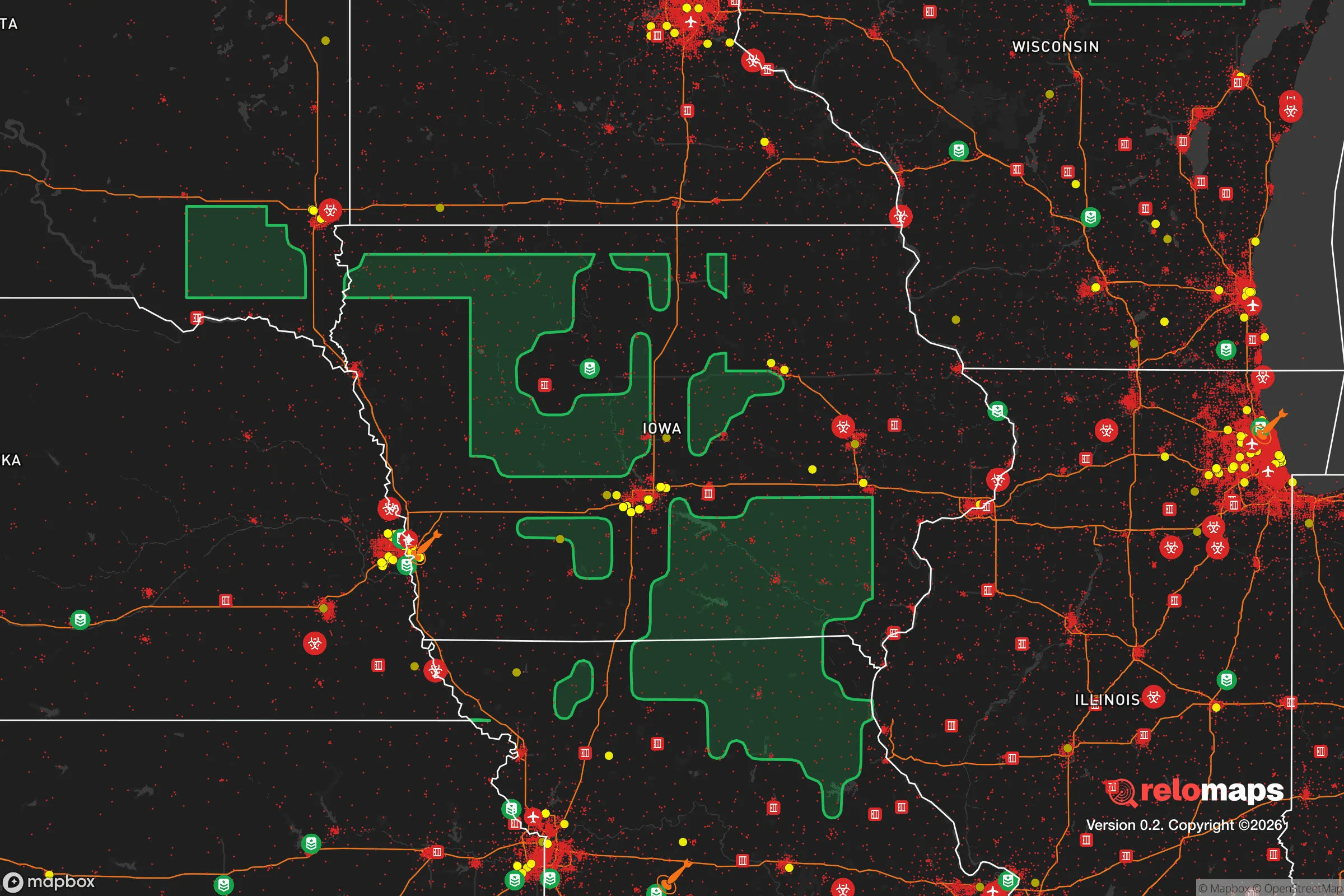


Important Note: For informational purposes only. This does not mean nothing bad ever happens in the green zones. Please use common sense. This is based on public data and modeled with AI. We tried to take a conservative approach but mistakes happen. We update this regularly as new information becomes available.
Solar Generator Recommendations
Backup power matters more here than in safer locations. We've picked three solar generators across budgets and capacity tiers — start with the budget unit if you only need a few essentials, or step up if you want to run a fridge and HVAC for days at a time.

Jackery Portable Power Station Explorer 300
Budget OptionPower on the Go: Weighing only 11 lbs, it's convenient to set up and store with book-sized foldable solar panels

BLUETTI Portable Power Station AC180
Designed for both indoor and outdoor scenarios, AC180 is highly capable as it has a robost capacity and continuous output power.

EF ECOFLOW DELTA Pro Ultra Power Station
Upgraded PickEcoFlow DELTA Pro Ultra is a whole-home energy system designed to grow with your family. Integrated with the Smart Home Panel 2, it scales to meet your evolving energy needs — keeping your home powered, intelligent, and secure through every stage of life.
We earn a commission, at no additional cost to you.
Strategic Assessment Analysis
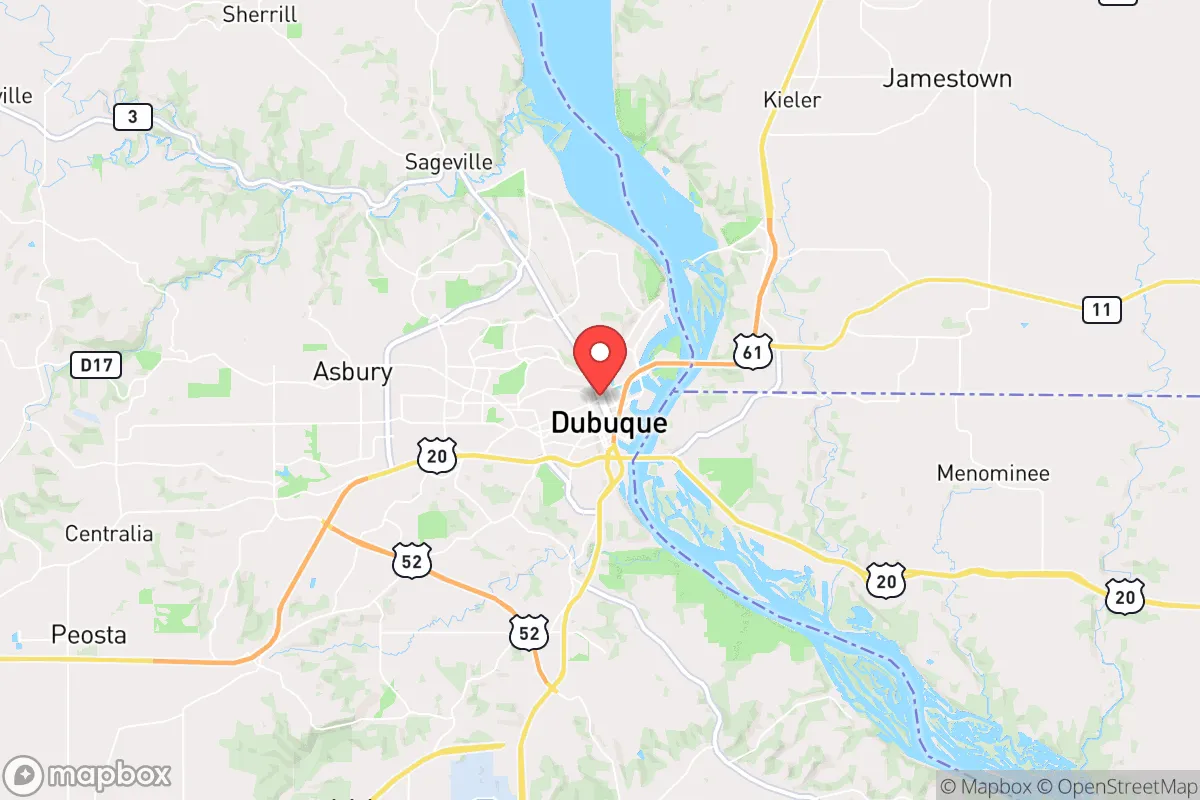
Dubuque, Iowa, sits on the western bank of the Mississippi River, a position that offers a blend of geographic insulation and practical access that is hard to find in the current national climate. While the city itself is a small urban center of roughly 58,000 people, its strategic value lies in its location at the junction of Iowa, Illinois, and Wisconsin, providing multiple escape corridors and supply routes without being a major population magnet. For a relocator thinking about long-term stability, Dubuque’s resilience comes from its relative isolation from the worst of the coastal chaos, its working-class industrial base, and a community that hasn’t fully bought into the progressive experiments that have gutted larger cities. This is not a prepper’s paradise, but it is a solid, defensible base of operations for someone who wants to be close enough to resources yet far enough from the blast zones and the mobs.
Geographic position and natural advantages for long-term security
Dubuque’s geography is its first and strongest card. The city is built into the steep bluffs of the Mississippi River valley, which provides natural defensibility—elevation advantages, limited approach points, and a river barrier to the east. The surrounding Driftless Area, a region that escaped the flattening of the last Ice Age, offers rugged terrain, deep valleys, and abundant springs. This means water is not a question mark here; the city draws from the Mississippi and from deep aquifers in the limestone bedrock, and rural properties often have their own wells. The soil in the Driftless is rich, and the growing season, while not long, is reliable enough for serious gardening and small-scale farming. For a relocator, this means you can secure a property with a well, a south-facing slope for solar, and enough timber for heating and construction without driving hours from a supply hub. The city’s position also puts it within a two-hour drive of Madison, Milwaukee, and the Quad Cities, but those are secondary concerns—the primary advantage is that Dubuque is not on any major interstate that funnels crisis traffic. US-20 and US-151 are two-lane highways for long stretches, easily blocked or monitored if needed.
Risks, exposures, and proximity to fallout-relevant landmarks
No location is a fortress, and Dubuque has its share of liabilities. The most obvious is the Mississippi River itself—while a resource, it is also a flood risk. The city has extensive flood walls and levees, but a major breach or a prolonged power outage during a flood event could isolate neighborhoods and compromise infrastructure. More concerning from a strategic perspective is the proximity to potential fallout targets. Dubuque is roughly 70 miles from the Quad Cities, which host the Rock Island Arsenal—a major military manufacturing and logistics hub. In a conflict scenario, that facility is a high-value target. Additionally, the city is about 100 miles from the Clinton and Byron nuclear power plants in Illinois. While not immediate blast zones, prevailing winds from the west mean fallout from a strike on the Arsenal or a plant accident could drift over Dubuque. The city itself has no major military bases, no refineries, and no major data centers, which is a double-edged sword: it reduces the likelihood of being a direct target, but it also means the local economy is not wired for rapid crisis response. The John Deere works in Dubuque is a heavy machinery plant—valuable for post-collapse rebuilding, but also a potential target for sabotage or seizure during civil unrest.
Practical resilience for a relocator: food, water, energy, and defensibility
For a single individual or a family looking to set up a resilient household, Dubuque offers a mix of urban convenience and rural access that is hard to beat in the Midwest. The city’s water supply is treated and reliable, but the real play is in the surrounding countryside. Within a 20-minute drive, you can find acreage with year-round springs and hardwood forests that can sustain a wood-fired boiler and a gravity-fed water system. The local food scene is surprisingly robust for a city this size—there are multiple farmers’ markets, a strong network of CSAs, and the Mississippi provides a protein source that is often overlooked. Hunting is legal and popular in the Driftless, with deer, turkey, and small game abundant. Energy resilience is more of a challenge. Dubuque is served by Alliant Energy, and the grid is average for the region—meaning it will go down in a derecho or ice storm, and restoration can take days. Solar is viable, but the city’s zoning and historic district regulations can be a headache; rural properties outside city limits are the better bet for off-grid setup. Defensibility at the household level is good: the terrain allows for natural chokepoints, and the local culture is still one of self-reliance. Gun ownership is common, and the sheriff’s department in Dubuque County is not the type to confiscate firearms during a declared emergency. The city itself has a low violent crime rate, but property crime has ticked up since 2020, driven by the usual suspects of drug addiction and economic dislocation.
The overall strategic picture for a conservative relocator
Dubuque is not a bug-out location for the end of the world—it is a working city with real infrastructure, real jobs, and real people who are not all on the same page politically. The county voted for Trump in 2020 and 2024, but the city itself is a blue dot in a red county, with a university (Loras and the University of Dubuque) that pulls in a more progressive element. That tension is actually a strength: it means the community has not become a monoculture, and there are still enough traditionalists to form a mutual assistance network. The biggest strategic risk is that Dubuque is too close to the I-80 corridor, which in a national emergency would become a refugee highway from Chicago and the East Coast. If you are looking for total isolation, head further north into the Driftless—places like Guttenberg or Elkader. But if you want a base with a hospital, a hardware store, a grain elevator, and a river that can move bulk goods, Dubuque is a solid choice. It is a place where you can live a normal life while quietly preparing for abnormal times, and that is the highest compliment a strategic assessment can give. The key is to buy outside the floodplain, get your own water and heat source, and make friends with the farmers and the machinists before the shelves go empty.

* Values derived from national, state, county, city and local statistics and may differ in a specific area. Last updated: 2026-04-19T08:38:11.000Z
Narrative content on this page is AI-generated and may contain mistakes. Verify any details that matter before acting on them.
ReloMaps may earn a commission from affiliate links at no extra cost to you.

