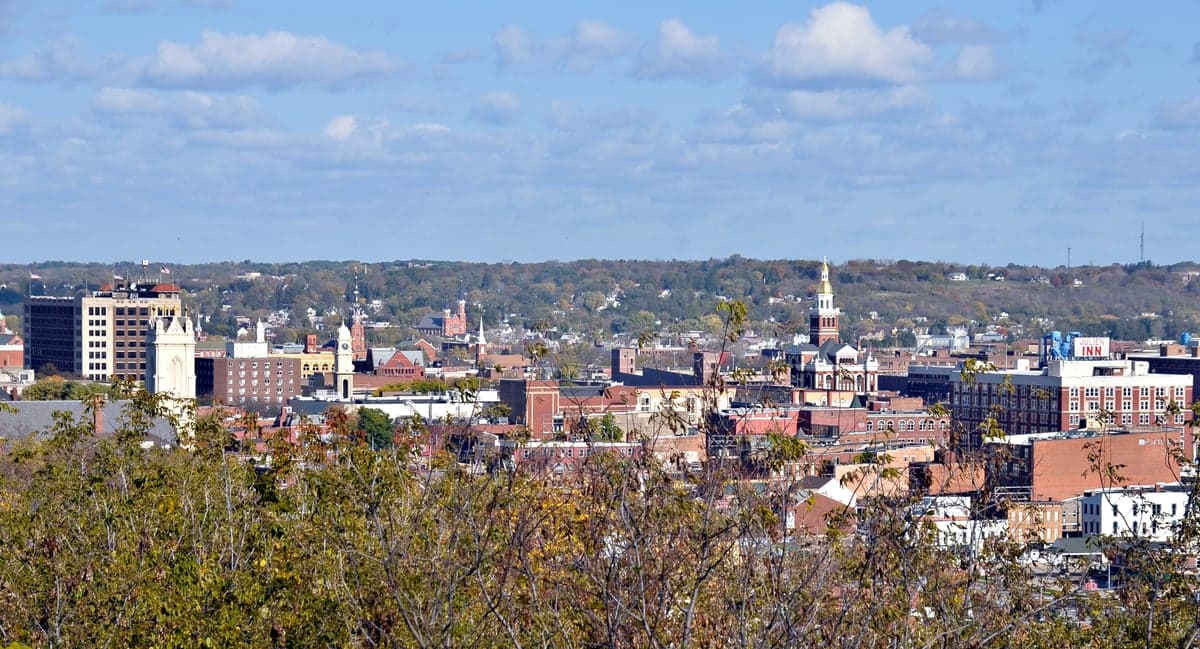


Photo: Wikipedia
Quality of Life in Dubuque, IA
A high quality of life with strong walkability, manageable living costs, healthy neighborhood signals, and solid amenity access.
What does Quality of Life tell us?
Quality of Life blends cost of living, nearby amenities, socioeconomic signals, and neighborhood character. City-level scores represent the whole municipality; individual neighborhoods can differ.
What does this tell us?
Quality of Life blends cost of living, nearby amenities, socioeconomic signals, and neighborhood character. City-level scores represent the whole municipality; individual neighborhoods can differ.
Cost of Living
24% below national average
The Real Cost of Living in Dubuque, IA for 2026
| Tier | Individual | Family (4) |
|---|---|---|
| Survival | $15k | $28k |
| Comfortable | $38k | $55k |
| Luxury | $116k+ | $180k+ |
| Elite (Top 5%) | $136k+ | $211k+ |
118%
The Area Signal
A metric tracking the socioeconomic signals of the area.


Hobbies
Explore the areaGroceries
2 within 10 miles
Gas
0 within 10 miles
Hospital
3 within 20 miles
Airport
ORD — O'Hare International
Post Office
USPS — Dubuque, IA
Critical Amenities
Quality-of-Life Analysis
Dubuque presents a notably affordable quality of life, with a cost of living index of 76—24 points below the national average—making it one of the more budget-friendly cities in the Midwest. The population skews toward working-class families, retirees, and young professionals drawn to the Mississippi River valley’s slower pace and lower financial pressure. Median household income hovers around $54,000, reflecting a community where modest means still afford a comfortable, stable lifestyle, especially compared to pricier regional hubs like Madison or the Quad Cities.
How housing costs and daily expenses compare to nearby cities
Housing is the standout advantage in Dubuque. The median home value sits at $193,100, roughly half the national median, while median rent is $943 per month—well below the $1,200+ averages in larger Iowa metros like Des Moines or Cedar Rapids. This affordability extends to utilities, groceries, and transportation, with the average commute clocking in at just 14.8 minutes, far under the national average of 26 minutes. Compared to neighboring Wisconsin cities like Platteville or Prairie du Chien, Dubuque offers similar housing costs but a wider range of amenities and job options, making it a practical choice for cross-border commuters. Property taxes in Dubuque County average about 1.5% of assessed value, slightly higher than rural Iowa counties but still manageable given the low home prices.
What daily life is like for families and professionals
Daily life in Dubuque revolves around a compact, walkable downtown along the Mississippi River, anchored by the historic Fenelon Place Elevator and the National Mississippi River Museum & Aquarium. The Dubuque Community School District serves roughly 10,000 students, with Wahlert Catholic High School and the University of Dubuque adding private and higher-education options. For families, the city offers over 30 parks, the Mines of Spain Recreation Area, and seasonal events like the Dubuque Farmers Market and the Julien Dubuque International Film Festival. Professionals benefit from a growing healthcare and manufacturing base, with major employers including John Deere Dubuque Works (employing about 2,000), MercyOne Dubuque Medical Center, and Sedgwick Claims Management Services. The average commute under 15 minutes means more time for outdoor recreation or local dining, though nightlife and cultural options are limited compared to larger cities—residents often drive 90 minutes to Cedar Rapids or 3 hours to Chicago for broader entertainment.
Dubuque is best suited for those who prioritize affordability, a tight-knit community feel, and access to nature over urban excitement. Retirees on fixed incomes, remote workers seeking low housing costs, and families wanting short commutes and good schools will find the city a strong fit. Young professionals or singles seeking vibrant nightlife or rapid career growth may feel constrained, but for anyone valuing financial breathing room and a slower rhythm, Dubuque delivers a quality of life that punches well above its cost index.

Crime in Dubuque, IA
Generally safer than 68% of comparable U.S. locations.
Violent CrimeViolent Crime Analysis
Property CrimeProperty Crime Analysis
Crime Analysis
Dubuque, Iowa, presents a mixed safety profile for potential residents. The city’s violent crime rate of 399.5 per 100,000 residents is notably higher than the national average, while its property crime rate of 1,524.9 per 100,000 sits slightly below the national benchmark. These figures place Dubuque in a position where careful neighborhood selection and awareness of local justice trends are essential for anyone considering a move.
Crime in context
When compared to statewide Iowa averages, Dubuque’s violent crime rate is significantly elevated—roughly double the state’s typical figure—while property crime aligns more closely with the rest of Iowa. Nationally, the city’s violent crime rate exceeds the U.S. average by about 15%, though its property crime rate is approximately 10% lower. This disparity suggests that while theft and burglary are less pressing concerns, violent offenses such as assault and robbery are more prevalent than in many peer communities. The city’s proximity to larger metro areas like the Quad Cities and its position as a regional hub for commerce and transportation may contribute to these dynamics.
What residents experience
Daily life in Dubuque involves a tangible awareness of safety, particularly in public spaces and during evening hours. The elevated violent crime rate means that incidents like aggravated assaults and robberies occur with enough frequency to warrant caution, especially in areas with higher foot traffic or near the city’s downtown core. Property crimes, while less common than the national norm, still affect residents through vehicle break-ins and residential burglaries. A key concern for newcomers is the local justice system’s orientation: Dubuque County, like many jurisdictions in the region, has seen a shift toward progressive prosecutorial policies. These approaches, while intended to reduce incarceration, can result in shorter sentences and more lenient plea deals for repeat offenders, potentially increasing the risk of recidivism and reducing deterrence. Readers should be aware that such policies may lead to a higher number of active criminals on the street, undermining public safety and victim justice.
Neighborhood-level variation is pronounced in Dubuque. Areas like the North End and parts of the West Side historically report higher crime concentrations, while neighborhoods such as Asbury and the southern reaches of the city near the Mississippi River tend to be quieter and safer. Prospective residents are advised to examine block-level crime maps and consult local law enforcement data for the most current trends, as conditions can shift with changes in policing strategy and judicial appointments. Overall, Dubuque demands a vigilant approach to personal safety, with particular attention to the broader implications of local criminal justice philosophy.
* Values derived from national, state, county, city and local statistics and may differ in a specific area. Last updated: 2026-04-19T08:38:11.000Z
Narrative content on this page is AI-generated and may contain mistakes. Verify any details that matter before acting on them.
ReloMaps may earn a commission from affiliate links at no extra cost to you.

