 Popular
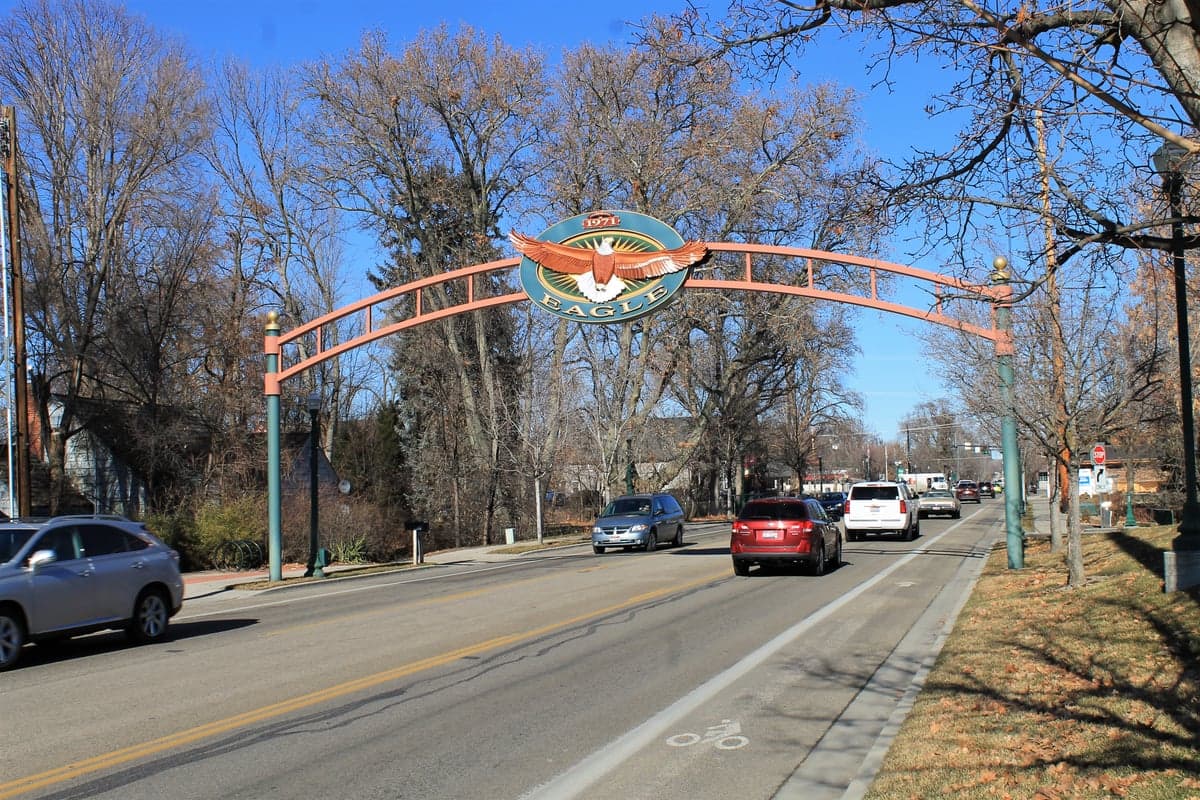
Photo: Wikipedia
Personal Sovereignty in Eagle, ID
Moderate friction. Expect trade-offs in some aspect of personal liberty and independence.
What does Personal Sovereignty tell us?
Personal Sovereignty measures your capacity for self-reliance and independence with minimal government friction. Higher scores mean fewer barriers between you and the way you want to live... but it assumes you have the space you need and good neighbors.
What does this tell us?
Personal Sovereignty measures your capacity for self-reliance and independence with minimal government friction. Higher scores mean fewer barriers between you and the way you want to live... but it assumes you have the space you need and good neighbors.
State Policy
Energy independence: Importer (25% of energy produced in-state)
Personal Liberty
Homesteading

Personal Liberty Analysis
Eagle, Idaho, offers a notably high degree of personal sovereignty, largely because it sits within a state that has deliberately structured its laws to minimize government intrusion into daily life. For those with a survivalist or prepper mindset, this isn't just about politics—it's about the practical ability to live on your own terms, prepare for uncertainty, and raise a family without constant bureaucratic friction. While no place is a libertarian utopia, Eagle’s combination of state-level protections, local zoning flexibility, and a culture of self-reliance makes it a strong contender for anyone prioritizing autonomy over convenience.
Tax burden and regulatory posture: how much the state leaves in your pocket
Idaho’s tax structure is deliberately lean, and Eagle residents benefit directly. The state’s flat income tax rate of 5.8% (as of 2025) is simple and predictable, with no progressive brackets that penalize higher earners or small business owners. Property taxes in Ada County are moderate—typically around 0.7% to 0.9% of assessed value—and are capped by state law to prevent runaway assessments. More importantly, Idaho has no inheritance tax, no estate tax, and no tax on Social Security benefits. For a prepper, this means more capital stays in your hands for land, supplies, and infrastructure rather than funding state programs you may not trust. The regulatory environment is equally restrained: Idaho is a right-to-work state with minimal business licensing hurdles, and Ada County’s building codes are less onerous than those in coastal states. You won’t face the kind of permitting delays or environmental review nightmares common in Oregon or California. The state’s general philosophy is “leave us alone,” and Eagle’s local government largely follows suit—though the city does enforce standard subdivision rules, so raw land purchases require due diligence on setbacks and utility hookups.
Self-defense and gun law specifics: what you can own and where you can carry
Idaho is one of the most firearm-friendly states in the nation, and Eagle sits squarely in that culture. Constitutional carry is fully legal—no permit required for open or concealed carry for anyone 18 or older who can legally possess a firearm. This isn’t a “may issue” or even “shall issue” system; it’s a recognition of a pre-existing right. For preppers, this means you can keep a sidearm on your hip while running errands or working your property without worrying about a licensing scheme that could be revoked. The state also has strong preemption laws: no city or county, including Eagle, can pass its own gun ordinances stricter than state law. So you won’t see the kind of magazine bans or “assault weapon” registrations that plague cities like Seattle or Denver. Stand-your-ground and castle doctrine are codified in statute, with no duty to retreat in any place you have a legal right to be. This is critical for home defense scenarios—if someone breaches your property line, the law is on your side. Suppressors, short-barreled rifles, and other NFA items are legal with federal paperwork, and many local gun shops in the Boise area can handle trust transfers. The only real limitation is that Eagle is within Ada County, which has some noise ordinances, so shooting ranges on residential lots require careful placement or sound mitigation.
Self-reliance and homesteading viability: lot sizes, zoning, and off-grid feasibility
Eagle’s zoning is a mixed bag for serious homesteading, but there are pockets of genuine self-reliance potential. The city itself is suburban, with most residential lots ranging from 0.25 to 1 acre in standard subdivisions. However, the unincorporated areas of Ada County immediately adjacent to Eagle—particularly toward the foothills and along the Boise River corridor—offer 5- to 20-acre parcels that are zoned for agricultural use. On those larger lots, you can keep chickens, goats, and even a few head of cattle without special permits. The county allows accessory dwelling units (ADUs) and “tiny houses” on foundations, which is useful for multi-generational prepper setups or rental income. Off-grid feasibility is real but requires planning: Idaho law does not mandate grid connection for new homes, but Ada County requires a septic system permit and a well permit if you’re not on municipal water. Solar panels are unregulated at the county level, and battery storage is common. The biggest constraint is water rights—Idaho uses a prior appropriation system, meaning you need a permit to drill a well, and domestic use is prioritized but not unlimited. For the serious prepper, buying land with existing water rights or a senior water claim is a must. The growing season is short (about 120 days), but cold-hardy crops and greenhouse setups work well. Overall, Eagle itself is too built-up for full self-sufficiency, but the surrounding rural fringe offers genuine homesteading viability within a 15-minute drive of town.
Personal liberties: parental rights, medical autonomy, speech, and property
Idaho has become a national battleground for parental rights, and the laws reflect a strong presumption that parents—not the state—know what’s best for their children. The state’s Parental Rights in Education Act (2023) requires schools to notify parents of any curriculum involving sexuality or gender identity and prohibits instruction on these topics in K-5. For conservative parents, this means you can opt your child out of materials you find objectionable without a legal fight. Medical autonomy is similarly robust: Idaho has banned nearly all forms of gender-affirming care for minors, and the state’s medical freedom laws prevent vaccine mandates for public school attendance and employment (with narrow exceptions for healthcare workers). You can refuse any medical treatment for yourself or your child without losing custody or facing state intervention, as long as it doesn’t rise to the level of neglect. On free speech, Idaho has no “hate speech” laws that criminalize political or religious expression, and Eagle’s local government has not attempted to restrict public commentary at council meetings. Property rights are protected by the state’s eminent domain limitations, which require a public purpose and just compensation, and by the lack of rent control or inclusionary zoning mandates. For the prepper, this means you can build a fence, store supplies, and post “no trespassing” signs without worrying about HOA overreach—though some subdivisions in Eagle do have HOAs, so check the covenants before buying.
Compared to other relocation destinations in the West, Eagle stands out for its balance of personal sovereignty and practical infrastructure. You don’t get the raw freedom of rural Montana or the complete regulatory vacuum of Wyoming’s remote counties, but you also don’t sacrifice access to hospitals, hardware stores, and a regional airport. The state’s legal framework is deliberately designed to keep government out of your gun safe, your child’s classroom, and your medical decisions. For the strategic prepper who wants to live in a community of like-minded individuals while maintaining the ability to bug in or bug out, Eagle offers a rare combination of liberty and logistics. The key is to buy the right parcel—preferably outside city limits with water rights—and to understand that even in Idaho, local zoning can still trip you up if you don’t read the fine print. But if your goal is to maximize personal autonomy while staying within striking distance of a real economy, Eagle is one of the best bets in the lower 48.

* Values derived from national, state, county, city and local statistics and may differ in a specific area. Last updated: 2026-04-21T18:23:50.000Z
Narrative content on this page is AI-generated and may contain mistakes. Verify any details that matter before acting on them.
ReloMaps may earn a commission from affiliate links at no extra cost to you.

