
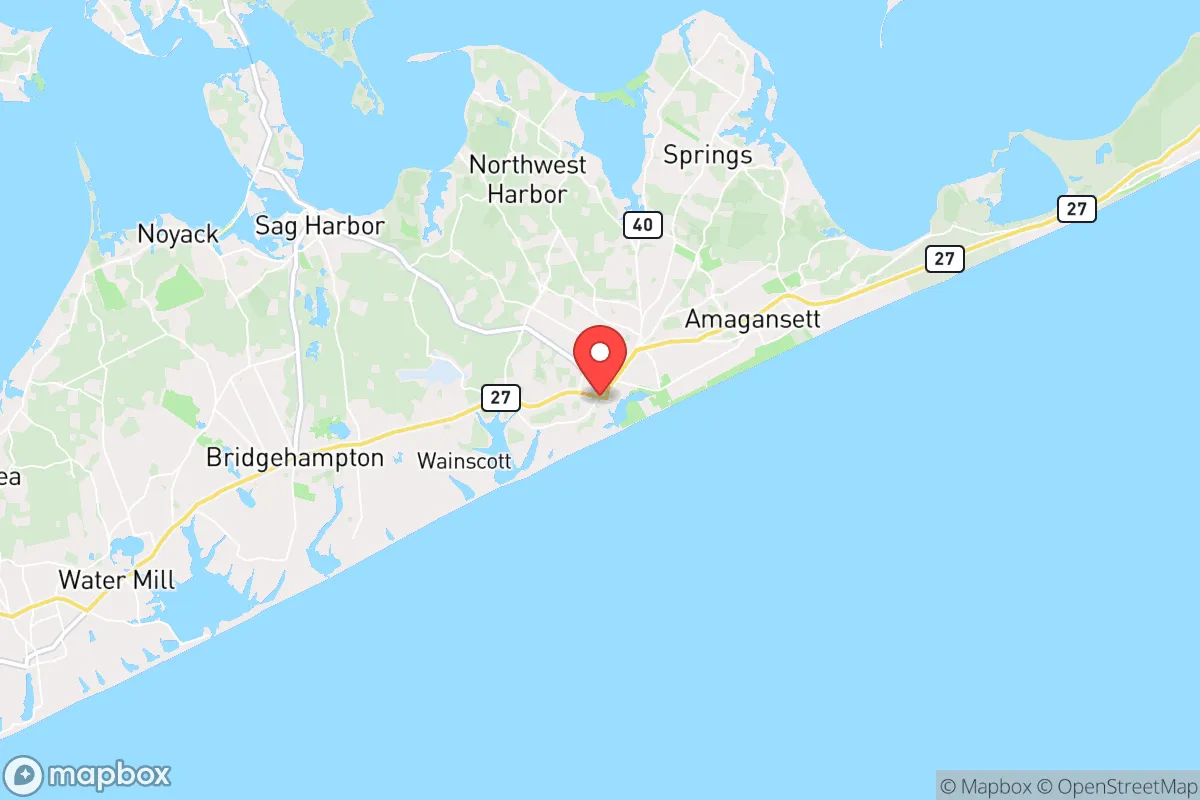
Photo: Wikipedia
Personal Sovereignty in East Hampton, NY
Moderate friction. Expect trade-offs in some aspect of personal liberty and independence.
What does Personal Sovereignty tell us?
Personal Sovereignty measures your capacity for self-reliance and independence with minimal government friction. Higher scores mean fewer barriers between you and the way you want to live... but it assumes you have the space you need and good neighbors.
What does this tell us?
Personal Sovereignty measures your capacity for self-reliance and independence with minimal government friction. Higher scores mean fewer barriers between you and the way you want to live... but it assumes you have the space you need and good neighbors.
State Policy
Energy independence: Importer (12% of energy produced in-state)
Personal Liberty
Homesteading

Personal Liberty Analysis
For the individual or family prioritizing personal sovereignty, East Hampton, New York presents a profound paradox: it offers some of the most desirable physical space and natural resources on the Eastern Seaboard, yet it sits squarely within a state whose regulatory and fiscal apparatus is among the most intrusive in the nation. The autonomy you can carve out here is real, but it is relentlessly constrained by layers of state and local governance that view individual self-reliance with suspicion. This is not a place for those seeking a low-profile, low-interference existence; it is a high-stakes environment where your ability to exercise personal freedom depends on financial resources and a deep understanding of the legal landscape. The trade-off is stark: you gain access to a unique ecosystem for self-sufficiency, but you must navigate a system that taxes, regulates, and mandates at nearly every turn.
Tax burden and regulatory posture: the cost of operating outside the system
The single greatest threat to personal sovereignty in East Hampton is the cumulative weight of New York State and local taxation. Property taxes are notoriously high, driven by some of the most expensive real estate in the country and a school district that, while excellent, commands a significant levy. For a prepper or homesteader, this is a fixed, recurring cost that demands a high income or substantial savings, making true financial independence difficult. Beyond property taxes, New York’s state income tax is progressive and burdensome, and the estate tax is a direct assault on generational wealth transfer. The regulatory posture is equally aggressive. The Town of East Hampton has some of the strictest building and zoning codes in the nation, heavily influenced by environmental conservation mandates. Any attempt to modify your property—whether building a root cellar, installing a solar array, or constructing a workshop—will require multiple permits, environmental reviews, and likely a public hearing. This is not a jurisdiction where you can quietly improve your land; the government has a say in nearly every structural decision. For the survivalist mindset, this represents a constant, grinding erosion of property rights, where the state’s definition of "appropriate use" almost always overrides the owner's.
Self-defense and gun law specifics: navigating a restrictive legal framework
For those who view the Second Amendment as a cornerstone of personal sovereignty, New York is a hostile environment, and East Hampton offers no local relief. The state’s Concealed Carry Improvement Act (CCIA), passed in 2022, transformed the legal landscape. Carrying a concealed firearm now requires a "proper cause" showing that goes far beyond simple self-defense, effectively making it a privilege granted by a licensing officer, not a right. The "sensitive locations" ban is sweeping, prohibiting firearms in virtually all public spaces, including parks, beaches, and businesses unless the owner explicitly posts a sign allowing it. This creates a legal minefield for anyone who wants to be prepared. Magazine capacity is capped at ten rounds, and the background check system for ammunition purchases adds another layer of bureaucratic friction. While owning a firearm for home defense is still possible, the process to obtain a permit is lengthy, expensive, and invasive, requiring character references and a course of instruction. For the prepper, the practical reality is that your ability to defend your property and family with a firearm is heavily circumscribed by state law, and the legal consequences of using a weapon in self-defense, even in a justified scenario, are severe. This is not a jurisdiction that trusts its citizens with arms.
Self-reliance and homesteading viability: lot sizes, zoning, and off-grid feasibility
This is where East Hampton’s unique geography offers a genuine, if expensive, advantage. The town is characterized by large lot sizes, particularly in the "Springs" and "Northwest" areas, with many properties exceeding one or two acres. This provides a rare degree of physical privacy and space for a serious homesteading operation. You can realistically keep chickens, maintain a large vegetable garden, and even raise small livestock on many parcels. However, the regulatory reality quickly reasserts itself. Zoning laws are strict: accessory structures are limited in size and placement, and any "agricultural" activity beyond a hobby garden may trigger additional oversight from the Suffolk County Department of Health Services. Going truly off-grid is nearly impossible. The town requires connection to the public water supply or a state-approved private well, and septic systems must meet rigorous health codes. Solar panels are permitted, but net metering rules and aesthetic review boards can complicate installation. Rainwater collection for potable use is heavily regulated, and composting toilets are generally not approved for full-time residences. The result is a landscape where you can have a large, private, productive property, but you cannot escape the grid or the government’s definition of acceptable infrastructure. Self-reliance here is about supplementing your lifestyle, not severing ties with the system.
Personal liberties: parental rights, medical autonomy, speech, and property
On the spectrum of personal liberties, East Hampton reflects the broader New York trend of prioritizing state authority over individual choice. Parental rights are under constant pressure. The state’s education mandates, including comprehensive sex education and social-emotional learning curricula, are non-negotiable for public school students. Opting out of specific lessons or materials is difficult and often requires legal action, placing the state’s educational philosophy above parental authority. Medical autonomy is similarly constrained. New York has some of the strictest vaccine mandates in the country, including for school attendance, and the state’s public health emergency powers were expanded significantly during the COVID-19 pandemic. The ability to refuse medical treatment or make independent health decisions for yourself or your children is limited by state law and local health department directives. Free speech is protected by the First Amendment, but local social norms and the prevalence of "cancel culture" in a wealthy, progressive community can create a chilling effect for those with dissenting views. Property rights, as noted, are heavily regulated. The town’s zoning board and architectural review board have broad discretion over what you can do with your land, and environmental groups wield significant influence over development. Your property is not a castle; it is a parcel subject to a dense web of local, county, and state regulations.
In the final analysis, East Hampton offers a deeply compromised form of personal sovereignty. It provides the physical space and natural resources for a self-reliant lifestyle that is nearly impossible to find in most of the Northeast, but it does so within a state and local governance structure that is fundamentally opposed to the principles of individual autonomy. Compared to a place like rural Texas or Idaho, where property rights, gun laws, and parental authority are far more robust, East Hampton is a high-cost, high-regulation environment where your freedom is always conditional. It is a viable option only for those with significant financial resources and a willingness to fight for every inch of their independence within a system designed to limit it. For the survivalist or prepper who values low taxes, minimal government interference, and the unencumbered right to self-defense, this area is a strategic compromise at best, and a potential trap at worst.

* Values derived from national, state, county, city and local statistics and may differ in a specific area. Last updated: 2026-04-24T01:45:50.000Z
Narrative content on this page is AI-generated and may contain mistakes. Verify any details that matter before acting on them.
ReloMaps may earn a commission from affiliate links at no extra cost to you.

